The quintessential Hong Kong luxury experience is not locked behind a room key; it’s accessible to anyone who understands the unwritten rules of engagement.
- High Tea at The Peninsula is open to the public, but guests have the exclusive privilege of making reservations, bypassing the often lengthy queue.
- True luxury is less about the price tag and more about the value of exclusivity, service, and unparalleled atmosphere—a calculus that applies to everything from cocktails to airport transfers.
Recommendation: Approach Hong Kong’s grand hotels not as fortresses, but as theaters of experience. This guide provides your script to navigate them like an insider.
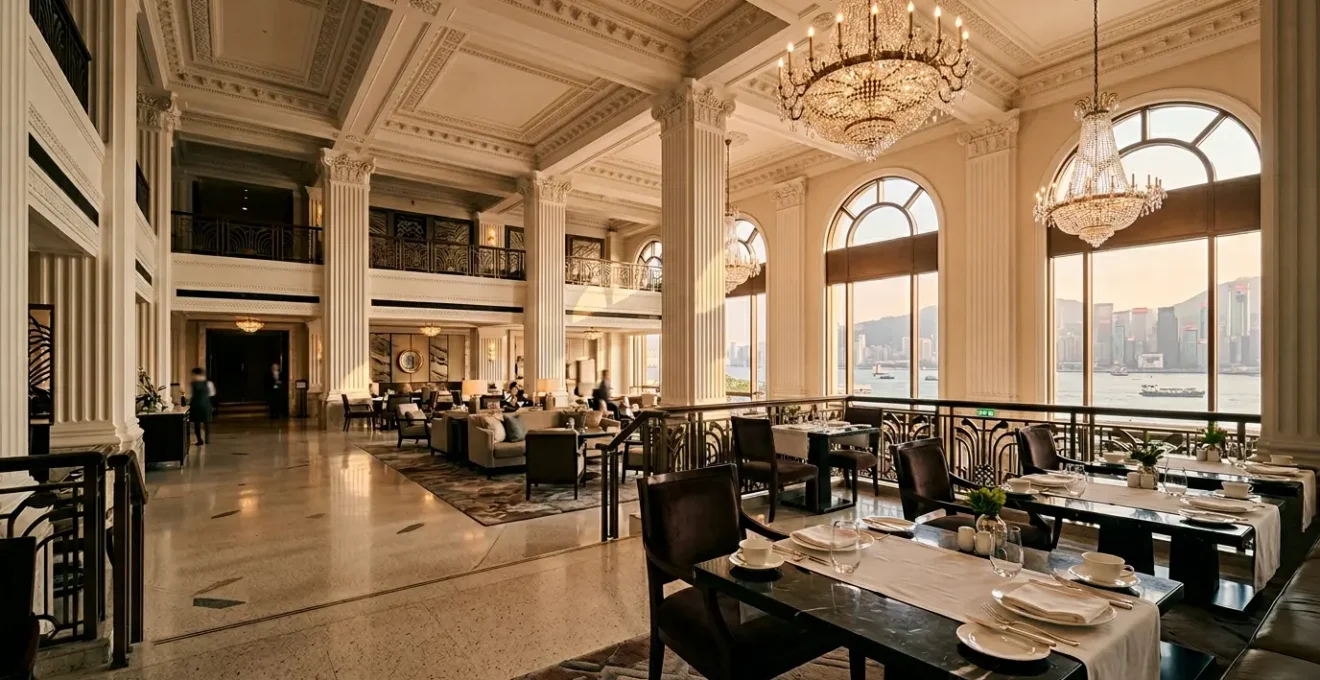
The image of The Peninsula’s elegant lobby, filled with the gentle clinking of silverware on fine china, is a cornerstone of Hong Kong’s colonial heritage. It prompts one of the most frequent questions I receive from discerning travelers: can one partake in this iconic Afternoon Tea without being a guest of the hotel? The answer, I am pleased to say, is a definitive yes. However, this access comes with a crucial distinction that separates the visitor from the resident. As travel writer Andy Luten notes, « only guests at The Peninsula can make reservations, everyone else must wait in a line that gets quite long. »
This reality of queuing for the privilege—sometimes for up to two hours during peak times—illustrates a fundamental principle of palace hotel life. While the doors are open, the experience is tiered. Hotel guests are not merely paying for a room; they are investing in seamless access and priority. This very dynamic, however, is not a barrier but an invitation. It is the first lesson in mastering the art of ‘luxury access’—understanding how to enjoy the world-class hospitality and heritage of these grand institutions, often without the nightly room rate.
This guide moves beyond that first cup of tea. It is your personal concierge’s brief, designed to answer the nuanced questions that arise when one seeks to truly indulge. We will explore the scope of a butler’s power, decode the value of a club lounge, and weigh the merits of a £20 cocktail against the skyline. This is your key to unlocking the soul of Hong Kong’s legendary hotels.
To help you navigate these rarefied environments, this guide is structured to answer the most pressing questions for the sophisticated traveler. Below is a summary of the insider knowledge we are about to explore.
Summary: A Concierge’s Guide to Hong Kong’s Hotel Luxuries
- What Can You Actually Ask a Hotel Butler to Do for You?
- Is Paying Extra for Club Floor Access Worth It for Free Cocktails?
- Helicopter or Rolls-Royce: What Is the Ultimate Airport Transfer?
- Which Luxury Hotel Spa Has the Best View of Victoria Harbour?
- Why Is In-Room Dining in HK Luxury Hotels Better Than Restaurants?
- Ozone or Sevva: Which Rooftop Bar Justifies the £20 Cocktail Price?
- Why Is the Landmark Mall Considered the Center of High Society?
- Which Hotels Offer a Guaranteed View of the Symphony of Lights?
What Can You Actually Ask a Hotel Butler to Do for You?
The term ‘butler’ often conjures images of Victorian formality, but in the context of a modern luxury hotel, the role is one of a highly intuitive personal assistant and problem-solver. Their purpose is to remove friction from your stay, personalizing your environment and schedule with quiet efficiency. So, what falls within their purview? The scope is remarkably broad, moving far beyond simply unpacking a suitcase or pressing a shirt. A truly excellent butler is your key to the city.
Their tasks can range from the logistical to the exceptional. Common requests include crafting bespoke vacation itineraries, securing reservations at fully booked Michelin-starred restaurants, or even acting as a personal shopper to source a specific, hard-to-find gift. They can arrange private dining experiences within your suite, prepare the room with your preferred amenities before you even arrive, and handle all transportation logistics. The goal is a seamless experience where your needs are anticipated and met.
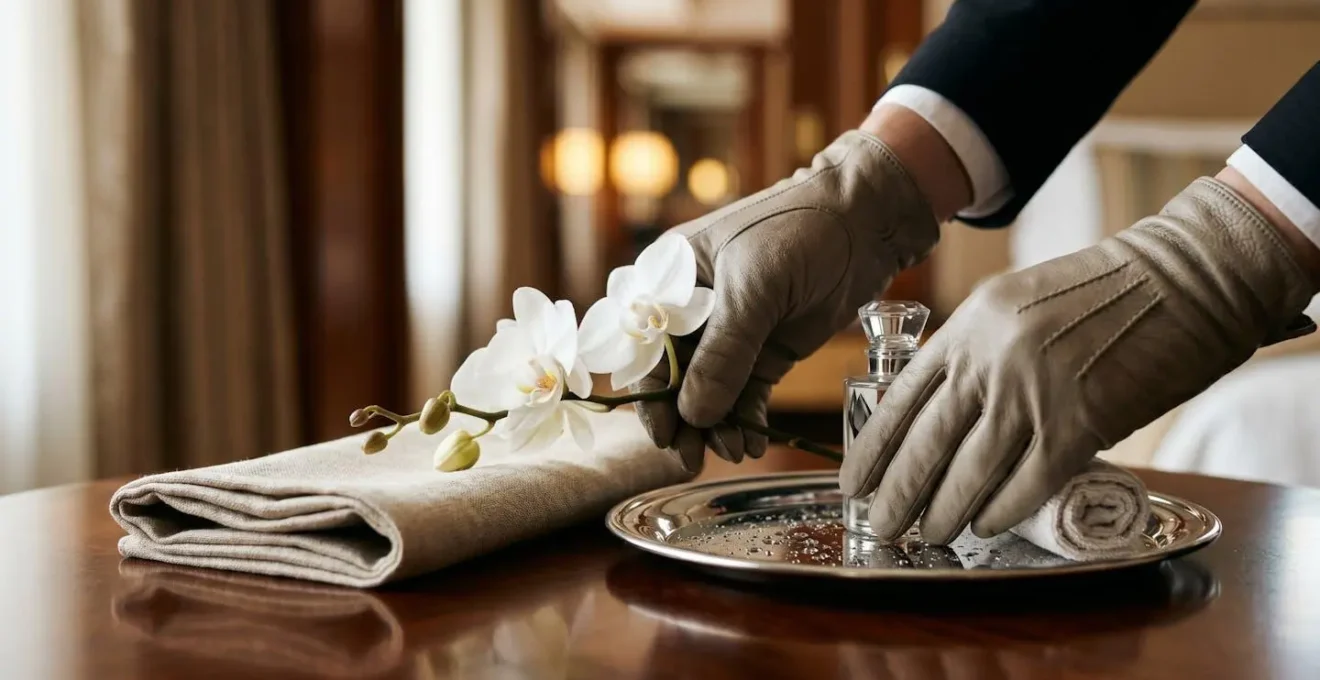
The essence of the service is captured perfectly by Martin Higgins, a former butler at Buckingham Palace, who explained to The Points Guy that, « Anything within the bounds of the law and etiquette is up for grabs when it comes to what you can ask of your butler. » This is the critical insight. The service is not a menu of options but a platform for possibility. A great butler thrives on challenge, whether it is sourcing last-minute tickets to a sold-out concert or arranging a surprise anniversary celebration down to the last detail. They are the human element of luxury, transforming a hotel stay into a personalized, effortless experience.
Is Paying Extra for Club Floor Access Worth It for Free Cocktails?
The allure of the Club or Executive Lounge is a common consideration for the discerning traveler. It presents a tangible upgrade, but one that often comes at a significant premium. Indeed, industry data reveals that club floor access can add anywhere from $50 to over $500 per night to the cost of a room. The immediate question is whether the « free » cocktails and canapés justify this expense. To view it in such simple terms, however, is to miss the point entirely. The true value is a blend of tangible savings and, more importantly, priceless intangible benefits.
The ‘value calculus’ requires looking beyond the complimentary champagne. A well-run club lounge is an oasis of calm, a hotel within a hotel. It offers a private, seamless check-in/check-out experience, away from the bustle of the main lobby. It provides a quiet, refined space to work or relax. And, crucially, it features a dedicated concierge team who often provide a higher, more personalized level of service than their counterparts downstairs. For a business traveler, the quiet workspace and networking opportunities can be invaluable. For a leisure traveler, the five daily culinary presentations can genuinely replace the cost of several meals and drinks out on the town.
Your 5-Point Audit: Is Club Access a Smart Splurge?
- Identify the Offerings: List all tangible benefits provided by the club lounge: number of food presentations, types of beverages, business services, and dedicated concierge access.
- Inventory Your Habits: Honestly assess your travel style. Will you use the lounge for breakfast daily? Do you typically enjoy pre-dinner cocktails? Do you require a quiet place to work or make calls?
- Conduct a Cost-Benefit Analysis: Compare the additional cost of the club access against your estimated daily spending on breakfast, snacks, evening drinks, and potential taxi fares saved by staying in.
- Weigh the Intangibles: Assign a personal value to the benefits of exclusivity, privacy, enhanced service, and a serene environment. Is avoiding a lobby queue worth a premium to you?
- Make an Executive Decision: Based on the balance of tangible savings and intangible value, decide if the club upgrade aligns with your specific needs and desires for this trip.
The decision ultimately rests on how one defines value. The following table, inspired by analysis from travel authorities like Fodor’s, breaks down this very calculus. It separates the quantifiable returns from the more nuanced, experiential advantages that often tip the scales for luxury seekers.
| Benefit Type | Tangible Value | Intangible Value |
|---|---|---|
| Food & Beverage | 5 daily culinary presentations, breakfast, evening cocktails (saves $50-150/day) | Privacy and exclusivity of dining environment |
| Check-in/Check-out | Time saved: 15-30 minutes | Seamless, VIP experience; no public lobby queues |
| Concierge Access | Dedicated staff for reservations and arrangements | Personalized relationship-building; insider local knowledge |
| Networking | N/A | Access to high-net-worth guest community in intimate setting |
| Workspace | Quiet environment with power outlets, printing services | Professional atmosphere conducive to business productivity |
Helicopter or Rolls-Royce: What Is the Ultimate Airport Transfer?
The journey from airport to hotel is the first act of any stay, and in Hong Kong, it can be a theatrical production. With the luxury segment being so significant— market research shows that luxury properties account for 38.37% of the market—hotels compete to make this first impression unforgettable. The two most spectacular options are, of course, a chauffeured Rolls-Royce or a private helicopter transfer. Choosing between them is not a matter of speed versus comfort, but of two fundamentally different statements of arrival.
The helicopter is the epitome of efficiency and spectacle. It lifts you above the city’s notorious traffic, transforming a one-hour journey into a breathtaking 15-minute scenic flight. It is an experience of pure adrenaline and perspective, offering a stunning aerial overview of the city’s iconic skyline and harbour. It is the ultimate power move, delivering you to the hotel’s doorstep with unmatched speed and a story to tell. It is about conquering the city from above.
The Rolls-Royce, particularly The Peninsula’s signature fleet in its custom ‘Peninsula Green’, offers a different kind of theatre. It is a masterclass in ground-level grace and heritage. As the hotel itself describes it, « Precision, elegance, and craftsmanship come alive at every turn. » This is not a transfer; it is an immersion. From the moment the white-gloved chauffeur opens the door, you are enveloped in a world of polished wood, supple leather, and serene silence. It is about gliding through the city’s vibrant streets while remaining utterly insulated in your private cocoon of calm. The choice is not between road and air, but between dramatic spectacle and serene elegance.
Which Luxury Hotel Spa Has the Best View of Victoria Harbour?
In Hong Kong, a spa treatment is not merely about wellness; it is an exercise in escapism. The city’s verticality allows for an experience unavailable elsewhere: serene relaxation set against one of the world’s most dynamic cityscapes. While several hotels offer magnificent spas, the one that has most masterfully integrated its view into the wellness journey is The Spa at Four Seasons Hong Kong. It offers a perspective that is truly unique.
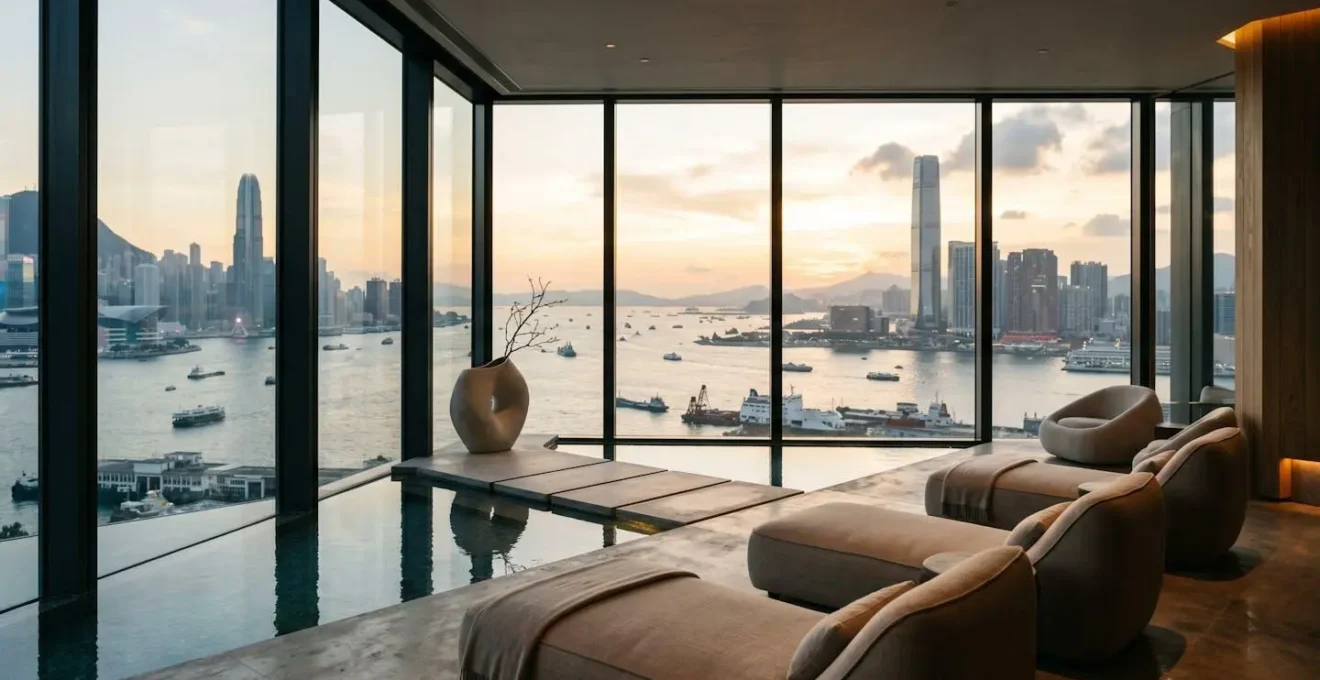
What sets the Four Seasons apart is its prime location on the Hong Kong Island side, looking directly across at the Kowloon peninsula. As the luxury travel guide Remote Lands highlights, « The unique location on the Hong Kong side of Victoria Harbour offers the breathtaking perspective of viewing both the Kowloon and Hong Kong Island skylines. » This dual-skyline panorama is the key. From its treatment rooms and relaxation lounges, you are not just looking at the harbour; you are suspended within it, with the energy of both sides of the city laid out before you. It is a view of unparalleled scope and grandeur.
Case Study: The Four Seasons’ Strategic View Enhancement
In 2024, the Four Seasons Hong Kong completed a significant refurbishment of its spa and rooftop infinity pool. The upgrade was a strategic move to maintain its leadership in Average Daily Rate (ADR) by leaning into its greatest asset. The project focused explicitly on maximizing the panoramic Victoria Harbour views from every possible vantage point, responding directly to a documented preference from high-net-worth travelers for suites and amenities that feature the iconic harbour. This wasn’t just a design choice; it was a business decision to monetize the view as a core component of the luxury experience.
This commitment to the view as an integral part of the therapy makes the experience exceptional. Whether you are enjoying a vitality pool or resting in a post-treatment lounge, the floor-to-ceiling windows ensure the dramatic cityscape is the constant, calming backdrop. This transforms a simple massage into a profoundly memorable, location-specific event.
Why Is In-Room Dining in HK Luxury Hotels Better Than Restaurants?
It seems a paradox. In a culinary capital like Hong Kong, a city where the city’s culinary prestige is reflected in over 200 restaurants in the Michelin guide, why would one choose to dine in their hotel room? The answer lies in understanding that for the true luxury guest, in-room dining is not a compromise; it is a curated, superior experience. It is the ultimate expression of privacy, comfort, and personalized service.
First, the quality is often equivalent to a top-tier restaurant. Luxury hotels in Hong Kong are culinary destinations in their own right, often housing several Michelin-starred establishments. The in-room dining menu is typically an extension of these same kitchens, prepared by the same world-class chefs. You are not ordering ‘room service’; you are summoning a Michelin-level meal to a private dining room with the best view in the house—your own. This is a core part of their strategy, as analysis shows luxury hotels’ revenue is driven by high-net-worth preferences for integrated experiences like Michelin dining and harbour-view suites.
Second, the service is unparalleled. The meal is not delivered on a simple tray; it is an event. A dedicated team sets up a properly dressed table with fine linen, polished silverware, and correct glassware. Courses are served sequentially, if you wish. It is a full restaurant experience, but on your terms, at your pace, and in complete privacy. There is no need for a reservation, no dress code, and no waiting for the bill. It is the height of effortless indulgence. After a long day of meetings or exploration, the ability to enjoy a world-class meal in solitude and comfort, set against a glittering skyline, is a luxury that no public restaurant can offer.
Ozone or Sevva: Which Rooftop Bar Justifies the £20 Cocktail Price?
A cocktail with a view in Hong Kong is a rite of passage, but at upwards of £20, it is an investment. The two most famous contenders for your money are Ozone at The Ritz-Carlton and Sevva in Central. While both offer spectacular views, they provide vastly different experiences. The « better » choice depends entirely on the atmosphere you seek. Justifying the price is a matter of matching the bar’s personality to your own.
Ozone, located on the 118th floor of the International Commerce Centre, holds the title of the world’s highest bar. Its appeal is one of futuristic, high-energy drama. The interior is a riot of geometric shapes and blue hues, creating a sense of being in a stylish spacecraft. The view is an astonishing, top-down perspective of Kowloon and the harbour below. As Voyager Guru states, « If you’re looking for the best views of Hong Kong, be sure to head to Ozone. » It is an experience of drinking amongst the clouds, popular with an international, jet-setting crowd. It is less a quiet chat and more a high-altitude party.
Sevva, by contrast, offers a more classic, sophisticated elegance. Located in the heart of the Central district, its sprawling 360-degree terrace puts you at eye-level with the city’s architectural icons, like the HSBC building. The atmosphere is one of refined glamour, attracting local high society and top finance executives. Its prime advantage is its unbeatable, direct view of the 8 PM Symphony of Lights show. It is the quintessential ‘heart-of-the-city’ experience, offering a cinematic, panoramic embrace of Hong Kong Island’s skyline.
This side-by-side comparison clarifies the choice. It is a decision between the futuristic drama of extreme altitude and the sophisticated glamour of being in the city’s vibrant heart.
| Feature | Ozone (Ritz-Carlton) | Sevva |
|---|---|---|
| Location | 118th floor, International Commerce Centre, Kowloon | Central, Hong Kong Island |
| Atmosphere | Futuristic, ultra-modern, world’s highest bar | Sophisticated, 360-degree terrace, colonial elegance |
| Signature View | Drinking amongst the clouds; Kowloon skyline below | HSBC building, Symphony of Lights, heart-of-city panorama |
| Clientele | International jet-set, high-energy party crowd | Local high society, finance executives, discerning travelers |
| Best Time to Visit | Sunset and late evening for dramatic city lights | Pre-Symphony of Lights (8 PM) for terrace viewing |
| Dress Code | Smart casual to chic | Business casual to upscale |
Why Is the Landmark Mall Considered the Center of High Society?
To call The Landmark a ‘mall’ is a profound understatement. In a city filled with luxury retail, The Landmark complex in Central distinguishes itself not merely by the brands it houses, but by its function as a fully integrated luxury ecosystem. It is the de facto drawing room for Hong Kong’s elite because it offers a seamless, exclusive, and curated world, entirely separate from the city streets.
The key to its status is its physical and social integration with the highest echelons of finance, hospitality, and fashion. As Jacada Travel notes, its anchor hotel, The Landmark Mandarin Oriental, is located in the « premier business district on Hong Kong Island. » This is ground zero for the city’s power players. The complex itself is designed for discretion, with a network of interconnected bridges and underground passages that link the hotel directly to premier office towers, exclusive members’ clubs, and flagship stores for every major luxury brand from Chanel to Gucci. One can move from a board meeting to a fitting at a couturier to a Michelin-starred lunch without ever stepping outside.
The Landmark as an Integrated Luxury Hub
The Landmark’s design creates a self-contained environment shielded from public view. Its interconnected architecture allows high-net-worth individuals to move seamlessly between the Mandarin Oriental hotel, their offices in adjacent towers, private clubs, and high-end retail and dining venues. This creates an exclusive bubble, positioning it as the preferred and most convenient gathering point for Hong Kong’s high society and the international luxury travelers they host. It is less a shopping destination and more a private, luxurious neighbourhood.
This architectural design fosters a powerful sense of community and exclusivity. It is not a place one simply passes through; it is a destination in itself. By consolidating the essential elements of a high-net-worth individual’s day—business, dining, socializing, and shopping—into one cohesive and luxurious space, The Landmark has cemented its position as the undisputed epicenter of Hong Kong high society. It is where the city’s elite live, work, and play, all within a single, elegant ecosystem.
Key Considerations for the Luxury Seeker
- Access vs. Ownership: The highest form of luxury is often seamless access, not ownership. A reserved table can be more valuable than a purchased item.
- Value the Intangibles: The true worth of a luxury experience lies in its exclusivity, privacy, and the quality of service—factors that rarely appear on a bill.
- Curate Your Experience: Use the hotel’s services—from the concierge to the in-room dining—as tools to build a bespoke journey that fits your precise needs.
Which Hotels Offer a Guaranteed View of the Symphony of Lights?
The Symphony of Lights is a nightly spectacle, a dazzling display across the skyscrapers of Victoria Harbour. For many visitors, securing a prime, unobstructed view is a non-negotiable part of their Hong Kong itinerary. With official data from the Hong Kong Tourism Board showing a city inventory of over 92,000 hotel rooms, identifying the select few that offer a *guaranteed* front-row seat is crucial. The key is to choose a hotel with not just a « harbour view » room, but one with a specific orientation and vantage point.
The most coveted views are typically from the Kowloon side, looking across to the more extensive Hong Kong Island skyline. Hotels like the InterContinental (now Regent), The Peninsula, and The Ritz-Carlton are legendary for this. A guest at the InterContinental’s club lounge, for instance, described it as a full-service restaurant overlooking the harbour, offering one of the most sought-after vantage points for the show directly from their seat. However, hotels on the Hong Kong Island side, such as the Four Seasons and Upper House, offer a unique reverse perspective that is equally dramatic.
The word « guaranteed » is paramount. It means booking a specific room category explicitly sold as having a direct, unobstructed view of the nightly show. Vague descriptions like « city view » or « partial harbour view » will not suffice. To ensure you are not disappointed, it is essential to select from a verified list of properties known for their prime positioning.
The following hotels are consistently recognized for offering rooms and suites with guaranteed, front-row seats to the Symphony of Lights:
- InterContinental Hong Kong: Its position on the Kowloon waterfront offers direct, cinematic views of the Hong Kong Island skyline.
- The Peninsula Hong Kong: Harbour-view rooms in its tower provide a sweeping, elevated panorama of the entire spectacle.
- Four Seasons Hong Kong: Offers the unique advantage of seeing both the Kowloon and Hong Kong Island skylines participate in the show.
- Upper House Hong Kong: With rooms starting on the 38th floor, its floor-to-ceiling windows provide a dramatic, high-angle viewpoint.
- The Ritz-Carlton Hong Kong: As one of the world’s highest hotels, its rooms offer an unparalleled « view from the heavens » of the lights below.
With these insights, you are no longer just a visitor to Hong Kong’s grand hotels; you are a connoisseur of their experiences. By understanding the nuances of access and the true definition of value, you can craft a journey that delivers the ultimate in luxury, whether for a night or just for an afternoon.