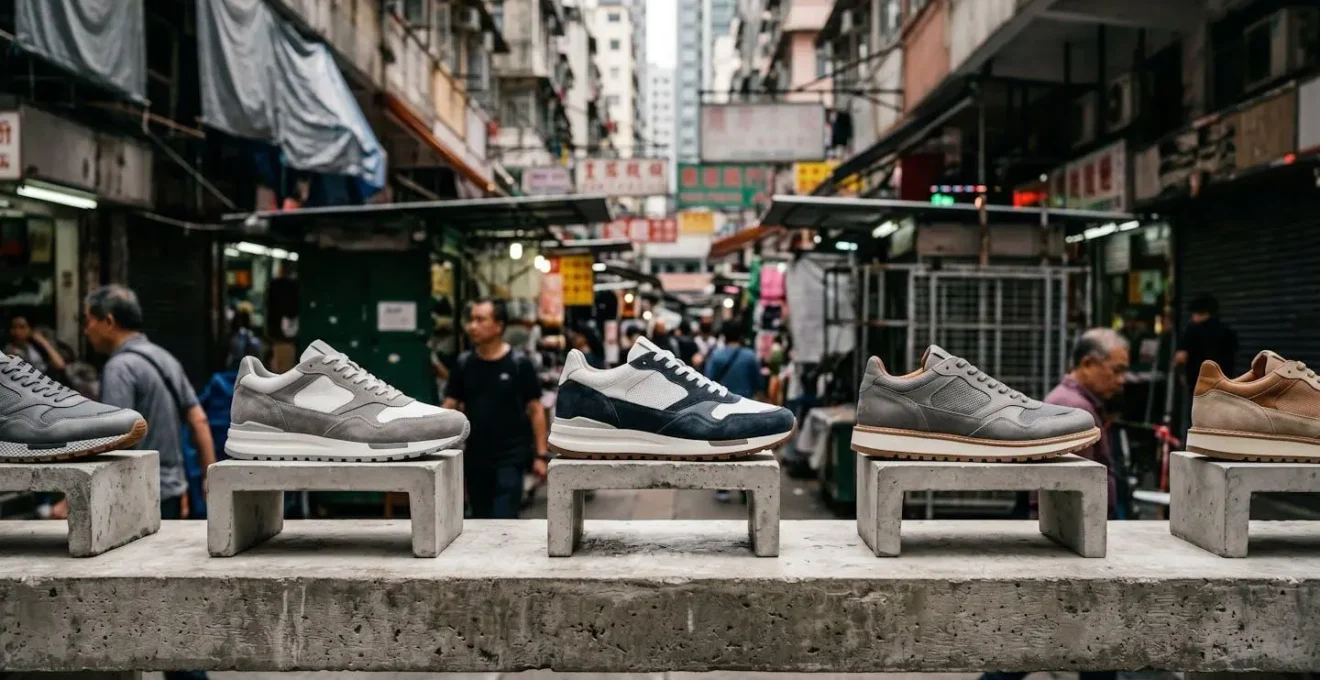
Forget everything you’ve heard about ‘bargaining’—surviving Sneaker Street is an authentication mission, not a haggling contest.
- Success isn’t about getting 50% off; it’s about distinguishing a legitimate grey market steal from a high-quality fake.
- The environment—from the crowds to the food stalls—provides crucial clues that most tourists miss.
Recommendation: Stop thinking like a tourist. To find real grails, you need to learn to read the entire Mong Kok ecosystem like a local hunter.
The moment you step out of the Mong Kok MTR station, it hits you: a tidal wave of sound, light, and humanity. This is the beating heart of Hong Kong, and at its center is Fa Yuen Street, the legendary « Sneaker Street. » For any streetwear enthusiast, it’s a pilgrimage site, a chaotic maze promising the ultimate score. The air is thick with the scent of egg waffles and the murmur of a thousand deals being made. Everyone tells you the same things: bargain hard, check the stitching, watch your wallet. This is kindergarten-level advice.
Those tips won’t help you when you’re staring at a wall of Off-White Jordans, and the price is just a little *too* good. The truth is, Fa Yuen Street is a complex ecosystem. It’s a place where global chains, dusty independent shops, parallel importers, and counterfeiters all operate within a few city blocks. The real grails are here, but so are the traps. Relying on generic tourist advice is the fastest way to go home with a beautiful, expensive, and utterly fake pair of shoes.
But what if the key wasn’t just in the shoe, but in the entire environment? What if spotting a legit deal had more in common with knowing which street food stall to trust than simply checking a logo? This guide is your upgrade. We’re moving beyond the basics. This is your training for a successful authentication mission. You’ll learn to manage the chaos, master a universal framework for spotting fakes that applies to more than just sneakers, and understand the unwritten rules of pricing and warranties. You’ll learn to see the street not as a tourist, but as a seasoned hunter.
This guide provides a strategic framework for your mission, breaking down everything from managing the environment to the final legit check. The following sections will equip you with the insider knowledge needed to navigate the market with confidence.
Summary: Your Authentication Mission on Sneaker Street
- How to Handle the Noise and Crowds of Mong Kok Without Getting Stressed?
- How to Distinguish Fake Electronics from Real Deals in Sham Shui Po?
- Why Is It Hard to Find XL or Size 12 Shoes in Local Markets?
- How Much Discount Should You Aim for at the Ladies’ Market?
- Will a Camera Bought in Mong Kok Be Covered by Warranty in London?
- Which Street Food Stall in Mong Kok Is Safe for Tourists to try?
- What Are the Most Common Distraction Techniques Used by Thieves in Markets?
- Is It Safe to Shop in Mong Kok Markets Alone After 10 PM?
How to Handle the Noise and Crowds of Mong Kok Without Getting Stressed?
The first rule of hunting on Fa Yuen Street is to control your environment before it controls you. The sensory overload of Mong Kok is not just a feature; it’s a filter. It’s designed to overwhelm tourists, rush their decisions, and make them miss crucial details. A stressed mind can’t perform a proper legit check. Your first step isn’t to find a store, but to implement a mission-based shopping strategy to master the chaos.
This isn’t about aimless wandering; it’s about surgical strikes. Before you even arrive, your mission should be defined. Instead of being pulled in a dozen directions by neon signs and aggressive shopkeepers, you operate from a plan. This transforms you from a passive victim of the environment into an active operator within it. The goal is to conserve your cognitive energy for the most important task: authenticating sneakers.
As the image suggests, the battle is won before it begins, in a moment of calm preparation. Here’s how you turn chaotic wandering into a structured mission:
- Pre-Mission Planning: Before you leave your hotel, research 3-4 target stores using online maps and forums. Save their locations offline so you’re not reliant on spotty public Wi-Fi.
- Entry Strategy: Don’t just emerge from the MTR and hope for the best. Start at a specific point. For Fa Yuen Street, Mong Kok Station Exit E2 is your ideal starting line. This turns a random walk into a planned route.
- Sensory Filter Technique: This is a pro-level move. Use noise-canceling headphones, but keep them in transparency mode for safety. Play a calm, focused playlist. This creates a personal bubble, filtering out the auditory chaos while keeping you aware of your immediate surroundings.
- Strategic Retreat Mapping: No soldier stays on the front line indefinitely. Identify quiet zones for 10-minute decompression breaks *before* you need them. A specific coffee shop or a small park just off the main street can be a lifesaver, allowing you to reset and review your findings.
- Exit Protocol: Decide on a hard time limit or a clear departure plan *before* you enter the market. This prevents decision fatigue and the kind of sensory overwhelm that leads to bad purchases.
By controlling your movement and sensory input, you create the mental space needed to focus. You’re no longer just a tourist in a crowd; you’re a hunter on the trail, ready for the real work to begin.
How to Distinguish Fake Electronics from Real Deals in Sham Shui Po?
The H2 might say « electronics, » but let a local tell you: the art of the legit check is a universal language in Hong Kong, whether you’re looking at a phone in Sham Shui Po or a pair of Travis Scotts in Mong Kok. The principles are identical. Forget the simplistic « check the stitching » advice. You need a robust framework. I call it the Universal Authentication Framework: The Three P’s Method. This is the mental model you must use for every potential purchase.
The scale of the problem is staggering; the global market for fakes is immense. An industry report confirmed that in 2023, the total revenue for counterfeit sneakers was estimated at $599 billion, vastly eclipsing the legitimate shoe market. This isn’t a cottage industry; it’s a global giant. That’s why you need a system.
Your authentication mission breaks down into these three core areas of investigation:
- Product (The Physical Tells): This is your hands-on inspection. Move beyond the obvious logo check.
- Weight: Authentic sneakers have a specific, consistent weight. Fakes often feel too light or strangely heavy. After handling a few, you develop a feel for it.
- Smell: This is a classic tell. Open the box and take a sniff. Counterfeit factories use cheap, strong chemical adhesives. A real Nike or Adidas has a distinct, almost neutral smell. Fakes often reek of a headache-inducing glue.
- Stitching: Look for precision. Authentic pairs have even, tight, and consistent stitching, especially around the midsole and heel tab. Sloppy, frayed, or uneven threads are a massive red flag.
- Packaging (The Box and Accessories): The fakers often get lazy here.
- Box Quality: An authentic box is sturdy, with sharp, high-quality printing. Flimsy cardboard, blurry logos, or typos on the label are dead giveaways.
- SKU Code Match: This is crucial. The SKU (Stock Keeping Unit) code on the box label must match the code on the tag inside the shoe’s tongue. No match, no deal.
- Person (The Seller and Shop): This is the most underrated part of the check.
- Seller Attitude: A legitimate seller knows their product. They can answer specific questions about release dates, materials, and why they have it in stock. Evasiveness or aggression is a bad sign. A confident, knowledgeable seller is reassuring.
- Shop Permanence: Is this a pop-up stall or an established store with regular local customers? A permanent fixture with a good reputation among locals is a much safer bet.
Finally, apply the Price-to-Rarity Ratio. Be suspicious not just of prices that are too low, but of rare items that are too easily available. If a shop has a full size run of a « limited-edition » sneaker from 2018, you’re not lucky—you’re being scammed. True scarcity is the hallmark of authenticity.
Why Is It Hard to Find XL or Size 12 Shoes in Local Markets?
So, you’ve mastered the chaos and you know how to spot a fake. Now you face a new obstacle: the size wall. If you have larger-than-average feet (typically a US size 11 or up), Sneaker Street can be a frustrating experience. You’ll find walls of grails, only to be told « no size, sorry » at every turn. This isn’t a random coincidence; it’s a business decision rooted in local market demographics.
The vast majority of independent boutiques on Fa Yuen Street cater to the local and regional Asian market, where the average shoe size is smaller. For a small shop owner, stocking a size 12 or 13 is a significant risk. It’s inventory that might sit on the shelf for months, tying up capital that could be used for faster-selling sizes 8, 9, and 10. The experience of many travelers confirms this reality. As one visitor noted on a forum:
Sneaker Market and Fa Yuen St. Market do sell ‘Real’ sneakers. Have bought a pair of runners that worked well for a friend but have had trouble finding bigger sized shoes for myself. If you are anything larger than 12, I imagine it’d be very difficult to find shoes in HK.
However, don’t give up hope. Finding larger sizes just requires a different strategy. Instead of carpet-bombing the independent shops, you need to be more targeted. Here’s the action plan for the big-footed hunter:
- Target Flagships, Not Boutiques: Your first stops should be the official flagship Nike, Adidas, and New Balance stores, especially the massive ones in Central or Tsim Sha Tsui. These stores are designed for an international audience and are far more likely to carry a full international size run.
- Use Availability as a Red Flag: This is a crucial authentication tip. If an independent shop miraculously has a full size run (US 6-14) of a rare or limited sneaker, you should be extremely suspicious. This is a massive indicator of counterfeit stock. Authentic rare stock is almost always patchy and incomplete.
- Contact Stores in Advance: If you have your heart set on a specific model, do some online reconnaissance. Find the contact information for a few promising independent stores and send them a quick email or message to ask about their stock in your size. It saves you a ton of time and disappointment on the ground.
- Understand the Inventory Logic: The small shops you’re browsing likely stock their inventory based on what moves quickly. A size 12 is high-risk for them. Don’t take it personally; just adjust your hunting ground to the larger, official brand stores that can afford to hold a wider range of sizes.
By shifting your focus from the small market stalls to the major brand flagships for your size, and using the suspicious availability of full size runs as a counterfeit filter, you can turn a frustrating search into a successful one.
How Much Discount Should You Aim for at the Ladies’ Market?
The title mentions the Ladies’ Market, and if you’re buying a generic « I ❤️ HK » t-shirt, the tourist advice holds true. But you’re a sneakerhead on an authentication mission. Applying the same bargaining tactics to a legitimate sneaker store is the fastest way to get laughed out of the shop. The rules are completely different. The common wisdom, often repeated in travel guides, suggests aggressive bargaining is the norm. As one guide from Hotel ICON puts it:
In general, expect sellers to give a 20 or 30% discount, and sometimes up to 50% if you buy in bulk.
– Hotel ICON Editorial Team, How to Bargain like a Pro
For sneakers, this advice is not just wrong; it’s counterproductive. Walking into a real sneaker shop and offering 50% of the asking price marks you as a clueless tourist, not a savvy negotiator. The price of authentic sneakers is dictated by global supply, demand, and rarity—not by how well you can haggle. You need a tiered discount framework. The potential for a discount depends entirely on the type of store and the type of shoe.
Here’s the real-world breakdown for negotiating sneaker prices on Fa Yuen Street:
- Hyped Drops & Consignment Stores (Discount: 0-5%): If you’re at a major chain (like Foot Locker) or a high-end consignment store (like KICKSCREW) looking at the latest Travis Scott drop or a pair of rare Dunks, the price is the price. These are market-driven prices for high-demand goods. At best, you might get a tiny discount (maybe 5%) if you’re paying with cash and buying multiple pairs, but don’t expect it. Haggling here is pointless.
- Independent Shops & Older Models (Discount: 5-10%): This is where some negotiation is possible. You’re in a smaller, independent boutique, and you’re looking at a pair of general release Air Max 1s or New Balance 550s from last season. The owner has more flexibility. The key is to show genuine purchase intent. Don’t start with a lowball offer. Ask questions, show your knowledge, then politely ask, « What’s your best price for cash? » A 5-10% discount is a realistic and respectable outcome.
- Clearance Stock & Bulk Buys (Discount: 15-20%): You’ve found a shop with a dusty « sale » section in the back, or you and your friends are planning to buy three or four pairs at once. Now you have leverage. In this scenario, you can be a bit more direct and negotiate for a bundle deal. A 15-20% discount is achievable because you’re helping the owner clear old inventory or secure a large sale.
Ultimately, the best bargaining signal is the shop itself. The major chains and pristine consignment stores are fixed-price environments. The independent shops with older stock are where your negotiation skills can yield a modest, but satisfying, reward. Know where you stand before you even ask for a discount.
Will a Camera Bought in Mong Kok Be Covered by Warranty in London?
This is one of the most important and least understood aspects of shopping on Sneaker Street. You’ve found a small, independent shop. They have the sneakers you want, 100% authentic, and the price is about 15% cheaper than at the official Nike store down the road. You’ve hit the jackpot, right? Maybe. But first you have to understand the Grey Market Paradox.
That price difference isn’t a random discount; it’s the cost of one crucial thing: the warranty. The shoes are real, but they are very likely « parallel imports. » This means they were purchased in another region with lower prices and imported into Hong Kong through unofficial channels. The product is authentic, but it’s disconnected from the brand’s official local support network.
Case Study: The Grey Market Sneaker Deal
Many independent stores on Fa Yuen Street source their inventory through parallel import channels. These are 100% authentic sneakers made by the brand, but they enter Hong Kong outside the official distribution network. The critical implication for you, the buyer, is that these sneakers receive zero after-sales support from the brand’s official channels in your home country. If a sole separates or there’s a manufacturing defect, your local Nike or Adidas store will not help you. That 15% you saved is precisely the price you pay for accepting the risk of no warranty, no returns, and no official support. In the fast-paced world of Hong Kong retail, « final sale » is the unspoken default policy.
So, the question « Will my sneakers be covered by warranty back home? » is directly tied to « Where did I buy them? » If you bought them from an official, licensed retailer (like a flagship store), the answer is yes. If you bought them from an independent shop offering a significant discount, the answer is almost certainly no. You must go into the transaction with your eyes open. To clarify your position before you pay, you should always ask a few key questions:
- « Is this an official brand distributor or a parallel import? » This direct question clarifies the warranty situation immediately.
- « What is your policy if I discover a manufacturing defect within 24 hours? » This tests their local policy and clarifies your very limited recourse window. Most will say « no returns, » which is your answer.
- « Can I have a detailed receipt with the store’s name and contact information? » An absolute must. A handwritten scrap of paper is not a receipt. You need proof of purchase from a legitimate business.
This isn’t to say you should avoid grey market deals. For a seasoned collector, saving 15% on a pair of shoes that will likely sit in a box is a smart move. But for a shoe you plan to wear daily, the peace of mind from an official warranty might be worth the extra cost. The choice is yours, but now you can make it an informed one.
Which Street Food Stall in Mong Kok Is Safe for Tourists to try?
This might seem like a detour, but it’s the most important lesson in this guide. Learning to choose a safe street food stall in Mong Kok uses the exact same skills you need to choose a trustworthy sneaker shop. This is Ecosystem Thinking in action. Both tasks require you to read subtle environmental clues to assess quality and authenticity. A good curry fishball stall and a good sneaker shop share the same DNA.
Forget online reviews. The best way to vet a stall is by using the Three-Pillar Safety Checklist, a method honed by generations of locals. This is real-time, on-the-ground data collection.
Just as you’d inspect the quality of ingredients at a food stall, you must apply the same critical eye to the « ingredients » of a sneaker shop. Here’s how the three pillars apply to both:
- Pillar 1 – The Queue Test (Social Proof):
- For Food: Look for the stall with a line of local customers, not just tourists. A queue of office workers or students on their lunch break is the strongest possible endorsement. It signals trusted quality and value.
- For Sneakers: The same logic applies. A trustworthy sneaker shop has a steady stream of local sneakerheads browsing, chatting with the staff, and making purchases. An empty store on a busy Saturday, or one filled only with wide-eyed tourists, can be a warning sign.
- Pillar 2 – The Cleanliness Check (Quality of Operations):
- For Food: Observe the stall’s operations. Is the cooking oil clear and fresh-looking, or dark and murky? Are the preparation surfaces clean? Do the vendors handle money and food separately? These are signs of professional hygiene standards.
- For Sneakers: Look at the shop’s « hygiene. » Is the inventory well-organized and dust-free, or is it a chaotic jumble of boxes? Are new stock arrivals visible? A busy but organized shop signals a professional operation that cares about its product.
- Pillar 3 – The Turnover Rate (Freshness of Product):
- For Food: Choose a stall with constant customer flow, where food is being cooked and sold continuously. High turnover means the ingredients are fresh and haven’t been sitting out for hours.
- For Sneakers: A good shop has high inventory turnover. You should see a mix of new releases, popular mainstays, and a few older gems. A shop filled entirely with « hyped » sneakers from five years ago is highly suspicious—where did all this « deadstock » suddenly come from? It’s likely counterfeit.
So, which street food stall is safe? The one that passes the three-pillar test. And which sneaker shop is trustworthy? The one that passes the exact same test. Trust the locals, look for quality operations, and be wary of anything that seems too good or too static.
What Are the Most Common Distraction Techniques Used by Thieves in Markets?
Your authentication mission reaches its most vulnerable point at the moment of discovery. You’ve found a potential grail, and your entire focus narrows to the shoe in your hands. You’re checking the stitching, verifying the SKU, smelling the glue… and you’ve completely forgotten about your surroundings. This state of intense focus, or Cognitive Overload, is exactly what pickpockets and thieves wait for. According to safety reports, this is a real risk; they confirm that pickpocketing is a common issue in crowded areas like the markets of Mong Kok.
You are never more of a target than when you are distracted by a potential purchase or have just made a high-value one. The branded shopping bag from a well-known sneaker store is a flag that says, « I just spent a lot of money and am carrying something valuable. » You need a post-purchase security protocol to protect yourself and your new acquisition.
These thieves are professionals who use well-rehearsed distraction techniques. Be aware of these common plays:
- The Assist-and-Lift: This is a two-person team. One person (the « assistant ») will approach you with a question or show you another shoe up close, invading your personal space and drawing your eye-level attention. Their partner (the « lifter ») then targets your bag or pocket from behind while you’re engaged.
- The Staged Spill or Commotion: Someone « accidentally » bumps into you, spills a drink nearby, or starts a loud argument. It’s a sudden, dramatic event designed to make everyone in the immediate vicinity look. In that split second of distraction, an accomplice makes their move.
- The Close Crowd: On a packed street or MTR car, it’s easy for a thief to use the natural jostling of the crowd as cover to slip a hand into a pocket or an open backpack.
Your Post-Cop Security Checklist
- Go Incognito: Immediately after purchasing, find a discreet spot to transfer your new sneakers from the branded store bag into a nondescript tote bag or your backpack. Stop advertising your score.
- Implement the Spotter System: If you’re shopping with a friend, designate roles. One person focuses on authenticating the shoes, while the other maintains full situational awareness, watching your bags and the people around you.
- Acknowledge Cognitive Overload: Be mentally aware that the intense focus required for a legit check makes you a prime pickpocket target. Consciously take a moment to look up, scan your surroundings, and check on your belongings before diving deep into inspecting a shoe.
- Guard Your Back: When engrossed in a purchase, physically position yourself with your back against a wall or have your friend stand behind you. This closes off the easiest angle of attack for a thief.
- Secure Your Valuables Before Exiting: Before you even leave the store, ensure your wallet, phone, and new purchase are securely stowed away in zipped-up compartments, not in easily accessible pockets.
By staying vigilant and making it harder for thieves to target you, you ensure that your hard-won grail actually makes it home with you. Your mission isn’t complete until you and your sneakers are safely back at your hotel.
Key takeaways
- Your primary tool is not bargaining, but a systematic authentication framework (Product, Packaging, Person).
- The price difference between shops often reflects a trade-off between official channels (with warranty) and grey market imports (authentic but no support).
- The entire market is an ecosystem; clues from crowds, seller behavior, and even nearby food stalls help verify a shop’s legitimacy.
Is It Safe to Shop in Mong Kok Markets Alone After 10 PM?
As the sun sets, Mong Kok transforms. The neon lights burn brighter, the crowds shift, and the energy changes. Shopping here after 10 PM is a different experience, and while Hong Kong is generally a very safe city, the vibe definitely becomes more intense as the night wears on. For a solo shopper, especially one unfamiliar with the area, the question of safety is a valid one.
During the day and early evening, Mong Kok is a chaotic but largely family-friendly commercial frenzy. It’s loud, crowded, but the atmosphere is one of commerce and excitement. After 10 PM, many of the mainstream shops and family-oriented stalls begin to close. The crowds that remain are often younger, and the focus shifts more towards nightlife. The energy becomes less about shopping and more about hanging out.
This isn’t inherently dangerous, but it does require a heightened level of situational awareness. As the editorial team at Her Safe Voyage notes, there’s a definite shift:
Most authentic local Hong Kong experience – chaotic markets, cheap street food, working-class energy. Safe during day and early evening, requires vigilance with belongings, avoid after midnight when the vibe shifts.
– Her Safe Voyage Editorial Team, Hong Kong Safety Guide
So, is it safe? The answer is nuanced. Physically, you are unlikely to be in danger. However, the environment becomes less conducive to a focused shopping mission. The shops that remain open late can be harder to read, and the thinning crowds can make you feel more exposed if you’re carrying valuable purchases. For a solo hunter, the optimal time to operate is between 2 PM and 9 PM. This window gives you the full, chaotic-but-functional market experience.
If you’re a seasoned traveler comfortable in dense urban environments, a late-night stroll can be an electrifying experience. But if your primary goal is to execute a successful and stress-free authentication mission, it’s best to complete your hunt before the vibe shifts. Get your grails, then enjoy the neon-lit chaos of Mong Kok at night without the burden of a high-value shopping bag.