Events and Festivals
Hong Kong is a dynamic metropolis where ancient spiritual traditions seamlessly intersect with a cutting-edge contemporary lifestyle. Whether you are navigating dense clouds of incense in a centuries-old temple or admiring modern masterpieces at global art fairs, the local calendar is packed with vibrant celebrations. Understanding these cultural cornerstones enriches any visit, transforming a simple sightseeing trip into a deeply immersive experience.
From the deafening drums of a traditional lion dance to the hushed, reverent atmosphere of an international auction house, participating in these events requires a blend of curiosity and cultural awareness. This overview will help you demystify the complex etiquette, unwritten rules, and historical significance behind the most iconic gatherings, ensuring you can participate confidently and respectfully.
Navigating Temple Culture and Local Etiquette
Before diving into the vibrant calendar of seasonal celebrations, understanding the spiritual backbone of the city is essential. Temples are not just tourist attractions; they are active places of worship where daily life and divine consultation intertwine.
Understanding Temple Layouts and Worship Practices
A common point of confusion for visitors is the distinction between different spiritual sites. For instance, a Man Mo Temple is dedicated to the gods of literature and martial arts, often bustling with students praying for academic success, while a Pure Land Monastery offers a much quieter, contemplative environment focused on Buddhist teachings. To truly engage with the local culture, you might observe worshippers using fortune sticks, a practice known as Kau Cim. This involves shaking a bamboo cylinder until a single stick falls out, which corresponds to a specific poetic prophecy about your future. It requires patience and a focused mind to ask the right questions.
Respectful Practices for Temple Visitors
When entering these sacred spaces, maintaining respectful behavior ensures you do not offend local worshippers. The atmosphere can be intense, filled with the heavy smoke of burning offerings, but visitors must remain mindful of their surroundings.
- Photography rules: Never photograph the deities directly, as this is widely considered disrespectful and invasive to the spiritual connection of the worshippers.
- Incense usage: Understand that specific materials have specific purposes. For example, sandalwood incense is often used specifically for ancestral worship due to its purifying properties.
- Physical boundaries: Always step over the raised wooden threshold at the temple entrance, never directly on it, as it acts as a barrier against evil spirits.
Celebrating Chinese New Year Like a Local
Chinese New Year transforms the city into a sea of red and gold, marked by family gatherings, feasts, and spectacular public displays. Participating in these festivities requires an understanding of the deeply rooted superstitions that dictate the holiday.
Parades, Fireworks, and Festive Markets
The celebrations kick off with bustling markets. Visiting the Victoria Park Flower Market on New Year’s Eve is a beloved tradition where locals purchase auspicious blooms like orchids and peach blossoms to bring good fortune. Following the lunar new year, the city hosts magnificent night parades. While grandstand seats require advance tickets, many savvy spectators find free vantage points along the route. Similarly, the iconic fireworks display over the harbor can be viewed for free from various spots, though securing a prime location requires arriving several hours early.
Essential Customs, Taboos, and Red Packets
Navigating the social etiquette of the lunar new year is like navigating a complex choreography. The giving of red packets, or Lai See, is a gesture of goodwill and blessings.
- Tourists can absolutely participate by giving small red packets to hotel staff or service workers to show appreciation and share the festive luck.
- Avoid buying shoes during the holiday, as the local word for « shoes » sounds like a sigh of hardship.
- Refrain from cutting your hair during the first few days of the new year, as it symbolizes cutting away your accumulated good luck.
The Thrill of Lion and Dragon Dances
No festive event is complete without the acrobatic energy of traditional performances. These dances are designed to bring good luck and drive away malevolent spirits through dynamic movement and loud noises.
Spotting the Differences and Understanding the Rituals
While often confused by newcomers, lion and dragon dances are distinct art forms. A lion dance typically involves only two performers operating a heavy, highly decorated lion head and body, whereas a dragon dance requires a long team of performers using poles to manipulate a serpentine body. During the performance, you will likely witness the Cai Qing (plucking the greens) ritual, where the lion « eats » a head of lettuce containing a red packet, symbolizing the spreading of wealth. The accompanying drums and firecrackers are intentionally deafening, serving as a sonic weapon to ward off bad energy.
Where to Watch and How to Participate Safely
You do not need to wait for a street festival to see these performances. Many large shopping malls host high-quality, free lion dance exhibitions during festive seasons to bless the businesses. If you wish to interact, feeding a red packet to the lion safely involves holding the envelope clearly and allowing the performer inside the heavy lion head—which can weigh up to several kilograms—to gently take it from your hands with the lion’s mouth.
Unique Island Traditions: The Cheung Chau Bun Festival
Taking place on a small outlying island, the Cheung Chau Bun Festival is one of the most culturally unique events, blending religious devotion with carnival-like energy.
Parades, Peace Buns, and Vegetarian Customs
During the festival, the entire island goes vegetarian for several days to purify the community and honor the gods. You will notice that even international fast-food chains on the island adapt their menus. A major highlight is the Piu Sik parade, where young children dressed as mythological figures or modern politicians appear to float miraculously in the air, supported by cleverly hidden steel frames. The iconic « PeaceBuns » stamped with auspicious characters are ubiquitous; while they are powerful cultural symbols, they are also genuinely tasty, sweet steamed buns filled with lotus seed or sesame paste.
Surviving the Crowds and Securing Souvenirs
Logistics can be challenging during the peak of the festival. Ferry queues to Cheung Chau grow exceptionally long, requiring immense patience. To see the famous midnight Bun Scrambling Competition without getting crushed, arriving early and finding a designated viewing zone is crucial. For those wanting a piece of the festival without climbing a tower, official bun magnets and keychains can be purchased from local bakeries and dedicated souvenir stalls near the pier.
Autumn Magic: Fire Dragons and Mid-Autumn Lanterns
When autumn arrives, the focus shifts to the moon, illuminated by both delicate paper lanterns and roaring dragons made of fire.
The Spectacle of the Tai Hang Fire Dragon Dance
For three consecutive nights, the quiet streets of Tai Hang come alive with a massive dragon crafted entirely from straw and thousands of burning incense sticks. Performers manipulate this fiery beast as it chases a glowing « Pearl » through the narrow alleys.
- To get a front-row view in the crowded streets, arrive before sunset and position yourself near the main intersections.
- Bring clear safety goggles if you plan to stand very close, as the falling incense ash can be hazardous to your eyes.
- When leaving, it is often better to walk towards Tin Hau Station rather than the heavily congested Causeway Bay area.
Capturing the Best Mid-Autumn Lantern Displays
Simultaneously, the city lights up with elaborate lantern displays. Families debate whether to buy traditional paper lanterns, which are fragile but authentic, or plastic battery-operated ones for young children. If you want to photograph these beautiful displays handheld, setting your camera to a higher ISO is essential to capture the ambient light without blurring. While Victoria Park hosts the largest displays and traditional lantern riddle games (which can be enjoyed visually even if you don’t read the language), the Tsim Sha Tsui waterfront often provides equally instagrammable, though sometimes less crowded, alternatives.
Summer Excitement: The Stanley Dragon Boat Festival
As the summer humidity peaks, the Dragon Boat Festival brings high-energy races and a vibrant party atmosphere to the southern shores.
A Blend of Fierce Competition and Beach Party
The races at Stanley Beach blur the line between a serious sporting event and a massive beach party. Spectators and paddlers alike often wear elaborate, humorous costumes, adding a carnival vibe to the intense physical competition. Out on the water, the winner is determined by the first dragon boat’s ornate wooden head crossing the finish line, driven by the synchronized rhythm of the team’s drummer.
Practical Tips for a Humid Race Day
Attending this event requires preparation to handle the intense summer heat and massive crowds.
- Arrive at Stanley Beach early in the morning to secure a viewing spot on the sand.
- Stay cool by bringing ample water, battery-powered fans, and seeking shade under umbrellas, as the humidity can be oppressive.
- To escape Stanley after the races without waiting two hours for a bus, consider leaving just before the final race concludes or walking significantly further up the main road to catch public transport before it reaches the beach area.
Exploring the Contemporary Art Scene
Beyond traditional festivals, the city has firmly established itself as a premier global hub for contemporary art and culture.
Major Exhibitions and Museums
For modern culture enthusiasts, visiting Art Basel is a highlight. As a member of the general public, purchasing tickets in advance allows you to explore an overwhelming array of international galleries under one roof. Year-round, the visually stunning M+ Museum of Visual Culture offers expansive exhibitions; paying the entry fee is highly worthwhile for anyone interested in 20th and 21st-century visual art, design, and architecture.
Street Art, Galleries, and Auctions
For a more grassroots experience, creating a gallery-hopping route through the winding streets of Sheung Wan reveals hidden artistic gems. Just a short walk away, you can find the famous « HKWalls » murals adorning the alleyways of Soho, showcasing vibrant international and local street art. If you are interested in the high-end art market, tourists can often attend public viewings at prestigious auction houses like Christie’s or Sotheby’s. However, if you plan to purchase, familiarizing yourself with the specific export rules and packaging requirements for contemporary art is essential to ensure your new masterpiece makes it home safely.
From the rhythmic beating of drums at a traditional lion dance to the hushed reverence of a contemporary art gallery, the calendar of events offers endless opportunities for discovery. By understanding the cultural nuances and practical logistics of these festivals, you can move beyond being a mere spectator and truly connect with the vibrant spirit of the city.
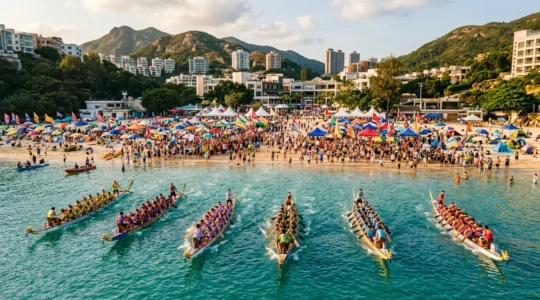
Is the Dragon Boat Festival at Stanley a Sport Event or a Beach Party?
The biggest mistake visitors make at the Stanley Dragon Boat Festival is thinking it’s about boat races. It’s a 30,000-person beach carnival where logistics are the real competition, not the paddling. Your success is measured in staying cool, finding an…
Lire la suite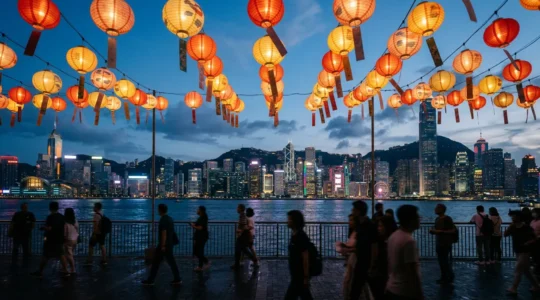
Where Are the Most Instagrammable Lantern Displays for Mid-Autumn?
The most captivating Mid-Autumn photos aren’t taken in the biggest crowds, but through strategic light choreography. The Tsim Sha Tsui promenade offers superior crowd flow and longer display times compared to the chaotic main carnival at Victoria Park. Creating a…
Lire la suite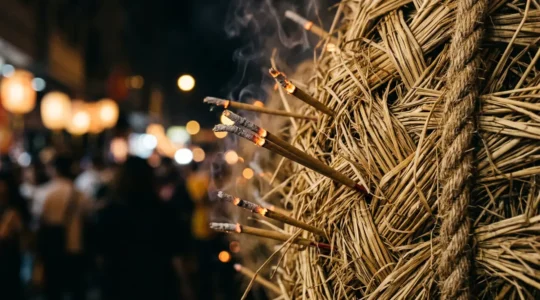
Why Is the Tai Hang Fire Dragon Made of Straw and Incense?
The Tai Hang Fire Dragon is crafted from straw and incense not for spectacle, but as a form of spiritual technology designed to absorb and burn away malevolence. Straw acts as an ephemeral vessel, a temporary body to house the…
Lire la suite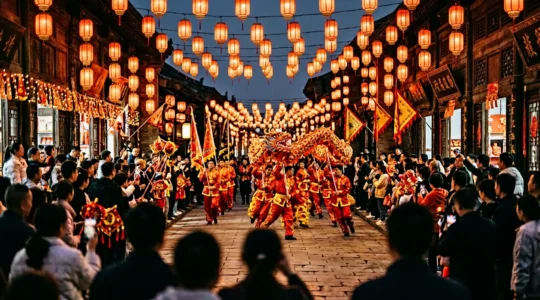
How to Differentiate Between a Lion Dance and a Dragon Dance?
Many believe the difference between a lion and dragon dance is simply the number of performers. This is a surface-level observation. The fundamental distinction lies in their purpose: the lion dance is a demonstration of a martial arts school’s discipline…
Lire la suite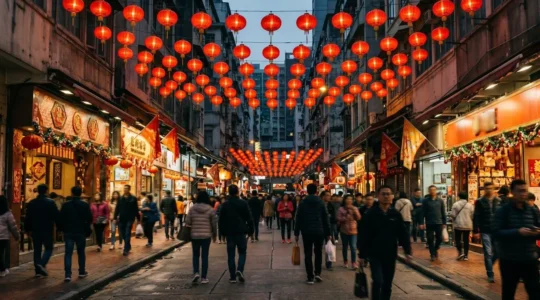
What Shops and Restaurants Actually Stay Open During Chinese New Year?
The key to surviving Chinese New Year in Hong Kong isn’t knowing which shops close, but understanding why they close and using that cultural knowledge as a strategic map. Follow the sound of drums and cymbals; the « Cai Qing » lion…
Lire la suite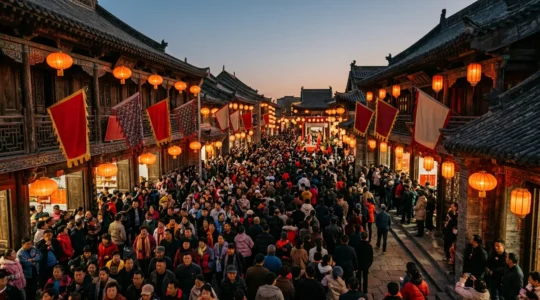
How to See the Bun Scrambling Competition Without Getting Crushed?
Stressed about the massive crowds at the Cheung Chau Bun Festival? The secret isn’t just to ‘arrive early,’ but to understand the island’s logistical pressure points. This guide, from an event security perspective, gives you the strategies to navigate ferry…
Lire la suite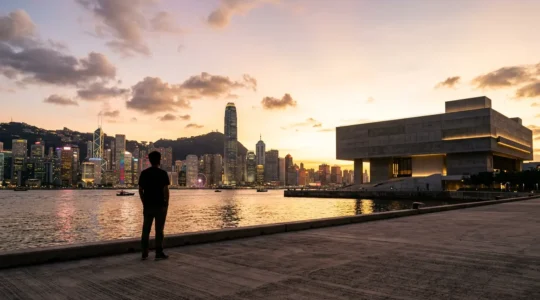
Beyond the Booths: A Consultant’s Guide to Hong Kong’s Art Scene During Art Basel
Art Basel isn’t just a fair to visit; it’s the annual catalyst that unlocks Hong Kong’s entire, dynamic art ecosystem for those who know where to look. The city’s true value for an art lover lies in its incredible diversity,…
Lire la suite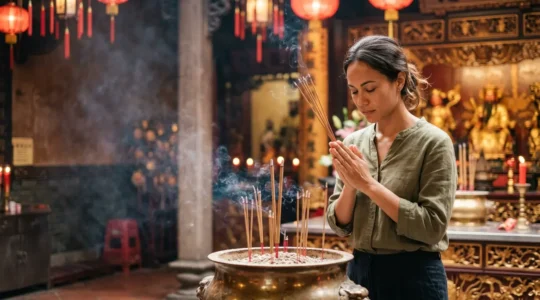
How to Visit a Hong Kong Temple Without Offending Local Worshippers?
The fear of committing a cultural faux pas in a Hong Kong temple stems from not understanding the ‘why’ behind the rituals, not just a lack of rules. Most temples function as either ‘transactional’ spaces for earthly needs (like Man…
Lire la suite