
The key to surviving Mong Kok’s sensory chaos isn’t avoidance, but a psychological shift in perspective.
- Instead of being overwhelmed by the environment, you learn to actively filter and interpret it.
- Specific, practical tactics for shopping and safety become tools for empowerment, not just defense.
Recommendation: Reframe your visit from a stressful ordeal into a fascinating urban exploration by applying simple cognitive techniques to manage the sensory input.
The moment you step out of the MTR station into Mong Kok, the world hits you like a physical force. A tidal wave of people, a cacophony of vendors shouting, the sizzle of street food, and a dizzying forest of neon and LED signs. For an introverted traveler, especially one from a quiet UK town, the first instinct is to retreat. The sheer density of stimuli can trigger an immediate fight-or-flight response, making you feel anxious, exhausted, and desperate for an escape.
Conventional travel advice often feels inadequate here. Tips like « go during off-peak hours » (which barely exist in Mong Kok) or « have a plan » are quickly overwhelmed by the reality on the ground. You are told to be aware of your surroundings, but when your senses are completely saturated, how can you possibly process anything effectively? This environment seems purpose-built to short-circuit a sensitive nervous system.
But what if the goal isn’t to block out the chaos, but to learn how to process it differently? What if you could transform this sensory assault into a manageable, even fascinating, urban symphony? As an urban psychologist, I propose that the solution lies not in building higher walls, but in developing better filters. It’s about consciously managing your attention and reframing your internal experience of the external world. This is a skill, and like any skill, it can be learned.
This guide will move beyond generic tips to provide you with a mental toolkit. We will explore specific, actionable strategies for everything from haggling and spotting fakes to finding quiet moments. Each piece of advice is designed to give you a sense of control and turn you from a passive, overwhelmed victim of the environment into an active, curious observer.
To help you navigate this dense landscape of information and stimuli, this article breaks down the essential skills you’ll need. The following sections offer a detailed look at the specific challenges of Mong Kok’s markets and provide the psychological and practical tools to master them.
Summary: A Strategic Guide to Thriving in Mong Kok’s Bustle
- Why You Should Never Accept the First Price at Ladies’ Market?
- Where to Find the Last Authentic Neon Signs Before They Are Removed?
- How to Distinguish Fake Electronics from Real Deals in Sham Shui Po?
- Which Street Market Is Best for Kitchenware: Shanghai Street or Temple Street?
- What Are the Pickpocket Tactics Used in Crowded Markets Like Mong Kok?
- How to Ensure Your Hotel Room Is Quiet in Such a Noisy City?
- Why Are the « Please Mind the Gap » Announcements So Frequent?
- How to Buy Sneakers on Fa Yuen Street Without Getting Fake Shoes?
Why You Should Never Accept the First Price at Ladies’ Market?
For many introverts, the thought of haggling is profoundly uncomfortable. It feels confrontational, personal, and draining. However, in places like Ladies’ Market, you must reframe this interaction. It’s not a personal battle; it’s a cultural game with established rules. The initial price is simply the opening move, an invitation to participate. Accepting it isn’t just overpaying—it’s declining to play the game, which can be seen as unsavvy.
The psychological trick is to detach your self-worth from the outcome. The vendor expects you to negotiate; it’s a transactional dance, not a judgment of your character. To make it manageable, have a clear maximum price in mind before you start. This transforms the process from an open-ended confrontation into a simple, goal-oriented task. A polite smile and a counter-offer are all that’s required. If the price doesn’t come down to your level, walking away is a perfectly acceptable and powerful move in this game.
Knowing the rules empowers you. It’s not about being aggressive, but about being informed. For most items, vendors expect a negotiation. In fact, a discount of 20-50% from the initial asking price is a common and achievable outcome for shoppers who engage in the process. Viewing it as a structured interaction with a predictable range makes the entire experience less daunting and more of a strategic challenge.
Where to Find the Last Authentic Neon Signs Before They Are Removed?
The iconic neon-drenched cityscape of Hong Kong is, sadly, a vanishing art form. Faced with new building regulations and the rise of cheaper LEDs, the city’s neon heritage is fading. For the overwhelmed traveler, seeking out these signs can be a powerful act of intentional observation. Instead of passively absorbing the visual chaos, you’re on a focused mission—a meditative treasure hunt that gives your journey a purpose and a filter.
This quest transforms you from a tourist into a temporary urban historian, documenting a disappearing world. The urgency is real; urban preservationists have documented that the number of signs has plummeted from over 120,000 before 2010 to fewer than 1,000 today. Your search for these glowing relics becomes a mindful practice, training your brain to pick out specific points of beauty from the overwhelming visual noise.
To begin your hunt, focus on specific zones where these signs still cluster. This turns a city-wide search into manageable segments:
- Mong Kok & Yau Ma Tei: The side streets off Nathan Road, along with Temple Street and Tung Choi Street, are prime territories for classic examples.
- Wan Chai: Lockhart Road, in particular, remains a vibrant gallery of neon, especially around pawnshops and restaurants.
- Jordan: Here you can find older, more characterful signs on smaller, family-run businesses.
For the best photographs, time your visit to the « blue hour »—the 30 minutes just after sunset. The lingering twilight provides a deep blue canvas that makes the neon glow with an ethereal quality.
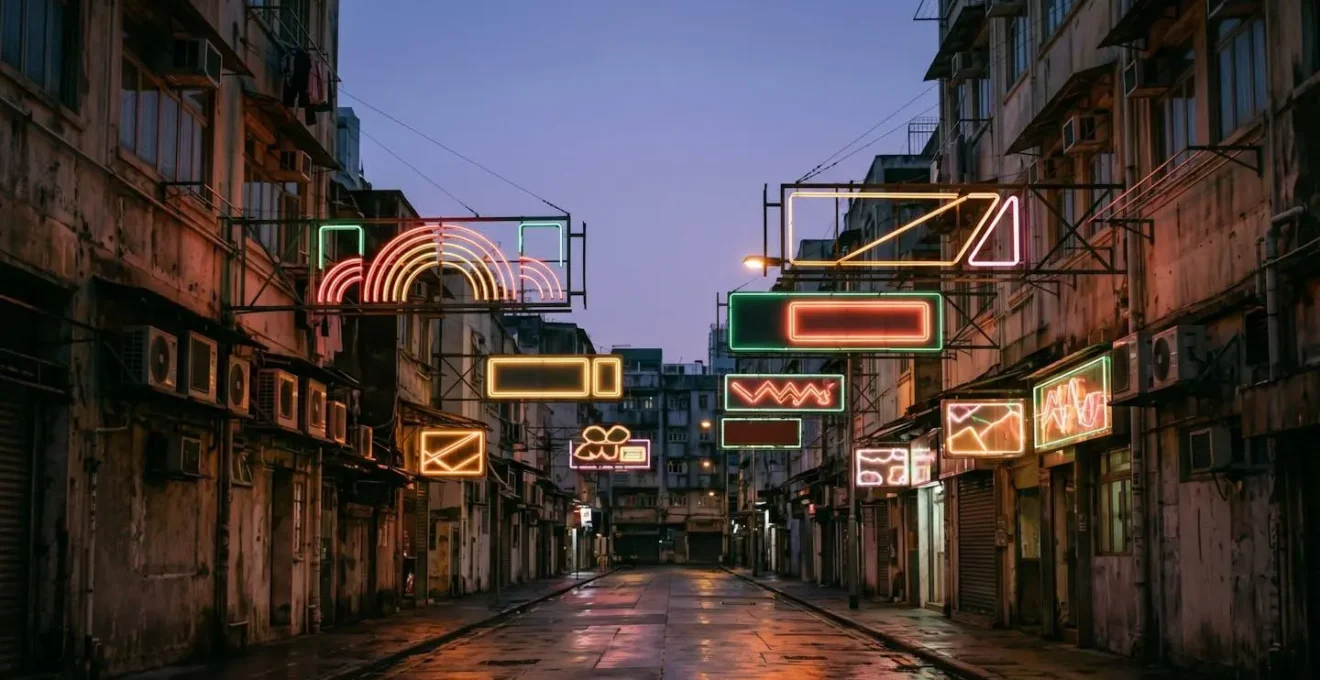
As this image suggests, the interplay between the cool, fading daylight and the warm, artificial glow creates a uniquely poetic and cinematic atmosphere. It’s a moment of calm and beauty that you can actively seek out, providing a perfect psychological anchor amidst the city’s relentless energy. Using a wide-aperture lens or your phone’s portrait mode can help blur the background, isolating the sign and creating that classic, dreamy Hong Kong aesthetic.
How to Distinguish Fake Electronics from Real Deals in Sham Shui Po?
Sham Shui Po is a paradise for tech lovers, but it’s also a minefield of counterfeits. The cognitive load of trying to assess every item for authenticity can be exhausting. The key here is not to rely on vague feelings but to use a structured, systematic approach. This offloads the mental work onto a clear process, a technique known as creating a cognitive script. You follow a set of steps, which reduces anxiety and improves accuracy.
As the professional advisory from the Sham Shui Po Electronics Shopping Guide emphasizes, « For expensive electronics, always verify serial numbers and request official receipts. Established shops display manufacturer authorization certificates. » This advice forms the foundation of a reliable verification process. Instead of trying to remember everything, you can use a simple, repeatable checklist to guide your inspection. This externalizes the memory task and frees up your mental energy to focus on the details.
By following a clear plan, you are no longer just a potential victim; you are an informed inspector. This shift in mindset is crucial for managing the stress of the situation. It’s about taking control through a methodical process, rather than being paralyzed by the fear of being scammed.
Your Action Plan: Verifying Electronics in Sham Shui Po
- Weight & Material Test: Compare the item’s weight and plastic feel against a known genuine product. Fakes are often noticeably lighter or feel cheaper.
- Port Quality Inspection: Examine all ports (USB, headphone, charging). Look for rough edges, misalignment, or a poor finish—tell-tale signs of counterfeit manufacturing.
- Serial Number Verification: Before paying, use your phone to check the serial number on the manufacturer’s official website or verification app.
- Packaging & Print Quality: Scrutinize the box for blurry text, inconsistent colors, or grammatical errors. Low-quality printing is a major red flag.
- Software Boot Test: Ask to power on the device. Watch for slow performance, unusual boot screens, or a clunky user interface that reveals fake firmware.
Which Street Market Is Best for Kitchenware: Shanghai Street or Temple Street?
Decision fatigue is a real threat in a place like Hong Kong, where options are endless. Choosing between two famous markets for a specific item like kitchenware can feel overwhelming. The solution is to define your intent *before* you go. Are you a serious cook looking for professional tools, or a tourist seeking a memorable souvenir? Answering this one question immediately clarifies your choice and conserves mental energy.
Shanghai Street in Yau Ma Tei is a functional supply district. It serves the city’s chefs and dedicated home cooks. The atmosphere is professional, not performative. Here you’ll find legendary shops like Chan Chi Kee, known for its high-carbon steel cleavers and woks. This is where you go for function and quality. The items are often heavy and built to last, reflecting their professional purpose.
Temple Street Night Market, on the other hand, is primarily an entertainment and tourist destination. While you can find kitchen-related items, they are geared towards novelty and gifts—think quirky gadgets, decorative tea sets, or souvenir chopsticks. The experience is about browsing and discovery in a lively, crowded atmosphere. This is where you go for fun and souvenirs.
This pre-emptive decision-making is a form of sensory gating. By clarifying your goal, you give your brain permission to filter out the market that doesn’t fit your needs, effectively cutting the sensory input in half. The following comparison breaks down the choice even further, allowing you to make a quick, logical decision based on your personal priorities.
| Criteria | Shanghai Street (Yau Ma Tei) | Temple Street Night Market |
|---|---|---|
| Primary Audience | Professional cooks & serious home chefs | Casual tourists & gift shoppers |
| Product Quality | Professional-grade: high-carbon steel woks, authentic cleavers, bamboo steamers | Novelty items: quirky gadgets, souvenir chopsticks, decorative tea sets |
| Operating Hours | Daytime (functional supply district for restaurants) | Evening/nighttime (tourist night market) |
| Price Range | Mid to high (quality reflects professional standards) | Budget-friendly (mass-market pricing) |
| Crowd Dynamics | Local restaurant buyers, quieter during weekdays | Dense tourist crowds, especially evenings and weekends |
What Are the Pickpocket Tactics Used in Crowded Markets Like Mong Kok?
For many visitors, the fear of pickpocketing in a dense crowd creates a state of hyper-arousal, which is mentally exhausting and ruins the experience. The psychological goal is to shift from anxious hyper-vigilance to a state of calm, situational awareness. This begins with understanding that while caution is wise, the risk is not as high as your anxiety might suggest. Local travel advisories note that petty crime like pickpocketing is relatively uncommon, even in crowded areas. Knowing this helps to lower your baseline stress level.
The next step is to learn the specific tactics used by thieves. This knowledge is empowering, not fear-inducing. It allows your brain to watch for specific patterns of behavior, which is far less taxing than trying to watch everyone and everything at once. You are no longer scanning for a vague « threat »; you are looking for a few known scripts.
Here are the common tactics and the simple, low-effort defenses against them:
- The ‘Stall and Snatch’: One person creates a sudden blockage or distraction (dropping items, asking for directions) while an accomplice acts from behind. Your defense is to simply maintain a small cushion of space around you in tight aisles.
- The ‘Close-Pass Brush’: A pickpocket deliberately bumps into you in a narrow corridor, using the contact to mask the theft. The defense is to wear your bag cross-body and in front of you, with a hand resting on it naturally.
- Bag Slashing: In extremely dense crowds, a small blade may be used to cut a bag’s strap or bottom. Using an anti-theft bag with slash-resistant fabric and locking zippers completely neutralizes this threat.
- Phone Grabbing: This typically happens near MTR exits or street corners, where a thief can snatch a phone and quickly disappear. Avoid walking while engrossed in your phone; stop in a shop doorway if you need to check directions.
This image demonstrates a key defensive posture: keeping your bag in front and your hand on it. This is not a gesture of fear, but one of casual control.

By adopting these simple, physical habits, you offload the security task from your mind to your body. Your posture does the work, freeing your mind to observe and enjoy the market. This is the essence of transforming anxiety into empowered awareness, a core skill detailed by resources like the pickpocket awareness guides for travelers.
How to Ensure Your Hotel Room Is Quiet in Such a Noisy City?
After a day of navigating the sensory intensity of Mong Kok, your hotel room must function as a true sanctuary for psychological decompression. It’s the place where your nervous system can reset. However, in a 24/7 city like Hong Kong, a quiet room is not a guarantee—it’s something you must strategically plan for. The process of securing your quiet space begins long before you check in.
During the booking process, you can make specific requests that significantly increase your chances of a peaceful stay. Don’t just ask for a « quiet room »; use precise language that shows you understand the sources of noise. This proactive approach puts you in control. It’s also vital to do your own reconnaissance. Use tools like Google Maps’ Satellite and Street View to inspect a hotel’s surroundings. Look for potential noise sources like major bus stops, all-night restaurants, or construction sites that might not be mentioned in the hotel’s description.
Even with the best room, some noise may seep in. You can augment the room’s soundproofing with a simple, lightweight DIY kit. A travel door draft stopper can block significant noise from the hallway. A white noise app on your phone can mask the persistent, low-frequency hum of city traffic. Finally, pressing rolled-up towels against window frames can dampen vibrations. It’s also important to understand the common trade-off in Hong Kong: a stunning « harbor view » often comes with significant traffic noise from the waterfront expressways. A « no-view » room facing an internal courtyard will almost always be exponentially quieter. Prioritize based on what you need most: a view or a good night’s sleep.
Why Are the « Please Mind the Gap » Announcements So Frequent?
For a visitor with a sensitive nervous system, the constant, seemingly redundant « Please mind the gap » announcements on the MTR can feel like just another layer of auditory assault. It’s easy to become irritated by their frequency. However, by understanding the reason behind them, you can perform a powerful act of cognitive reframing: transforming an annoyance into a useful, even calming, anchor.
The announcements are not random. They are a direct and necessary response to two core factors: the MTR’s aging infrastructure and its immense passenger density. Many older stations, especially on the Tsuen Wan line that runs through Mong Kok, were built with curved platforms to fit the city’s tight urban grid. These curves create variable and sometimes significant gaps between the train and the platform edge. When you combine this physical characteristic with the sheer volume of people getting on and off trains that arrive every two minutes, the risk of an accident becomes statistically significant.
The frequent chimes and warnings are therefore a carefully calibrated safety feature, not a thoughtless repetition. Once you understand this, you can re-code the sound in your brain. Instead of hearing it as « more noise, » you can learn to hear it as an « auditory landmark. » It’s a predictable, reliable sound in an otherwise chaotic environment. It tells you exactly where you are in the process of travel, reducing the need to constantly look for visual signs. It becomes a rhythm of the city’s circulatory system.
Case Study: MTR System Design and Passenger Flow
Hong Kong’s MTR is a marvel of efficiency, but its design reflects the era in which it was built. As detailed in guides to the city’s infrastructure like those found on Hong Kong travel portals, the curved platforms of 1970s-era stations pose a continuous safety challenge. The system’s response is a high-frequency announcement strategy calibrated to passenger volume. For the visitor, reframing these announcements as helpful auditory cues—distinguishing the unique chimes for different MTR lines—can turn sensory overload into a navigational tool, reducing the cognitive load of constantly searching for visual information.
Key Takeaways
- The feeling of being overwhelmed is a product of sensory overload; managing it is a skill based on filtering and reframing, not avoidance.
- Transforming from a passive victim to an active observer—with a specific goal like finding neon signs or verifying a product—gives you control.
- Adopting simple, physical habits (like bag position) and using structured checklists offloads mental work and reduces anxiety.
How to Buy Sneakers on Fa Yuen Street Without Getting Fake Shoes?
Fa Yuen Street, also known as Sneaker Street, is another environment that can overload the senses and the intellect. The sheer volume of shoes, shops, and competing claims creates a high-stakes, high-stress situation for anyone trying to find an authentic pair. Just as with electronics, the key to success and sanity is to replace anxious guesswork with a forensic, systematic inspection. You must become a detective, not just a shopper.
Counterfeiters have become incredibly sophisticated, but they almost always cut corners on details that a trained eye can spot. Your advantage lies in knowing exactly what to look for. This transforms the shopping experience from a gamble into a structured analysis. Focus your attention on the subtle markers of quality and authenticity that fakes can rarely replicate perfectly.
This macro-level attention to detail is your best defense. The illustration below shows the kind of micro-details—stitching consistency, material texture—that you should be examining.

A structured checklist, like the one provided by local shopping guides such as The Honeycombers, turns this process into a science. Pay attention to the smell (fakes often have a strong chemical glue odor), the stitching (it should be uniform and tight), and the SKU number (it must match on the box and the shoe’s tongue tag). One of the biggest red flags is price: if a high-heat, limited-edition sneaker is being sold at or below its retail price in a small, independent shop, it is almost certainly a counterfeit.
Ultimately, navigating Mong Kok is a masterclass in managing your own psychology. By applying these strategies—reframing interactions, engaging in intentional observation, and using systematic processes—you can do more than just survive the chaos. You can learn to appreciate its energy, find its hidden gems, and leave with a profound sense of accomplishment rather than a feeling of exhaustion.