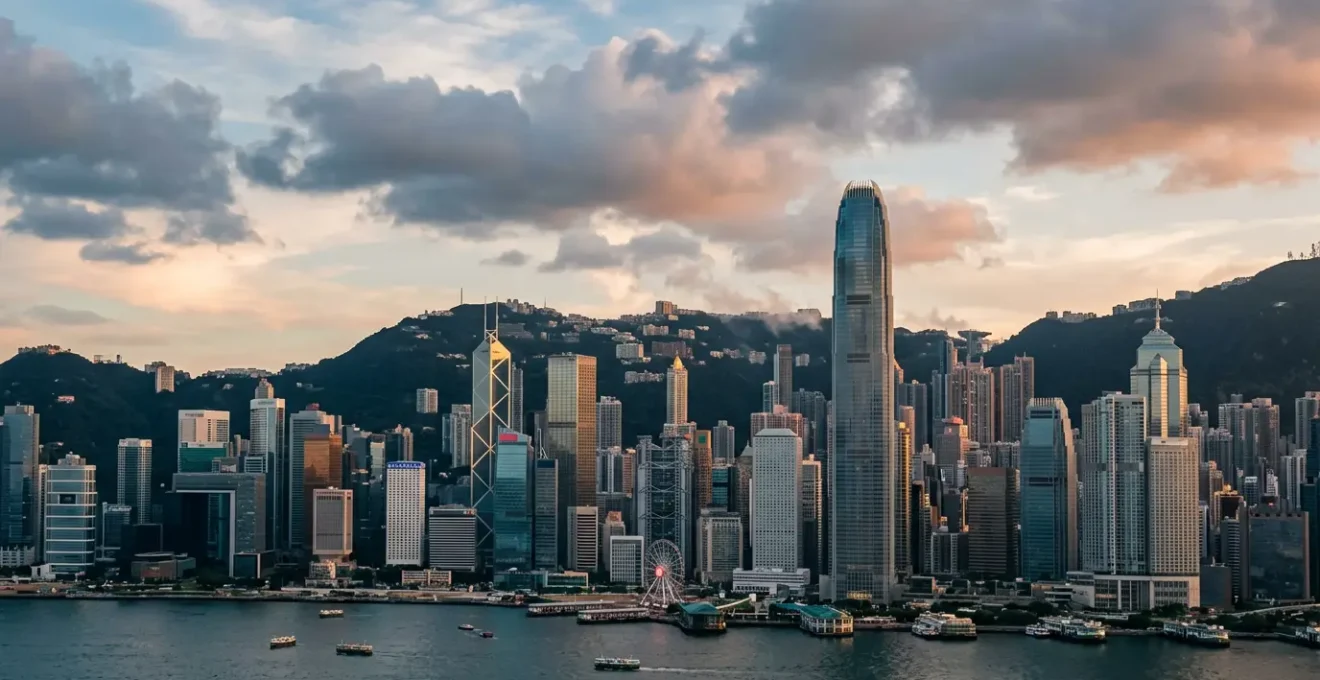
The iconic forms of Hong Kong’s skyline are not mere aesthetic whims; they are elegant solutions to immense structural challenges. This guide deconstructs key skyscrapers to reveal how engineering necessity—from managing typhoon winds to integrating cultural beliefs—dictated their world-famous designs. For an architecture student, understanding this interplay between constraint and creativity is the first step toward true design mastery.
To the casual observer, the Hong Kong skyline is a dazzling spectacle of glass and steel, a testament to wealth and ambition. We see a forest of towers competing for height and attention. Many guides will point out the famous ones, repeating well-worn tales of Feng Shui battles and record-breaking heights. But for us, as students of design and engineering, that is only the surface. To truly appreciate these structures is to look past the facade and see them as brilliant, large-scale physics problems that have been solved in the most ingenious ways.
The real story of this skyline is written in load paths, wind-shear calculations, and material science. Why does one building wear an exoskeleton while another relies on a hollow, rigid skin? How can ancient construction techniques using no nails stand in philosophical contrast to a super-tall tower designed to flex in a typhoon? These are not just design choices; they are answers forged under the immense pressure of geography, culture, and physical laws. This is where architecture transcends form and becomes a masterclass in structural problem-solving.
This analysis will move beyond the superficial to deconstruct the engineering genius embedded within these towers. We will explore how their most distinctive features are direct responses to specific constraints, revealing the hidden logic that every aspiring architect and engineer must understand. By the end, you will see these buildings not just as objects, but as narratives of innovation.
To navigate this structural exploration, we will delve into the specific engineering and design questions that define Hong Kong’s most instructive towers. The following sections break down the ‘why’ behind their iconic forms.
Table of Contents: An Engineer’s Deconstruction of the Hong Kong Skyline
- Why Does Hong Kong Still Use Bamboo Scaffolding for Modern Skyscrapers?
- How Did I.M. Pei’s Design Challenge Traditional Feng Shui Beliefs?
- Why Does the HSBC Main Building Have No Internal Supporting Columns?
- Why Are the Windows of Jardine House Round Instead of Rectangular?
- Which Commercial Towers Have Free Public Viewing Decks on Upper Floors?
- Why Does the HSBC Building Have Cannons Pointing at the Bank of China?
- Why Are There No Nails Used in the Construction of Chi Lin Nunnery?
- Which 3 Skyscrapers Define the Hong Kong Skyline History for Architecture Buffs?
Why Does Hong Kong Still Use Bamboo Scaffolding for Modern Skyscrapers?
At first glance, the sight of bamboo scaffolding encasing a modern glass-and-steel skyscraper can seem anachronistic—a relic of the past clinging to the future. Yet, from an engineering perspective, this practice is a masterstroke of efficiency and material science. The primary drivers are speed and cost-effectiveness. Bamboo is abundant, lightweight, and can be erected and dismantled by skilled teams far more quickly than its steel counterpart, a critical advantage in a city where construction timelines are relentlessly tight. A single worker can carry several poles at once, and the structure is built using simple nylon ties, requiring no heavy machinery.
However, the most compelling reason lies in the material’s surprising structural properties. While steel is strong, it is also heavy and rigid. Bamboo, a type of grass, possesses an incredible combination of flexibility and strength. In fact, its tensile strength—the ability to resist being pulled apart—is remarkable. Some research shows that certain species have a tensile strength of up to 28,000 pounds per square inch (psi), surpassing that of some types of steel. This flexibility allows the scaffolding to bend and absorb wind load during a typhoon, rather than rigidly resisting it, which could lead to catastrophic failure.
This is not an unregulated, informal craft. The practice is so integral to the city’s construction industry that it is governed by a comprehensive and official Code of Practice for Bamboo Scaffolding Safety, first issued by the Hong Kong Labour Department in 2009. This formalization ensures standards for material quality, structural integrity, and worker safety are maintained, proving that this ancient technique has a secure and logical place in modern high-rise construction. It is a perfect example of materiality and constraint driving an optimal local solution.
How Did I.M. Pei’s Design Challenge Traditional Feng Shui Beliefs?
When I.M. Pei’s Bank of China Tower rose in 1990, it was more than an addition to the skyline; it was a profound cultural and architectural statement. From an engineering standpoint, its triangular, cross-braced structure was an innovative and efficient way to resist wind loads while creating a dynamic, crystalline form. The design, an example of structural expressionism, proudly displays its load-bearing frame, celebrating the geometric purity of its engineering. This choice allowed for a lighter structure, using less steel than a conventional tower of its height.
However, this very geometric logic clashed dramatically with the deep-rooted principles of Feng Shui, the traditional Chinese practice of arranging spaces to achieve harmony with the natural world. The sharp, angular forms and the prominent ‘X’ shapes across the facade were seen as deeply problematic. In Feng Shui, sharp edges and points are believed to create negative energy, or ‘sha qi’.
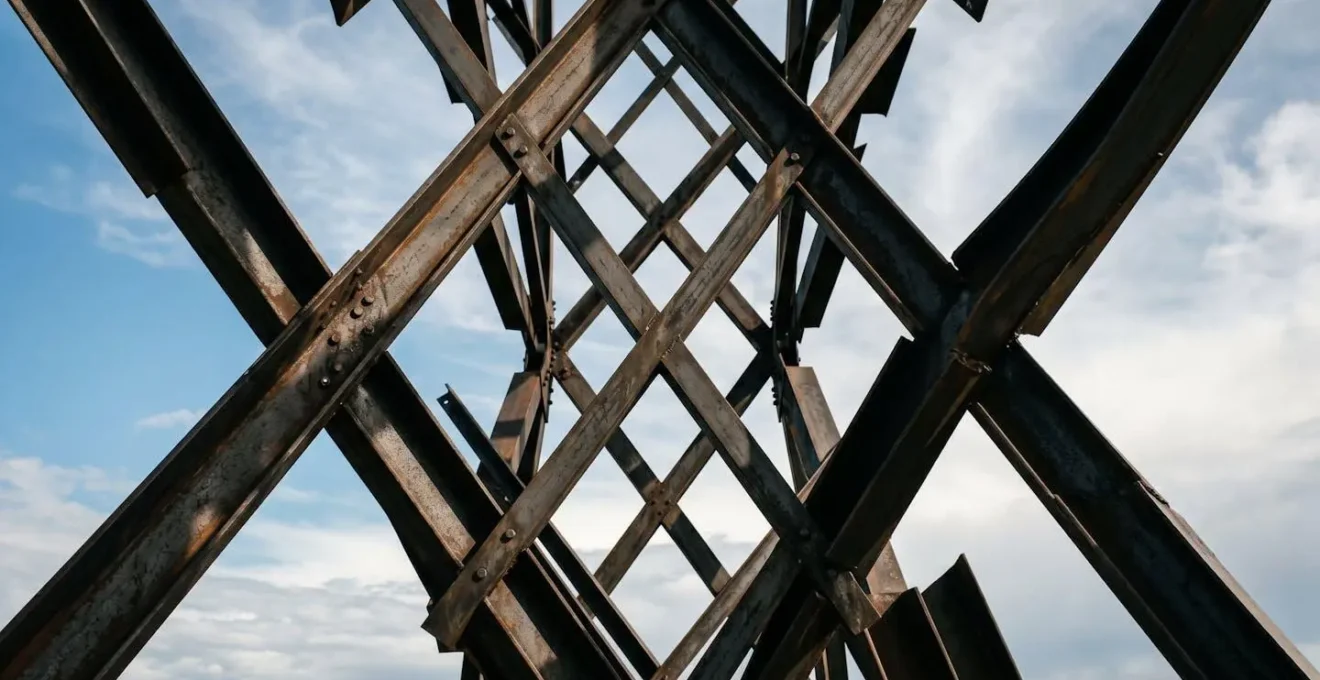
This conflict was not a subtle academic debate; it became a major public controversy, embodying the tension between Western modernism and Eastern tradition. The building’s sharpest corners were perceived as threats aimed at its neighbors. As one analysis vividly describes it:
The seemingly sharp corners of the triangular vertical volume were described by the feng shui masters as akin to knife blades aiming at the building’s neighbors, namely the Government House, the Prince of Wales Barracks, and the HSBC tower.
– CNN Architecture Analysis, How I.M. Pei’s Bank of China tower changed Hong Kong’s skyline
This « Feng Shui war » demonstrates a fascinating instance of cultural-structural symbiosis (or in this case, conflict), where a purely rational engineering solution was imbued with powerful, and to many, negative, cultural symbolism. The Bank of China Tower remains a potent lesson for any architect: a building is never just a structure; it is an intervention into a cultural landscape.
Why Does the HSBC Main Building Have No Internal Supporting Columns?
Norman Foster’s 1985 HSBC Main Building is a landmark of high-tech architecture and one of the most brilliant examples of structural expressionism in the world. Its most radical feature is the complete absence of a central core or internal supporting columns. This creates vast, open, and flexible floor plates, but from a structural engineering perspective, it poses a fundamental question: where do the loads go? The answer is revolutionary: the entire structure is hung from an external frame. It is, in essence, a building turned inside out.
The design features eight massive steel masts, arranged in two rows, from which the floors are suspended via suspension trusses. These trusses, clearly visible on the facade, are grouped in five distinct zones, giving the building its characteristic layered or « wedding cake » appearance. This exoskeleton system transfers all the building’s loads—from its own weight to the forces of a typhoon—to the masts and down to the foundations. This required an immense amount of material, including over 30,000 tons of steel and 4,500 tons of aluminum, all prefabricated and shipped from around the world.
The decision to adopt this incredibly complex and expensive system was not just an engineering flex. It was driven by a powerful design philosophy. By eliminating internal columns, Foster was able to create a soaring ten-story atrium and, most importantly, a completely open public plaza at ground level. This gesture was a core part of the architectural vision, as it symbolically and physically opened the bank to the city. This design choice is a key principle outlined in Norman Foster’s philosophy for the column-free HSBC building. The structure isn’t just holding the building up; it’s actively creating public space and community connection.
Why Are the Windows of Jardine House Round Instead of Rectangular?
Jardine House, completed in 1973, was Hong Kong’s first skyscraper, and its facade of 1,748 circular windows gives it a unique and unforgettable identity. These « portholes » are not a stylistic quirk; they are the direct, visible result of a groundbreaking structural solution designed to combat one of Hong Kong’s greatest engineering challenges: typhoon-force winds. The building’s architect, James Kinoshita, needed to create a structure that was both strong and light, a difficult combination.
The solution was to abandon the traditional beam-and-column frame and instead design the building with a load-bearing skin. The tower’s exterior walls are made of reinforced concrete and act as the primary structural system, much like an aluminum can or a stalk of bamboo—hollow on the inside but incredibly stiff on the outside. This external tube structure is highly efficient at resisting the lateral forces from wind.
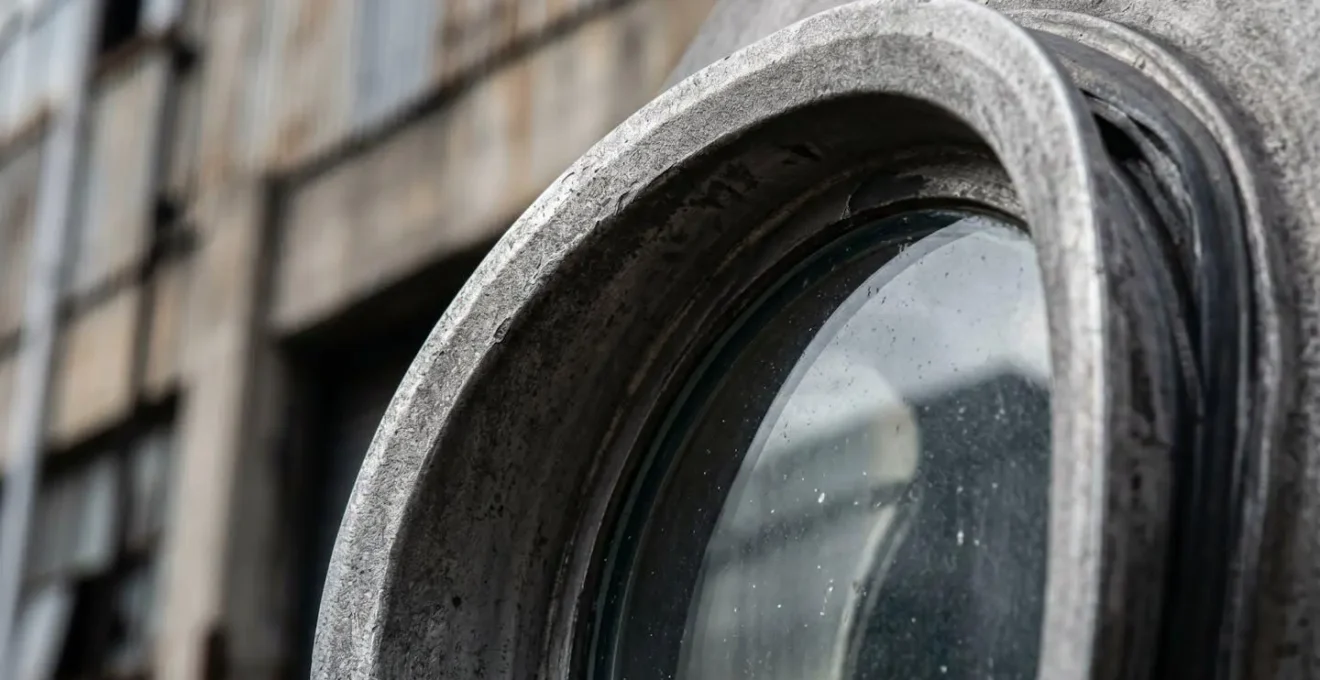
This is where the windows come in. In a load-bearing skin, any opening is a point of structural weakness. Rectangular windows create high-stress concentrations at their corners, which would have required significant and heavy reinforcement around each opening, compromising the lightness of the design. Circular openings, however, distribute stress evenly around their circumference, making them inherently stronger. This allowed for smaller, lighter structural members. The architect himself explained this logic clearly:
Because of that, the building had to be as light as possible, so instead of a beam and column system, we made a kind of skin around it, like a piece of bamboo. It’s hollow inside with a stiff core outside. It turns out this is the origin of the tower’s distinctive porthole windows: bigger windows would have compromised the building’s structural integrity.
– James Kinoshita (Architect), Interview on Jardine House design
Jardine House is a masterclass in how form is dictated by structural necessity. The round windows are not a decorative choice but an elegant engineering answer to the problem of wind, proving that the most iconic architectural features often arise from the most practical constraints.
Which Commercial Towers Have Free Public Viewing Decks on Upper Floors?
While many cities monetize their high-altitude views with expensive observation decks, Hong Kong has a fascinating history of integrating public viewing spaces into its commercial towers. This was often not an act of corporate generosity but a result of clever urban planning regulations. In the past, the government would grant developers « bonus plot ratio »—permission to build higher and add more floor space—in exchange for providing public amenities, including observation floors.
A key example of this policy is the Bank of China Tower. For many years, a small observation deck on its 43rd floor was freely accessible to the public, offering stunning panoramic views of the city. While access policies have changed over time, the building stands as a historical precedent for this public-private trade-off, demonstrating how planning can ensure that the vertical expansion of the city provides a tangible return to its citizens.
Case Study: The Two International Finance Centre (Two IFC)
Another prominent example is Two IFC, the city’s second-tallest building. On the 55th floor, the Hong Kong Monetary Authority (HKMA) maintains an Information Centre that includes an exhibition area and library. While primarily a functional space for the HKMA, it is open to the public and offers breathtaking views from its windows. Visitors typically need to present identification for access, but it remains a free way to experience the city from a significant height, integrated within one of its premier commercial addresses.
Today, the trend has shifted towards ticketed experiences, such as the Sky100 deck in the International Commerce Centre (ICC). As Hong Kong’s tallest building, the ICC represents the pinnacle of super-tall engineering, but its viewing experience is a commercial enterprise. The older model of free, publicly accessible viewing areas in towers like the Bank of China and Two IFC serves as an important reminder for architects and urban planners of a different model of civic integration in high-rise design.
Why Does the HSBC Building Have Cannons Pointing at the Bank of China?
The « Feng Shui war » between the Bank of China (BOC) Tower and its neighbors is one of Hong Kong’s most enduring architectural legends. After the BOC Tower’s « knife blades » were seen as directing negative energy towards the HSBC headquarters, HSBC allegedly retaliated. The story goes that two large, cannon-like structures were installed on the roof of the HSBC building, aimed directly at the BOC Tower to deflect and return the negative ‘qi’. This tale of architectural warfare is a compelling narrative that has become part of the city’s folklore.
However, the engineering reality is both more mundane and, in a way, more brilliant. The « cannons » are not weapons; they are the building’s Building Maintenance Units (BMUs). These are highly sophisticated, purpose-built cranes used for window cleaning and facade maintenance. On a building with such a complex exoskeleton, a simple window-washing cradle would be impossible. These custom-designed BMUs are engineered to navigate the intricate structure, extending and retracting to reach every part of the exterior.
Dual Functionality: Engineering Tool and Symbolic Weapon
The genius of this situation lies in the dual interpretation. The cannon-like appearance of the BMUs, while a result of their mechanical function, provided the perfect symbolic counter-measure in the Feng Shui narrative. This convergence of practical engineering and cultural storytelling is a unique phenomenon. The equipment serves a vital maintenance purpose, yet its form allows it to participate in a powerful cultural dialogue. It’s a perfect example of how an object’s meaning is co-created by its design and the context into which it is placed. For an architect, it’s a profound lesson in how the public reads and interprets architectural forms.
So, while there are no actual cannons, the story endures because the visual evidence is so convincing. It showcases a unique cultural-structural symbiosis, where a piece of maintenance machinery has become an indelible part of Hong Kong’s architectural mythology, serving as a powerful symbolic shield in the city’s spiritual landscape.
Why Are There No Nails Used in the Construction of Chi Lin Nunnery?
In a city defined by steel and concrete, the Chi Lin Nunnery in Diamond Hill stands as a breathtaking counterpoint. Rebuilt in the 1990s, it is a stunning recreation of the temple architecture of the Tang Dynasty (618–907 AD). Its most astonishing engineering feature is that the entire wooden structure is built without the use of a single nail or metal fastener. This is not a stylistic choice, but a faithful adherence to ancient and incredibly sophisticated construction techniques.
The secret lies in a traditional interlocking wooden joinery system known as dougong. This is a complex arrangement of interlocking wooden brackets that are fitted together, piece by piece, to transfer the immense weight of the heavy tiled roof down to the building’s structural columns. Each component is precisely cut to support and be supported by the others, creating a strong yet flexible structural web. The dougong system serves multiple purposes: it supports the roof, reduces the unsupported span of beams, and provides a degree of elasticity that makes the structure surprisingly resilient to earthquakes.
A Living Museum of Ancient Engineering
The Chi Lin Nunnery is more than a place of worship; it is a living architectural museum. The decision to use yellow cedar from Canada and follow the dougong system was a deliberate act of cultural preservation. It serves as a physical library of construction methods that stand in stark philosophical contrast to the force-resistant steel frames of modern skyscrapers. Where a modern tower uses rigidity and brute strength to fight against forces like wind, the dougong system allows the structure to flex and move, absorbing and dissipating energy. It represents a different way of thinking about structure—one based on harmony, balance, and interconnectedness.
For an architecture student, studying the Chi Lin Nunnery is essential. It provides a tangible link to a rich history of engineering that is based on a deep understanding of wood as a material and a different philosophy of structural forces. It is a quiet but powerful reminder that the most advanced technology is not always the most recent.
Key Takeaways
- Structural necessity, especially wind engineering, is the primary author of Hong Kong’s most iconic architectural forms.
- The city’s architectural narrative is a dynamic interplay between Western modernism and traditional Chinese culture, like Feng Shui.
- Hong Kong’s skyline documents a clear evolution in structural systems, from load-bearing skins (Jardine House) to exoskeletons (HSBC) and modern super-tall solutions (ICC).
Which 3 Skyscrapers Define the Hong Kong Skyline History for Architecture Buffs?
While Hong Kong has over 550 buildings taller than 150 meters, a few key towers serve as crucial chapters in its architectural history. For any student of structural design, three buildings in particular trace the city’s remarkable evolution in solving the challenges of building ever higher in a typhoon-prone environment: Jardine House, the HSBC Main Building, and the International Commerce Centre (ICC).
These three towers are not just important for their height or style; they represent a clear progression in wind engineering and structural systems over five decades. They tell the story of a city’s continuous innovation.
1. Jardine House (1973): As the city’s first true skyscraper, it pioneered the concept of a reinforced concrete ‘load-bearing skin’ or ‘tube’ structure. This innovation, visibly expressed through its iconic round windows, created a stiff external frame to resist wind forces while allowing for column-free interior spaces—a radical idea at the time.
2. HSBC Main Building (1985): A decade later, this tower rewrote the rules with its suspended structure and externalized steel ‘exoskeleton’. It took the idea of moving the structure outside to a new extreme, hanging the floors from massive steel masts. This not only solved the wind-load problem but also fulfilled a philosophical goal of creating a completely open public plaza at its base.
3. International Commerce Centre (ICC) (2010): As a modern super-tall skyscraper standing at 484 meters, the ICC represents the current state of the art. Its design incorporates a host of advanced wind engineering strategies, including subtly curved facades to disrupt wind vortexes, massive outrigger systems for stability, and potentially tuned mass dampers to counteract building sway. It is the culmination of decades of research and experience.
Together, these three buildings form a perfect trilogy. They illustrate a clear evolutionary path from an external concrete tube, to a suspended steel exoskeleton, to the complex, integrated systems required for super-tall structures. Studying their differences and the problems each was designed to solve provides an accelerated course in the history of modern skyscraper engineering.
Your Structural Analysis Checklist: 5 Points to Deconstruct Any Skyscraper
- Identify the Primary Structural System: Is it a core-and-frame, a tube system (like Jardine), an exoskeleton (like HSBC), or a hybrid? Look for visual clues on the facade.
- Trace the Load Paths: How does the weight of the building and the force of the wind travel to the ground? Follow the columns, trusses, and bracing.
- Analyze the Materiality: Why were specific materials (steel, concrete, glass, bamboo) chosen? Consider strength, weight, cost, and local availability.
- Investigate the Contextual Forces: What non-structural forces shaped the design? Consider urban planning regulations, cultural beliefs (Feng Shui), or economic factors.
- Question the Form: Why does it look the way it does? Challenge every curve, angle, and detail as a potential answer to an engineering problem.
The next time you stand before one of these giants, or any great building, do not just see it as a static object. Look at it with an engineer’s eye. Ask not just « what is it? » but « why is it this way? ». Your journey to becoming a thoughtful and innovative architect or engineer begins with that simple, powerful question.