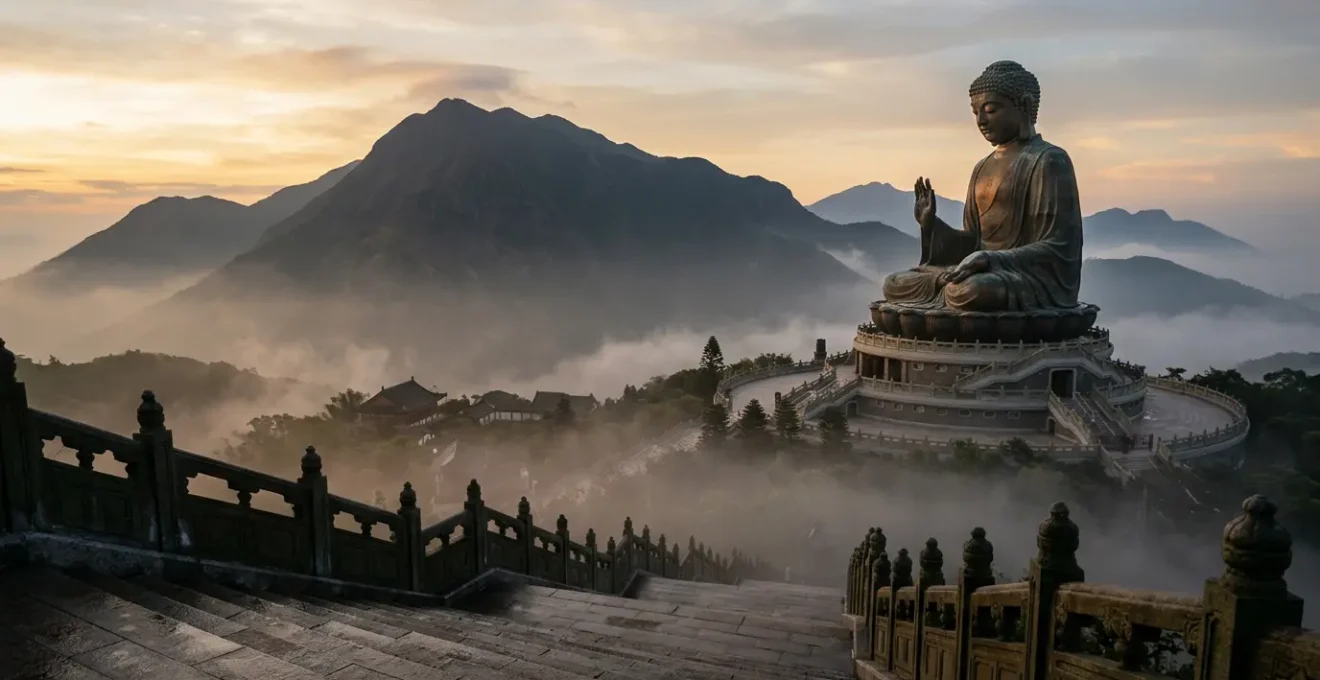
In summary:
- Arriving early is pointless without a precise counter-flow strategy; this is that strategy.
- The Crystal Cabin isn’t for the view, it’s for « queue arbitrage »—a tool to get you to the summit before the main crowd even starts their wait.
- Your first mission upon arrival is to climb the 268 steps immediately, conquering them before the sun gets high and the pathways become congested.
- Use the Wisdom Path and the inner halls of the Buddha as your « sanctuaries » between 11 AM and 2 PM, when the main plaza is at its most chaotic.
Let’s be honest. The idea of a peaceful, contemplative pilgrimage to the Tian Tan Buddha is a beautiful lie sold in travel brochures. The reality for most is a frantic ordeal of queues, selfie sticks, and the constant, deafening hum of a thousand simultaneous conversations. The common advice— »go early to beat the crowds »—is the most dangerous kind of platitude: technically true, but utterly useless without a real plan.
Showing up at 9:55 AM, thinking you’ve outsmarted everyone, is the definition of a rookie mistake. By then, the tour buses are already unloading, and you’re just the first wave of a tsunami of tourists. The secret isn’t just when you arrive; it’s how you use every second of that golden hour before the 10 AM tipping point, when the site transforms from serene monument to chaotic theme park. This isn’t just another guide telling you to buy tickets online. This is a strategic battle plan from someone who has spent years navigating this territory, a counter-flow itinerary designed to give you the experience you actually came for.
This guide provides a step-by-step operational sequence, from choosing the right tool for ascent to identifying tactical retreats when the crowds become overwhelming. We will cover the critical decisions you must make in the first 30 minutes, the hidden sanctuaries to escape to, and the common time-wasting traps you must avoid to preserve your sanity and find a moment of genuine peace.
Summary: How to Actually Beat the Crowds at the Big Buddha (Before 10 AM Is Just the Start)
- Standard or Crystal Cabin: Is the Glass Bottom Cable Car Scary?
- Are the 268 Steps to the Buddha Difficult for Seniors?
- What Is Actually Inside the Base of the Big Buddha Statue?
- Is the Vegetarian Lunch at Po Lin Monastery Worth the Meal Ticket?
- How to Catch the Bus from Ngong Ping to Tai O Fishing Village?
- How Fit Do You Need to Be to Climb the Steps to the Ten Thousand Buddhas?
- What Do the Wooden Columns of the Wisdom Path Actually Signify?
- How to Hike Lantau Peak for Sunrise Without Camping Overnight?
Standard or Crystal Cabin: Is the Glass Bottom Cable Car Scary?
This is your first strategic decision, and it’s not about the view. It’s about queue arbitrage. On a busy morning, standard cabin queues can swell to over an hour, meaning you lose your entire head start. The Crystal Cabin, while more expensive, almost always has a shorter line. Think of the extra cost as paying for time and serenity. A 20-minute shorter queue means 20 minutes of peace at the top before the hordes arrive. The fear factor is manageable; the floor is triple-layer tempered glass. If you’re nervous, sit in the middle and focus on the horizon, not directly down. The real terror should be the thought of arriving at the Buddha’s feet at the same time as three tour buses.
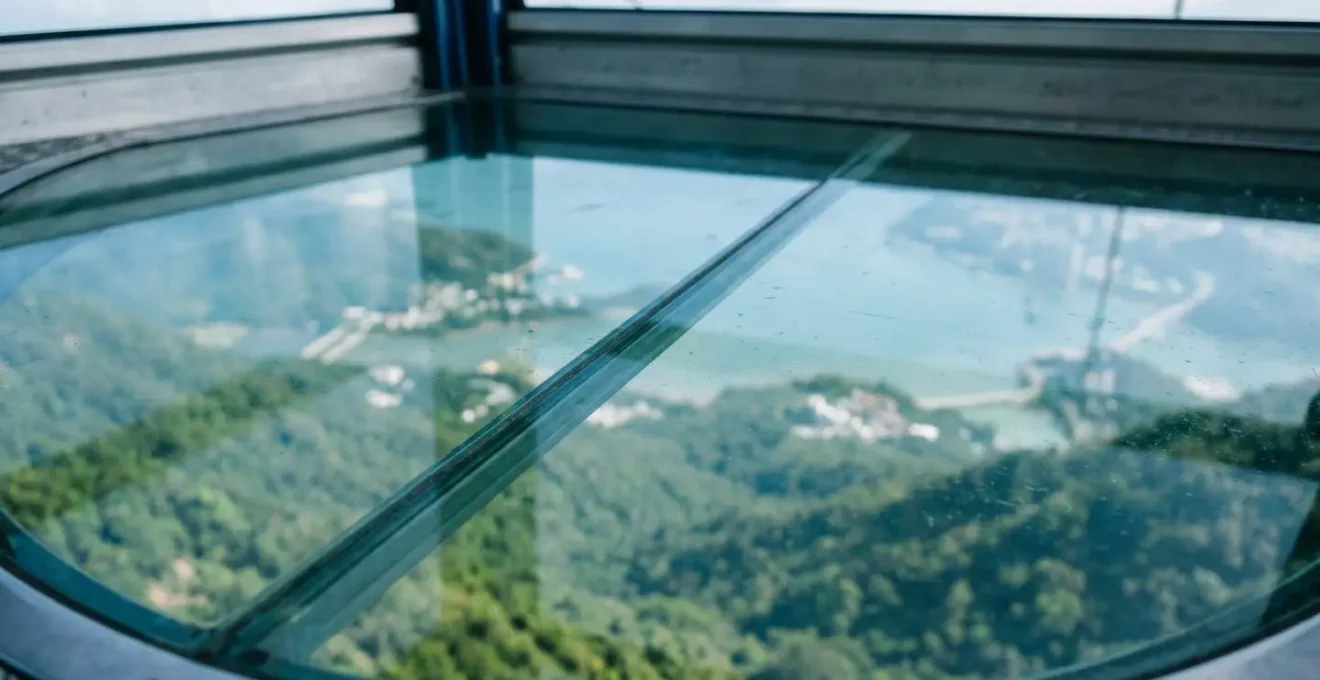
As you can see, the perspective through the floor offers a unique view, but your primary goal is speed. For those with a genuine fear of heights, the standard cabin is the only option. For everyone else, the Crystal Cabin is your express ticket to the top. To make the best choice, consider this breakdown.
| Factor | Standard Cabin | Crystal Cabin | Crystal+ Cabin |
|---|---|---|---|
| Floor Type | Solid metal floor | Glass bottom only | Glass floor + walls (360° view) |
| Queue Time (Peak) | 30-60 mins (up to 2+ hours) | Shorter (every 3-7 mins) | Shortest queues |
| Price (Round-trip) | ~HKD 235-290 | ~HKD 330-390 | ~HKD 400-500 |
| Best For | Budget travelers, fear of heights | Time-savers, moderate thrill-seekers | Premium experience seekers |
| Photography | Side windows only | Floor shots (may have glare/scratches) | Maximum panoramic potential |
| Fear Factor | Low | Medium (glass floor spans full width) | High (fully transparent) |
Are the 268 Steps to the Buddha Difficult for Seniors?
Your first objective upon disembarking the cable car is to ignore the village, ignore the snack stands, and head directly for the steps. Do not hesitate. This is the main event, and you must conquer it before the midday sun and crowds make it a miserable slog. The 268 steps are equivalent to climbing a 15-story building, but the design is merciful, with wide rest platforms strategically placed. For a senior with average mobility, the climb is challenging but absolutely achievable if done smartly. The key is to start before 10 AM when temperatures are cooler and your energy is highest. Use the platforms not just for rest, but as photographic milestones, each offering a slightly different, more intimate perspective of the giant statue looming above. For visitors with significant mobility issues, a small winding road provides vehicle access; don’t be afraid to ask staff for assistance. The base of the stairs still offers a powerful view for those who cannot make the ascent.
Strategic Ascent Plan
- Start Early: Begin the climb before 10 AM to take advantage of cooler temperatures.
- Pace Yourself: Use the first rest platform (around step 50) to hydrate and assess your energy. There’s no prize for speed.
- The Halfway Haven: The platform at step 134 marks the halfway point and offers the best shade and seating. Plan for a 5-minute break here.
- Mindful Motivation: Focus on the changing views of the Buddha as you ascend, turning each platform into a reward.
- Rest at the Top: Once you reach the summit platform, there is shaded seating available. Rest here before you begin exploring the base of the statue.
What Is Actually Inside the Base of the Big Buddha Statue?
This is one of the best-kept secrets for escaping the midday crowds. While thousands jostle for the perfect selfie on the main platform, a serene and fascinating museum lies hidden within the three-story pedestal beneath the Buddha. Entry is not free, but here’s the insider strategy: walk over to the Po Lin Monastery restaurant and purchase a vegetarian meal ticket. This ticket not only guarantees you lunch but also includes free entry to the exhibition halls inside the Buddha’s base. It’s a far better value than paying the separate admission fee. Inside, you’ll find a quiet, air-conditioned space that feels a world away from the chaos outside. The centerpiece is a purported relic of Gautama Buddha, housed in the Hall of Meritorious Merit. Photography is forbidden here, which mercifully forces a moment of quiet contemplation. The other halls contain beautiful calligraphy and paintings depicting the life of the Buddha. Plan to spend 20-30 minutes here between 11 AM and 1 PM, when the outdoor crowds are at their peak. It’s a perfect tactical retreat for history buffs and anyone seeking a moment of genuine peace.
Three-Level Exhibition Guide
- Hall of Universe (First Level): Start here for context. Contains calligraphy and paintings explaining Buddhist philosophy and the life of Buddha Shakyamuni. (10 minutes)
- Hall of Meritorious Merit (Second Level): The spiritual heart of the site. This is where the purported sarira (cremation relic) is housed. A place for quiet observation. (5-10 minutes)
- Hall of Remembrance (Third Level): Features a large ceremonial bell and memorial tablets. It’s a solemn, quiet space. (5 minutes)
Is the Vegetarian Lunch at Po Lin Monastery Worth the Meal Ticket?
The short answer is yes, but for strategic reasons, not just culinary ones. The vegetarian food is simple, hearty, and authentic Buddhist fare—don’t expect Michelin-star cuisine. Its real value lies in providing a structured, peaceful respite from the madness of the Ngong Ping Village food court, which is dominated by familiar but soulless international chains. By purchasing the meal ticket, you are buying your way into a calmer, more authentic experience. Go for the standard set lunch; recent visitor reviews confirm that the deluxe set at around HKD 150 per person includes rice, soup, and a selection of 4-6 shared vegetarian dishes. The key is timing. Avoid the 12:30 PM to 1:30 PM rush. The ideal time to eat is either early at 11:30 AM, right after your initial climb, or later, after 2 PM, when the tour groups have started their descent. This allows you to use the peak crowd hour (midday) to explore quieter areas like the Wisdom Path, and then return for a late, peaceful lunch.
| Option | Price Range | Speed | Authenticity | Vegetarian-Friendly | Strategic Timing |
|---|---|---|---|---|---|
| Po Lin Monastery (Standard Set) | HKD 110-150 | 15-20 mins wait | High (Buddhist tradition) | 100% vegetarian | 11:30 AM or after 2 PM to avoid rush |
| Po Lin Monastery (Deluxe Set for 2) | HKD 300 (HKD 150/person) | 15-20 mins | High (VIP dining room) | 100% vegetarian | Same as standard |
| Po Lin Snack Stand (tau fu fa) | HKD 20-35 | 5 mins | Medium-High | Yes | Anytime – grab and go |
| Ngong Ping Village (Subway/Starbucks) | HKD 50-80 | 10 mins | Low (international chains) | Limited options | Midday peak crowds |
| Ngong Ping Village (Local eateries) | HKD 60-100 | 15 mins | Medium | Some options | Flexible |
| Tai O Fishing Village | HKD 50-120 | 30+ mins (includes bus travel) | High (seafood focus) | Limited | Best after 1:30 PM Buddha visit |
How to Catch the Bus from Ngong Ping to Tai O Fishing Village?
When you can’t stand the sight of another selfie stick, it’s time to execute your escape plan: a trip to the Tai O Fishing Village. This is the perfect « counter-flow » maneuver for the afternoon. The New Lantau Bus Route 21 is your chariot away from the chaos. The bus terminus is a short 5-minute walk from the Big Buddha, but don’t just wander over. The service is infrequent (every 30-60 minutes), and on weekends, the queue can be deceptively long. Your mission is to finish with the Buddha by 1:30 PM to aim for a bus around 2:00 PM. This gives you the full afternoon in Tai O before heading back to Tung Chung. When you board, grab a seat on the left side of the bus. This is non-negotiable. It offers spectacular, unobstructed views of the Shek Pik Reservoir and the South China Sea coastline as the bus winds its way down the mountain. The 25-minute ride is a scenic journey in itself. Be warned, the road is twisty; if you’re prone to motion sickness, be prepared. If you miss the bus or the queue is horrendous, Lantau’s blue taxis are a viable, albeit more expensive, Plan B.
How Fit Do You Need to Be to Climb the Steps to the Ten Thousand Buddhas?
Before we go any further, let me save you from the single most common, soul-crushing mistake tourists make. This question is a trap. The Ten Thousand Buddhas Monastery is a completely different place, located miles away in Sha Tin in the New Territories. It has nothing to do with the Big Buddha on Lantau Island. Every year, countless visitors waste a precious morning trying to find a non-existent path from the Big Buddha to this other monastery. Do not be one of them. As a guide, there is nothing more painful than watching someone’s itinerary fall apart because of this simple geographic error.
The Ten Thousand Buddhas Monastery is in Sha Tin, not on Lantau Island. Don’t confuse it with the Big Buddha when planning your Hong Kong temple visits – they require separate day trips.
– Next Stop Hong Kong Travel Guide, Hong Kong Temple Climbing Guide
So, to answer the question: your fitness level for that climb is irrelevant to your Lantau trip. Acknowledging this distinction is the first step to a well-planned Hong Kong visit. Focus your energy on the single, massive challenge in front of you today: the Big Buddha experience.
What Do the Wooden Columns of the Wisdom Path Actually Signify?
Around 11 AM, the main plaza by the Buddha descends into peak chaos. This is your signal to retreat. Your destination: the Wisdom Path, a 15-minute walk away. This is your ultimate crowd-free sanctuary. The path consists of 38 towering wooden columns arranged in an infinity (∞) symbol, each inscribed with verses from the Heart Sutra, one of Buddhism’s most profound texts. For the layman, the core concept is this: « Form is emptiness, emptiness is form. » It’s a lesson in looking beyond surface appearances to understand that the material and the spiritual are interconnected. But you don’t need to be a philosopher to appreciate the experience. The path is a walking meditation. As you trace the infinity loop, the sheer scale of the columns against the backdrop of Lantau Peak forces a sense of perspective. It’s quiet here. The air is still. You can actually hear the birds. This is the place to find the peace that eludes you at the main site. Use this time, from 11 AM to 2 PM, to linger here and let the tour groups have their frantic moment up at the statue.
Contemplative Walk-Through Guide
- Follow the Trail: Take the clearly marked path from Ngong Ping Village; it’s a pleasant 10-minute walk.
- Walk the Infinity: Enter at the start and intentionally follow the ∞ pattern. Observe the artistry of the calligraphy, even if you can’t read it.
- Find the Viewpoint: Pause at the path’s highest point for the iconic panoramic view of the columns with Lantau Peak behind them.
- Shoot Low: For dramatic photos, crouch down and shoot upwards to emphasize the height of the columns against the sky.
- Seek Solitude: The quietest spot is usually at the far end of the loop, furthest from the entrance. This is your spot for true contemplation.
Key takeaways
- Strategic Ascent: Use the Crystal Cabin for « queue arbitrage » to gain time, not just for the view.
- First Objective: Climb the 268 steps immediately upon arrival, before 10:30 AM, to avoid the dual misery of heat and crowds.
- Counter-Flow Sanctuaries: When the main plaza becomes unbearable (11 AM – 2 PM), retreat to the quiet interior of the Buddha’s base or the meditative Wisdom Path.
How to Hike Lantau Peak for Sunrise Without Camping Overnight?
For the truly committed, those who find even the 9 AM « early » crowd intolerable, there is a final, ultimate strategy: the pre-dawn assault on Lantau Peak. This is not for the faint of heart, but it guarantees you an experience of absolute solitude, culminating in seeing the Big Buddha in the first light of day before anyone else is even awake. The plan involves a night hike, but a successful mission is highly dependent on logistics and weather. A clear sunrise is never guaranteed; experienced Hong Kong hikers report that a clear sunrise above a sea of clouds occurs in only about 30-40% of attempts due to the region’s humidity. More often than not, you’ll get mist or overcast conditions, but the profound silence of the mountain at night is its own reward. The strategy involves ascending Lantau Peak from the Pak Kung Au trailhead and then descending to Ngong Ping, arriving at the Big Buddha around 9:30 AM, fully serene and ready for a quiet moment before the first cable car passengers even arrive.
Your action plan: Night Hike Logistics Checklist
- Pre-book a Lantau Blue Taxi the night before for a 4:00 AM pickup from your Tung Chung hotel to the Pak Kung Au trailhead.
- Pack essential gear: A headlamp with fresh batteries, a windproof layer, at least 1.5L of water, and energy snacks.
- Download offline maps of Lantau Trail Section 3. Do not rely on cell signal in the mountains.
- Check the Hong Kong Observatory website 24 hours prior. Cancel if heavy fog or poor visibility is predicted.
- Plan your descent: After sunrise, take the Ngong Ping trail down (1.5 hours) to arrive at the Big Buddha before the first crowds.
This isn’t just about ticking a box on your Hong Kong itinerary. It’s about outsmarting the system to reclaim a moment of genuine awe. So, take this plan, set your alarm, and go earn your serene experience. The Buddha will be there, waiting for the few who are clever enough to meet him in peace.