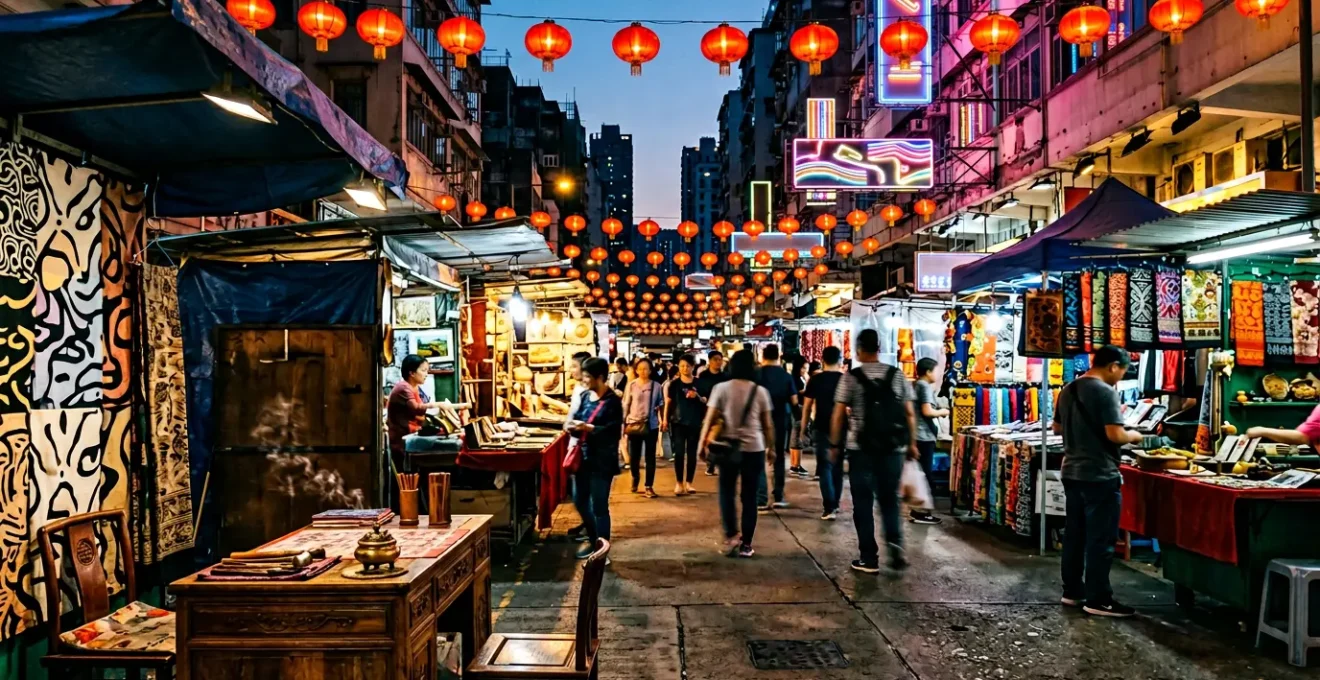
Let’s be blunt: Temple Street Night Market is no longer a place for bargain shopping—it’s a cultural theater, and its value has shifted from cheap goods to un-digitizable experiences.
- The real « purchases » are sensory moments: the sizzle of a claypot, the chaos of bargaining, the scent of herbal teas.
- Most merchandise is skippable; focus on interactive souvenirs and food-related items you can’t find online.
- The experience is a performance. To enjoy it, you must know when to arrive, what to eat, and what to ignore.
Recommendation: Go for the atmosphere, the food, and the fortune tellers, but leave your serious shopping list at home. This guide shows you how.
Every traveler to Hong Kong faces the Temple Street dilemma. You’ve seen the iconic photos: a river of people flowing through canyons of neon, stalls overflowing with trinkets, the air thick with the steam of street food. It promises an authentic, gritty, vibrant slice of the city. But then you hear the whispers from other skeptical travelers: it’s a tourist trap, a gauntlet of cheap plastic junk and counterfeit bags you can get for less on AliExpress. In an era where any product is a click away, is a physical night market like this just an outdated relic?
The standard advice to « bargain hard » and « soak in the atmosphere » feels hollow. It fails to address the core question: has the market lost its soul? Many guides still talk about it as a shopping destination, a place to hunt for deals. This is where the disappointment begins. The truth is, Temple Street has undergone a fundamental value shift. It has evolved from being Hong Kong’s « Poor Man’s Night Club » into a living performance space. Its currency is no longer cheap electronics but the chaotic symphony of Cantonese bargaining, the clatter of mahjong tiles from hidden parlors, and the taste of wok hei that can never be replicated.
Forget thinking of it as an outdoor mall. To truly judge its worth, you must approach it as a cultural theater. Your goal isn’t to fill a shopping bag, but to collect sensory data—an un-digitizable experience that stands in direct opposition to the sterile world of online shopping. This guide is built on that premise. We’ll bypass the tourist traps and show you how to find the authentic performance hidden in plain sight: how to eat safely, decode the fortune tellers, identify the few things worth buying, and understand the rhythm of the market to see it at its peak.
This article provides a critical framework for experiencing Temple Street not as a shopper, but as a cultural observer. The following sections will break down exactly how to navigate its chaos to find genuine value.
Summary: Navigating the Modern Temple Street Experience
- How to Eat Claypot Rice at Street Stalls Without Getting an Upset Stomach?
- Can English Speakers Get Accurate Readings from Temple Street Fortune Tellers?
- What Are the Only 3 Things Actually Worth Buying at a Night Market?
- Why Is It a Mistake to Arrive at Temple Street Before 7 PM?
- Which Night Market Is Less Crowded Than Temple Street but Equally Vibrant?
- Where to Find Trusted Second-Hand Designer Bag Shops in Central?
- Why Are Curry Fish Balls the Most Popular Street Snack in HK?
- How to Eat Street Food in Hong Kong Without Getting Sick?
How to Eat Claypot Rice at Street Stalls Without Getting an Upset Stomach?
The sizzling claypot rice is one of the main acts at the Temple Street theater, but many tourists hesitate, fearing the infamous « traveler’s stomach. » The key to eating safely isn’t luck; it’s observation. Hong Kong’s food hygiene is surprisingly rigorous, and your best defense is to learn how to spot the high-performing stalls. Forget looking for official certificates; instead, learn to read the unwritten rules of Hong Kong street food.
Your primary safety mechanism is heat. The claypot itself, cooked over a roaring flame, is an incredibly safe vessel. The sustained high temperature required to achieve that perfect crispy rice crust (the *fan jiao*) is more than enough to neutralize most pathogens. Your risk analysis should therefore focus on the side dishes and the vendor’s practices. Look for what locals call « hygiene theater »: clear, non-verbal cues that signal a vendor’s commitment to safety. This includes separate hands or tongs for handling money versus food, a rapid turnover of ingredients, and utensils stored in clean, covered containers.
The ultimate vote of confidence comes from the locals. One of the most reliable indicators of quality and safety is the presence of local high school students. If you see a stall mobbed by teenagers in uniform around 4-5 PM, you’ve found a winner. They are the city’s most discerning, budget-conscious food critics, and their repeat business is a stronger guarantee than any travel review. Follow their lead, and you can enjoy the deep, smoky flavor of claypot rice without a second thought.
Can English Speakers Get Accurate Readings from Temple Street Fortune Tellers?
Lining the street near the Tin Hau temple complex, the fortune tellers are a core part of Temple Street’s performance. But for an English speaker, the experience can seem impenetrable. Can you get a « real » reading without speaking Cantonese? The answer is yes, but you must reframe your expectations. You are not there for a specific, literal prediction; you are participating in a cultural tradition.
Many of the more experienced fortune tellers have ingeniously solved the language barrier with a « menu system. » They use binders filled with pre-translated, numbered archetypal phrases and interpretations. You’ll point to your palm, the reader will identify a line, and then point you to a corresponding number in the book that reads something like, « You have a strong sense of justice, but this can lead to conflict with authority. » It transforms the session from a psychic reading into a philosophical dialogue, aligning your personal narrative with traditional Chinese archetypes. It’s less about « Will I get the job? » and more about « What does my character mean for my life’s journey? »
For a smoother experience, opt for modalities that require less complex language exchange. Palm and face readings are highly visual and more easily translated through gestures and the menu system. Fortune-telling via bird-selected sticks or complex numerology can be harder to convey. The key is to ask broad, life-balance questions rather than specific yes/no queries. Approach it not as a quest for a concrete future, but as an interactive way to engage with a rich cultural practice. The « accuracy » lies in the insight you gain from seeing yourself through the lens of a different culture, not in the teller’s psychic ability.
What Are the Only 3 Things Actually Worth Buying at a Night Market?
Let’s be clear: 95% of the merchandise at Temple Street is skippable junk. Phone cases, knockoff watches, and « I ♥ HK » t-shirts are the definition of a tourist trap. In the age of e-commerce, these items offer zero value. So, should you buy anything at all? Yes, but only if it falls into one of three specific categories that online shopping can’t replicate.
The first is the Ephemeral Purchase. This is an item that solves an immediate, situational need. It’s a sweltering humid night and you buy a cheap portable fan. Your phone is about to die and you grab an emergency power bank. Its value isn’t in its quality or longevity, but in its momentary utility. You are buying a temporary solution, and that’s perfectly fine.
The second, and most important, is the Interactive Souvenir. The object’s worth comes not from the item itself, but from the memory of acquiring it. This could be a simple jade bracelet from a vendor you shared a laugh with, a piece of calligraphy you watched being painted, or a tea set you spent ten minutes discussing with the shop owner. The item is a physical token of a human connection—a story you can take home. This is an experience online shopping is fundamentally incapable of delivering.
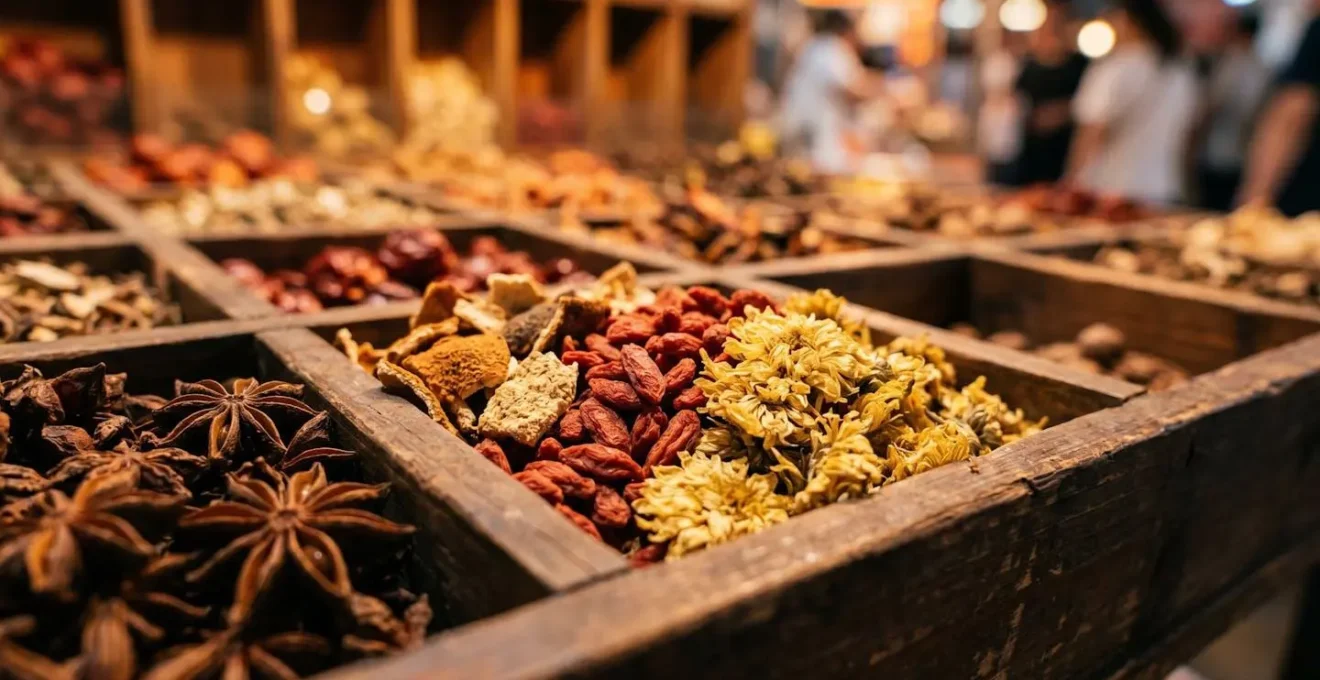
The final category is the Sensory Good. These are products whose value is locked in their taste or scent, making pre-purchase testing essential. Think unique local teas, traditional herbal balms like Tiger Balm, or specialty spices. The ability to smell the tea leaves or test the balm on your skin is the core of the purchasing experience. You’re not just buying a product; you’re verifying its quality with your own senses, creating a moment of pure, un-digitizable physical commerce.
Why Is It a Mistake to Arrive at Temple Street Before 7 PM?
One of the biggest mistakes first-time visitors make is arriving too early. Showing up at 5 PM, expecting the vibrant chaos from the movies, will only lead to disappointment. You’ll find a sleepy street with vendors slowly setting up metal frames, a « behind-the-scenes » glimpse that lacks the iconic energy. Temple Street operates on a two-speed timeline, and the real show doesn’t start until after dark.
The period between 5:00 PM and 7:00 PM is the « Awakening Phase. » While it can be interesting for photographers, it’s not the market experience you came for. The first signs of life appear around 6:00 PM, when the *dai pai dong* (open-air food stalls) fire up their woks. This is the optimal window for an early dinner, allowing you to grab a table for claypot rice before the main crowds descend. However, the merchandise stalls will still be sparse.
The magic truly begins between 7:00 PM and 7:30 PM. As daylight fades, the famous neon signs flicker to life, painting the street in hues of red, blue, and gold. This is the transition to peak vibrancy. Crowd density increases, the symphony of haggling and sizzling woks builds, and the market finally assumes its legendary atmosphere. The period from 7:30 PM to 10:00 PM is prime time. This is when the cultural theater is in full swing, offering the authentic, energetic experience you were promised. The strategic play is simple: arrive around 6:30 PM for dinner, then begin your walk through the market after 7:30 PM as the neon glow fully takes over.
Which Night Market Is Less Crowded Than Temple Street but Equally Vibrant?
For some skeptical travelers, even a well-timed visit to Temple Street can feel overwhelmingly crowded and tourist-focused. With Hong Kong expecting a significant number of visitors— tourism data points towards 44 million visitors in 2024—the desire for a more local, less congested experience is understandable. Fortunately, Hong Kong offers a variety of night markets, each with its own distinct brand of vibrancy.
If you’re seeking local authenticity, your best alternative is the Fa Yuen Street Market in Mong Kok. While it also sells clothes and accessories, its primary audience is Hong Kong residents buying daily necessities. The energy is less theatrical than Temple Street but feels more genuine, offering a real glimpse into local life that runs late into the evening.
For a purely food-focused experience, Graham Street Market in Central is a must-visit. As one of the city’s oldest wet markets, it offers a daytime cornucopia of traditional street food and old-world charm that many feel is more authentic than the night market offerings. If a modern, scenic vibe is more your speed, the Kwun Tong Promenade often features food trucks and pop-up vendors against the stunning backdrop of Victoria Harbour. For a different kind of energy entirely, the Ap Liu Street Market in Sham Shui Po is a haven for tech enthusiasts and vintage hunters, staying open until around 9 PM and offering a fascinating look at second-hand electronics and retro gadgets.
Where to Find Trusted Second-Hand Designer Bag Shops in Central?
After seeing the blatant fakes at Temple Street, you might wonder where savvy locals go for genuine, pre-owned luxury. Don’t even think about buying a « designer » bag from a market stall. Instead, turn your attention to Central’s thriving and highly trusted second-hand luxury scene. Hong Kong has perfected the art of authenticated luxury resale, a world away from the market’s chaos.
The gold standard is represented by chains like Milan Station. As a publicly-listed company on the Hong Kong Stock Exchange, it provides a level of corporate accountability that is unheard of in the resale world. Their business model is built on trust, featuring a comprehensive authentication process, a buy-back policy, and a full refund guarantee if an item is ever proven counterfeit by a brand boutique. This is the polar opposite of a shady market transaction.
To find these legitimate shops, you need to look up. Many of the most trusted retailers are « upstairs shops, » located on the upper floors of commercial buildings in Central, like the World-Wide House or Melbourne Plaza. This business model reduces overhead, allowing for better pricing on authenticated goods. When vetting a shop, look for key trust signals: a long history of physical operation (10+ years), a clearly written authentication and refund policy, and professional staff who conduct thorough inspections of stitching, hardware, and serial numbers right in front of you. This is where the real value is found—in expertise and guaranteed authenticity, not in a dubious market « bargain. »
Key Takeaways
- The primary reason to visit Temple Street in 2024 is for the cultural experience, not shopping. Treat it as a performance.
- The market’s true value lies in un-digitizable moments: the food, the sounds, and the human interactions.
- Food safety in Hong Kong is generally high, but your best strategy is to choose vendors with high heat, high turnover, and a crowd of local customers.
Why Are Curry Fish Balls the Most Popular Street Snack in HK?
Of all the snacks on offer, none is more iconic than curry fish balls (*gaa lei yu daan*). You’ll see them everywhere, bobbing in a golden curry sauce. To the uninitiated, they might seem simple, but their immense popularity is rooted deep in Hong Kong’s history and cultural identity. Understanding the fish ball is to understand the city’s spirit of resourcefulness and adaptation.
The snack emerged in the 1950s out of post-war economic necessity. Street vendors, catering to a working-class population with limited means, ingeniously used inexpensive fish scraps and leftover fish paste to create an affordable, portable protein source. Served on a bamboo skewer, they were the perfect « mobile food » for a city on the move, requiring no utensils and easily eaten while walking. This practical design was crucial to their success in Hong Kong’s fast-paced pedestrian culture.
The flavor profile was equally brilliant. The mild, slightly sweet yellow curry sauce was a gentle introduction to spiciness for the traditionally subtle Cantonese palate. It perfectly embodied Hong Kong’s unique position as a cultural crossroads between East and West. Today, eating curry fish balls is more than just having a snack; it’s a taste of the city’s history. It symbolizes Hong Kong’s incredible ability to create something beloved and enduring from humble beginnings, a treat that remains accessible and enjoyed by everyone, from schoolchildren to business executives.
How to Eat Street Food in Hong Kong Without Getting Sick?
The food is the heart of the Hong Kong street experience, but fear of foodborne illness holds many travelers back. This fear is largely unwarranted. Hong Kong’s Centre for Food Safety is incredibly diligent; a recent report showed a 99.8% satisfactory rate for 66,900 samples tested in a single year. Your job is simply to know how to choose wisely from an already safe pool.
The single most important factor in street food safety is the cooking method. High heat is your best friend. The chart below breaks down the risk levels associated with common preparation styles, providing a simple framework for making safe choices.
| Cooking Method | Safety Level | Examples | Key Risk Factors | What to Look For |
|---|---|---|---|---|
| Steamed/Boiled | Safest | Dim sum, fish balls, rice noodles | Minimal – high temp kills pathogens | Visible steam, food cooked to order |
| Deep Fried | Very Safe | Spring rolls, fried wontons, egg waffles | Very low – oil temperature above 350°F | Active bubbling oil, golden color |
| Stir Fried (Wok Hei) | Safe | Noodles, claypot rice, fried rice | Low when done properly | Visible high flame, wok hei aroma, rapid cooking |
| Grilled/Roasted | Generally Safe | Skewered meats, roasted chestnuts | Medium – depends on internal temp | Char marks, no pink center for meat |
| Pre-Cooked/Room Temp | Highest Risk | Pre-cut fruit, cold salads, unheated garnishes | High – bacterial growth potential | Avoid items sitting out, prefer freshly prepared |
Beyond choosing the right cooking method, you can further minimize risk by adopting the habits of a local. This simple protocol, based on observation and basic hygiene, will allow you to feast with confidence. As a detailed analysis from the Centre for Food Safety shows, simple consumer actions are highly effective.
Your Hong Kong Street Food Safety Checklist
- Apply the School Uniform Test: Identify stalls crowded with students in uniform after school (4-5 PM). Their presence is the single strongest signal of quality, safety, and value.
- Conduct a Utensil Hygiene Check: Observe the vendor’s process. Look for separate tongs for each food type, skewers pulled from clean covered containers, and no cross-contamination between handling money and food.
- Assess the Turnover Speed: Choose stalls that are busy and constantly cooking fresh batches. High ingredient turnover means food isn’t sitting around, which is a key factor in food safety.
- Prioritize High-Heat Cooking: Make steamed, boiled, or deep-fried items your first choice. The cooking temperature is your most reliable safety guarantee. Avoid pre-cut fruit or other items sitting at room temperature.
- Sanitize Before You Snack: Always carry hand sanitizer or wipes. The vast majority of street food stalls do not provide hand-washing facilities, so your own hand hygiene is the final line of defense.
Now that you know how to bypass the traps, find the real value, and eat like a local, you are ready to experience the vibrant, chaotic, and unforgettable performance of Hong Kong’s street life. The next step is to embrace the mindset of a cultural explorer and plan your own sensory adventure.