
While Hong Kong’s tax-free environment offers significant initial discounts on luxury watches, the final « landed cost » for a UK buyer is often much closer to the UK price once hidden fees and mandatory import VAT are factored in.
- The absence of VAT in Hong Kong creates an immediate price advantage, but this is only part of the story.
- Hidden costs like Dynamic Currency Conversion (DCC) and potential warranty issues can quickly erode initial savings.
- A mandatory 20% UK VAT on import is the single biggest factor that levels the playing field, making a seemingly great deal merely good.
Recommendation: Only proceed with a Hong Kong purchase if the discount achieved is greater than the 20% UK VAT plus a buffer for currency fees and potential service costs. For most, the hassle outweighs the marginal savings.
The image is iconic: queues snaking outside Chanel in Tsim Sha Tsui, or a discerning shopper finally acquiring that sought-after Rolex. For British luxury enthusiasts, Hong Kong has long been a Mecca, shimmering with the promise of tax-free shopping. The logic seems simple: with no VAT or sales tax, prices for high-end watches and designer goods must be substantially lower than in the UK. This belief fuels countless « shopping pilgrimage » trips, with buyers hoping to pair a holiday with a savvy investment.
However, this straightforward assumption overlooks a complex web of financial variables. The common advice to « be careful of fakes » or « negotiate a discount » barely scratches the surface. The reality is that the initial price tag is just the beginning of the calculation. Many first-time buyers are caught out by pitfalls that can neutralise or even reverse their expected savings, turning a dream purchase into a costly mistake. The most common misconception is that leaving the country with the watch means you’ve « beaten the system. »
The true question isn’t whether the ticket price is lower, but what the final, « fully landed » cost will be once the item is back on British soil. This guide abandons the simple « yes/no » and instead provides a strategic framework for UK buyers. We will dissect the entire process, from the psychology of scarcity to the hard maths of customs declarations. Our angle is that of a financial consultant: the real saving is made not at the till, but by mastering the hidden variables of currency, warranty, and UK import duty.
This article provides a complete cost-benefit analysis for UK luxury buyers. We will explore the nuances of warranties, payment methods, and negotiation strategies before delivering a final verdict with a step-by-step customs calculation. Read on to discover if that Hong Kong luxury bargain is a financial masterstroke or a fool’s errand.
Summary: The Definitive UK Buyer’s Guide to Luxury Shopping in Hong Kong
- Why Do People Queue for Hours Outside Chanel in Tsim Sha Tsui?
- Will a Camera Bought in Mong Kok Be Covered by Warranty in London?
- Where to Find Trusted Second-Hand Designer Bag Shops in Central?
- Why Is the Landmark Mall Considered the Center of High Society?
- Should You Pay in GBP or HKD When Using a UK Card at Luxury Stores?
- Why You Should Never Accept the First Price at Ladies’ Market?
- Can You Use Your Octopus Card to Place Bets on the Horses?
- Is High Tea at The Peninsula Only for Hotel Guests?
Why Do People Queue for Hours Outside Chanel in Tsim Sha Tsui?
The queues outside luxury boutiques in Hong Kong are not just about a city that loves to shop; they are a physical manifestation of a carefully orchestrated global strategy. For top-tier brands like Rolex and Chanel, scarcity is not a bug in the supply chain, it’s a core feature of the marketing model. As one industry analysis notes, brands like Rolex deliberately restrict supply to maintain prestige and desirability. This manufactured scarcity creates an intense sense of urgency and exclusivity. When a desirable item is available, buyers feel compelled to act immediately, knowing it may not be there tomorrow.
This plays directly into powerful psychological triggers. For the travelling UK shopper, the pressure is even more acute. The limited time of a holiday creates a « now or never » mindset. This is amplified by the Fear of Missing Out (FoMO), a potent driver of consumer behaviour. Seeing others queue validates the item’s desirability and triggers a competitive instinct. In fact, recent research on luxury consumer psychology demonstrates that psychological states like FoMO significantly amplify impulsive consumption, especially among younger, digitally-connected generations who are constantly exposed to what others have.
Understanding this context is the first step for a strategic buyer. The emotional pull and social pressure are part of the brand’s toolkit to encourage a quick, full-price purchase. A savvy consultant, however, recognises this environment for what it is: a sales tactic. The goal is to remain objective, separating the genuine value of the item from the manufactured hype surrounding its acquisition. The queue is a signal of high demand, but not necessarily a signal of a good deal.
Will a Camera Bought in Mong Kok Be Covered by Warranty in London?
While the title asks about a camera, the principle is critically important for luxury watch buyers. The allure of a lower price in Hong Kong can be powerfully compelling, but it may come with a significant hidden cost: the invalidation of the manufacturer’s international warranty. This concept, which can be termed ‘Warranty Arbitrage’, is where the initial saving is traded for a future financial risk. A watch without a valid warranty is, for all intents and purposes, a different and less valuable product.
The distinction hinges on where you buy: from an Authorized Dealer (AD) or the « grey market ». An AD is a retailer officially sanctioned by the brand (e.g., Rolex, Omega) to sell their products. A purchase from a Hong Kong AD, with the warranty card correctly stamped, dated, and registered, will be honoured by the brand’s service centres worldwide, including in the UK. However, many of the « best deals » in Hong Kong are found through grey market dealers. These are unofficial resellers who may offer a brand-new watch at a steeper discount, but this comes with a serious catch regarding the warranty.
This illustration highlights the importance of the official documentation. The intricate details of a warranty card are a key part of the product’s value and authenticity.
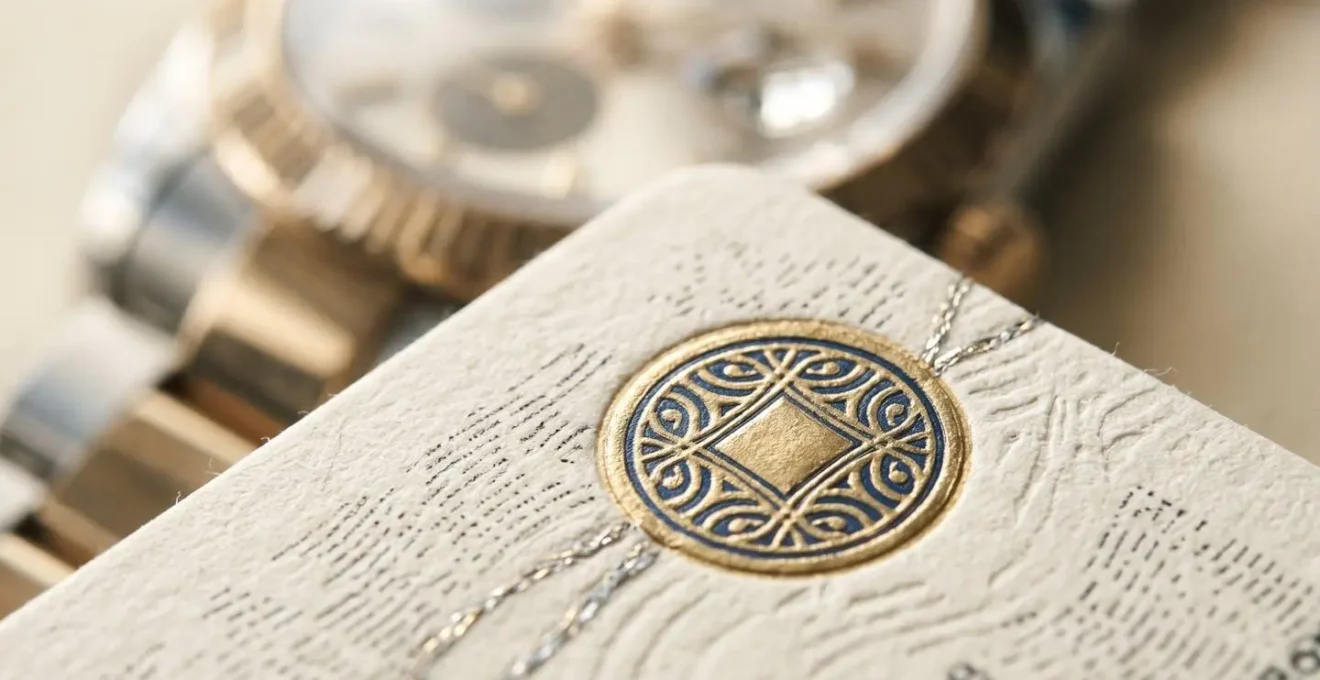
The table below breaks down the crucial differences. A grey market dealer’s « in-store » warranty is effectively useless to a UK buyer once they have returned home. Any issue with the watch would require either shipping it back to Hong Kong at their own expense or paying out-of-pocket for repairs at a UK service centre, potentially negating any initial savings.
The following table, adapted from analysis by experts like those at specialist watch journal Jack Turner Watches, clarifies the risks involved.
| Aspect | Authorized Dealer Purchase | Grey Market Purchase |
|---|---|---|
| Warranty Type | Manufacturer’s international warranty (2-5 years depending on brand) | Seller’s limited warranty only (typically 1-2 years) |
| UK Service Center Recognition | Fully honored with warranty card correctly stamped and dated | Often not valid; may require return to original seller |
| Serial Number Status | Intact and registered with manufacturer | Sometimes removed to protect dealer identity |
| Warranty Activation | Activated at point of sale by AD with official documentation | May not be activatable through official channels |
| Long-term Service Costs | Covered repairs during warranty period | Out-of-pocket costs for any repairs, potentially negating initial savings |
Where to Find Trusted Second-Hand Designer Bag Shops in Central?
Adapting this question for our focus, the savvy UK buyer might look to the pre-owned watch market in districts like Central or Tsim Sha Tsui to find discontinued models or avoid AD waiting lists. Hong Kong has a vibrant and mature second-hand market, offering potential for significant value. However, the risks are magnified. While the UK has established, trusted names for pre-owned luxury, navigating the Hong Kong scene requires a higher level of personal diligence. Here, the burden of authentication falls almost entirely on the buyer.
Unlike buying new from an AD, a pre-owned purchase comes with no guarantee of authenticity from the brand itself. The market is rife with « Frankenwatches » (watches made from a mix of genuine and aftermarket parts) and highly sophisticated fakes. A trusted dealer is paramount, but even then, a « trust but verify » approach is essential. For a high-value purchase, a buyer should never rely solely on the dealer’s word or the accompanying paperwork, which can also be forged.
The key is to become a mini-expert before you even step into a shop. This involves deep research into the specific model you’re targeting, understanding its unique tells—the font on the dial, the finish on the movement, the weight and feel of the bracelet. This is not a transaction for the novice. For a UK buyer, the stakes are higher, as returning a questionable purchase from the other side of the world is a logistical nightmare. Therefore, a pre-purchase authentication plan is not just recommended; it’s a mandatory part of the process.
Your Pre-Owned Watch Authentication Checklist in Hong Kong
- Travel with a loupe to inspect the dial, hands, and lume condition under magnification for any signs of re-finishing, water damage, or poor-quality printing.
- Double-check that the serial and reference numbers match exactly across the watch case (often between the lugs on a Rolex), any accompanying papers, and the warranty card.
- Pay special attention to the bracelet’s authenticity. Steel watch bracelets, particularly on vintage pieces, are often replaced with cheaper aftermarket versions which significantly reduce the watch’s value.
- Insist on having the caseback opened by an independent, trusted watchmaker before finalizing the purchase to verify the authenticity of the movement itself.
- Research current UK market prices for the exact same model and condition to establish a firm negotiation baseline and verify that you are getting a genuine financial advantage.
Why Is the Landmark Mall Considered the Center of High Society?
For the strategic UK buyer, the question isn’t about social status, but about retail strategy. The choice of where to shop in Hong Kong—the opulent, air-conditioned halls of The Landmark in Central or the bustling, high-traffic streets of Tsim Sha Tsui in Kowloon—is a tactical decision that directly impacts negotiation potential. The Landmark, home to the flagship stores of the world’s most prestigious brands, cultivates an atmosphere of pure luxury and exclusivity. Here, the sales process is highly polished, and the concept of « discounting » is often considered crass. The price is the price, and the value is in the premium experience.
Conversely, areas with a higher density of competing Authorized Dealers, such as in Kowloon, can sometimes foster a more competitive environment. While still high-end, the sales approach may be slightly more flexible. This is where a polite, well-researched inquiry about a discount might be better received. However, expectations must be managed. For the most in-demand steel sports models from Rolex or Patek Philippe, the answer will be a firm « no » everywhere. The global demand far outstrips supply, and dealers have long waiting lists of clients willing to pay full price.
This is a contemplative moment many buyers face: deciding whether the experience is as important as the price.

For other brands, or for precious metal versions of popular models, there is often some room for manoeuvre. According to experienced Hong Kong watch buyers on forums like GeoExpat, a discount of 5-15% off the Manufacturer’s Suggested Retail Price (MSRP) can be achievable at authorized boutiques, particularly for brands like Omega, Cartier, or IWC. This discount, however, is the *starting point* of our calculation, not the end. The strategic buyer knows that this initial saving is the figure that will be chipped away at by currency fees and UK import taxes.
Should You Pay in GBP or HKD When Using a UK Card at Luxury Stores?
This question leads us to one of the most critical and often overlooked pitfalls for UK travellers: the Dynamic Currency Conversion (DCC) trap. When you use your UK card abroad, the payment terminal will often present you with a choice: pay in the local currency (Hong Kong Dollars, HKD) or your home currency (Pounds Sterling, GBP). It seems helpful, showing you the cost in a familiar currency. This is a deception. Always, without exception, choose to pay in the local currency (HKD).
When you choose to pay in GBP, you are not getting your bank’s exchange rate. Instead, you are authorising the merchant’s payment processor to perform the currency conversion for you. This service, DCC, is offered at an exchange rate that is significantly worse than the one your own bank or card provider (like Visa or Mastercard) would give you. The markup is pure profit for the processor and the merchant. According to industry analysis, this markup can be anywhere from 3% to a staggering 18% on the transaction value. On a £8,000 watch, a 5% DCC markup would add £400 to your bill instantly, potentially wiping out your entire negotiated discount.
To avoid this trap, you need the right payment tool. Traditional UK high street bank debit and credit cards are often the worst offenders, as they not only expose you to DCC but also charge their own non-sterling transaction fee (typically 2.75-3%) on top. The strategic buyer travels with a dedicated fintech or travel card designed to minimise these fees.
The following table, based on real-world data from consumer advocates like The Points Guy, illustrates the stark difference in total cost for an £8,000 luxury purchase.
| Payment Method | Foreign Transaction Fee | DCC Risk | Estimated Total Cost (on £8,000 purchase) | Recommended? |
|---|---|---|---|---|
| Traditional UK High Street Bank Card | 2.75-3% | High if accepted | £8,220 – £8,640 (with potential DCC markup) | ❌ No |
| Wise Multi-Currency Card | 0.43-0.65% | Avoided by holding HKD | £8,034 – £8,052 | ✅ Yes |
| Revolut (Premium/Metal) | 0% up to limit | Easy to avoid | £8,000 – £8,080 | ✅ Yes |
| UK Credit Card (No FTF) | 0% | Must decline at terminal | £8,000 (if DCC properly declined) | ✅ Yes (with vigilance) |
| Accepting DCC in GBP | N/A | Guaranteed loss | £8,240 – £8,400 | ❌❌ Never |
Why You Should Never Accept the First Price at Ladies’ Market?
While the chaotic energy of the Ladies’ Market is a world away from a hushed Rolex boutique, the underlying principle of negotiation holds true, albeit in a more subtle and structured form. You should rarely accept the first price offered at an Authorized Dealer (AD) either—*if* you are buying the right brand. The key is to abandon the one-size-fits-all approach to haggling and adopt a brand-aware, tiered negotiation strategy. The potential for a discount is not uniform across all luxury watches; it is a direct function of a specific model’s supply and demand.
Attempting to negotiate on a steel Rolex Daytona is not just futile; it marks you as an amateur. The dealer has a long list of clients willing to pay full MSRP and wait years. Conversely, for many excellent watches from brands like Omega, IWC, or Tudor, a discount is often expected and built into the pricing structure. Going in with the right knowledge and a realistic target demonstrates that you are a serious, informed buyer, which dealers respect.
Your negotiation power is also influenced by your timing, payment method, and demeanour. Visiting a store on a quiet weekday morning gives you more of the salesperson’s attention than a hectic Saturday afternoon. Demonstrating genuine product knowledge and expressing long-term interest can build rapport. And as we’ll see in the next section, being able to pay by cash or bank transfer can be a powerful final bargaining chip. The most important tool, however, is always being prepared to politely thank the salesperson and walk away if the price isn’t right.
Brand-Specific Discount Hierarchy at Hong Kong Authorized Dealers
- Tier 1 (Zero Discount): Professional Rolex steel sports models (Submariner, Daytona, GMT) and Patek Philippe steel models. These are typically sold on an allocation list only, and no negotiation is possible.
- Tier 2 (0-5% Potential): Rolex precious metal models and highly sought-after limited editions. A small discount might be possible for a cash or bank transfer payment, but this often requires an existing relationship with the dealer.
- Tier 3 (10-20% Achievable): Omega, IWC, Panerai, Breitling, Cartier. Standard negotiation is expected. Larger discounts are often offered for bank transfers versus credit card payments to avoid processing fees.
- Tier 4 (15-30% Possible): Tudor, Longines, TAG Heuer, Oris. There is significant negotiation room here, especially if you shop on quiet weekdays or towards the end of the month when sales targets are looming.
- Strategy: Visit on weekday mornings, demonstrate brand knowledge, express genuine long-term interest, mention grey market prices as a benchmark (without being aggressive), and always be prepared to walk away.
Can You Use Your Octopus Card to Place Bets on the Horses?
This question, about a ubiquitous local payment method, highlights a crucial aspect of Hong Kong’s commercial culture that extends into the world of luxury goods: the preference for cash. While you can’t buy a Rolex with an Octopus card, the choice between paying by card versus cash (or bank transfer) is a significant strategic decision. This decision is symbolised by the image below: the choice between plastic and paper.

In the UK, large cash transactions are rare and often viewed with suspicion. In Hong Kong, they are a common and often preferred method of doing business, even for high-value items. Luxury watch dealers, like many merchants, are sensitive to credit card processing fees, which can be around 1.5-2.5% of the transaction value. On a £10,000 watch, this represents a significant cost of £150-£250 that the dealer has to absorb. By offering to pay via bank transfer or cash, you are effectively handing that saving back to the dealer, which can be a powerful tool in your final negotiation.
This preference often creates a two-tiered pricing structure, as detailed in the case study below. The « card price » and the « cash price » are different. A final, extra discount of 2-5% can often be unlocked simply by asking, « What is the best price for a bank transfer? » This can add hundreds of pounds to your total savings.
Case Study: Cash Transactions and Discount Incentives
As noted by guides for international buyers, Hong Kong dealers demonstrate a strong preference for cash or bank transfer. This often creates a two-tier pricing system. For example, a watch with a negotiated price of HKD 80,000 on a credit card might be offered at HKD 77,000 (a further 3.75% discount) for an instant bank transfer. This is particularly true for purchases above HKD 50,000. However, UK buyers must balance this potential saving against the security risks of carrying large amounts of cash and, crucially, the potential for increased scrutiny from UK customs upon return if they cannot provide a clear electronic payment trail for their declared goods.
Key Takeaways
- The initial tax-free price in Hong Kong is only the start; the true cost is the final ‘landed’ price in the UK.
- Hidden fees from Dynamic Currency Conversion (DCC) and lack of international warranty can erase any discount.
- The mandatory 20% UK VAT on import is the great equalizer and must be factored into any budget.
Is High Tea at The Peninsula Only for Hotel Guests?
Just as anyone can enjoy high tea at The Peninsula, any UK resident returning with a high-value item from abroad can expect a non-negotiable meeting with His Majesty’s Revenue and Customs (HMRC). This is the final, and most important, part of our calculation: the « Red Channel Reality Check. » The belief that you can just wear a new watch on your wrist and stroll through the green « Nothing to Declare » channel is a dangerous fantasy. It is also illegal. Failing to declare goods over your personal allowance is tax evasion, and UK Border Force officers are highly trained to spot it.
The process of declaring your purchase is straightforward and non-negotiable. Upon arriving in the UK, you must declare any goods that exceed your £390 duty-free allowance. For a luxury watch, this means heading to the red « Goods to Declare » channel or using the government’s online declaration portal in advance. The maths is simple and brutal for the unprepared buyer: UK customs regulations mandate that travelers must pay a 20% VAT on the full value of the watch. There is also a customs duty, which for watches is capped at a small amount, so the main figure is the 20% VAT.
This final step is where many « great deals » fall apart. A 15% discount achieved in Hong Kong is completely wiped out by the 20% VAT bill you have to pay upon landing. The actual saving is the difference between the Hong Kong discount and the UK VAT rate. This makes the negotiation phase and avoidance of other fees absolutely critical. Only a substantial discount in Hong Kong makes the entire exercise worthwhile from a purely financial perspective.
Your Complete UK Customs Declaration Calculation
- Step 1: Calculate the watch purchase price in GBP at the actual exchange rate used for the transaction (e.g., HKD 80,000 ÷ 9.8 = £8,163).
- Step 2: Add 20% VAT on the full purchase price. In this example, £8,163 × 0.20 = £1,633 in VAT is due to HMRC.
- Step 3: Calculate the Total UK Landing Cost. This is the Purchase Price + VAT. Here, £8,163 + £1,633 = £9,796.
- Step 4: Compare this Total UK Landing Cost to the price of the same watch from a UK authorized dealer (including VAT) to determine your true, final saving.
- Step 5: Complete the Red Channel declaration at the UK airport with your proof of purchase, or use the official online declaration portal within the required timeframe before you travel.
- Critical Reality Check: A watch bought with a 15% discount in Hong Kong might cost £6,940 (vs a UK pre-VAT price of £8,163). After adding the £1,388 UK VAT (20% of £6,940), the final landed cost is £8,328. This may offer little to no saving over simply buying in the UK with full local support and no hassle.