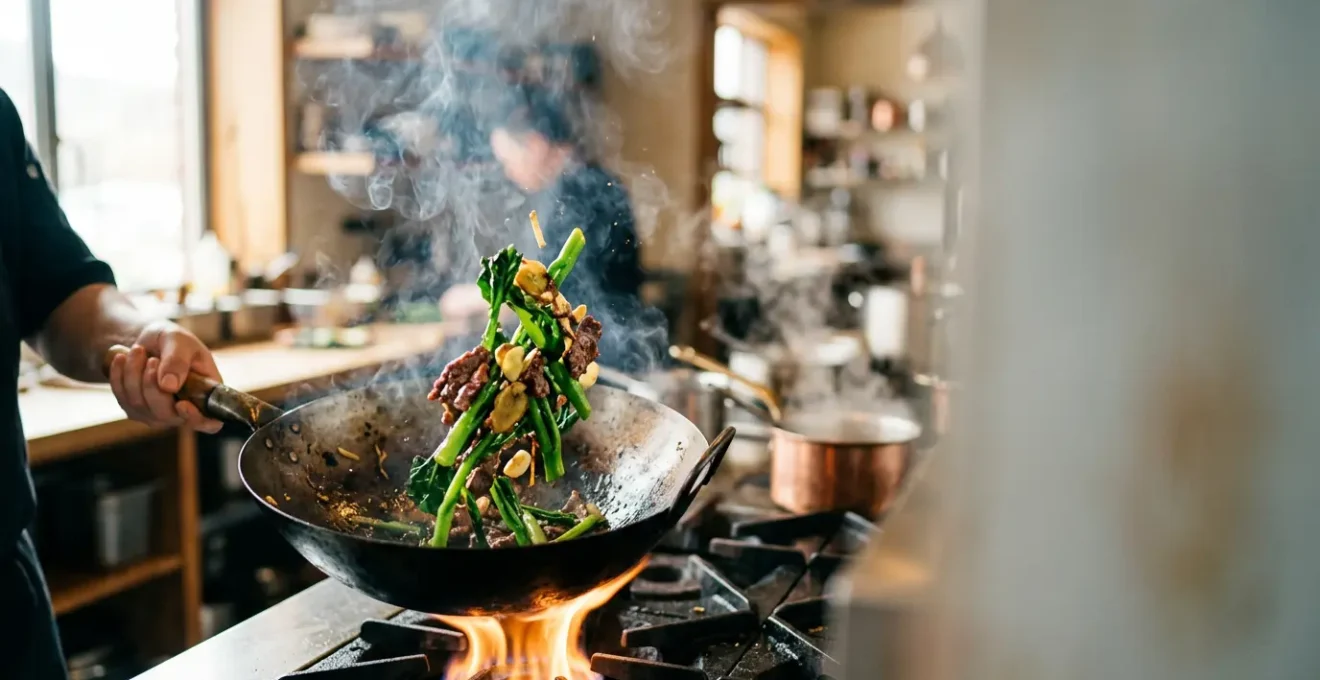
Most believe « wok hei » is just a smoky flavor. In truth, it’s the ultimate expression of a Cantonese chef’s mastery over extreme heat, a philosophy of controlled violence that creates unparalleled aroma and texture. This culinary ideal of intense energy stands in deliberate contrast to the cuisine’s other pillar: the gentle, refined art of flavor preservation found in steaming and slow-cooking, revealing a profound duality at the heart of every Cantonese meal.
Walk into any authentic Cantonese kitchen, and you will feel it before you taste it: a sudden, explosive roar of a jet engine-like burner, the percussive clang of a metal ladle against a carbon steel wok, and an intoxicating, fleeting aroma that is so much more than just smoke. This is the essence of wok hei, often translated as the « breath of the wok. » But this translation, while poetic, barely scratches the surface. It’s not just a flavor; it’s a tangible energy, a testament to a chef’s skill, and a cornerstone of our culinary philosophy.
Many aspiring cooks and food lovers chase this elusive quality, believing it comes from simply using a powerful burner or a well-seasoned wok. While high heat is a prerequisite, true wok hei is a complex dance of thermodynamics and technique. It is the result of a series of rapid chemical reactions—the Maillard reaction and caramelization—supercharged by intense heat, creating a flavor profile that is simultaneously savory, slightly sweet, and deeply aromatic. It is the signature of a perfectly executed stir-fry, where vegetables remain crisp-tender and meat is succulent and seared.
But to truly understand wok hei is to understand its place within the broader spectrum of Cantonese cooking. It represents the yang—the fiery, active, and intense principle. This stands in beautiful contrast to the yin—the gentle, slow, and nurturing techniques like steaming and double-boiling that are equally revered. Wok hei is not an isolated trick; it is one half of a complete culinary worldview, a philosophy of balance that manifests in everything from choosing a live fish to the proper way to hold one’s chopsticks.
This guide will take you beyond the simple definition of wok hei. We will explore this culinary duality by answering questions that reveal the deeper principles at play. By understanding the contrast between fiery intensity and gentle refinement, you will learn not just what wok hei is, but how to recognize and appreciate the masterful skill behind every truly great Cantonese dish.
Summary: What Is « Wok Hei » and How Can You Taste It in a Stir-Fry?
- How to Choose a Live Fish from the Tank at a Seafood Restaurant?
- Why Do Cantonese Meals Always Start or End with Slow-Cooked Soup?
- What Are the Taboos of Using Chopsticks During a Family Meal?
- Why Is Cantonese Food Less Spicy Than Szechuan or Thai Cuisine?
- Roast Goose or Roast Duck: Which Is the True Hong Kong Specialty?
- Which Street Market Is Best for Kitchenware: Shanghai Street or Temple Street?
- How to Tell Sweet Zongzi from Savory Zongzi Before Unwrapping?
- How to Tell If a Shrimp Dumpling Skin Is Too Thick or Just Right?
How to Choose a Live Fish from the Tank at a Seafood Restaurant?
Choosing a live fish at a Cantonese seafood restaurant is not about picking the biggest or most exotic specimen. It is the first step in a culinary decision-making process rooted in the philosophy of preserving yuanwei, or the « original flavor » of the ingredient. A chef’s primary consideration is how the fish’s texture and fat content will respond to a specific cooking method, most often steaming.
From a chef’s perspective, the ideal fish for steaming has delicate, tender flesh that cooks quickly and absorbs the subtle aromatics of ginger, scallion, and light soy sauce. This is why species like sea bass, grey sole, or flounder are highly prized. Their fine texture would be destroyed in the high-heat violence of a wok. When you select your fish, look for clear eyes, vibrant red gills, and lively movement—all signs of freshness that will translate into a cleaner, sweeter flavor when steamed. The goal is not to mask the fish’s taste but to elevate it with utmost subtlety.
Conversely, fish with firmer, more robust flesh, such as blackfish (tautog), are less suited for the gentle art of steaming. Their structure can withstand the intense, rapid heat of a wok, making them better candidates for stir-frying or braising, where they can develop a slight char and absorb a richer sauce without falling apart. As culinary tradition dictates, the most pristine seafood is best cooked by steaming to honor its natural qualities. Therefore, the choice you make at the tank is a collaboration with the chef, deciding together on the best way to celebrate the ingredient’s inherent character.
Why Do Cantonese Meals Always Start or End with Slow-Cooked Soup?
If wok hei represents the fiery, instantaneous, and ‘yang’ energy of Cantonese cuisine, then slow-cooked soup, or lo foh tong (老火湯), is its profound ‘yin’ counterpart. The tradition is so deeply ingrained that, as doctoral student Yao Limei noted in Whetstone Magazine, « One would rather eat a meal without meat than one without soup. » This is not merely an appetizer; it is a bowl of philosophy, embodying the principles of nourishment, patience, and balance.
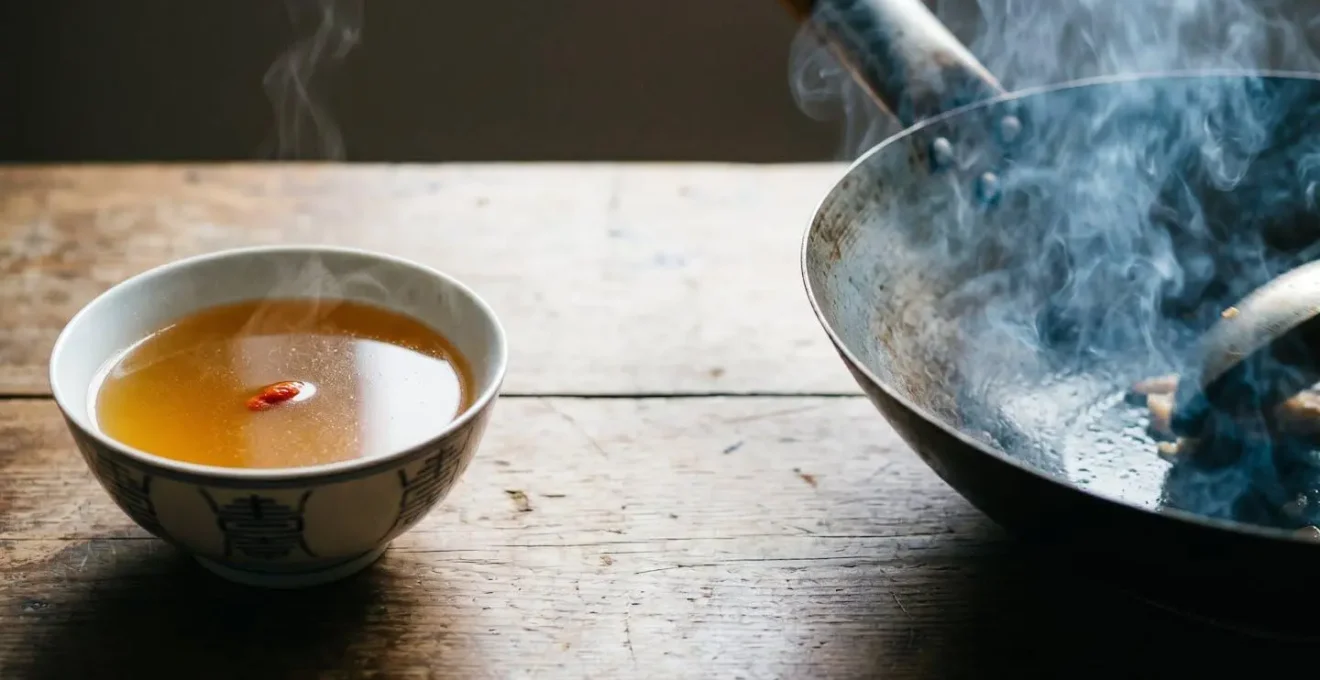
Unlike the rapid, high-heat alchemy of the wok, these soups are simmered for hours over a low, gentle flame. This slow extraction process coaxes out the deepest flavors and nutritional essence from ingredients like pork bones, chicken, and a carefully curated selection of Chinese herbs. The result is a broth that is not just flavorful, but is believed to have restorative properties, designed to balance the body’s internal energy. Serving it at the beginning of a meal prepares the palate and stomach, while serving it at the end provides a soothing, harmonious conclusion.
This practice is the most tangible expression of the culinary duality that defines Cantonese cooking. The aggressive, searing heat of a stir-fry is deliberately balanced by the gentle, nurturing warmth of a soup. One technique creates flavor through intense, rapid transformation, while the other builds it through slow, patient melding. Experiencing a Cantonese meal without both is to only see half of the picture. The soup provides the calm, foundational bass note against which the thrilling, high-pitched melody of wok hei can truly shine.
What Are the Taboos of Using Chopsticks During a Family Meal?
The « controlled violence » of the wok might seem chaotic, but it exists within a culinary culture that deeply values order, respect, and harmony at the dining table. Chopstick etiquette is the most visible manifestation of this principle. These are not arbitrary rules; they are a code of conduct designed to show respect for elders, fellow diners, and the food itself. Mastering them is as much a part of appreciating the cuisine as developing a palate for wok hei.
The most serious taboo is sticking chopsticks vertically into a bowl of rice. This practice visually mimics incense sticks burned at funerals and is considered a powerful omen of death. Similarly, using chopsticks to point at people is accusatory and rude, akin to pointing a finger. Stirring or « digging » through a communal dish to find a preferred morsel is seen as greedy and unhygienic, a breach of the communal spirit of the meal. Even the sound they make is important; tapping chopsticks on the side of a bowl is associated with the sound of beggars seeking alms and is thought to bring bad luck.
These customs underscore the cultural emphasis on discipline and consideration, providing a structured and respectful framework for the dining experience. It’s a quiet choreography that contrasts sharply with the dynamic, individualistic performance of the chef at the wok. One is about communal harmony, the other about singular, masterful execution.
Your Action Plan: Auditing Chopstick Etiquette
- Placement & Pointing: When gesturing or resting, observe where your chopsticks point. Are they ever aimed at another person or left askew? The goal is to always show respect.
- Food Interaction: Review how you take food from a communal plate. Do you search or dig for the best piece? Practice taking the piece closest to you to show consideration.
- Vertical Sticking: Audit your habits when pausing. Do you ever leave chopsticks standing upright in your rice bowl? Always rest them on the provided holder or flat across the bowl’s rim.
- Sound & Noise: Pay attention to unconscious tapping. Do you drum your chopsticks on the table or bowl when thinking or waiting? Cultivate silence to demonstrate politeness.
- Post-Meal Placement: After finishing, check how you leave your chopsticks. Are they crossed or separated? Place them neatly together on the rest to signify you are finished.
Why Is Cantonese Food Less Spicy Than Szechuan or Thai Cuisine?
The restrained use of spice in Cantonese cuisine is not a failure of imagination but a deliberate philosophical choice. While Szechuan and Thai cooking masterfully use chili and other potent spices to create complex, multi-layered flavor profiles, the Cantonese approach is centered on the principle of yuanwei (原味)—the « original flavor » of the ingredients. The goal is to elevate, not mask.
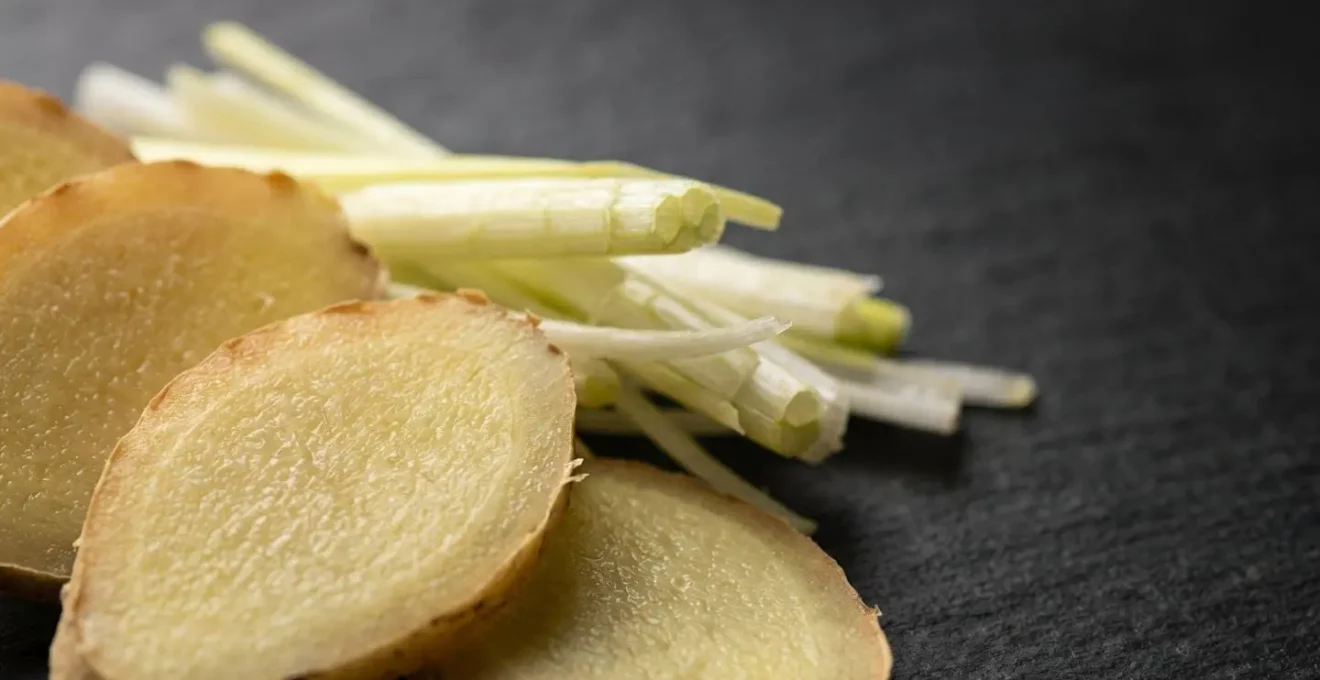
From a chef’s point of view, the highest-quality ingredients—a freshly caught fish, a tender young chicken, or crisp bok choy—possess a delicate, natural sweetness that is a treasure to be preserved. Overpowering these with intense spice would be considered a failure of the chef’s primary duty: to honor the ingredient. Instead, we use a subtle arsenal of aromatics like fresh ginger, spring onions, garlic, and high-quality soy sauce. These are used to accentuate and complement the food’s natural taste, adding depth without obscuring its essence.
This philosophy is why sourcing the freshest ingredients is paramount. The entire culinary system is built on the assumption that the base ingredients are of exceptional quality. As culinary guides often document, the philosophy emphasizes minimal spice usage to highlight the food’s intrinsic character. Wok hei itself is a perfect example of this. The smoky aroma doesn’t mask the flavor of the beef or broccoli; it envelops it, adding a new dimension of complexity while allowing the ingredient’s original taste to be the star. It is flavor enhancement, not flavor replacement.
Roast Goose or Roast Duck: Which Is the True Hong Kong Specialty?
While both roast goose and roast duck are beloved staples of Cantonese siu mei (燒味), or roast meats, roast goose holds a special place as the quintessential Hong Kong specialty. The distinction lies in the richness of the meat and the resulting texture of the skin. A goose has a higher fat content and a more robust, gamier flavor, which renders down during the slow-roasting process to create an exceptionally fragrant, juicy meat and a skin that achieves an almost glass-like crispness.
The preparation is a multi-step art form. As described by Travel China Guide, « The cleaned goose is blow up, scald with boiled water, coated with seasonings and sugar water, and then roasted. » This process of « blowing up » separates the skin from the fat, allowing it to become incredibly brittle in the oven, while the scalding and coating help create that signature deep mahogany color. This meticulous, patient technique is another expression of the Cantonese mastery over heat, but one that operates on a completely different timeline and principle than wok hei.
Case Study: Contrasting Heat Philosophies
The preparation of roast goose and a wok-fried dish are perfect illustrations of the Cantonese culinary duality. Both rely on the Maillard reaction for flavor, but they achieve it in opposite ways. Roasting a goose involves a slow, controlled Maillard reaction at a consistent temperature over a long period. This allows complex, sweet, and deeply caramelized flavors to develop, creating a rich taste and signature crispy skin. In stark contrast, achieving wok hei in a stir-fry involves a rapid, high-heat Maillard reaction that occurs in mere seconds. This intense heat produces a smoky, charred aroma rather than sweet caramelization. Both are pinnacles of heat control, but they demonstrate entirely different philosophies: roasting is a meditation on patience and richness, while wok-frying is a sprint of aromatic intensity.
So, while roast duck is more widely available and delicious in its own right, the superior texture and deeper flavor of roast goose, a result of this slow and masterful roasting technique, make it the true icon of Hong Kong’s culinary scene.
Which Street Market Is Best for Kitchenware: Shanghai Street or Temple Street?
For any culinary enthusiast looking to replicate Cantonese flavors at home, the question of equipment inevitably arises. In Hong Kong, two famous streets come to mind: Shanghai Street and Temple Street. However, they serve two entirely different purposes, reflecting the distinction between being a cook and being an eater, between acquiring the tools and experiencing the result.
Shanghai Street in Yau Ma Tei is the undisputed champion for kitchenware. This is not a tourist market; it is a long stretch of professional-grade restaurant supply stores where chefs and serious home cooks go to buy their equipment. Here you will find everything from hand-hammered carbon steel woks and high-powered burners to traditional bamboo steamers, cleavers, and delicate porcelain. It’s the place to go if your goal is to practice the craft. You can feel the weight of a proper wok, get advice from seasoned vendors, and purchase the authentic tools needed to pursue the art of wok hei yourself.
Temple Street, on the other hand, is a vibrant night market. While you might find some basic kitchen gadgets, its primary culinary purpose is eating, not shopping. The air here is thick with the scent of wok hei emanating from the dai pai dongs (open-air food stalls). Temple Street is where you go to witness wok hei in action. It’s a living classroom where you can watch street chefs masterfully toss noodles and seafood over roaring flames, serving up the very essence of what the tools from Shanghai Street are meant to create.
Choosing between them depends on your mission. Go to Shanghai Street to equip your kitchen; go to Temple Street to educate your palate. The table below, inspired by analyses of Cantonese cooking tools, breaks down the choice for the wok hei enthusiast.
| Aspect | Shanghai Street | Temple Street |
|---|---|---|
| Primary Focus | Professional kitchenware and cooking equipment | Night market atmosphere with street food stalls |
| Best For | Purchasing authentic wok tools (carbon steel woks, ladles, spider strainers) | Experiencing wok hei from dai pai dong food vendors |
| Wok Selection | Wide variety: round-bottom professional woks, flat-bottom home woks, unseasoned carbon steel | Limited kitchenware; focus on eating rather than buying |
| Learning Opportunity | Observe traditional tool craftsmanship and get expert advice from vendors | Watch street chefs demonstrate wok hei technique in real-time |
| Visitor Experience | Shopping-focused, practical, for serious cooking enthusiasts | Dining-focused, atmospheric, for culinary tourists |
Key Takeaways
- Wok hei is a philosophy of intense heat, while slow-cooking and steaming represent a philosophy of gentle preservation.
- The quality of Cantonese cuisine relies on honoring the ‘yuanwei’ or « original flavor » of fresh, high-quality ingredients.
- Mastery in Cantonese cooking is demonstrated across a ‘texture spectrum’, from the fiery char of a stir-fry to the delicate skin of a dumpling.
How to Tell Sweet Zongzi from Savory Zongzi Before Unwrapping?
Zongzi, the pyramid-shaped glutinous rice dumplings wrapped in bamboo leaves, are another perfect example of Cantonese cuisine’s gentle, yin-focused cooking methods. Unlike the rapid-fire technique of the wok, zongzi are slowly boiled or steamed for hours. This patient process allows the subtle, earthy aroma of the bamboo leaves to permeate every grain of rice, melding the flavors of the filling into a cohesive whole.
Distinguishing between a sweet and a savory zongzi before unwrapping it is a subtle art, often down to regional traditions in shape. While there’s no universal rule, there’s a common convention: savory zongzi are often larger and shaped into a more traditional, sharper pyramid (a tetrahedron). Sweet zongzi, filled with red bean paste or alkaline-treated ‘lye water’ rice, are frequently smaller and molded into a longer, more conical or horn-like shape. This difference in form is a practical code, signaling the chef’s intent to the eater.
This method of slow-cooking stands in direct opposition to the philosophy of wok hei. Wok-frying, as seen in a classic Yeung Chow Fried Rice, is designed to keep every grain of rice separate, toasting them with intense heat to create a fluffy texture with charred, smoky notes. Zongzi preparation does the exact opposite. Its goal is cohesion, creating a soft, slightly sticky texture where the rice and filling are bound together by slow, moist heat. Both are rice-based dishes, yet they represent the two polar extremes of Cantonese heat application: one separates and chars, the other melds and infuses.
How to Tell If a Shrimp Dumpling Skin Is Too Thick or Just Right?
If wok hei is the ultimate demonstration of power and intensity, the skin of a perfect har gow (蝦餃), or shrimp dumpling, is the ultimate expression of delicacy and precision. It represents the absolute pinnacle of the cuisine’s gentle, refined pole. Judging a har gow skin is a key test for any dim sum chef and a sign of a restaurant’s quality.
A perfect har gow skin should be so thin and translucent that you can see the pink hue of the shrimp filling through it. It must be a testament to the chef’s skill with a delicate wheat starch dough. Yet, despite its gossamer thinness, it must be strong enough to be lifted with chopsticks without tearing. The texture should be soft, slightly chewy, and smooth—never gummy, tough, or floury. When you bite into it, the skin should yield effortlessly, giving way to the crisp, juicy shrimp inside. A skin that is opaque, thick, or breaks easily is a sign of a clumsy hand or an improperly made dough.
This obsession with delicate texture is the other side of the Cantonese culinary coin. The texture spectrum in our cooking is vast. At one end, you have the intense, crisp-tender char of vegetables seared with wok hei—a texture created by fire and force. At the opposite end, you have the ethereal, almost non-existent skin of a perfect har gow—a texture created by finesse and restraint. A chef who can master both the violent flame of the wok and the gentle shaping of a paper-thin dumpling skin is a true master of the craft. They have demonstrated a complete understanding of the cuisine’s fundamental duality.
To truly appreciate Cantonese cuisine, your next step is to actively seek out these contrasting textures and flavors in every dish. Notice the balance, taste the philosophy, and you will unlock a much deeper level of enjoyment.