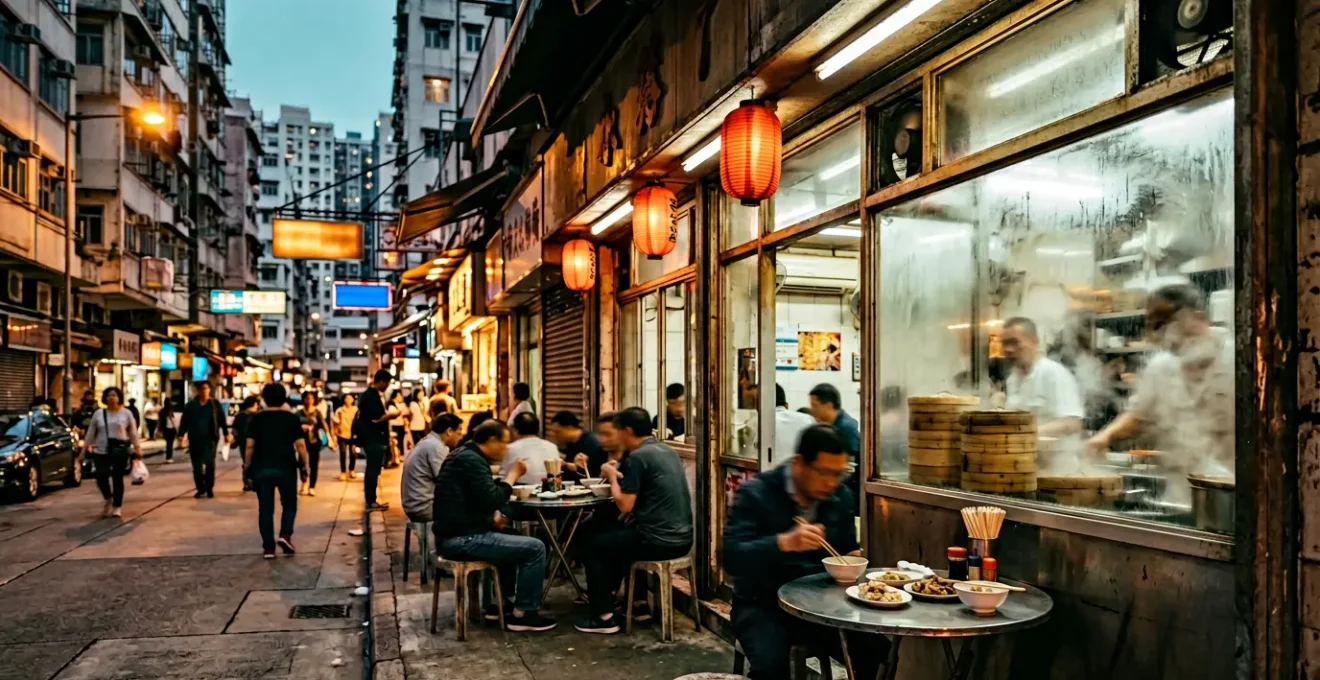
Securing a Michelin-starred meal in Hong Kong for less than the price of a London takeaway is entirely possible, but it requires decoding the city’s unique, high-efficiency dining culture.
- Success lies not in just finding the right restaurant, but in understanding local customs like table sharing (dap toi), tipping etiquette, and ordering systems.
- The same principles of speed, quality, and resourcefulness that govern a £2 street snack also apply to the world’s most affordable Michelin eateries.
Recommendation: Embrace the pace and the pragmatism. Learning the ‘why’ behind Hong Kong’s food rules will transform you from a confused tourist into a confident, savvy diner who can navigate the entire culinary landscape.
The idea sounds almost mythical: enjoying a meal recognised by the prestigious Michelin guide for less than £15. In most of the world’s culinary capitals, this is a fantasy. But in Hong Kong, it’s a delicious reality. Many travel guides will simply provide a list of budget-friendly starred establishments, pointing you towards famous dim sum houses or noodle shops. While helpful, these lists miss the most crucial ingredient for a truly successful and stress-free experience: understanding the cultural system that makes this incredible value possible.
The secret to unlocking Hong Kong’s affordable gastronomic treasures isn’t just knowing *where* to go, but *how* to operate within its fast-paced, intensely pragmatic food ecosystem. This is a city where space is the ultimate luxury and efficiency is king. From the bustling ‘cha chaan tengs’ (local diners) to the humble street-side stalls, a set of unwritten rules governs the dining experience. Mastering these codes—from why you’re sharing a table with strangers to how to order without speaking a word of Cantonese—is the real key.
This guide moves beyond a simple list. We will decode the ‘why’ behind the ‘what’ of Hong Kong dining. By understanding the logic that underpins everything from seating arrangements to the taste of a stir-fry, you won’t just eat a cheap Michelin meal; you’ll navigate the entire food scene with the confidence of a local, turning your culinary journey into a genuine cultural immersion.
This article will walk you through the essential cultural knowledge and practical strategies you need to master. From layover budget planning to allergy communication, you’ll gain the insider skills to dine like a pro across Hong Kong.
Summary: Your Guide to Hong Kong’s Culinary Codes
- Why Do You Have to Share Tables (Dap Toi) in Local Restaurants?
- How to Order Food in a Cha Chaan Teng If You Can’t Read Chinese?
- Do You Need to Tip in Hong Kong Restaurants with a Service Charge?
- Why Is It Impossible to Get a Table at Popular Spots on Sundays?
- How to Spend Less Than £100 per Day During a Hong Kong Layover?
- Why Are Curry Fish Balls the Most Popular Street Snack in HK?
- How to Communicate a Shellfish Allergy Safely in Cantonese Dining?
- What Is « Wok Hei » and How Can You Taste It in a Stir-Fry?
Why Do You Have to Share Tables (Dap Toi) in Local Restaurants?
Walking into a packed Hong Kong eatery and being seated next to a stranger can be jarring for a first-timer. This practice, known as ‘dap toi’ (literally « share table »), isn’t a quirky tradition; it’s a fundamental solution to a city-wide problem: a critical lack of space. Hong Kong’s extreme population density is the driving force behind this custom. With a population of 7.5 million and only 24% of its land developed, every square inch is valuable real estate.
For restaurant owners facing astronomical rental costs, an empty seat is a financial liability. Dap toi is a strategic business practice that maximizes turnover by ensuring every single spot at a table is generating revenue. This high-efficiency model is what allows these small, independent restaurants to survive and, crucially, to offer high-quality food at incredibly low prices. By keeping turnover high, they can keep meal costs low. In essence, sharing a table directly subsidizes the affordable price of your meal.
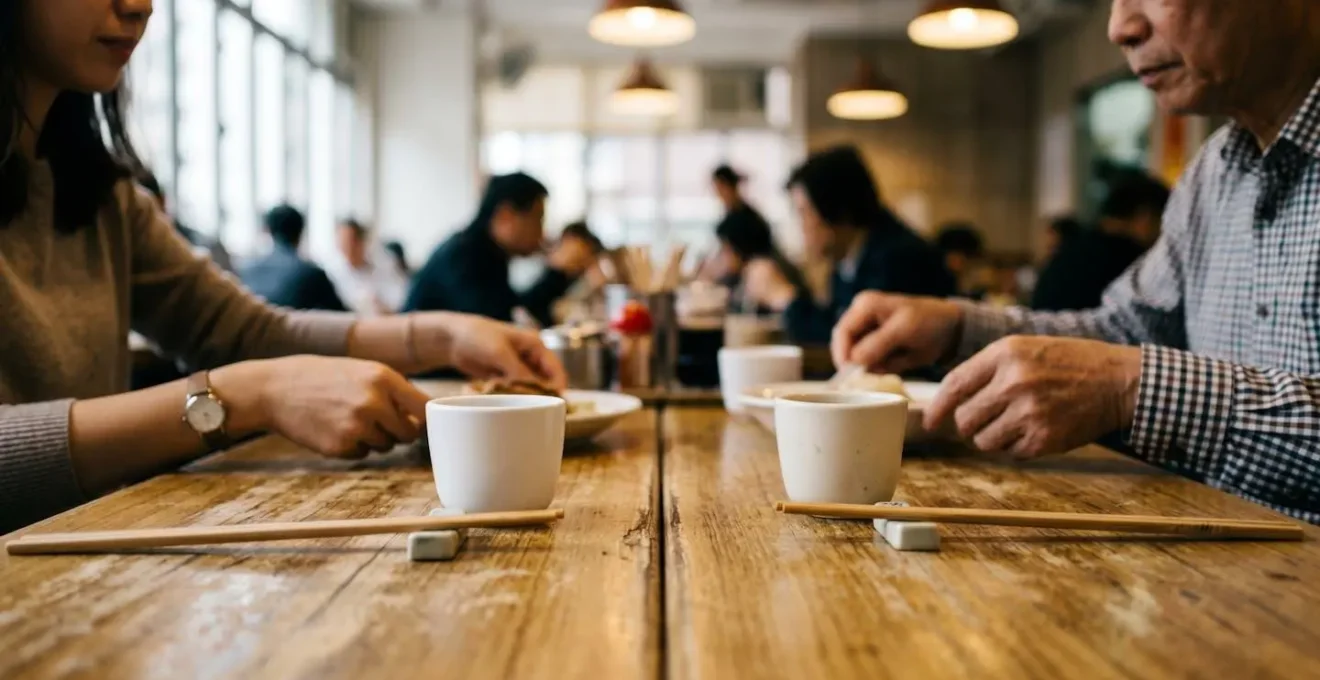
The etiquette of dap toi is simple and based on mutual, unspoken respect. Diners create an invisible boundary down the middle of the table. There is no obligation to make small talk; in fact, it’s more common to ignore your table-mates completely. You simply eat your meal and leave. Embracing this practice is the first step to dining like a local. It shows you understand the pragmatism and efficiency that define the city’s food culture.
How to Order Food in a Cha Chaan Teng If You Can’t Read Chinese?
The ‘cha chaan teng’ is the heart and soul of everyday Hong Kong dining. These fast-paced, no-frills cafes are a fusion of Canto-Western cuisine, serving everything from macaroni soup with ham to French toast and milk tea. For a non-Chinese speaker, the loud, seemingly chaotic environment and Chinese-only menus can be intimidating. However, they are designed for efficiency, and there are several strategies to navigate them with ease.
The key is to understand that speed is paramount. Waitstaff are not being rude; they are processing a high volume of orders and expect quick decisions. The best approach is to be prepared. Before you even sit down, look for picture menus on the walls or glass display cases showing models of the food. These are your best friends. When it’s time to order, a simple and confident point is universally understood. Don’t be shy; it’s the expected method for anyone unfamiliar with the menu.
To further empower yourself, leverage technology and a few key visual cues.
- Use a Restaurant App: Download the OpenRice app, which is available in English. You can look up the restaurant beforehand, view user-submitted photos of the menu and dishes, and have your choice ready.
- Look for Set Menus: Many cha chaan tengs have breakfast, lunch, or afternoon tea sets (look for the characters ‘下午茶’ for afternoon tea). These are combo deals that are easy to order and offer great value.
- Point with Precision: When pointing at a menu item, make it clear. If you’re pointing at a picture on the wall, walk over to it if necessary. Clarity avoids confusion and keeps the process moving smoothly.
- Watch What Others Eat: See a delicious-looking dish on a nearby table? A polite point in its direction when the waiter arrives is a perfectly acceptable way to order.
This approach respects the efficiency-driven culture of the cha chaan teng while ensuring you get a delicious, authentic meal at local prices.
Do You Need to Tip in Hong Kong Restaurants with a Service Charge?
Tipping culture is one of the most confusing aspects of international travel. In Hong Kong, the rule is refreshingly simple: tipping is not expected or required. This is a significant departure from North American or even European norms and is crucial for any budget-conscious traveler to understand. Acting like a local means not tipping, and it is not considered rude.
The reason for this lies in the widespread practice of including a service charge directly on the bill. At most mid-range to high-end restaurants, a 10% service charge is automatically added to your total. It’s important to understand that this is not a gratuity that goes directly to your server. Instead, it is considered part of the restaurant’s revenue, used to cover general operational costs, including staff salaries. It is a fixed charge, not a discretionary tip.
At more casual eateries like cha chaan tengs or dai pai dongs (open-air food stalls), there is no service charge and absolutely no expectation of a tip. While some locals might leave the small coins from their change on the table, this is a minor gesture and is entirely optional. As a visitor, you are not expected to do so. Adhering to this local custom will not only save you money but also demonstrates a deeper understanding of the local culture, allowing you to blend in more seamlessly.
Why Is It Impossible to Get a Table at Popular Spots on Sundays?
If you try to walk into a popular dim sum restaurant on a Sunday morning, you’ll be met with a daunting sight: huge crowds and hours-long waits. This isn’t just a busy day; it’s the epicentre of Hong Kong’s weekly social calendar, caused by the convergence of two powerful cultural forces.
The first and most significant is the tradition of ‘yum cha’ (literally « drink tea »). For Hong Kong families, Sunday yum cha is a multi-generational ritual. It’s the primary time for extended families to gather, share dim sum, and catch up. Entire clans, from grandparents to toddlers, descend on large Cantonese restaurants, occupying big round tables for hours. This tradition alone puts immense pressure on the city’s dining scene.
The second force is the statutory day off for Hong Kong’s several hundred thousand foreign domestic helpers. Sundays are their one day of freedom, and they congregate in popular public and commercial areas to socialise. This adds another massive wave of people looking for places to eat and relax, particularly in popular districts. The combined demand from family yum cha and the domestic helper community creates a perfect storm, making Sunday lunch the single most competitive time to dine out all week. Savvy diners either go very early (before 9 AM), very late (after 2 PM), or avoid popular areas altogether.
How to Spend Less Than £100 per Day During a Hong Kong Layover?
A long layover in Hong Kong presents a golden opportunity for a culinary adventure, and it doesn’t have to break the bank. With smart planning, you can experience the city’s highlights, including a Michelin-recommended meal, for well under £100. The key is to leverage the city’s hyper-efficient public transport and its abundance of high-quality, low-cost food options.
Your two most valuable tools are the Airport Express train and an Octopus Card. The Airport Express whisks you to the city centre in under 25 minutes, and an Octopus Card is your all-in-one payment method for MTR (subway), buses, ferries, and even purchases at convenience stores. Avoiding taxis is the single biggest money-saver. Once in the city, focus your time on one or two adjacent neighbourhoods to minimize travel time and maximize exploration.
A Michelin meal on a budget is surprisingly easy. Hong Kong has dozens of Michelin Bib Gourmand (good value) and one-star establishments where a meal can cost between £10-£15. Spots like Tim Ho Wan (dim sum) or Ho Hung Kee (wonton noodles) offer world-class food at street-level prices. By combining one of these affordable Michelin meals with cheap and delicious street snacks and free activities like riding the Star Ferry or visiting a temple, you can have an unforgettable layover experience that is rich in culture but low in cost.
To make this tangible, a typical budget for an 8-hour layover can be broken down clearly. The following estimate, based on data from official tourism board guides, shows just how achievable this is.
| Expense Item | Cost (GBP) | Details |
|---|---|---|
| Airport Express Round Trip | £9-12 | Fast train to/from Central or Kowloon |
| Octopus Card Deposit | £6 | Refundable transport card for MTR/buses |
| Michelin Meal (Bib Gourmand/1-star) | £10-15 | Tim Ho Wan dim sum or Ho Hung Kee noodles |
| Street Snack (Egg Waffle/Fish Balls) | £2-4 | Authentic local street food experience |
| Bottled Water/Drinks | £2-3 | Hydration during exploration |
| MTR Local Transport | £3-5 | Multiple stops for sightseeing |
| Free Activities | £0 | Star Ferry, Nan Lian Garden, Temple Street |
| Total Estimated | £32-45 | Well under £100 budget with margin for shopping |
Why Are Curry Fish Balls the Most Popular Street Snack in HK?
On almost every corner in Hong Kong’s bustling districts, you’ll find a vendor selling skewers of golden-brown orbs simmering in a fragrant curry sauce: curry fish balls. This humble snack is more than just a popular treat; it’s a cultural icon that tells the story of post-war Hong Kong. Its popularity is rooted in its history of resilience, resourcefulness, and affordability.
Curry fish balls emerged in the 1950s, a time when Hong Kong was grappling with post-war scarcity. They were invented as a clever way to use up scraps of fish that would otherwise be discarded. By mincing the leftover fish, mixing it with flour to create a ‘bouncy’ texture, and then simmering it in a strong, flavourful curry sauce to mask any imperfections, vendors created a cheap and delicious source of protein for the working class. The snack became an instant hit, embodying the city’s « can-do » spirit.
This philosophy—transforming simple, inexpensive ingredients into something high-quality and satisfying through skill and efficiency—is the very soul of Hong Kong’s food scene. It’s the same principle that allows a humble eatery like Tim Ho Wan to earn a Michelin star for its dim sum. The curry fish ball is the street-level expression of this culinary ethos. As one Hong Kong Tourism Board dining guide puts it:
The perfect fish ball has two key elements: the ‘bouncy’ or ‘QQ’ quality of texture, and the complexity of the vendor’s unique curry sauce, which is often a closely guarded secret.
– Hong Kong street food cultural analysis, Hong Kong Tourism Board dining guides
Eating a skewer of curry fish balls is to taste a piece of the city’s history and appreciate the foundational principles of its entire food ecosystem.
How to Communicate a Shellfish Allergy Safely in Cantonese Dining?
For travelers with food allergies, navigating a foreign food scene can be a source of major anxiety. In Cantonese cuisine, where complex sauces and mixed ingredients are common, communicating a severe allergy like shellfish is critical. The language barrier can make this feel impossible, but with the right preparation, you can dine safely.
The number one risk is not cross-contamination, but hidden ingredients. Many foundational flavour bases in Cantonese cooking use shellfish derivatives. Oyster sauce, shrimp paste (haam ha), and XO sauce (a spicy seafood condiment) are ubiquitous and may be included in dishes that don’t seem to contain seafood. Dumplings, soups, and even some vegetable stir-fries can pose a risk. Simply stating « no shrimp » is often not enough.
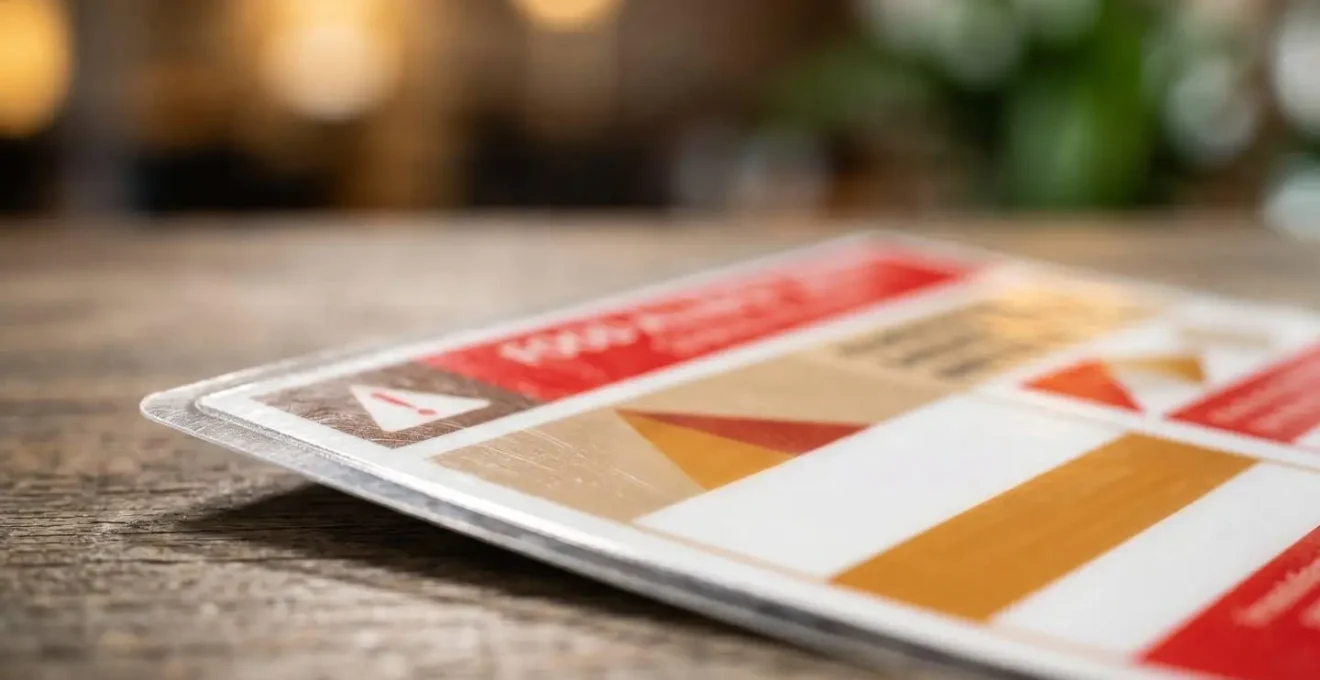
The most effective tool is a bilingual allergy translation card. These cards clearly state your allergy and the severity of your reaction in written Chinese characters. You can show this card to the waiter, who can then take it directly to the kitchen to communicate with the chef. Services like Equal Eats have provided trusted allergy cards since 2006, specifically designed to highlight hidden ingredients like oyster sauce or shrimp paste. It is also wise to stick to « safer » dishes where shellfish is highly unlikely:
- Char Siu (BBQ Pork): A roasted meat dish that is universally free of seafood.
- Steamed or Roasted Chicken: Simple preparations with minimal sauce risk.
- Sweet and Sour Pork: A classic dish where the sauce is vinegar and sugar-based.
- Buddha’s Delight (Lo Han Jai): A mixed vegetable dish, but you must confirm no oyster sauce is used.
Combining an allergy card with smart dish selection is the most reliable strategy for a safe and enjoyable dining experience.
Key Takeaways
- Hong Kong’s high-efficiency dining culture, born from a lack of space, is what makes its world-class food so affordable.
- Mastering local customs like table sharing (dap toi), non-tipping, and pointing to order is essential for a smooth experience.
- The city’s food philosophy values resourcefulness and skill, turning simple ingredients into culinary treasures, from street-side fish balls to Michelin-starred dim sum.
What Is « Wok Hei » and How Can You Taste It in a Stir-Fry?
There is a flavour in Cantonese stir-fries that is notoriously difficult to describe but instantly recognizable once you’ve tasted it. It’s a complex, smoky, and slightly charred essence that elevates a simple dish of noodles or rice into something extraordinary. This elusive quality is called ‘wok hei’, which translates to « the breath of the wok. » It is not an ingredient but a flavour imparted by a specific, high-heat cooking technique.
Wok hei is achieved when food is tossed in a well-seasoned, searingly hot wok over a roaring flame. The intense heat, often exceeding 200°C (400°F), causes caramelization and the Maillard reaction to occur in seconds. As the chef expertly tosses the ingredients, droplets of oil hit the hot metal and ignite, creating a flare-up that kisses the food. This process imparts a distinctive smoky aroma and flavour that cannot be replicated with standard home kitchen equipment. It is the hallmark of a masterful Cantonese chef and is most commonly found at dai pai dongs (open-air food stalls) and traditional restaurants that use powerful wok burners.
To taste true wok hei, you need to know where to look and what to order. The quintessential dish for experiencing it is ‘Gon Chow Ngau Ho’ (dry-fried beef with flat rice noodles). The broad surface area of the noodles is perfect for capturing the smoky essence. When you eat it, pay attention to more than just the taste. Notice the smoky aroma, the slight char on the edges of the noodles, and the way the flavour feels both fresh and deeply complex. That is the breath of the wok.
Your Wok Hei Hunter’s Checklist: How to Spot an Authentic Stall
- Flame intensity: Look for a stall with a roaring, jet-like flame. The fire should be visibly engulfing the bottom of the wok during cooking.
- Wok condition: Observe the wok itself. A true wok hei station will have a dark, almost glowing patina, built up from years of intense heat and seasoning.
- Chef’s technique: Watch the chef’s rhythmic, continuous tossing motion. This ensures every piece of food makes contact with the hottest part of the wok.
- Acoustic cues: Listen for the loud, aggressive sizzle as ingredients hit the wok. This sound indicates the heat is sufficient for wok hei development.
- Aromatic evidence: Before you even order, you should be able to smell a distinct, pleasant smokiness in the air around the stall. This is the « breath » you’re hunting for.
Frequently Asked Questions About Hong Kong Dining
Is tipping expected at high-end restaurants with a 10% service charge?
No tip is needed when a 10% service charge is included. Tipping is not part of local custom, and by not tipping, you’re acting like a local rather than being rude.
Should I tip at Cha Chaan Tengs or Dai Pai Dongs?
No tip is expected at casual eateries. Leaving small coins from your change is a common local practice but entirely optional.
Does the service charge go directly to staff?
The 10% service charge goes to the restaurant as part of the bill, not directly to staff as a gratuity like in the US. It’s a fixed operational charge.
With this cultural knowledge in hand, you’re no longer just a tourist hoping to find a cheap meal. You are an informed diner, equipped to navigate the vibrant, efficient, and endlessly delicious food landscape of Hong Kong. You understand the pragmatism behind shared tables, the history in a simple fish ball, and the artistry in the smoky breath of a wok. Now you’re ready to hunt for that Michelin star, not just with a map, but with genuine local insight.