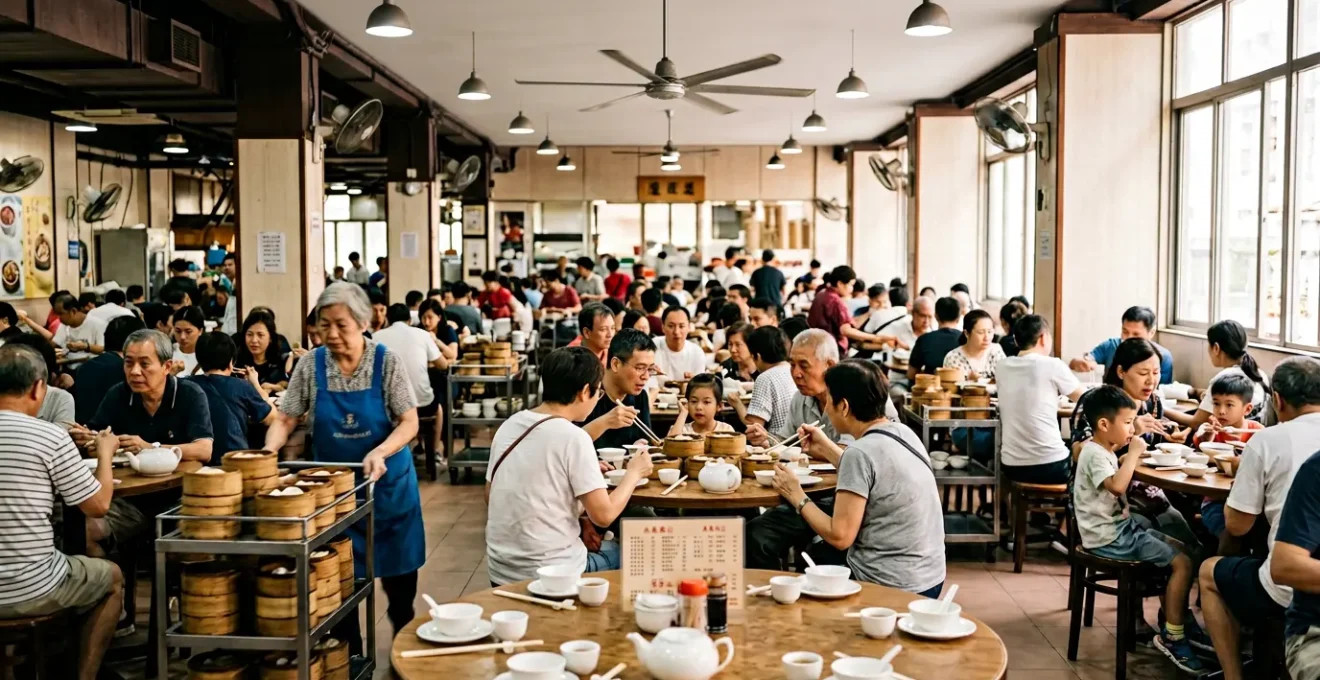
Forget polite waiting; mastering traditional trolley dim sum is a competitive sport, not a passive restaurant meal.
- Success depends on strategic positioning and reading social cues, not asking for a menu.
- The noise and chaos (yeet nao) are signs of a good restaurant, not poor service.
Recommendation: Your goal isn’t just to eat, it’s to master the hunt. Use this playbook to feast like a seasoned champion.
The moment you step into City Hall Maxim’s Palace on a Sunday morning, the sensory overload hits you. It’s a grand ballroom of clattering porcelain, echoing Cantonese chatter, and the rumble of steam-filled carts navigating a sea of tables. For the uninitiated, it’s pure chaos. The rookie mistake is to sit politely, waiting for someone to take your order. You will starve. Many guides will tell you to be patient or ask for a menu, but that advice is useless here. This isn’t your neighborhood Chinese takeaway.
This is the grand theatre of traditional trolley dim sum, and to eat well, you must become a player, not just a spectator. The real key isn’t patience; it’s strategy. It’s about understanding that the beautiful pandemonium follows a set of unwritten rules—a social contract of controlled chaos. This guide is your playbook. We’re not here to just identify dishes; we’re here to teach you the art of the hunt. We will decode the rituals, from washing your bowls to tapping your fingers, and arm you with the aggressive tactics needed to intercept the freshest dumplings before anyone else.
This article provides a complete strategic breakdown for your next dim sum adventure. Follow these sections to transform from a timid tourist into a tactical titan of the tea house.
Summary: How to Get Food from the Trolleys at City Hall Maxim’s Palace?
- Why Do Locals wash Their Bowls with Tea Before Eating?
- How to Hover for a Table at Lin Heung Tea House Without Being Rude?
- How to Read the Stamp Card tally at the End of a Dim Sum Meal?
- Why Is It So Noisy inside Traditional Dim Sum Halls?
- What to Do If the Trolley Lady Doesn’t Have the Dish You Want?
- Which Street Market Is Best for Kitchenware: Shanghai Street or Temple Street?
- What Is the Etiquette for Priority Seats on Hong Kong Transport?
- Why Do People Tap Their Fingers on the Table When Tea Is Poured?
Why Do Locals wash Their Bowls with Tea Before Eating?
The first thing you’ll see a local do is pour hot tea into their bowl, swirl it around, and dump the water into a larger communal basin. A tourist sees this and thinks the restaurant’s hygiene is questionable. This is a classic rookie mistake. This pre-meal wash isn’t about cleaning dirty dishes; it’s a deeply ingrained cultural ritual known as ngaan zai. It’s a gesture of respect for the meal to come, a way to warm the porcelain, and a moment to center yourself before the hunt begins. It’s considered common in many parts of China and Hong Kong as both custom and a simple habit.
The process is precise and almost meditative. You nest your entire place setting—chopsticks, spoon, and small bowl—inside the larger bowl. Pouring the tea over everything, you use the chopsticks to handle the other items, ensuring everything is warmed by the fragrant steam. This sets the tone for the entire experience. It signals to everyone at the table that you are ready.
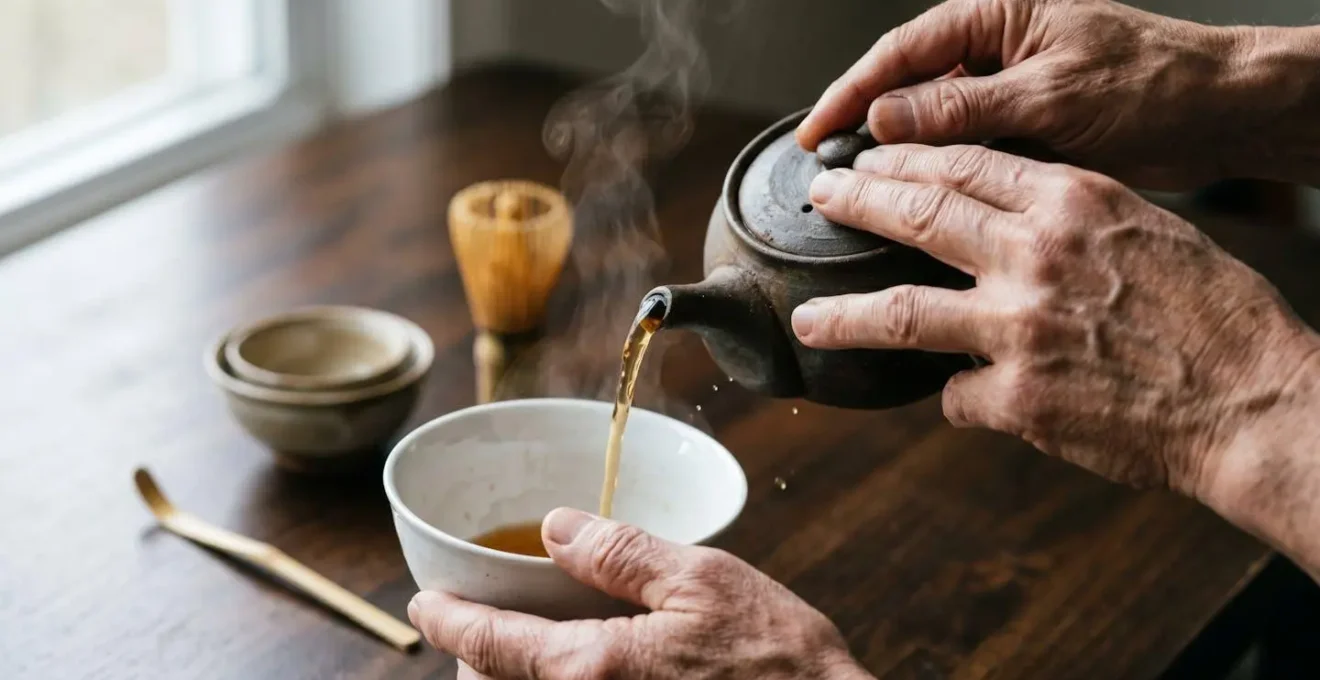
As the steam rises, you’re not just washing a bowl; you’re participating in a tradition that connects you to generations of dim sum lovers. Embracing this small act immediately separates you from the casual observers and marks you as someone who understands the deeper game. It’s the first step to eating like a veteran.
How to Hover for a Table at Lin Heung Tea House Without Being Rude?
In a place as notoriously packed as Lin Heung or Maxim’s, you don’t « wait » for a table—you stalk it. This isn’t rude; it’s the required method of engagement. The art is to be an assertive hunter, not an intrusive pest. The key is situational awareness. You must learn to read the room and anticipate when a table will become available. Standing directly behind someone’s chair is the mark of an amateur; it’s too aggressive and makes people uncomfortable. Instead, you need a more strategic approach.
A seasoned veteran employs a multi-step strategy for securing a spot in the chaos:
- Read the Table’s Tempo: Look for the signs. Are they on their last sips of tea? Have the empty baskets been stacked high on the edge of the table? Has someone made the universal « check, please » hand gesture? These are your cues. A table resting between dishes is not a target.
- Strategic Positioning: Don’t lock onto one table. Stand in a high-traffic lane where you have a clear line of sight to multiple potential targets. This is your observation post. From here, you can monitor the flow of the entire hall.
- The Non-Verbal Contract: Once you’ve identified a table that’s truly finishing, you can make your move. Establish brief, subtle eye contact with the person who appears to be paying the bill. A slight, knowing nod is all it takes. This is the unspoken agreement that you’ve called « next. » No words are needed.
This process is part of the experience. It’s a dance of observation and subtle communication. As the cultural guide Nomadic Samuel puts it, you must « Embrace the chaos. » Sharing tables with strangers is expected, and the staff are masters of logistical tetris, moving people around to maximize space. It’s not personal; it’s just the way the game is played.
How to Read the Stamp Card tally at the End of a Dim Sum Meal?
Once you’ve secured a table, a small card with columns of Chinese characters and letters will be placed on your table. This is your scorecard. Every time a trolley lady serves you a dish, she will stamp this card. This is not just a receipt; it’s a running tally of your conquests, and learning to read it is crucial for managing your budget and your appetite. For a group, the optimal approach for a 3-4 people group dynamic is to get a variety of dishes to share, and the stamp card helps track that.
The system seems cryptic, but it’s based on a simple tiered pricing structure. Each stamp corresponds to a different price category, usually marked as Small (S), Medium (M), Large (L), and Special (SP). Knowing what falls into each category is key to strategic ordering.
| Category Stamp | Chinese Character | Typical Dishes | Price Tier | Strategic Budgeting Tip |
|---|---|---|---|---|
| S (Small) | 小 | Basic buns, simple rice rolls, plain congee | Lowest | Foundation of your meal—order 1-2 to anchor the experience |
| M (Medium) | 中 | Siu mai, har gow, char siu bao, cheong fun | Mid-range | Core classics—aim for 2-3 of these for variety |
| L (Large) | 大 | Premium ingredients: scallop dumplings, abalone, XO sauce dishes | Higher | Specialty indulgence—1 per meal for premium experience |
| SP (Special) | 特 | Rare seasonal items, chef specialties with luxury ingredients | Highest | Optional treat—only if budget allows and item is unique |
| Cha Wai (Tea Charge) | 茶位 | Per-person tea service charge | Fixed fee | Hidden stamp often confusing to tourists—automatically added per diner |
Don’t forget the « Cha Wai » or tea charge, a fixed fee per person that gets its own stamp. By keeping an eye on your card, you can balance your desire for the premium « Large » dishes with the more affordable « Medium » classics. A veteran knows how to build a diverse and satisfying meal without being surprised by the final bill. The stamp card isn’t just an accounting tool; it’s your guide to a well-played game.
Why Is It So Noisy inside Traditional Dim Sum Halls?
The first thing a Westerner complains about in a traditional dim sum hall is the noise. The constant clatter of porcelain, the shouts of the trolley ladies announcing their wares, the cacophony of a hundred conversations happening at once. A tourist might interpret this as poor ambiance. A veteran knows this is the sound of success. In Cantonese culture, there’s a concept called yeet nao (熱鬧), which translates to « hot and noisy. » It signifies liveliness, excitement, and prosperity. A quiet dim sum hall is a red flag; it’s either unpopular, has bad food, or both.
The noise is the restaurant’s heartbeat. It’s a symphony of community and connection. This isn’t the place for a quiet, candlelit dinner. This is a place for spirited debate, for families catching up, and for the joyful roar of a shared experience. The soundscape is an integral part of the meal, a sensory immersion that says « we are all here together. »
The Soundscape of Yeet Nao
At a true local spot, the sounds are a form of music. The clatter of heavy porcelain bowls serves as the rhythm section. The hiss of steam from the trolleys provides the ambient atmosphere. The rhythmic tapping of fingers on the table to say « thank you » for tea acts as a percussive punctuation to conversations. This is the sound of normal life, a sign that the place is thriving and the food is good.
As the Secret Food Tours guide to Hong Kong dining notes, « The clinking of chopsticks, the aroma of freshly steamed buns, and the lively chatter create an atmosphere that is Hong Kong through and through. » To enjoy traditional dim sum, you must learn to love the noise. It’s the soundtrack to authenticity. It’s the audible proof that you’re in the right place, at the right time, about to have a fantastic meal.
What to Do If the Trolley Lady Doesn’t Have the Dish You Want?
Here we arrive at the heart of the hunt. You’re seated, you’ve washed your bowls, and you’re scanning the horizon for the tell-tale steam of a fresh cart. But what happens when the trolleys that pass by don’t have your coveted har gow or char siu bao? The amateur waits. The veteran hunts. Waiting passively at your table is a losing strategy. You must become proactive, adopting the tactics of a seasoned food warrior.
This is not the time for politeness; it’s the time for a clear, concise plan of attack. You have to switch from a « gatherer » mindset (taking what comes to you) to a « hunter » mindset (actively seeking your target). This requires a combination of strategic positioning and direct action. The goal is to intercept the best dishes the moment they emerge from the kitchen, hot and fresh.
Action Plan: Proactive Dim Sum Acquisition
- The Kitchen Embassy Tactic: Don’t wait at your table. Strategically walk towards the kitchen entrance. This is the source. Here, you can see what’s coming out next and be the first to flag down the trolley carrying the freshest items.
- The Floor Captain Alliance: Identify the senior managers. They often wear different uniforms or carry tablets. They are the gatekeepers to off-menu or special orders. A polite but firm request to them can sometimes get a dish made just for you.
- The Ambush Strategy: This requires some courage. As a trolley passes, you can call out your desired dish using basic Cantonese phonetics. It’s a common local tactic. Essential phrases: « Har Gow! » (shrimp dumplings), « Siu Mai! » (pork dumplings), or « Fung Zao! » (chicken feet).
- Monitor Multiple Trolleys: Position yourself near a high-traffic intersection within the hall where multiple trolley routes converge. This maximizes your interception opportunities without having to leave your post.
- Plan d’intégration : Combine these tactics. Send a scout to the kitchen while another monitors the main floor. This is a team sport, and a coordinated effort yields the best results.
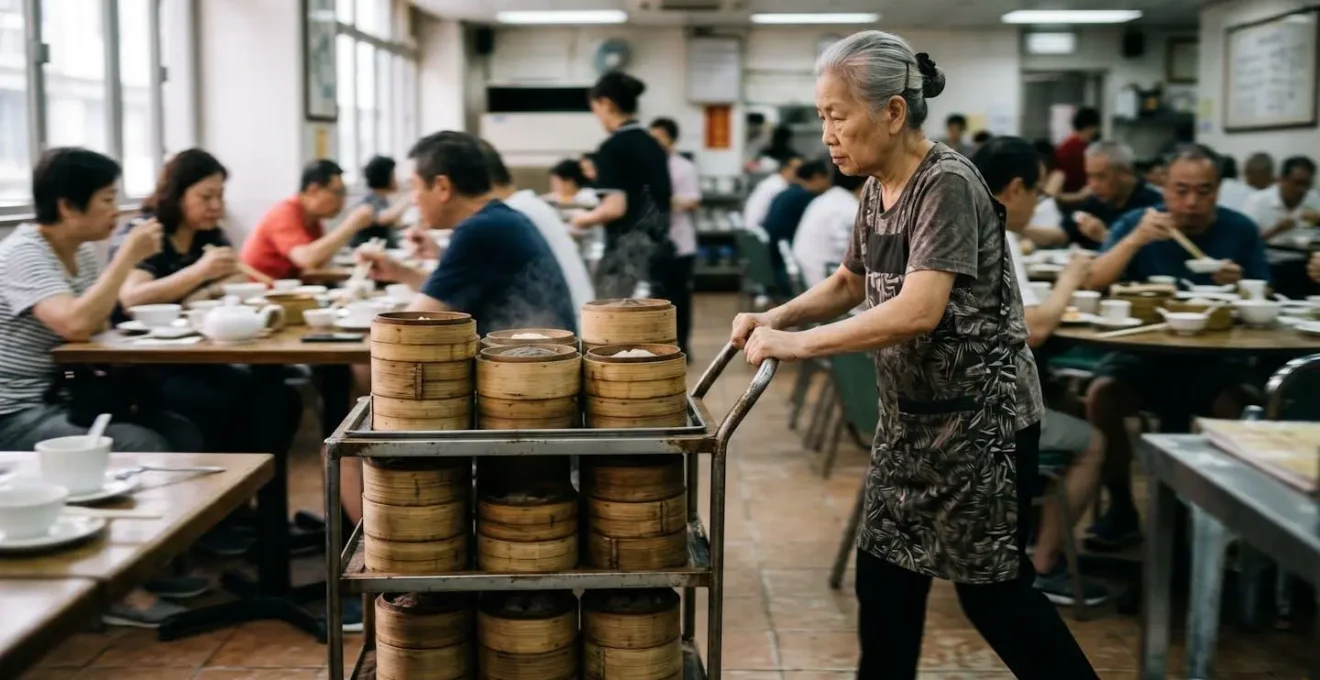
Remember, the trolley ladies are busy. A vague point or a hesitant question will get you nowhere. Be direct, be clear, and be ready to act. This is the essence of the trolley dim sum experience—a delicious, chaotic, and ultimately rewarding pursuit.
Which Street Market Is Best for Kitchenware: Shanghai Street or Temple Street?
After a successful dim sum hunt, you might be inspired to recreate the experience at home. This leads to a critical question: where do you get the gear? Hong Kong offers two famous markets, Shanghai Street and Temple Street, but they serve entirely different purposes. A tourist goes to Temple Street. A chef—or a serious foodie—goes to Shanghai Street. Your choice depends on your goal: are you looking for a souvenir or are you looking for authentic, restaurant-grade tools?
Shanghai Street in Yau Ma Tei is Hong Kong’s undisputed kitchenware hub, with a legacy spanning over 65+ years of family-owned shops like Man Kee Chopping Board supplying the city’s top chefs. This is where you go for the real deal. Temple Street, on the other hand, is a night market spectacle, great for soaking up the atmosphere and bargaining for trinkets, but it’s not a serious destination for culinary equipment.
| Decision Factor | Shanghai Street (Yau Ma Tei) | Temple Street Night Market (Jordan) |
|---|---|---|
| Primary Purpose | Recreate the Food: Restaurant-grade authenticity | Recreate the Vibe: Cultural bargaining experience |
| Kitchenware Quality | Professional chef-grade: bamboo steamers, woks, solid wood chopping boards cut from single tree trunks | Basic novelty items: chopstick sets with decorative boxes, novelty tea towels, souvenir-grade utensils |
| Specialty Items | Bamboo steamer baskets (dim sum-authentic), serving tongs, small soy sauce dishes, traditional mooncake molds | Limited kitchenware mixed with electronics, toys, clothing—not a dedicated kitchenware destination |
| Shopping Experience | Focused, quieter browsing among professional restaurateurs and serious home cooks | Chaotic, noisy environment—practicing bargaining skills in carnival-like atmosphere |
| Price Point | Competitive wholesale pricing with bulk discounts available through negotiation | Tourist-oriented pricing, bargaining expected but less specialized inventory |
| Operating Hours | Daytime (1pm-7pm typical) | Evening/Night market atmosphere (opens after sunset) |
The choice is clear. If you’re serious about your dim sum, you need the tools of the trade, and Shanghai Street is the only place to find them. Leave Temple Street for the novelty tea towels and the carnival games. Your kitchen deserves the same authenticity as your palate.
What Is the Etiquette for Priority Seats on Hong Kong Transport?
The concept of situational awareness is the single most important skill for navigating Hong Kong, whether you’re hunting for dumplings or riding the MTR. On public transport, this skill is most visible in the unwritten rules surrounding priority seats. While there are clearly marked seats for the elderly, pregnant, or disabled, the local social contract extends far beyond these signs. In Hong Kong, any seat is a potential priority seat.
Merely avoiding the marked seats is not enough. A true local is constantly scanning their environment, ready to act. The silent, collective disapproval you receive for not offering your seat to someone in need is a powerful social penalty. To avoid this, and to act with the grace of a resident, you must adopt the « pre-emptive scan » technique.
- Pre-emptive Scan Before Sitting: Before you even think about sitting down, scan your immediate vicinity. Is there an elderly person, a pregnant woman, or a parent with a small child nearby? If so, you remain standing. It’s that simple.
- Social Penalty Awareness: Understand that the « stink eye » you get for being oblivious is a real and potent force. This silent judgment carries more weight than any official rule or sign.
- Unwritten Rule Extension: The Hong Kong social contract dictates offering *any* seat, not just the officially designated ones, to an elderly passenger. This is a crucial distinction that separates tourists from those who understand the local culture.
- Proactive Gesture Timing: The moment you see someone in need board the train or bus, you stand up. Don’t wait for them to ask or to stand awkwardly in front of you. A proactive, immediate gesture is a sign of respect.
This is the same muscle you use in the dim sum hall: observing your surroundings, anticipating needs, and acting decisively based on unspoken cues. Master this on the MTR, and you’ll be well-prepared for the battlefield of the tea house.
Key Takeaways
- Dim sum is a proactive hunt, not a passive meal; you must be aggressive to eat well.
- The noise and chaos (yeet nao) are the signs of an authentic, high-quality restaurant.
- Mastering unwritten rules like finger-tapping and bowl-washing separates veterans from tourists.
Why Do People Tap Their Fingers on the Table When Tea Is Poured?
Of all the rituals in a dim sum hall, the finger tap is perhaps the most elegant and efficient. When someone pours you tea, you’ll see locals gently tap two fingers on the table. This is the « finger kowtow, » a silent, respectful « thank you. » In a hall where tea is poured all meal long, shouting « thank you » every time would be disruptive and impractical. The finger tap is a brilliant solution, a piece of non-verbal communication perfectly designed for the yeet nao environment.
The origin of this custom is a fantastic piece of imperial lore. As the story goes, the Qianlong Emperor was traveling through southern China in disguise. To avoid revealing his identity, he poured tea for his servant. The servant, unable to perform the full kowtow bow that would have blown the emperor’s cover, improvised. He bent his fingers and tapped them on the table, mimicking the act of bowing. This clever gesture of gratitude, born from imperial intrigue, has been passed down through generations and is now a universal part of Cantonese tea culture.
But for the true veteran, there’s another layer of complexity. The type of tap you use can subtly change depending on the social hierarchy at the table:
- Two-Finger Tap (Index + Middle): This is the most common gesture, used when a peer or someone of similar status pours for you. Tap three times to show respect among equals.
- Single-Finger Tap (Index Only): A more casual version used between close friends or when receiving tea from someone younger than you.
- Fist Tap (Curled Knuckles): This is the ultimate sign of respect. Use this when an elder or a person of significantly higher status pours your tea. A gently tapped fist on the table symbolizes a full bow of five limbs to the ground, honoring the elder.
Mastering these variations is the final step in your transformation. It’s a subtle but powerful signal that you are no longer just a visitor; you are someone who understands and respects the intricate social dance of the dim sum hall. You have mastered the hunt, you can read the room, and you speak the silent language of the tea house.
Now you have the complete playbook. You know how to stalk a table, decode the scorecard, thrive in the chaos, and communicate like a local. The only thing left is to put your training into practice. Head to City Hall, take a deep breath, and start the hunt. Your reward awaits in a bamboo steamer.