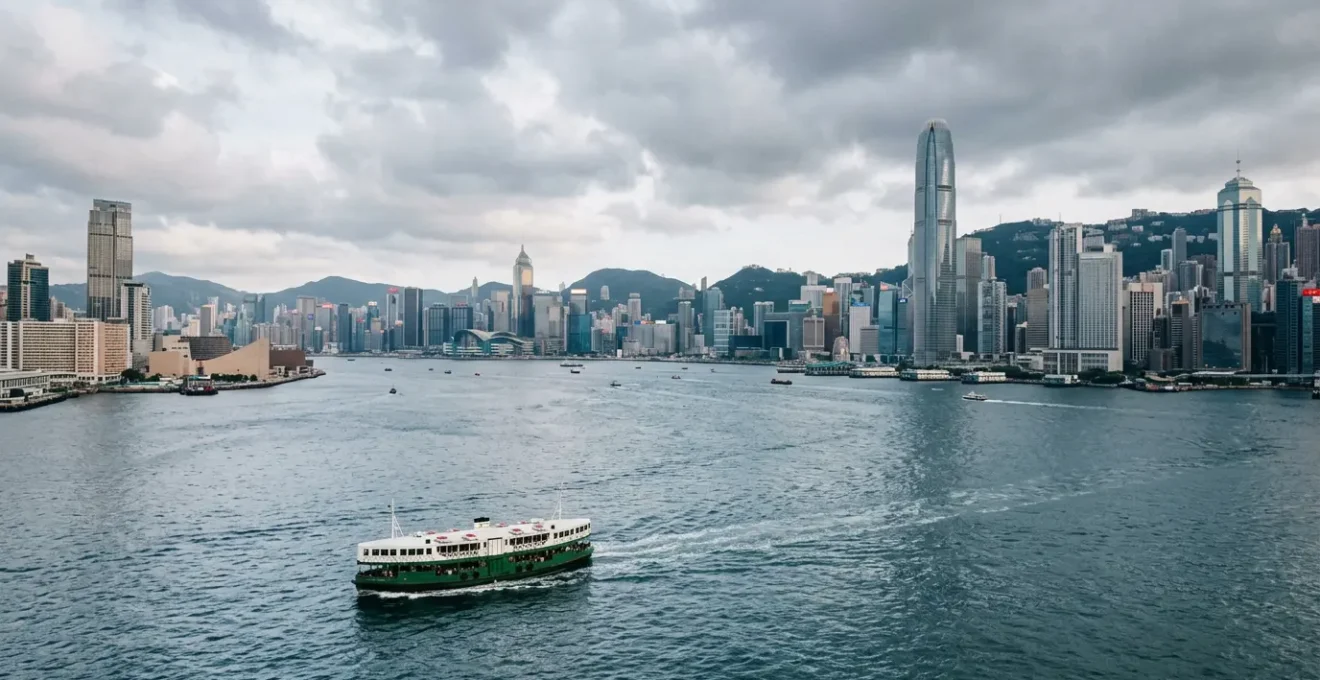
The Star Ferry’s true value isn’t its low price, but its role as a living, interactive time capsule of Hong Kong’s maritime soul.
- Its century-old operational details, like manual mooring with billhooks, are preserved acts of « kinetic history. »
- The journey is a sensory experience, connecting you to the same sights, sounds, and smells as generations of Hong Kongers.
Recommendation: Treat your ride not as simple transport, but as the first chapter in a historical exploration of the city.
For over a century, the silhouette of a green and white Star Ferry has been as integral to the Hong Kong skyline as the towering banks and misty peaks behind it. Many visitors see it as a charmingly cheap way to cross Victoria Harbour, a budget-friendly photo opportunity. They praise its affordability and the magnificent views it offers of the cityscape, and while they are not wrong, this perspective only scratches the surface. The real value of the Star Ferry isn’t measured in Hong Kong dollars, but in its profound connection to the city’s past.
But what if the key to understanding the ferry’s worth isn’t in looking out at the skyline, but in looking inward at the vessel itself? This journey is not just a commute; it is an act of participation in living history. The Star Ferry is a meticulously preserved, interactive maritime museum where every creak of the floorboards, every clank of the turnstile, and every action of the crew is a deliberate performance. It’s a sensory time-travel experience, a deliberate anachronism that stands resilient against the relentless march of modernity.
This guide will take you beyond the postcard view. We will explore the hidden layers of the Star Ferry experience, revealing how the choice of your seat, the way you pay, the time you ride, and even the way the sailors moor the boat are all threads in a rich tapestry of Hong Kong’s maritime and social heritage. Prepare to see this iconic vessel not just as transport, but as a destination in itself.
To fully appreciate the layers of this floating monument, this article delves into the practical details that reveal its historical depth. From choosing a deck to tracing its influence across the city, each section uncovers a piece of the ferry’s enduring legacy.
Summary: Uncovering the Layers of Hong Kong’s Iconic Ferry
- Upper Deck or Lower Deck: Which Star Ferry Seat Offers the Better Breeze?
- Do You Need Coins or Octopus Card for the Star Ferry Turnstile?
- When Is the Best Time to Ride the Star Ferry for Sunset Photos?
- How to Visit the Maritime Museum Immediately After Disembarking?
- Why Do Star Ferry Sailors Use Billhooks to Catch the Mooring Ropes?
- How to Spend Less Than £100 per Day During a Hong Kong Layover?
- Why Are Hong Kong Trams Still Double-Deckers Unlike Elsewhere in Asia?
- How to Walk from the Star Ferry to the West Kowloon Cultural District?
Upper Deck or Lower Deck: Which Star Ferry Seat Offers the Better Breeze?
The choice between the upper and lower decks of the Star Ferry is more than a matter of fare; it’s a decision that echoes the social stratification of old Hong Kong. Historically, the air-conditioned upper deck was the domain of first-class passengers, offering a more comfortable and refined journey away from the engine’s heat and noise. The lower deck was the workhorse, carrying third-class passengers and, in its earliest days, even livestock. Today, this class distinction has vanished, but the sensory differences remain stark and offer two unique ways to experience the harbour.
For the quintessential « breeze, » the open-air sections of the upper deck are unparalleled. Here, you feel the unobstructed wind as you cut across the water, providing the best vantage point for photography and a feeling of expansive freedom. It’s the cinematic Hong Kong experience, with the wind in your hair as the skyline unfolds before you. It is cleaner, quieter, and offers a panoramic perspective.
However, for a historian, the lower deck offers a more visceral, authentic form of sensory time-travel. Down here, you are closer to the water, feeling the spray on your face. You hear the deep, rhythmic thrum of the diesel engine, a sound that has pulsed through the harbour for decades. The smell of salt and diesel fuel is more potent. It is a grittier, more mechanical, and arguably more honest experience—a direct connection to the ferry’s true nature as a working vessel.
Do You Need Coins or Octopus Card for the Star Ferry Turnstile?
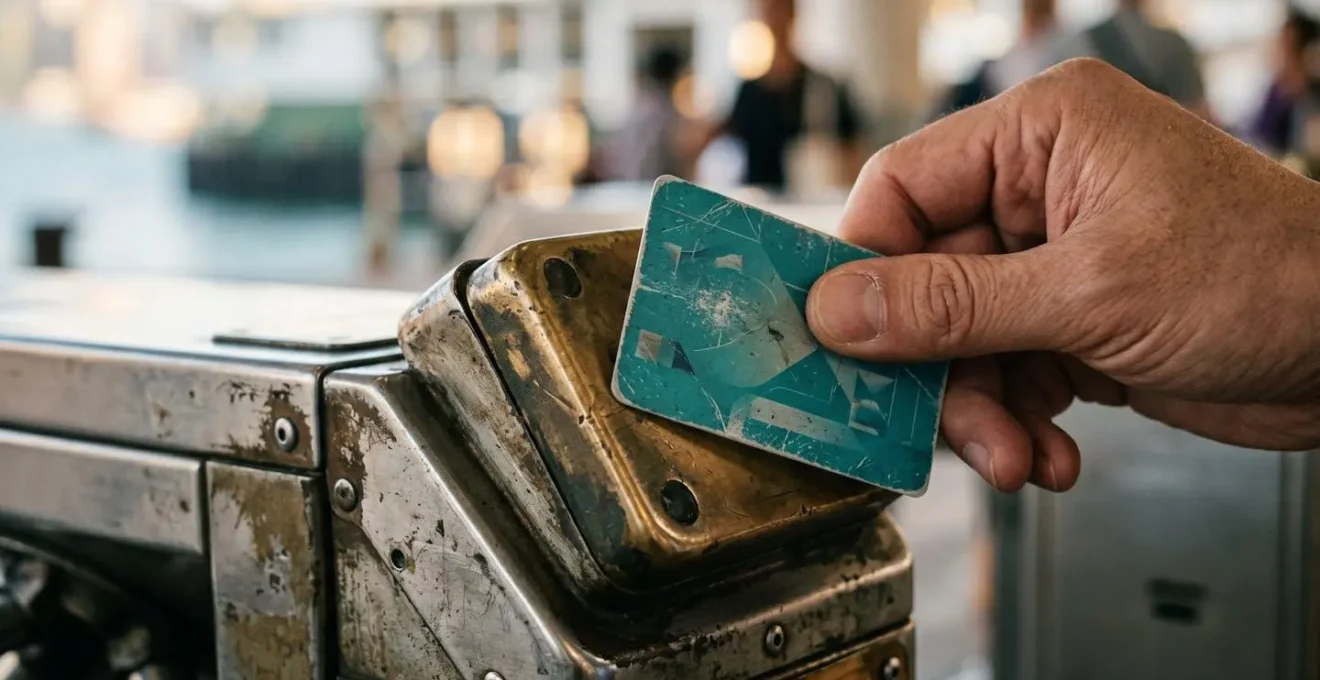
The simple act of paying your fare for the Star Ferry is an interaction with a piece of living history. The chunky, mechanical turnstiles, which accept both coins and the modern Octopus card, are themselves artifacts. The satisfying « clank » as you pass through is a sound that has echoed in these piers for generations. While tourists might fumble for change, most locals seamlessly tap their Octopus card, creating a beautiful juxtaposition of 19th-century mechanics and 21st-century technology. You can use either, but each represents a different era of the city’s life.
This interaction—the blend of old and new—is perfectly captured in the tactile experience of paying. The cool, weathered metal of the turnstile feels ancient, while the plastic of the Octopus card is a symbol of Hong Kong’s hyper-efficient present.
However, the price of a ticket was not always such a simple transaction. The fare has been a deeply political issue, demonstrating the ferry’s role as a vital social artery for the city. This was never more apparent than during the events of 1966.
Case Study: The 1966 Star Ferry Riots
In 1966, a proposed 5-cent fare increase, a mere 25% hike, triggered a significant political milestone in Hong Kong’s history. A young student’s hunger strike in protest at the Central terminal led to his arrest, which in turn sparked the 1966 Hong Kong riots. These events, escalating from peaceful protest to violent clashes, underscored the ferry’s profound importance to the daily lives and economic stability of Hong Kong residents. As detailed in historical records of the Star Ferry, this moment cemented the vessel not just as transport, but as a potent symbol in the city’s political consciousness.
When Is the Best Time to Ride the Star Ferry for Sunset Photos?
The most common advice given to any visitor is to ride the Star Ferry at sunset to capture the « Symphony of Lights » show. While this experience offers undeniably spectacular views of the illuminated skyline, it is also the most crowded and, from a historical perspective, the least authentic time to travel. The modern laser show, while impressive, is a recent invention that overlays a contemporary tourist spectacle onto a century-old experience. To truly connect with the ferry’s spirit, one must seek the moments of quiet and authenticity that exist outside of this peak hour.
To engage in a more meaningful form of sensory time-travel, consider timings that reveal the ferry’s true character as a working vessel and a place of contemplation. Riding during a misty, rainy day, for instance, evokes the moody, cinematic atmosphere of classic Hong Kong films, offering a melancholic beauty that a clear sunset cannot match. It’s in these moments that you can almost feel the ghosts of sailors and traders who have made this same journey in all weathers.
For those seeking to capture the soul of the harbour, here are some alternative strategies that offer a deeper, more historical connection than the standard sunset ride:
- Dawn Patrol Ride: Take one of the first ferries around 6:30 AM to travel alongside local workers. You’ll experience the quiet, purposeful atmosphere of the city awakening, a far cry from the evening tourist rush.
- Atmospheric Weather Rides: Choose a day with mist or rain to evoke the moody, cinematic feel of classic Hong Kong cinema, connecting with a more romantic and historical ambiance.
- Pre-Symphony Quiet: Ride just before the 8 PM light show begins. You’ll enjoy the tranquil harbour as dusk settles, lit by the city’s organic glow without the distraction of lasers, closer to the timeless view of the past.
- Post-Show Contemplation: Board a ferry after 9 PM when the crowds disperse. This late-evening crossing allows for a quiet, contemplative connection with the same harbour views witnessed by mariners for over a century.
How to Visit the Maritime Museum Immediately After Disembarking?
The Star Ferry is not just a floating exhibit; it is also the perfect gateway to a deeper exploration of Hong Kong’s nautical past at the Hong Kong Maritime Museum. Conveniently, the museum is located at Central Pier 8, a mere stone’s throw from the Star Ferry’s own Central Pier 7. This proximity is no accident; it creates a seamless « heritage trail » that allows you to step off one piece of maritime history and directly into another. The museum itself is housed in a former ferry pier, further cementing this connection.
Since relocating to Central Pier 8 in 2013, the museum has vastly expanded its ability to tell the story of the harbour. An analysis of the museum’s growth shows its display space is now five times larger than its original location, with its collection growing from 700 to over 2,000 exhibits. This makes the short walk from the ferry an essential pilgrimage for anyone interested in the context behind their harbour crossing.
Your Action Plan: Auditing the Star Ferry’s Living History
- Points of Contact: On your ride, actively list all sensory inputs—the deep thrum of the engine, the smell of diesel and saltwater, the feel of the worn wooden benches, the clank of the turnstile.
- Collecte: Inventory the historical artifacts in plain sight. Note the design of the crew’s uniforms, the shape of the mooring billhooks, and the typography on the vessel’s signage.
- Cohérence: Contrast the preserved historical elements (like manual mooring) with modern additions (like Octopus card payment). What does this blend of old and new tell you about Hong Kong?
- Mémorabilité/Émotion: Identify the specific moments or details that feel most authentically « old Hong Kong » versus those that feel purely touristic. Is it the crew’s efficient movements or the skyline view?
- Plan d’Intégration: After your ride, immediately connect the experience to a deeper context by following the steps below to visit the Maritime Museum, looking for exhibits that explain what you just witnessed.
The walk itself is a simple, pleasant stroll along the waterfront. Here is your direct route:
- Disembark at Central Pier 7 and exit towards the waterfront promenade.
- Turn left and walk eastward along the harbourfront, keeping the water on your right.
- In just 2-3 minutes, you will arrive at Central Pier 8. Enter the Hong Kong Maritime Museum.
- Once inside, seek out the specific « Star Ferry Trail » exhibits, which feature ship models and displays detailing the harbour’s rich history.
Why Do Star Ferry Sailors Use Billhooks to Catch the Mooring Ropes?
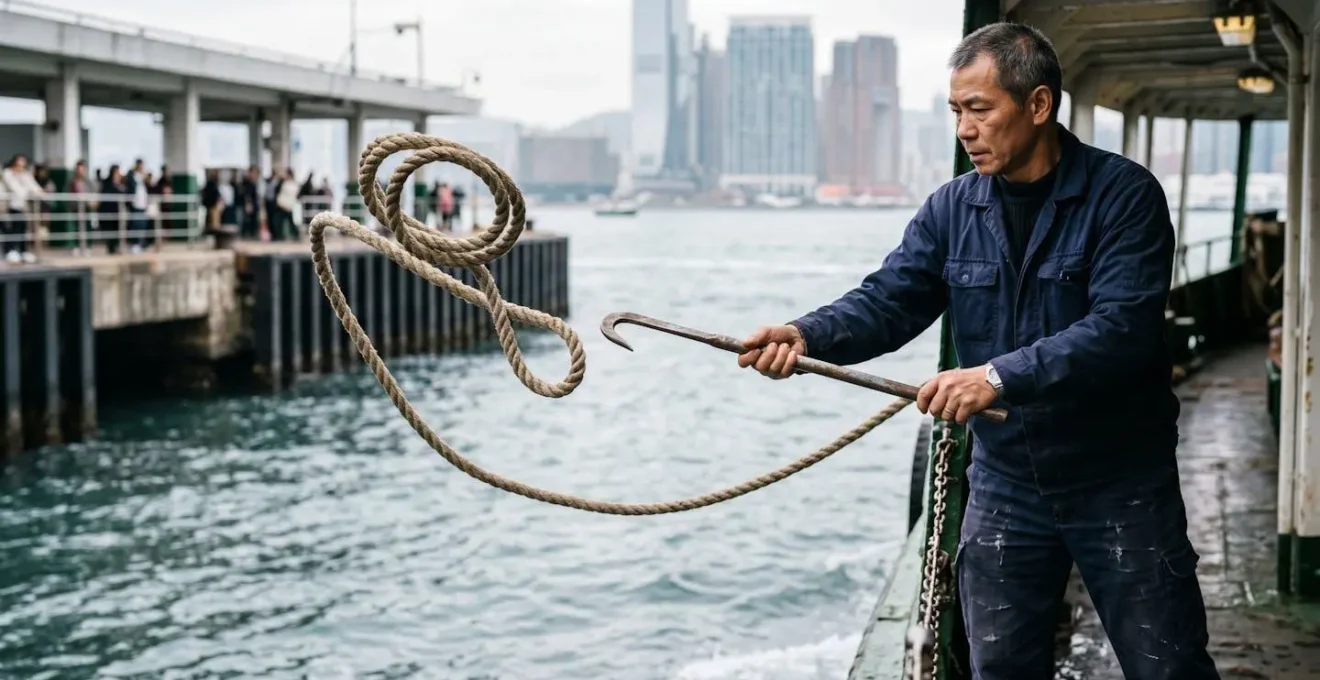
Of all the historical details preserved by the Star Ferry, none is more captivating than the daily performance of its mooring procedure. As the ferry approaches the pier, a sailor expertly tosses a thick, heavy rope towards the dock, where another crew member catches it with a long metal billhook known locally as a ‘gwa’ (掛). In an age of automated docking systems and bow thrusters, this manual, centuries-old technique of seamanship is a profound act of deliberate anachronism—a conscious choice to preserve « kinetic history. »
This isn’t a procedure born of a lack of funds for modernization; it is a custodial duty. The sailors are practitioners of a skill passed down through generations, a physical embodiment of the ferry’s connection to its 1888 origins. Their fluid, coordinated movements are a testament to human skill, precision, and a deep understanding of the vessel and the water. This daily docking has become a living performance of maritime heritage.
The continued use of this method makes the Star Ferry one of the few operational transport services in the world that still relies on this specific historical practice.
Preserving Traditional Seamanship: Manual Mooring with Billhooks
When regular service began, vessels were moored by having a sailor on the ship toss a rope to another on the pier, who caught it with a long billhook. This technique requires immense precision and coordination. The Star Ferry has maintained this traditional manual method for over 135 years, rejecting modern automated systems. The sailors thus act as custodians of a historical skill that technology has erased from nearly every other port in the world, making each docking a live demonstration of human-powered maritime heritage.
How to Spend Less Than £100 per Day During a Hong Kong Layover?
While Hong Kong is often perceived as an expensive metropolis, a layover here can be remarkably affordable if you embrace its rich heritage. The key is to anchor your day around experiences that are both culturally significant and incredibly low-cost. The cornerstone of any budget-friendly historical itinerary is, without question, the Star Ferry. It delivers an experience of world-class significance for a price that is almost negligible.
According to current Star Ferry pricing information, the adult upper deck fare is a mere HK$2.70 on weekdays. This translates to roughly £0.27, making it one of the most affordable and iconic travel experiences on the planet. For less than the price of a chocolate bar, you are granted a front-row seat to one of the world’s most famous skylines and a ride on a piece of living history. This incredible value is the foundation upon which an entire day of exploration can be built.
By using the Star Ferry as your primary mode of cross-harbour transport, you can connect to a wealth of other low-cost or free heritage experiences. A short walk from either pier can lead you to historic neighbourhoods, free-to-enter temples, or the start of scenic hiking trails. Here is a sample itinerary demonstrating how to immerse yourself in Hong Kong’s history for well under your daily budget:
- Morning Star Ferry Crossing (Central to TST): HK$2.70 (£0.30) for those iconic harbour views.
- Breakfast at a Cha Chaan Teng: HK$40-60 (£4-6) for a classic Hong Kong-style meal.
- Historic ‘Ding Ding’ Tram Ride: HK$3 (£0.30) for a scenic journey across Hong Kong Island on a double-decker.
- Walk Through Old Neighbourhoods: Free exploration of historic districts like Sheung Wan for an authentic atmosphere.
- Hike to Victoria Peak: Free alternative to the costly Peak Tram, offering spectacular views.
This itinerary comes to a total of under HK$100 (around £10), proving that Hong Kong’s history is accessible to all.
To Remember
- The Star Ferry’s value is in its preserved historical practices, not just its low fare.
- Every detail, from the engine sound to the mooring technique, is a part of the « living heritage » experience.
- Use the ferry as a starting point to explore Hong Kong’s history, from the Maritime Museum to the city’s old and new districts.
Why Are Hong Kong Trams Still Double-Deckers Unlike Elsewhere in Asia?
Just as the Star Ferry commands the waters of Victoria Harbour, the « Ding Ding » trams command the thoroughfares of Hong Kong Island. Like the ferry, the trams are a deliberate act of heritage preservation and a beloved anachronism. The reason Hong Kong is home to the world’s only exclusively double-decker tram fleet is rooted in the same principle that guides the Star Ferry: a deep-seated understanding that these historical transport systems are intrinsic to the city’s identity and spatial logic.
In a city as vertically dense and spatially constrained as Hong Kong, the double-decker design was initially a practical solution to maximize passenger capacity on a narrow footprint. While other Asian cities replaced their trams with subways or buses, Hong Kong chose to retain and invest in its fleet. This decision was not just about nostalgia; it was a recognition of the tram’s role as a slow, scenic artery that offers a unique perspective on the city’s vibrant street life, a human-scaled counterpoint to the high-speed efficiency of the MTR subway system.
The trams and the ferry are not competitors but partners in heritage. They are two halves of the same historical soul, offering complementary journeys through the city’s story. This connection is beautifully articulated by travel analysts who understand Hong Kong’s unique cultural landscape.
The Star Ferry and the ‘Ding Ding’ Trams serve as the twin pillars of Hong Kong’s living transport museum. One is the historical artery of the sea, the other of the land.
– Hong Kong Tourism Analysis, AsiaTours
Both systems have survived and thrived because they offer an experience, not just a service. They are moving landmarks that provide a tangible connection to the city’s colonial past and its evolution into a global metropolis.
How to Walk from the Star Ferry to the West Kowloon Cultural District?
The journey on the Star Ferry does not end when you disembark at the Tsim Sha Tsui pier; it can be the starting point of another profound journey through time. A short walk from the pier to the new West Kowloon Cultural District is not merely a change of location but a walk through 150 years of Hong Kong’s history, from its colonial, industrial past to its hyper-modern, cultural future. The ferry acts as a time machine, depositing you at the perfect starting point for this « Time Tunnel » walk.
This walk physically embodies the city’s evolution. You begin at a pier that reeks of diesel and history, step past a monument to the age of steam and rail, traverse the dizzying commercialism of the late 20th century, and arrive in a sprawling park dedicated to 21st-century global culture. It is a powerful, compressed lesson in urban transformation, all made possible by the ferry’s strategic location.
Follow these steps to experience this journey through Hong Kong’s timeline:
- Disembark at the Tsim Sha Tsui Star Ferry Pier and orient yourself toward the iconic Kowloon-Canton Railway Clock Tower, a red-brick remnant from 1915.
- Walk past the Clock Tower, the historical midpoint landmark representing the age of steam.
- Continue west along the waterfront promenade, passing through the massive Harbour City shopping mall precinct, a symbol of Hong Kong’s rise as a commercial hub.
- Experience the sensory transition: from the bustling, diesel-scented pier to a polished retail environment, and then out into the open, manicured green space of the waterfront.
- Arrive at the West Kowloon Cultural District (approx. 10-15 minute walk), where futuristic architecture like the M+ museum represents Hong Kong’s contemporary identity.
This short walk frames the Star Ferry not as a relic, but as the enduring historical anchor from which both the past and the future of Hong Kong can be explored and understood.
So on your next journey across the harbour, look beyond the skyline. Listen to the engine, watch the sailors, feel the history unfolding around you, and understand that you are not just a passenger, but a participant in one of the world’s greatest living museums.