
In summary:
- Your UK plugs (Type G) will work directly in Hong Kong without an adapter.
- For connectivity, purchasing a tourist SIM card from a 7-Eleven is reliable, but be prepared for mandatory passport registration.
- The free « Wi-Fi.HK » service is too slow and unreliable for important tasks like video calls; a mobile data plan is essential.
- The Octopus card is non-negotiable for transport and small purchases; the « Sold » version is best for most tourists as a souvenir.
- While tap water is officially safe, boiling it or using a filtered bottle aligns with local practice and provides peace of mind.
For many Western travelers, planning a trip to Hong Kong comes with a unique set of questions, often born from confusion about its relationship with mainland China. You might wonder about internet access, what gear to pack, and how to navigate the city’s intricate systems. While you’ll often hear generic advice about getting a travel card or using public Wi-Fi, these tips rarely address the specific nuances that can make or break a trip. The reality of staying connected, powered up, and safe in Hong Kong lies in understanding the details that differentiate it from other destinations.
Is the free Wi-Fi good enough, or is it a security risk? Will your electronics from home work, or will you be searching for an adapter at midnight? These aren’t minor inconveniences; they are foundational to a smooth travel experience. The key isn’t just knowing the rules, but understanding the local context behind them—from the reality of « grey market » electronics to the cultural norms around drinking tap water. This guide moves beyond the surface-level answers to provide a clear, expert-driven framework for navigating Hong Kong’s practical realities.
We will systematically address the most pressing concerns for any first-time visitor from the UK and beyond, focusing on digital sovereignty, practical preparedness, and making informed choices. By tackling these issues head-on, you can ensure your journey is defined by discovery, not by logistical frustration.
This article provides direct answers to the most common practical questions for travelers in Hong Kong. Below is a summary of the topics we will cover to help you prepare for your trip with confidence.
Summary: Your Hong Kong Practical Questions Answered
- Which Tourist SIM Card Offers the Best Data Package at 7-Eleven?
- Is the Free Government Wi-Fi.HK Reliable for Video Calls?
- Do UK Plugs Work in Hong Kong or Do You Need an Adapter?
- What Is the Emergency Number for Police and Ambulance in HK?
- What Are the Current Entry Rules for British Citizens Entering Hong Kong?
- Will a Camera Bought in Mong Kok Be Covered by Warranty in London?
- Sold vs On-Loan Octopus: Which Card Type is Best for Tourists?
- Is Tap Water Safe to Drink in Hong Kong Hotels?
Which Tourist SIM Card Offers the Best Data Package at 7-Eleven?
For any traveler, staying connected is a top priority. In Hong Kong, the most convenient option is to purchase a prepaid tourist SIM card upon arrival. 7-Eleven stores are ubiquitous and serve as the primary, most reliable point of sale for these SIMs. They offer a range of plans specifically designed for short-term visitors, balancing data allowance, validity, and cost. While options are plentiful, understanding the key differences is crucial for selecting the right package for your needs.
The plans available are typically straightforward, offering a set amount of 5G data over a specific period, such as 3, 5, or 7 days. Some even include data that can be used in neighboring Macau, which is a great value for those planning a day trip. The key consideration for all travelers is the legal requirement for real-name registration. As confirmed by 7-Eleven’s official guidelines, all prepaid SIM cards must be real-name registered in order to be activated. This process is simple but mandatory: you will need to present your passport to the store clerk at the time of purchase. They will handle the registration process for you, which usually only takes a few minutes.
To help you decide, here is a comparison of typical tourist SIM card plans you can expect to find at a Hong Kong 7-Eleven. Prices and data allowances can vary, but this gives a clear overview of the value proposition for each type.
| SIM Card Plan | Price (HKD) | Data Allowance | Validity | Registration Required |
|---|---|---|---|---|
| 5G Hong Kong Tourist SIM (7-day) | $78 | 35GB Local (5GB/day) + 3.5GB Macau | 7 days | Passport |
| HK-Macau Multi-Trip Card | $48 | Free 2 days + flexible data packs | Reusable | Passport |
| 15GB 5G Hong Kong (3-day) | Variable | 15GB local data | 3 days | Passport |
| 12GB 5G Hong Kong (7-day) | Variable | 12GB local + Macau roaming | 7 days | Passport |
Ultimately, the « best » package depends on the length of your stay and data needs. For a week-long trip, the 7-day Tourist SIM offers a generous balance of local and Macau data, making it an excellent all-around choice. For shorter stays, a 3-day plan may suffice. Regardless of your choice, the convenience and competitive pricing at 7-Eleven make it the superior option over relying on potentially slow and insecure public Wi-Fi.
Is the Free Government Wi-Fi.HK Reliable for Video Calls?
The short answer is no. While the Hong Kong government’s « Wi-Fi.HK » initiative is a well-intentioned effort to provide free internet access across the city, it is fundamentally unsuitable for bandwidth-intensive activities like video calls. For travelers needing reliable connectivity for work, staying in touch with family, or navigating with real-time maps, relying on this service is a significant risk. The network suffers from inconsistent performance, slow speeds, and frequent connection failures, particularly in outdoor areas.

This lack of reliability isn’t just anecdotal. An official audit highlighted the system’s deep-seated issues. A government watchdog survey revealed that one in five outdoor connection attempts failed entirely, and even when a connection was established, speeds were often far slower than promised. In indoor locations like libraries or government buildings, performance is slightly better, but speeds are often capped. These speeds are barely adequate for basic browsing and are certainly not robust enough to sustain a stable video or voice call without significant lag and dropouts.
From a digital security perspective, using any public Wi-Fi network also carries inherent risks. These networks are often unsecured, making your data vulnerable to interception. For a traveler, this could expose sensitive information like login credentials, banking details, and private messages. Given these significant drawbacks in both performance and security, the Wi-Fi.HK service should be seen as a last-resort option for non-critical tasks only. A dedicated mobile data plan from a tourist SIM card remains the only dependable solution for staying securely and reliably connected in Hong Kong.
Do UK Plugs Work in Hong Kong or Do You Need an Adapter?
Yes, standard UK plugs work perfectly in Hong Kong without the need for an adapter. This is a significant convenience for travelers from the United Kingdom, as it’s one less item to pack. Hong Kong inherited its electrical system from its time as a British colony and has maintained the Type G plug and socket system. This is the familiar three-pronged rectangular plug used across the UK, Ireland, Malaysia, Singapore, and other regions.
Beyond the physical plug shape, the electrical voltage is also compatible. Official electrical standards confirm that Hong Kong operates on 220V, while the UK uses 230V. This small difference is well within the tolerance range of virtually all modern electronics, such as laptops, phone chargers, and camera battery chargers. These devices are designed with universal power supplies that can handle voltages between 100-240V, so you do not need a voltage converter.
While you won’t need an adapter for your UK devices, optimizing your charging strategy can make your trip even smoother. Instead of carrying multiple individual chargers, consider a single multi-port GaN (Gallium Nitride) charger. These compact devices can power a laptop, phone, and power bank simultaneously from a single outlet, saving space and time. Paired with a high-capacity power bank (20,000mAh is a good target), you can explore the city all day without worrying about finding an outlet.
Your Hong Kong Power Preparedness Checklist
- Confirm Plugs: Verify your devices use the standard UK Type G plug. They will fit directly into Hong Kong outlets.
- Check Voltage Labels: Look for « 100-240V » on your chargers. This confirms compatibility with Hong Kong’s 220V system, meaning no voltage converter is needed.
- Invest in a Power Bank: Acquire a high-capacity power bank (at least 20,000mAh) to ensure your phone and other devices stay charged throughout long days of exploring.
- Upgrade Your Charger: Consider a multi-port GaN charger to efficiently charge all your electronics from one socket, reducing clutter and charging time.
- Backup Plan: While extremely rare, some very old buildings might have different sockets. Carrying a single, cheap universal adapter provides a fallback for these exceptional cases.
What Is the Emergency Number for Police and Ambulance in HK?
In Hong Kong, the universal emergency number for all services—police, fire, and ambulance—is 999. This number is easy to remember as it is the same as the one used in the United Kingdom. The 999 control center operates 24/7 and is equipped to handle calls from locals and tourists alike. A crucial feature for international visitors is its built-in interpretation service. If you are unable to speak Cantonese, simply state « English, please » when the operator answers, and they will connect you with an English-speaking officer or an interpreter to assist you.
The call is free from any phone, including landlines, mobile phones, and public payphones. When you call, it is vital to stay calm and provide clear information. The operator will ask for your exact location, the nature of the emergency, and your contact number. If you are unsure of your precise address, look for building numbers, street names, major landmarks, or MTR station exits to help emergency services find you quickly. Describing what you see around you can be extremely helpful.
For non-emergency situations, it is important not to use the 999 number, as this can tie up critical resources. For general police inquiries, you can visit a local police station. For minor medical issues, pharmacies like Watsons and Guardian are widely available for over-the-counter medication, and most hotels can recommend nearby private clinics with English-speaking doctors. Being prepared means knowing both the emergency contacts and the resources available for less urgent matters.
What Are the Current Entry Rules for British Citizens Entering Hong Kong?
For British citizens, entering Hong Kong for tourism or business is a straightforward process. As of the latest regulations, UK passport holders can enter Hong Kong visa-free for a period of up to 180 days. This generous stay duration makes it easy to plan both short getaways and extended visits without the bureaucracy of a visa application. However, a few key requirements must be met to ensure a smooth entry process at immigration.
The most critical requirement is the validity of your passport. Your British passport must have at least six months of validity remaining from your intended date of departure from Hong Kong. Immigration officials are strict about this rule, and you could be denied entry if your passport expires sooner. Additionally, you must be able to demonstrate that you have sufficient funds to support yourself during your stay and that you hold an onward or return ticket. While immigration officers do not check every traveler, you should have proof of your flight booking and accommodation details readily available in case you are asked.
A more contemporary consideration for travelers is digital hygiene. While it is rare for tourists to be subject to device inspections, the evolving legal landscape means it is wise to practice proactive data security. Before you travel, review the personal data on your phone and laptop. Consider what is essential for your trip and what could be backed up and removed. This small step is not about paranoia, but about maintaining digital sovereignty and peace of mind while traveling in a complex region.
Your Pre-Travel Immigration Checklist for Hong Kong
- Passport Validity: Check that your UK passport is valid for at least six months beyond your planned departure date from Hong Kong.
- Onward Travel Proof: Have a printed or digital copy of your return or onward flight ticket booking confirmation ready to show immigration if requested.
- Accommodation Details: Keep your hotel booking confirmation or the address of your host easily accessible.
- Sufficient Funds: Be prepared to show evidence of sufficient funds for your trip, which can include credit cards, a recent bank statement, or cash.
- Digital Hygiene Review: Before traveling, assess the data on your electronic devices. Back up sensitive personal or work information and remove anything not essential for your trip as a precautionary measure.
Will a Camera Bought in Mong Kok Be Covered by Warranty in London?
The answer is almost certainly no, unless you take very specific precautions. Mong Kok’s bustling electronics markets are famous for their attractive prices, but these savings often come at a hidden cost: the lack of a valid international warranty. Many of the cameras, lenses, and other electronics sold here are « parallel imports » or « grey market » goods. These are genuine products, but they have been imported into Hong Kong through unofficial channels, bypassing the manufacturer’s authorized distribution network.
Case Study: The Grey Market Warranty Trap
The allure of saving £100 on a new camera in Mong Kok can be strong, but this price difference directly reflects the warranty risk. As explained in guides covering parallel imports or grey market goods, a camera purchased from a non-authorized dealer will not have its warranty honored by the manufacturer’s official service center in London. The product is authentic, but because it was not sold through an approved channel, its warranty is void outside of the shop that sold it. Only products purchased from an official, authorized dealer—with a properly stamped international warranty card that matches the camera’s serial number—will be eligible for service in the UK.
To secure a valid international warranty, you must buy from an authorized dealer. These are typically larger, more established chain stores or flagship brand stores, and their prices will be much closer to what you would pay in the UK. The small, independent shops in places like the Sim City mall are where you are most likely to encounter grey market products. While the staff might offer you a « shop warranty, » this is only valid for repairs at that specific store in Hong Kong, making it useless once you return home.
If you are determined to buy electronics in Hong Kong, you must perform a thorough due diligence check before handing over any money. A legitimate international warranty is a physical card that must be stamped and dated by the dealer. Protecting your purchase requires vigilance.
Checklist for Verifying International Warranty in Hong Kong
- Ask Directly: Inquire with the seller: « Is this product from an authorized dealer and does it include a full international warranty valid in the UK? » Request this confirmation.
- Inspect the Warranty Card: The box must contain an official international warranty card that explicitly lists the United Kingdom as a country for authorized service.
- Match Serial Numbers: The serial number printed on the camera body or lens must exactly match the serial number on the warranty card and the box. Any discrepancy is a major red flag.
- Get it Stamped: Before paying, insist that the seller stamps the warranty card with their official shop seal, dates it, and signs it. An unstamped card is invalid.
- Verify Contents: Check that the charger has a UK-compatible plug (Type G) and that the camera’s menu can be set to English.
Key takeaways
- The Octopus card is the single most essential item for navigating Hong Kong, used for everything from transport to convenience stores.
- Bargain electronics from Mong Kok are likely « grey market » goods, meaning their warranty will not be valid back home in the UK.
- While free public Wi-Fi exists, it is too slow and unreliable for anything beyond basic browsing; a tourist SIM card is a must for dependable connectivity.
Sold vs On-Loan Octopus: Which Card Type is Best for Tourists?
The Octopus card is the lifeblood of daily transactions in Hong Kong, and for a tourist, it is an absolute necessity. This contactless smart card is your key to the city’s world-class public transport system—including the MTR, buses, trams, and ferries—and is also accepted at thousands of retail outlets, from convenience stores like 7-Eleven to fast-food chains and supermarkets. The first decision you’ll make is whether to get an « On-Loan » or a « Sold » Octopus card. While both function identically, they differ in cost, refund policy, and souvenir value.
The On-Loan Octopus is the traditional choice for budget-conscious, short-term visitors. You pay an upfront cost that includes a refundable deposit and some initial stored value. Before you leave Hong Kong, you can return the card at any MTR Customer Service Centre to get your deposit and any remaining balance back, minus a small service fee. The Sold Octopus, on the other hand, is purchased outright for a small, non-refundable fee. It comes with no initial value, so you must add funds to it immediately. Its main appeal is that you get to keep the card as a souvenir; they are often released in special, collectible designs.
As detailed by the official Hong Kong Tourism Board, the choice depends on your trip’s length and personal preference. For a trip of five days or more, or for anyone who appreciates a practical souvenir, the Sold Octopus is arguably the better option. It saves you the hassle of queuing to return the card at the airport and leaves you with a memento of your trip.
| Card Type | Upfront Cost | Deposit | Refund Process | Best For | Souvenir Value |
|---|---|---|---|---|---|
| On-Loan Octopus | HK$150 (HK$50 deposit + HK$100 stored value) | HK$50 refundable | Return to MTR station for refund (HK$11 service fee if within 3 months) | Short trips (1-4 days), budget travelers | None – must be returned |
| Sold Octopus | HK$39 (varies by design) | None | No refund, keep forever | Medium trips (5+ days), souvenir collectors | High – collectible designs |
Regardless of which card you choose, its utility goes far beyond just getting on the MTR. Thinking of it as a city-wide debit card for small expenses is the right mindset. You can use it to grab a coffee, buy a snack from a vending machine, or pay for entry at some attractions. This eliminates the need to carry lots of cash and coins, streamlining almost every small transaction you’ll make throughout the day.
Is Tap Water Safe to Drink in Hong Kong Hotels?
Officially, yes. The Hong Kong Water Supplies Department states that the water treated at its plants meets the World Health Organization’s guidelines for drinking water quality. However, there is a significant gap between this official stance and the lived reality of local culture. The overwhelming majority of Hong Kong residents boil their tap water before drinking it. This practice isn’t due to a lack of trust in the water source itself, but rather a long-standing concern about the condition of the plumbing in the city’s vast number of buildings.
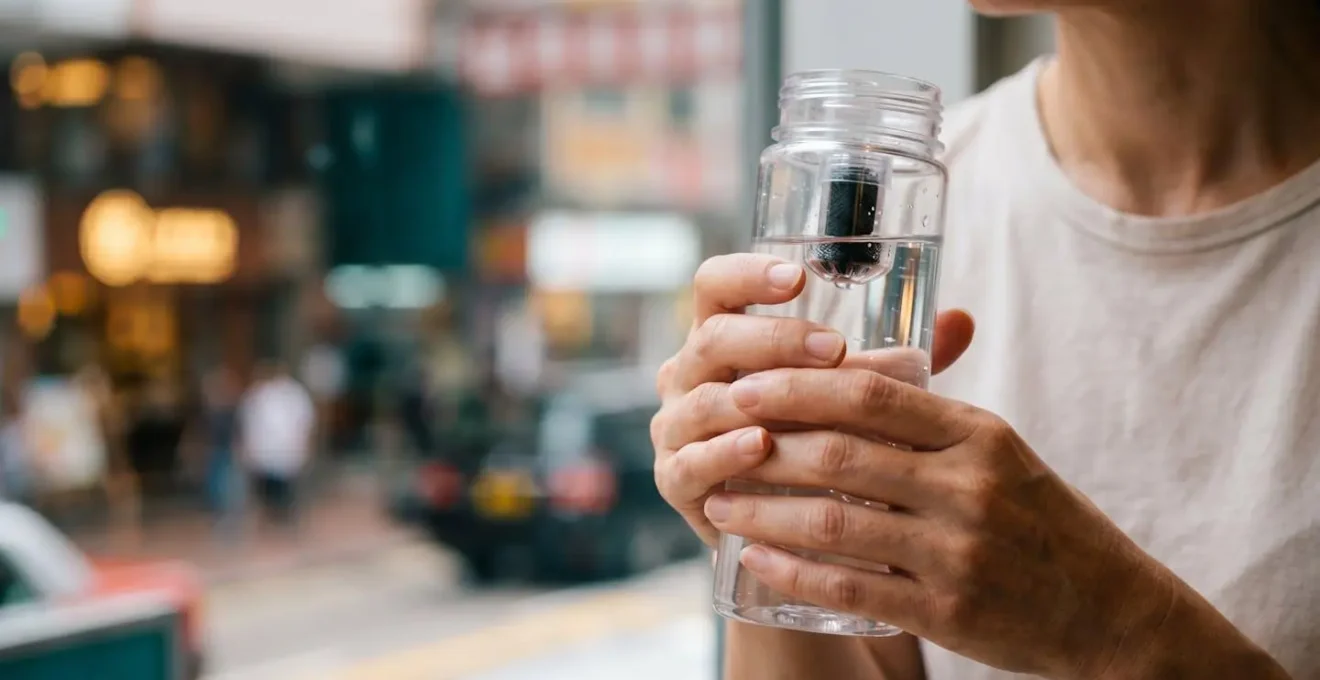
For a tourist, this creates a confusing situation. While the water in your hotel room is technically safe to drink from the tap, you will notice that almost no one else does. As the Nerd Nomads travel guide observes, this reveals a « gap between official recommendations and actual local behavior that tourists should be aware of. » The concerns about older pipes and building maintenance are not unfounded. Therefore, adopting a cautious approach is the wisest and most culturally sensitive path. Your hotel will likely provide complimentary bottled water each day, and the in-room kettle is there for a reason: for boiling water for tea, coffee, and drinking.
A more sustainable and empowering strategy is to travel with a filtered water bottle from a reputable brand like Lifestraw, Brita, or Grayl. This gives you complete control over your water quality, reduces plastic waste from single-use bottles, and allows you to refill from any tap with confidence. You can use boiled kettle water in your hotel room for hot drinks and your filtered bottle while you are out exploring the city. This hybrid approach respects local custom while providing a safe, convenient, and environmentally friendly solution to staying hydrated.
A Practical Hydration Strategy for Your Hong Kong Trip
- Invest in a Filtered Bottle: Purchase a reusable water bottle with a built-in filter. This is the most reliable way to ensure safe drinking water from any tap while reducing plastic waste.
- Use the Hotel Kettle: For hot beverages or plain drinking water in your room, use the kettle to boil tap water, following the local custom. It’s a good practice to clean it once before first use.
- Accept Hotel Bottles: Utilize the complimentary bottled water provided by your hotel, but try to supplement it with filtered or boiled water to minimize waste.
- Locate Convenience Stores: Identify nearby 7-Eleven or Circle K stores for purchasing large bottles of water if needed, which is more economical than buying small bottles on the go.
- Combine Methods: Use your filtered bottle for cold water during the day and rely on the kettle for hot drinks or refills in the evening for a comprehensive and safe hydration plan.
Frequently Asked Questions on Hong Kong Travel Logistics
What should I do if I don’t speak Cantonese during an emergency?
The 999 emergency service has multilingual interpretation capabilities. Clearly state ‘English please’ when the call connects. For non-emergencies, contact the Hong Kong Tourism Board multilingual hotline.
Which essential apps should I download before arriving in Hong Kong?
Download MyObservatory (official weather app with typhoon warnings), HKeMobility (real-time transport updates), and save the Tourism Board hotline. These apps can help prevent emergencies by keeping you informed of weather and transportation conditions.
Where can I find English-speaking medical care for non-urgent issues?
Guardian and Watsons pharmacy chains are widely available for over-the-counter medication. For minor illnesses requiring a doctor, private clinics in major districts offer English-speaking practitioners. Hotels can provide recommendations for nearby English-speaking clinics.