In summary:
- The key to a mess-free experience is a refined ritual, not a fight against stickiness.
- Proper reheating (steaming is best) is crucial for the perfect texture and easy unwrapping.
- Unwrap the zongzi from the wide top down, letting gravity assist you.
- Pairing with Pu’er tea is essential for cutting through the richness and aiding digestion.
- Understanding the cultural context, from legends to modern festivals, enhances the entire experience.
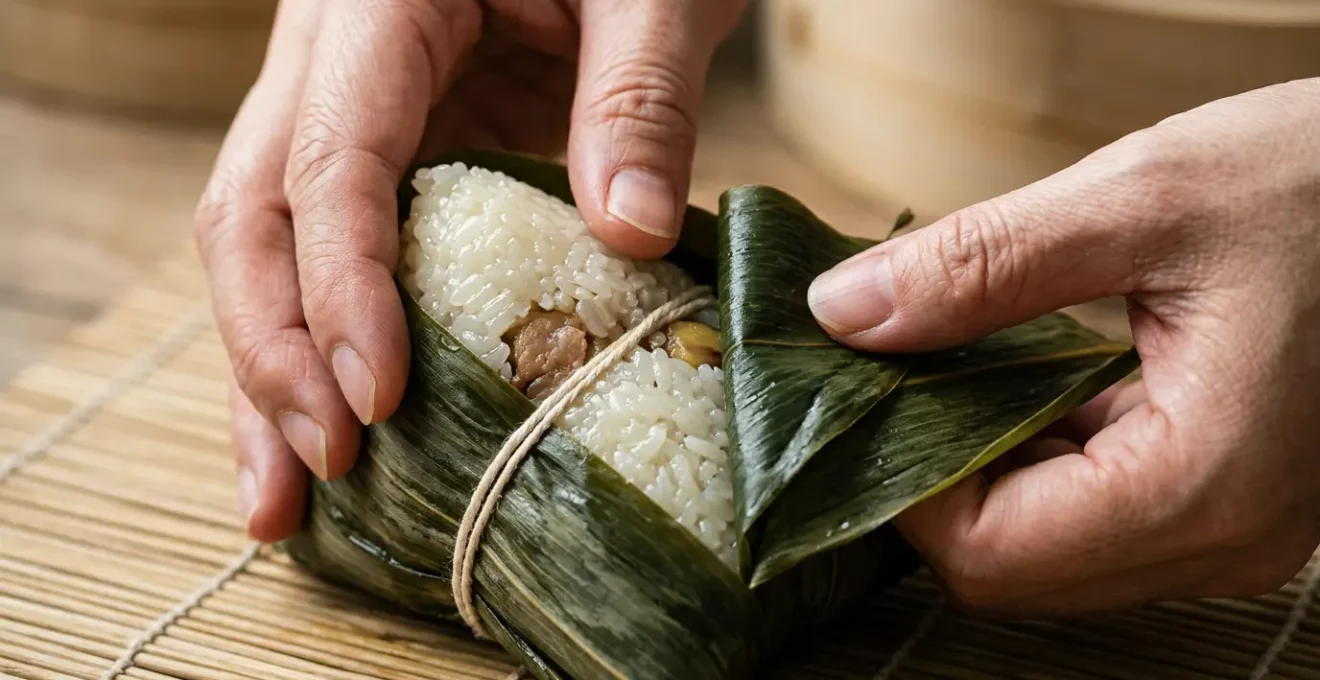
The first encounter with a zongzi can be intimidating. This pyramid of glutinous rice, lovingly wrapped in bamboo leaves and tied with string, promises a delicious savory or sweet treasure within. Yet, for the uninitiated, the reality is often a struggle against a surprisingly tenacious, sticky opponent, resulting in messy hands and a less-than-elegant dining experience. Many will tell you to « be careful » or « use scissors, » but these tips only address the symptoms, not the cause of the challenge.
The truth is, zongzi is more than just a snack; it’s a food steeped in thousands of years of history and tradition. But what if the secret to conquering the sticky mess wasn’t a trick, but an approach? What if, instead of battling the dumpling, you could participate in a culinary ritual? This guide reframes the act of eating zongzi from a clumsy task into a moment of refined appreciation. By understanding the dumpling’s structure, mastering the preparation, and embracing the culture surrounding it, you can transform potential frustration into pure enjoyment.
We will explore how to identify your zongzi before you even open it, the proper way to prepare it for eating, and the cultural significance that makes it so much more than a simple rice dumpling. Follow these steps, and you will not only eat zongzi cleanly but also with a newfound appreciation for this iconic festival food.
Summary: How to Master the Art of Eating Zongzi
- How to Tell Sweet Zongzi from Savory Zongzi Before Unwrapping?
- What Is the Best Way to Reheat a Refrigerated Zongzi?
- Why Do Locals Drink Pu’er Tea specifically with Zongzi?
- Where to Buy Zongzi Outside of the Festival Season?
- Why Are Zongzi Thrown into the River in Legends?
- Pu’er or Jasmine: Which Tea Pairs Best with Greasy Dim Sum?
- Do the ‘Peace Buns’ Actually Taste Good or Are They Just Symbols?
- Is the Dragon Boat Festival at Stanley a Sport Event or a Beach Party?
How to Tell Sweet Zongzi from Savory Zongzi Before Unwrapping?
The first step in the refined ritual of enjoying zongzi is knowing what you’re about to eat. While nothing is foolproof, there are distinct regional traditions and visual cues that can help you distinguish between a sweet (tián) and savory (xián) dumpling. The preference is famously divided across China; southern regions overwhelmingly favor savory fillings, to the point where e-commerce data shows that savory zongzi sales were three times higher than sweet ones during a recent Dragon Boat Festival.
This regional preference provides your first clue. Zongzi from southern China, like the Cantonese style, are typically larger and filled with rich ingredients like pork belly, salted duck egg yolk, and shiitake mushrooms. In contrast, northern Chinese zongzi are often smaller, simpler, and filled with sweet ingredients like red bean paste or jujubes (Chinese dates). This difference is rooted in local agriculture and climate.
Visually, inspect the leaves. Savory zongzi are often marinated in soy sauce, which can stain the bamboo leaves, giving them a darker, sometimes mottled brown appearance. Sweet zongzi, lacking these dark marinades, usually retain the lighter, natural green or yellowish-tan color of the dried leaves. The shape can also be an indicator: long, horn-shaped zongzi are often sweet, while the classic, stout pyramid shape can be either, but is more commonly savory in the south. By making an informed guess, you can prepare your palate—and your tea pairing—accordingly.
This initial observation is the first courtesy you pay to the meal, setting the stage for the steps to come.
What Is the Best Way to Reheat a Refrigerated Zongzi?
A cold, hard zongzi is the primary cause of a messy eating experience. The glutinous rice, when chilled, becomes dense and overly sticky, making the leaves adhere stubbornly. The secret to a clean separation and a soft, delectable texture is proper reheating. While a microwave offers speed, it is the enemy of good zongzi, often creating rubbery hot spots and leaving other parts cold. The superior method, without question, is steaming.
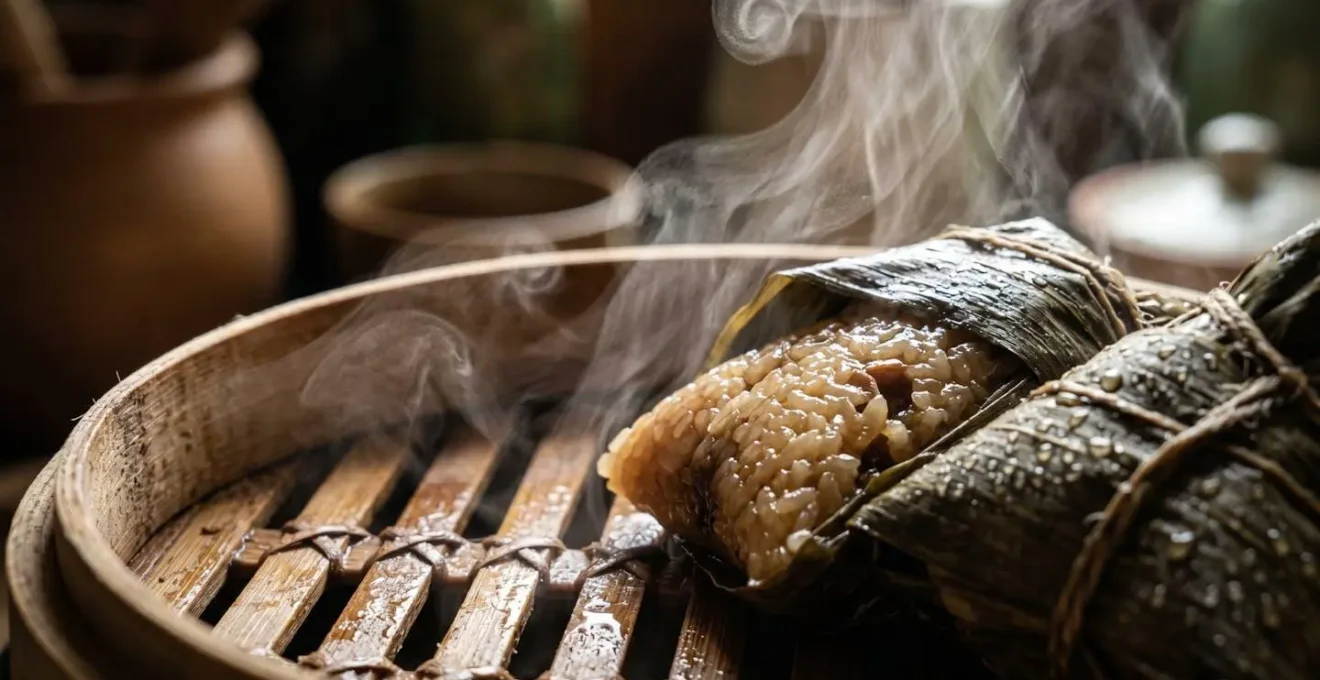
Steaming gently and evenly warms the zongzi, allowing the moisture to permeate the rice and loosen its grip on the leaves. This restores the intended soft, sticky, and chewy texture. Here are the recommended methods for preparation:
- Steaming (Optimal): Place the zongzi (still in its leaves) in a steamer basket over a pot of simmering water. Steam for 15-20 minutes, or until it is thoroughly heated and soft to the touch. This preserves moisture and flavor perfectly.
- Boiling: Submerge the wrapped zongzi completely in a pot of boiling water for 10-15 minutes. This method is effective but carries a slight risk of the zongzi becoming waterlogged if the wrapping isn’t perfectly tight, which can dilute the flavor.
- Pan-Frying (For a new experience): For an interesting textural contrast, first reheat the zongzi by steaming or boiling. Then, unwrap it, slice it into thick pieces, and pan-fry the cut surfaces in a lightly oiled pan until a golden, crispy crust forms. This creates a delightful combination of crunchy exterior and soft interior.
By investing the time to reheat your zongzi correctly, you are not just warming up food; you are preparing it to be eaten as it was meant to be, setting the stage for an effortless and mess-free experience.
Why Do Locals Drink Pu’er Tea specifically with Zongzi?
The pairing of zongzi with tea is not a matter of simple taste; it is a functional and traditional choice born from centuries of culinary wisdom. While any hot tea is pleasant, the specific recommendation of Pu’er tea, especially with savory zongzi, is a masterstroke of food science. Savory zongzi are incredibly rich, often containing fatty pork belly and rich egg yolks, all held together by dense, starchy glutinous rice. This is where Pu’er tea performs its magic.
Pu’er is a fermented tea, and this process gives it unique properties. According to a deep dive into its composition by tea experts, Pu’er contains beneficial microorganisms and enzymes that actively help break down the heavy fats and complex carbohydrates found in zongzi. Its robust, earthy flavor profile acts as a powerful palate cleanser, cutting through the richness of the pork and preventing the greasy feeling that can sometimes accompany such a heavy meal. Each sip refreshes your mouth, allowing you to appreciate the next bite as much as the first.
This digestive aid is a cornerstone of traditional Chinese medicine and dining philosophy. The goal is balance. The heaviness (a yin quality) of the zongzi is perfectly balanced by the cleansing, digestive power (a yang quality) of the Pu’er tea. It transforms the act of eating from simple consumption into a harmonious experience, ensuring you feel satisfied and comfortable, not overly full and sluggish. For sweet zongzi, a lighter, more floral tea like Jasmine or a green tea can be a wonderful complement, but for the classic savory dumpling, Pu’er is the undisputed champion.
Choosing the right tea is as important as reheating the zongzi itself—it’s an integral part of the ritual.
Where to Buy Zongzi Outside of the Festival Season?
Once reserved for the Dragon Boat Festival, the popularity of zongzi has grown so much that you no longer need to wait for a specific time of year to enjoy them. Thanks to modern distribution and a growing appreciation for regional Chinese cuisine, quality zongzi are now available in most cities with a significant Asian population. The challenge has shifted from finding them at all to finding high-quality, authentic versions.
Your primary destination should be a well-stocked Asian supermarket. These stores typically offer zongzi in several forms, catering to different needs. For the best quality, look for those made in-house, but frozen options can also be excellent. When selecting, be a discerning customer. Check the ingredient list for whole, recognizable foods and avoid those with excessive fillers or preservatives. If buying frozen, avoid packages with a lot of ice crystals, as this can indicate that the product has thawed and been refrozen, which damages the texture of the rice.
However, to truly elevate your experience, the best zongzi often come from smaller, more personal sources. Many local Chinese restaurants make their own to sell, and these are often far superior to mass-produced versions. The ultimate source, however, is often found within the community itself. For the most authentic and lovingly prepared zongzi, a little networking can go a long way.
Your Action Plan: Sourcing High-Quality Zongzi
- Navigate Asian Supermarkets: Systematically check three key zones: the hot food section for fresh, same-day zongzi; the refrigerated aisle for options with a 3-5 day shelf life; and the frozen section for long-term storage varieties.
- Inspect for Quality: Scrutinize the ingredient list to ensure minimal fillers and verify production dates. For frozen zongzi, look for tightly sealed packaging without excessive ice crystals, which suggests a stable cold chain.
- Explore Digital Avenues: Use Asian food delivery apps like Fantuan or Chowbus to find restaurant-made zongzi delivered to your door. This is an excellent way to sample different regional styles from local eateries.
- Connect with the Community: Join local Chinese community groups on platforms like Facebook or WeChat. During festival seasons and beyond, home cooks often sell traditional, homemade zongzi that far surpass commercial quality.
- Prioritize Authenticity: When in doubt, prioritize zongzi from home cooks or trusted local restaurants. Their connection to traditional recipes almost always yields a superior flavor and texture compared to factory-produced versions.
Finding a great zongzi is the foundation upon which the entire refined ritual is built.
Why Are Zongzi Thrown into the River in Legends?
The act of eating zongzi is inextricably linked to the Dragon Boat Festival and the legend of Qu Yuan, a poet and minister who lived during the Warring States period of ancient China. The story, a cornerstone of Chinese culture, directly explains the origin of these rice dumplings. After being exiled by a corrupt king, the patriotic Qu Yuan drowned himself in the Miluo River on the fifth day of the fifth lunar month as a form of protest.
According to legend, local villagers who admired him raced out in their boats to try and save him or at least retrieve his body. When they couldn’t find him, they began to throw packets of rice into the water. This act had a dual purpose: it was both a food offering to Qu Yuan’s spirit and a way to distract the fish and other creatures away from his body, in hopes of preserving it from being eaten.

Deeper folklore adds another layer to the tradition. It’s said that Qu Yuan’s spirit later appeared to the villagers, revealing that a dragon was intercepting the rice offerings. He instructed them to wrap the rice in bamboo leaves and tie it with colorful silk threads, as these were things the dragon feared. This not only explains the modern form of zongzi but also reflects ancient Chinese beliefs about spiritual protection and dragon worship. The desire to keep the body intact was paramount, a profound act of filial piety and respect for one’s ancestors. Understanding this legend transforms the zongzi from a simple food into a symbol of loyalty, sacrifice, and cultural memory.
This historical context elevates the meal, connecting you to a tradition that has endured for over two millennia.
Pu’er or Jasmine: Which Tea Pairs Best with Greasy Dim Sum?
The principle of pairing Pu’er tea with rich zongzi can be extended to other culinary experiences, most notably the beloved tradition of yum cha, or dim sum. When faced with a table laden with greasy, fried, or rich dim sum dishes—such as siu mai (pork dumplings), har gow (shrimp dumplings), or spring rolls—the choice of tea becomes a crucial element of the meal’s success. The two most common offerings are Pu’er and Jasmine.
Following the same logic as our zongzi pairing, Pu’er is the superior choice for a heavy dim sum meal. Its fermented, earthy character and digestive properties are perfectly suited to cut through the fat and oil. It cleanses the palate between different dishes, allowing you to distinguish the delicate flavors of a steamed dumpling from the robust taste of a pan-fried turnip cake. It prevents the feeling of being weighed down, enabling you to sample a wider variety of dishes comfortably.
Jasmine tea, on the other hand, is a green tea scented with jasmine blossoms. It is light, floral, and aromatic. While delightful on its own or with lighter fare, its delicate profile can be completely overwhelmed by greasy or heavily seasoned foods. Jasmine tea is best reserved for meals featuring steamed vegetables, light seafood, or delicate, sweet buns. For a classic, rich dim sum feast, choosing Pu’er is not just a matter of taste, but a strategic decision to enhance digestion and elevate the entire dining experience.
This knowledge of functional pairings is a hallmark of a sophisticated diner, applicable far beyond the Dragon Boat Festival.
Do the ‘Peace Buns’ Actually Taste Good or Are They Just Symbols?
When exploring Chinese festival foods, it’s easy to assume all have the same culinary standing as zongzi. A perfect counterpoint is the « Peace Bun » from Hong Kong’s Cheung Chau Bun Festival. These white, steamed buns, stamped with the Chinese characters for « peace » (平安), are the festival’s iconic image. But are they a culinary delight or primarily a symbol?
Traditionally, these buns were simple, plain steamed dough—more of a symbolic offering and a photo opportunity than a gastronomic treat. Their primary function was ceremonial. In recent years, to appeal to modern palates, bakeries have started filling them with sweet pastes like lotus seed or red bean. While this has certainly improved their flavor, their essence remains deeply rooted in symbolism rather than complex culinary craftsmanship.
This contrasts sharply with zongzi, which is, at its heart, a culinary masterpiece. The texture of the glutinous rice, the interplay of flavors from the fillings, and the aroma from the bamboo leaves are all inseparable from the experience. The following table highlights the fundamental differences between these two festival foods.
| Aspect | Traditional Peace Buns | Zongzi (Rice Dumplings) |
|---|---|---|
| Primary Function | Symbolic/ceremonial value | Culinary masterpiece with ritual significance |
| Flavor Profile | Often bland, plain steamed dough | Complex flavors from glutinous rice, meat, mushrooms, salted egg |
| Modern Evolution | Now filled with lotus seed paste, red bean, savory options | Continuously innovating with luxury ingredients (abalone, truffle) |
| Texture Experience | Soft, basic bread texture | Distinctive sticky, chewy glutinous rice texture inseparable from experience |
| Cultural Persistence | Primarily photo-op and symbolic purchase | Eaten year-round with 2000+ year culinary tradition |
While both are important, zongzi stands apart for its deep, enduring, and complex role on the plate, not just in the ceremony.
Key Takeaways
- Mastering zongzi begins with identification: dark leaves often mean savory, light leaves mean sweet.
- The secret to a mess-free experience is proper reheating. Steaming is the gold standard for perfect texture.
- The pairing is part of the meal: Pu’er tea is essential for digesting rich, savory zongzi and cleansing the palate.
Is the Dragon Boat Festival at Stanley a Sport Event or a Beach Party?
To fully understand zongzi’s place in the modern world, one must look at how its native festival has evolved. The Dragon Boat Festival is a massive cultural event, with mainland China alone seeing a staggering 119 million domestic trips made during the holiday period. But the nature of the celebration can vary dramatically by location, and nowhere is this more apparent than at Hong Kong’s famous Stanley Main Beach Dragon Boat Championships.
The answer to the question is: it’s both. The event undergoes a fascinating transformation throughout the day, embodying a unique cultural fusion. The morning is dominated by serious athletic competition. Teams, many of whom have trained for months, engage in intense races that require power, synchronization, and technique. This part of the day is a true sporting event, honoring the tradition of the villagers who raced to save Qu Yuan.
However, as the afternoon wears on, the atmosphere shifts. Fueled by the large expatriate community and a celebratory holiday mood, the event morphs into a massive, vibrant beach party. The focus moves from the water to the sand, with crowds, music, and a carnival-like atmosphere taking over. This hybrid experience is distinct to Hong Kong’s international demographic. In contrast, festivals in mainland China or Taiwan tend to remain more traditional, with a stronger focus on family gatherings, memorial ceremonies, and the shared ritual of making and eating zongzi. The Stanley festival showcases how an ancient tradition can adapt and take on a new, dynamic identity in a global city.
By understanding this evolution, you can appreciate how zongzi remains a relevant and cherished part of a celebration that is both deeply traditional and excitingly modern. Your next step is to take this knowledge and turn it into a delicious, mess-free reality.