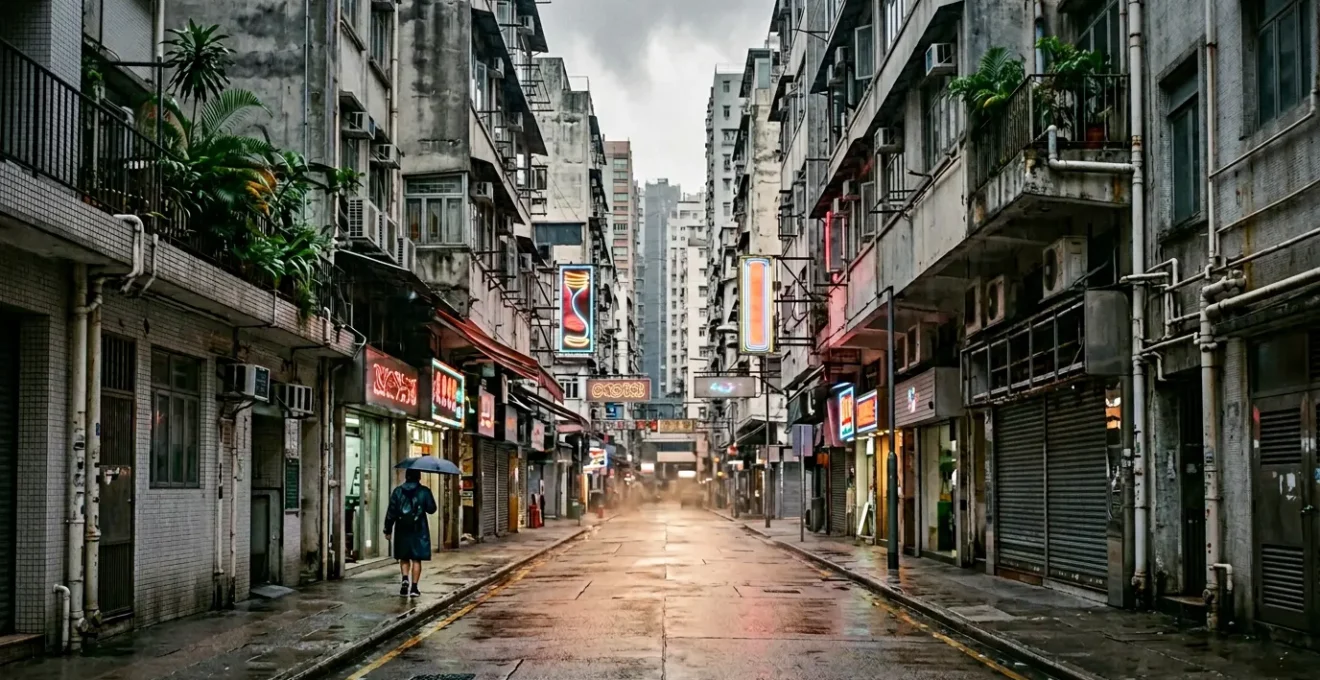
The key to preventing heat rash in Hong Kong’s humidity is not just about staying cool; it’s about actively managing the moisture trapped against your skin.
- Your choice of fabric is more critical than its color; synthetic moisture-wicking materials outperform cotton, which acts like a sponge.
- Rapid temperature shifts from outdoor heat to aggressive indoor air-conditioning can stress the skin; strategic layering is essential.
- Proper hydration requires replacing lost salts (electrolytes), not just drinking water, to maintain your body’s internal balance.
Recommendation: Focus on creating a breathable « microclimate » around your skin with the right clothing and hydration strategy, rather than simply avoiding the heat.
For a visitor from a cool, dry climate, arriving in Hong Kong in August can be a shock to the system. The oppressive wave of heat is one thing, but it’s the near-total humidity that presents a unique challenge to your skin. Within days, many travelers develop an intensely itchy, red, bumpy rash, commonly known as heat rash. From a clinical perspective, this condition is called miliaria, and it occurs when your sweat ducts become blocked, trapping perspiration under the skin. The usual advice—stay in the shade, drink water—is a starting point, but it often fails to address the root cause in such an extreme environment.
Most guides focus on basic cooling, but they miss the critical factor: moisture management. When your skin cannot « breathe, » sweat accumulates, leading to inflammation and the characteristic rash. This is not just a minor annoyance; it can be deeply uncomfortable and ruin your travel experience. As a dermatologist specializing in tropical conditions, I can tell you that preventing miliaria is less about avoiding sweat and more about facilitating its evaporation. It’s about mastering your skin’s personal microclimate—the thin layer of air and moisture directly in contact with your body.
This guide moves beyond generic tips. We will delve into the science of why certain fabrics fail in 90% humidity, how to counteract the physiological stress of extreme air conditioning, and why electrolyte balance is more important than water volume for true hydration. We will equip you with a practical, dermatologically-sound strategy to keep your skin clear and comfortable, allowing you to focus on the vibrant energy of Hong Kong, not the incessant itch.
This article provides a comprehensive overview of the key strategies for staying comfortable and healthy in Hong Kong’s unique climate. The following sections will guide you through everything from clothing choices to understanding local weather warnings.
Summary: A Clinical Approach to Surviving Hong Kong’s Climate
- Cotton or Synthetics: What Fabric breathes Best in 90% Humidity?
- Why Do You Need a Cardigan When It’s 33°C Outside?
- Why Is Pocari Sweat Better Than Water for Hiking in HK Heat?
- What Does a T8 Signal Mean for Your Travel Plans?
- Where Are the Best Public Pools to Cool Off in the City Center?
- Why Can Temple Smoke Trigger Asthma Attacks in Sensitive Travelers?
- What Repellent Works Best for Sandflies on Remote Beaches?
- Do You Need a VPN to Access Google and Facebook in Hong Kong?
Cotton or Synthetics: What Fabric breathes Best in 90% Humidity?
When packing for a tropical climate, the conventional wisdom is to choose light, natural fabrics like cotton. From a dermatological standpoint, this can be a critical mistake in an environment as humid as Hong Kong. The primary goal for preventing heat rash is not just allowing air to circulate, but actively wicking moisture away from the skin. In August, with average relative humidity reaching 81%, the air is already saturated with water, severely inhibiting the natural evaporation of sweat.
This is where fabric science becomes essential. Cotton is highly breathable, which feels pleasant in dry heat. However, it is also hydrophilic, meaning it absorbs and retains moisture. Once you start sweating in Hong Kong’s humidity, a cotton shirt becomes a heavy, damp cloth plastered to your skin. This creates the perfect occlusive environment for blocking sweat ducts and triggering miliaria. The fabric ceases to be breathable and instead acts as a wet compress, exacerbating skin irritation.
This macro photograph shows the texture of a modern synthetic fabric designed to manage moisture, a key ally in humid climates.

In contrast, modern synthetic materials like certain polyesters, nylon, or merino wool are engineered to be hydrophobic. They do not absorb moisture; they pull it from the skin’s surface and transport it to the outer layer of the fabric to evaporate. As noted by material experts, « Cotton, for example, breathes great but holds moisture like a sponge. Polyester wicks well but needs extra design elements to boost breathability. » For visitors from cooler climates whose skin is unaccustomed to constant dampness, choosing moisture-wicking synthetics is the single most important clothing decision you can make. Look for loose-fitting athletic or travel wear designed specifically for hot, humid conditions.
Why Do You Need a Cardigan When It’s 33°C Outside?
It sounds counterintuitive to pack a warm layer for a trip where the outdoor temperature consistently hovers above 30°C. However, one of the most significant and often overlooked stressors for your skin and body in Hong Kong is thermal shock. The city runs on powerful air conditioning, and transitioning from the sweltering outdoor humidity into a shopping mall, MTR station, or restaurant can mean a sudden temperature drop of 15°C or more.
From a physiological perspective, this rapid change forces your body to constantly readjust. Outdoors, your blood vessels dilate to release heat and you sweat profusely. When you step inside, your body must quickly constrict those vessels to conserve heat. This yo-yo effect can be exhausting. More importantly for skin health, the frigid, dry air of the AC can be harsh. While it provides relief, it can also strip moisture from skin that is already stressed and inflamed from the heat, leading to dryness and irritation on top of any existing heat rash.
The solution is not to avoid the cool air, but to manage the transition. Having a light, easily packable layer—like a thin linen shirt, a pashmina, or a light cardigan—is non-negotiable. You can put it on a few minutes before entering an air-conditioned space and take it off after you’ve been back outside for a few minutes. This simple act buffers the sudden temperature change, giving your body’s thermoregulation system time to adapt gently. With studies showing Hong Kong’s aggressive air conditioning can drop to 18°C, this layer becomes a crucial tool for maintaining both comfort and skin equilibrium.
Why Is Pocari Sweat Better Than Water for Hiking in HK Heat?
Staying hydrated is paramount when exploring Hong Kong, especially if you’re undertaking physical activity like hiking. However, in extreme heat and humidity, « hydration » means more than just drinking water. When you sweat, you don’t just lose water; you lose critical electrolytes like sodium, potassium, and magnesium. Replenishing with plain water alone can lead to a dangerous condition called hyponatremia, where the salt concentration in your blood becomes dangerously diluted.
This is particularly relevant in Hong Kong’s August climate, where studies show the heat index can reach a dangerous 42°C (107.6°F). At these levels, your body’s sweat rate can be enormous. From a clinical perspective, maintaining electrolyte homeostasis is as important as maintaining fluid volume. Isotonic sports drinks, like the ubiquitous Pocari Sweat or Aquarius found in every Hong Kong convenience store, are formulated for this exact purpose.
Their « isotonic » nature means they have a similar concentration of salt and sugar to your body’s own fluids. This allows for significantly faster absorption from the gut into the bloodstream compared to plain water. As a comprehensive study on hydration explains, « During intense sweating…Drinking only plain water can lead to hyponatremia…Isotonic drinks contain similar salt and sugar concentrations to human blood, allowing for significantly faster absorption. » For a traveler not acclimatized to this level of exertion in heat, relying solely on water during a hike on Dragon’s Back or Lion Rock is a serious risk. Always carry at least one bottle of an isotonic drink for every one or two bottles of water.
What Does a T8 Signal Mean for Your Travel Plans?
Beyond the daily heat and humidity, Hong Kong’s late summer is also typhoon season. Understanding the city’s warning system is not just a matter of convenience; it’s a critical safety issue. The Hong Kong Observatory uses a numbered signal system from 1 to 10. While signals 1 and 3 are advisories, the issuance of a Typhoon Signal No. 8 (T8) is a major event that brings the city to a halt.
A T8 signal means that a typhoon is approaching and sustained winds of gale force are expected. When the « pre-T8 » announcement is made, you typically have a two-hour window before the signal is officially hoisted. In this time, the city transforms. Office workers pour out of buildings to get home, supermarket aisles fill with people stocking up on supplies, and public transportation begins to shut down. For a tourist, being caught unaware can leave you stranded.
Once the T8 is in effect, almost everything closes: shops, restaurants, banks, and all tourist attractions. Ferry services are suspended, buses stop running, and while the underground MTR lines may operate on a limited schedule, all over-ground train and light rail services cease. Your travel plans for the day are unequivocally cancelled. The primary instruction is to return to your hotel or accommodation and stay indoors. It’s essential to have water and food on hand, as you may be confined for several hours or even a full day. Do not be tempted to go « typhoon-watching » by the waterfront; the winds and storm surge are extremely dangerous.
Where Are the Best Public Pools to Cool Off in the City Center?
When the urban heat becomes overwhelming, one of the most effective and accessible ways to cool down is by visiting one of Hong Kong’s excellent public swimming pools. Managed by the Leisure and Cultural Services Department (LCSD), these facilities are clean, affordable, and offer a genuine respite from the oppressive humidity. For a visitor, they represent a perfect way to lower your core body temperature and give your skin a break from constant sweating.
These are not just simple pools; many are large complexes with multiple indoor and outdoor pools, waterslides, and ample deck space. They offer a refreshing glimpse into local life and are a far more immersive experience than a private hotel pool. Immersing your body in cool water is the fastest way to combat heat stress and can help soothe irritated skin by washing away sweat and salt buildup. A few hours at a public pool can effectively reset your body’s tolerance for the heat.
Some of the most centrally located and impressive options for tourists include:
- Kowloon Park Swimming Pool: Located right in the heart of Tsim Sha Tsui, this massive complex has four heated indoor pools and three outdoor leisure pools, all set within the greenery of Kowloon Park. It’s an urban oasis.
- Victoria Park Swimming Pool: A newer, state-of-the-art facility in Causeway Bay on Hong Kong Island. It features a 50-meter main pool, a multi-purpose pool with a movable floor, and a large spectator stand, often hosting swimming competitions.
- Kennedy Town Swimming Pool: Famous for its striking modern design and stunning panoramic views over Victoria Harbour, this facility on the western side of Hong Kong Island is an architectural gem and a fantastic place to cool off.
This image captures the scale and relief offered by Hong Kong’s public pools, set against the dense urban landscape.

Why Can Temple Smoke Trigger Asthma Attacks in Sensitive Travelers?
A visit to one of Hong Kong’s beautiful and atmospheric temples, like Man Mo Temple or Wong Tai Sin Temple, is a highlight for many travelers. However, the fragrant clouds of incense smoke that define these spaces can pose a significant respiratory risk, especially for those with asthma or other sensitivities. From a medical standpoint, the danger lies not in the visible smoke itself, but in the microscopic particles it contains.
As one medical analysis points out, « The real danger isn’t the visible smoke but the invisible fine particles (PM2.5) from incense combustion, which can penetrate deep into the lungs and trigger inflammation. » These PM2.5 particles are small enough to bypass the body’s natural defenses in the nose and throat, lodging deep within the lung tissue and airways. For an individual with asthma, this can trigger bronchospasm and an immediate asthma attack. For others, it can cause coughing, shortness of breath, and eye or throat irritation.
This doesn’t mean you must avoid temples altogether. Instead, a strategic approach can minimize your exposure:
- Visit Early: Go early in the morning on a weekday when crowds are smaller and the volume of incense being burned is at its lowest.
- Stay Upwind: Be mindful of airflow and position yourself upwind of the main incense burners. Stick to outdoor or well-ventilated sections of the temple complex.
- Limit Exposure: Apply a « look, don’t linger » principle in the most heavily concentrated areas. Appreciate the atmosphere from a slight distance.
- Carry Medication: If you have asthma, always carry your reliever inhaler with you and ensure your travel companions know where it is. Consider taking a preventive puff before you enter if your doctor advises it.
By being mindful of these factors, you can enjoy the rich cultural heritage of Hong Kong’s temples without compromising your respiratory health.
What Repellent Works Best for Sandflies on Remote Beaches?
While Hong Kong is a bustling metropolis, it also boasts beautiful and remote beaches, particularly on Lantau Island and in the Sai Kung peninsula. However, these idyllic spots are often home to a persistent pest: the sandfly. Smaller than mosquitoes, their bites can be intensely itchy and cause large, painful welts, especially on individuals with no prior exposure. Standard mosquito repellent may not be sufficient if not applied correctly.
The most effective chemical repellent against both sandflies and mosquitoes is DEET (N,N-Diethyl-meta-toluamide). For Hong Kong’s conditions, a concentration of 20-30% is recommended. It is not the strength of the DEET that matters most, but the correctness of its application, especially when combined with sunscreen. The sequence is critical: sunscreen must be applied first, allowed to dry completely, and then repellent applied on top. Reversing this order can render both products ineffective.
Unlike mosquitoes, sandflies in Hong Kong’s remote beach areas exhibit distinct behavioral patterns that require targeted prevention strategies. They are most active during dusk and dawn periods, fly at lower altitudes targeting ankles and lower legs, and their bites typically cause more intense allergic-type reactions than standard mosquito bites. This knowledge allows beachgoers to time visits and apply protection strategically to vulnerable areas.
– Health.harvard.edu, Heat rash: How to spot it and what to do
Because sandflies fly low to the ground, they predominantly bite ankles and lower legs. It is essential to concentrate repellent application in these specific areas. A light spray on your arms will do little to prevent the dozens of bites you might receive around your feet.
Your Action Plan: DEET Application for Sandfly Protection
- Base Layer: Apply sunscreen first to all exposed skin and wait a full 20 minutes for it to absorb completely.
- Repellent Application: Apply a DEET-based repellent (20-30%) over the top of the sunscreen.
- Target Zone: Focus the application heavily on your feet, ankles, and lower legs up to the knee.
- Timing: Be extra vigilant and reapply repellent during peak sandfly activity hours: dawn and dusk.
- Post-Swim Reapplication: Always reapply both sunscreen and repellent after swimming and towel-drying.
Key Takeaways
- Preventing heat rash is about active moisture management, not just cooling down. Choose synthetic wicking fabrics over absorbent cotton.
- Counteract thermal shock from extreme A/C by carrying a light layer to ease the transition between outdoor heat and indoor cold.
- True hydration in extreme humidity requires replacing lost electrolytes with isotonic drinks, not just drinking plain water.
Do You Need a VPN to Access Google and Facebook in Hong Kong?
A common question for travelers familiar with mainland China’s « Great Firewall » is whether similar internet restrictions apply in Hong Kong. The short answer is no. Under the « One Country, Two Systems » framework, Hong Kong maintains a free and open internet. You do not need a VPN (Virtual Private Network) to access international websites and services like Google, Facebook, Instagram, WhatsApp, X (formerly Twitter), or The New York Times. They are all freely and directly accessible.
However, that does not mean a VPN is useless for a traveler in Hong Kong. The primary benefit shifts from censorship circumvention to security and privacy. Hong Kong offers ubiquitous free public Wi-Fi in MTR stations, coffee shops, shopping malls, and at the airport. While convenient, these networks are unsecured, making your device vulnerable to data interception by malicious actors. A VPN encrypts your internet connection, creating a secure tunnel that protects your sensitive information—like passwords, banking details, and private messages—from being snooped on while you use public Wi-Fi.
A secondary benefit is accessing geo-blocked content from your home country. If you want to watch a show on your specific country’s Netflix library or access a service like BBC iPlayer, a VPN allows you to set your virtual location back home, bypassing these regional restrictions. So, while not essential for basic access, a VPN is still a highly recommended tool for any traveler concerned with digital security and content access.
By understanding these nuances of the local environment—from climate and clothing to digital security—you can ensure your trip to Hong Kong is safe, comfortable, and focused on discovery.
Frequently Asked Questions about Digital Access in Hong Kong
Is a VPN required to access Google, Facebook, or other open internet services in Hong Kong?
No, unlike mainland China, Hong Kong does not require a VPN to access the open internet including Google, Facebook, Instagram, WhatsApp, and other international platforms. These services are freely accessible without restrictions.
Why should travelers still consider using a VPN in Hong Kong?
The primary reasons are security and privacy on ubiquitous public Wi-Fi networks found in MTR stations, cafes, shopping malls, and Hong Kong International Airport. A VPN encrypts your data and protects sensitive information when using these public networks.
Can a VPN help access home country streaming services while in Hong Kong?
Yes, using a VPN to set your virtual location back to your home country allows you to access geo-blocked streaming libraries like Netflix, BBC iPlayer, Hulu, or other region-specific content that would otherwise be unavailable in Hong Kong.