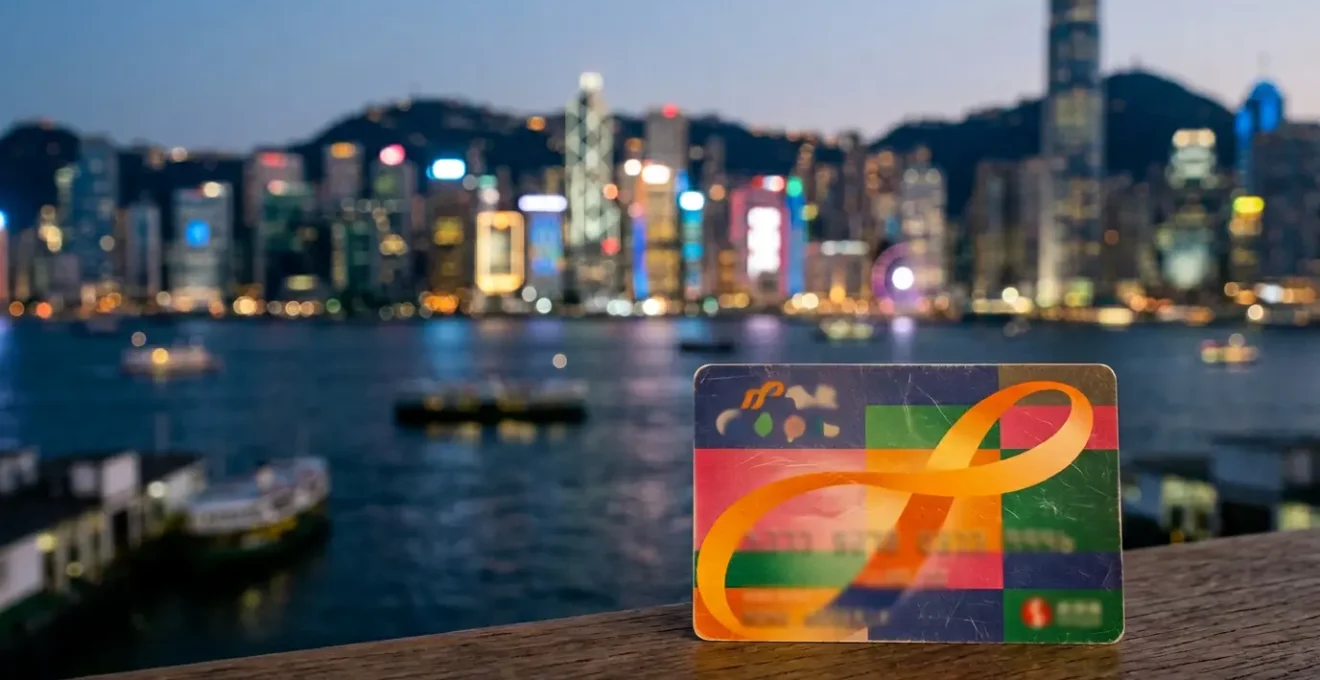
The choice between a Sold and an On-Loan Octopus isn’t about souvenirs; it’s a strategic calculation of your personal tolerance for end-of-trip administrative friction.
- The On-Loan card offers a refundable deposit but requires a final task at the airport to reclaim your funds, minus a handling fee.
- The Sold (Tourist) card acts as a functional keepsake with zero end-of-trip hassle, but the initial cost and any remaining balance are non-refundable.
Recommendation: For maximum convenience and a frictionless departure, the Sold card is the superior choice. For maximum value recovery, the On-Loan card is optimal if you don’t mind the refund process.
For any short-term visitor to Hong Kong, the question inevitably arises: which Octopus card should I get? The standard advice often boils down to a simple binary: the On-Loan card is for people who want their deposit back, and the Sold (or Tourist) Octopus is for those who want a souvenir. While technically true, this surface-level view misses the core of the decision. As a payment systems analyst, I see this not as a simple purchase but as your first step in managing a temporary, personal micro-payment ecosystem for the duration of your trip. The « best » card isn’t about aesthetics; it’s about optimizing your entire travel workflow, from arrival to departure.
The real deciding factor is your personal tolerance for « friction »—the small administrative hurdles that consume time and mental energy. The On-Loan card introduces a mandatory end-of-trip task: the refund process. The Sold card eliminates this task entirely. This guide will deconstruct the Octopus ecosystem, moving beyond the refund debate to analyze critical operational aspects like negative balance allowances, merchant acceptance, and integration with essential travel apps. By understanding the system’s mechanics, you can make a strategic choice that aligns perfectly with your travel style, ensuring a truly seamless Hong Kong experience.
To help you master this essential Hong Kong tool, we will explore the key operational questions every tourist faces. This structured analysis will provide the data you need to select and manage your personal payment ecosystem effectively.
Summary: Sold vs On-Loan Octopus: Which Card Type is Best for Tourists?
- Where Can You Get Your Octopus Deposit Back at the Airport?
- What Happens If You Tap Your Octopus with Insufficient Funds?
- Can You Pay for McDonald’s and 7-Eleven with Octopus?
- How to Top Up an Octopus Card Using Cash at a Convenience Store?
- Does the Tourist Octopus App Work on Android Phones Without NFC?
- Why Do You Pay When Getting Off the Tram, Not When Getting On?
- Should You Pay in GBP or HKD When Using a UK Card at Luxury Stores?
- How to Use the Citymapper App to Navigate Hong Kong Like a Local?
Where Can You Get Your Octopus Deposit Back at the Airport?
For travelers who opt for the On-Loan Octopus card, managing the end-of-trip workflow is a key consideration. The refund process is centralized and designed for tourist convenience, primarily at the Hong Kong International Airport (HKIA). You can get your deposit (typically HK$50) and any remaining balance back at any MTR Customer Service Centre, including the ones located at the Airport Express stations in the airport’s Arrivals Hall or within the main terminal.
However, this process is not without cost. The refund is subject to a handling fee, which introduces a small but important variable into your total cost calculation. According to official Octopus refund procedures, a fee of HK$11 or 1% of the remaining value is charged, whichever is higher. This fee is waived if the card is returned within 90 days of issue, which applies to most short-term tourists. If you decide to cancel it after this period, the fee will be deducted. It’s a small detail, but for the systems-minded traveler, it’s a piece of data that influences the cost-benefit analysis of the On-Loan card versus the Sold card.
This « exit friction » is the primary trade-off for the On-Loan card’s refundability. You must allocate a few minutes before check-in to queue and process the refund. For some, this is a minor inconvenience; for others rushing to catch a flight, it’s a task best avoided. Your decision should factor in this final step of the card’s lifecycle.
What Happens If You Tap Your Octopus with Insufficient Funds?
One of the most elegant features of the Octopus payment ecosystem is its built-in safety net: the « courtesy allowance. » If you attempt to make a payment and your card has a positive balance but not enough to cover the full fare, the system will allow a single transaction to proceed. This lets your balance go negative, ensuring you can complete one final, essential journey, such as a trip to the airport, without the stress of being stranded.
This is not an unlimited overdraft. As per the system’s design, official Octopus specifications confirm a courtesy allowance of up to HK$50 for a single transaction on most modern cards. Once the card’s balance is negative, it becomes locked and cannot be used for any further purchases or transport until it is topped up to a positive value. This feature is a calculated design choice, balancing user convenience against financial risk for the operator.
This thoughtful design prevents a common point of friction in urban transit systems—the inability to exit a station or board a final bus due to a small balance shortfall. The system prioritizes the successful completion of a journey over strict, real-time balance enforcement.
Real-World Example: Using the Final Journey Feature
A tourist with just HK$0.10 remaining on their Octopus card can successfully complete a HK$35 MTR journey to the airport. Upon tapping out at the exit gate, their balance becomes -HK$34.90. The card is then blocked from further use, but the critical final journey is completed. This demonstrates the courtesy allowance in action, designed specifically for such scenarios to allow one last essential trip even with insufficient funds.
Can You Pay for McDonald’s and 7-Eleven with Octopus?
Absolutely. The power of the Octopus card lies in its near-universal acceptance for small-to-medium transactions across Hong Kong. It is the undisputed backbone of the city’s retail and transit payment ecosystem. Both McDonald’s and 7-Eleven are cornerstone merchants, with Octopus readers at virtually every checkout counter. For a tourist, this means you can seamlessly pay for a quick meal, a bottle of water, or travel essentials without ever needing to handle cash.
The scale of this ecosystem is immense. The network includes nearly 190,000 acceptance points across Hong Kong, a figure that demonstrates its deep integration into daily life. This ubiquity is what makes the card more than just a travel pass; it’s a temporary wallet for the city. From a systems perspective, this high-density acceptance network is what minimizes payment friction to almost zero for the user. You rarely have to ask, « Do you take Octopus? »—you simply look for the distinctive orange reader.
The range of merchants accepting Octopus is vast and covers nearly every aspect of a tourist’s day:
- Food & Drink: All major fast-food chains (McDonald’s, KFC), coffee shops (Starbucks, Pacific Coffee), bakeries, and thousands of local cha chaan tengs.
- Convenience & Groceries: 7-Eleven, Circle K, and major supermarket chains like PARKnSHOP and Wellcome.
- Transport: MTR, buses, trams, Star Ferry, and even some green minibuses and taxis.
- Attractions & Entertainment: Entry for the Peak Tram, some museums, and even purchases at vending machines and public swimming pools.
This extensive network makes it feasible to challenge yourself to an « Octopus-only » day, relying solely on the card for all expenses, which is a testament to the system’s robustness.
How to Top Up an Octopus Card Using Cash at a Convenience Store?
Maintaining a sufficient balance on your Octopus card is a core part of managing your payment ecosystem in Hong Kong. The process is designed to be fast, efficient, and widely accessible, with convenience stores like 7-Eleven and Circle K serving as primary top-up locations alongside MTR stations. Using cash at these stores is the most common method for tourists.
The procedure is standardized and takes less than 10 seconds. You don’t need to navigate complex menus or deal with language barriers; the transaction is universally understood. The maximum value an Octopus card can hold is HK$3,000, which is more than sufficient for any short-term visitor’s needs for transport and daily spending.
Here is the simple, step-by-step process for a cash top-up:
- Locate a Store: Find any 7-Eleven, Circle K, or other participating convenience store. They are ubiquitous, especially within or near MTR stations.
- Prepare Your Cash: Have cash ready, typically in multiples of HK$50 or HK$100, as this is the standard top-up increment.
- Approach the Cashier: Simply present your Octopus card and the cash. If you wish to be polite, you can say, « Ng-goi, ga-jik » (唔該,加值), which is Cantonese for « Please, add value. » However, the gesture of showing the card and cash is universally understood.
- Complete the Transaction: The cashier will place your card on their reader, add the value, and return it to you immediately. You can check the small display on the reader to confirm the new balance.
This frictionless process is a hallmark of the Octopus system’s design, ensuring that users can quickly and easily manage their funds on the go.
Your Pre-Trip Octopus Strategy Checklist
- Estimate Budget: Roughly calculate your daily transport and small purchase (drinks, snacks) budget to decide on your initial top-up amount. A good starting point is HK$200-300.
- Assess Friction Tolerance: Decide between the On-Loan and Sold card based on whether the convenience of avoiding the refund process is worth the non-refundable cost.
- Check Phone for NFC: Verify if your smartphone has NFC. If it does, you can potentially use the Octopus App for Tourists for top-ups via credit card, reducing your reliance on cash.
- Download Key Apps: Install Citymapper and MTR Mobile before you arrive. They integrate with Octopus fare data to help you navigate efficiently.
- Pack a Backup Card: Bring a fee-free international travel credit/debit card for larger purchases at restaurants and shops, where it is often the better payment method.
Does the Tourist Octopus App Work on Android Phones Without NFC?
No, the Octopus App for Tourists, like all other mobile Octopus functionalities, is fundamentally dependent on Near Field Communication (NFC) technology. An Android phone without an NFC chip cannot physically communicate with a physical Octopus card or emulate a digital one. This is a critical technical constraint that tourists must be aware of before relying on the app as part of their payment ecosystem.
NFC is the short-range wireless technology that allows the phone and the card reader (or the physical card itself) to exchange data when held in close proximity. The app uses this connection for two primary functions: checking the balance of a physical card by tapping it to the back of the phone, and topping up a physical or digital card using a linked credit or debit card. Without NFC, the phone lacks the necessary hardware to perform these tasks. Tourists with non-NFC Android devices must rely on traditional methods for balance checking and top-ups, such as the machines in MTR stations or service counters.
For those with compatible devices, the digital Octopus is an increasingly viable option. Mobile wallets now supporting Octopus for tourists include:
- Apple Wallet: Supported on iPhone 8 or later.
- Samsung Pay: Available on compatible NFC-enabled Samsung devices.
- Huawei Pay: Primarily for Huawei phones sold in the Greater China region.
If you don’t have the app or a compatible phone, the easiest way to check your balance is by using the Octopus Enquiry Machines found in every MTR station. A simple tap on the reader instantly displays your current balance and a list of your last 10 transactions, providing a quick and easy way to manage your funds.
Why Do You Pay When Getting Off the Tram, Not When Getting On?
The payment system of Hong Kong’s iconic trams, or « Ding Dings, » is a fascinating anomaly within the city’s otherwise highly sophisticated, distance-based transit network. You board at the rear and pay only when you exit from the front, a practice that stems directly from the tramway’s historical flat-fare structure. Unlike the MTR, which requires entry and exit taps to calculate a fare based on the distance traveled, the tram charges a single, fixed price for any journey, regardless of length.
This design is a masterclass in operational efficiency tailored to the tram’s function as a short-distance, high-frequency connector along the dense northern corridor of Hong Kong Island. By having passengers board at the back without the delay of payment, the system can handle large crowds quickly during peak hours. The payment process is deferred to the exit, where the flow of disembarking passengers is naturally more staggered. This « rear-entry, front-exit » model maximizes passenger throughput and minimizes dwell time at stops.
The flat fare (currently a very modest HK$3.00 for adults) makes this simple system possible. There is no need for complex calculations, so a single tap upon exit is sufficient to deduct the correct amount. This historical quirk has been preserved even with the advent of the Octopus card, seamlessly integrating a 20th-century operational model with 21st-century payment technology. It’s a perfect example of a system retaining its original, efficient design while adapting to new technological standards.
Should You Pay in GBP or HKD When Using a UK Card at Luxury Stores?
When using a foreign credit or debit card in Hong Kong—or anywhere abroad—you will often be presented with a choice at the payment terminal: pay in your home currency (e.g., GBP) or the local currency (HKD). From a financial systems perspective, the correct answer is unequivocal: always choose to pay in the local currency (HKD). Opting to pay in your home currency triggers a process known as Dynamic Currency Conversion (DCC).
DCC is marketed as a convenience, showing you the exact cost in a currency you’re familiar with. However, this « service » comes at a significant, often hidden, cost. The exchange rate used by the merchant’s payment processor for DCC is almost always far less favorable than the rate your own bank or card network (like Visa or Mastercard) would provide. The markup can be anywhere from 3% to 7% higher than standard exchange rates, making your purchase substantially more expensive. This is a crucial point of friction between the local payment ecosystem and the global financial network.
Here is a basic set of rules to follow to avoid these unnecessary fees:
- At Retail Stores: When the terminal asks, always select HKD. Decline any offer to be charged in GBP.
- At Restaurants: The same rule applies. Choose the local currency option on the card machine.
- At ATMs: If you withdraw cash, the ATM may offer to « lock in » an exchange rate. Decline this conversion and let your home bank handle the exchange.
This comparative analysis shows where each payment method excels, guiding you toward the most efficient choice for each transaction type.
| Factor | Credit Card (Fee-Free Travel Card) | Octopus Card |
|---|---|---|
| Currency Conversion | Bank rate (typically 1-2% above mid-market) | No conversion at point of sale (pre-loaded HKD) |
| Transaction Fees | 0% (with fee-free cards) to 3% (standard cards) | Zero transaction fees |
| Purchase Protection | Yes – up to 90-120 days for disputes | None – no buyer protection |
| Travel Insurance | Often included (trip delay, lost luggage) | Not applicable |
| Loyalty Points/Miles | Yes – earn points on all purchases | No rewards program for tourists |
| Best Use Case | High-value items (HK$1,000+), luxury goods, hotels | Small purchases (HK$10-500), transport, convenience stores |
| Acceptance | Universal at mid-to-high-end merchants | 190,000+ points, mostly retail & transport |
Key Takeaways
- Always Pay in HKD: When using a foreign credit card, decline Dynamic Currency Conversion (DCC) to avoid inflated exchange rates.
- The Courtesy Allowance is Your Safety Net: Your Octopus card allows one final journey even with an insufficient (but positive) balance, preventing you from being stranded.
- Sold vs. On-Loan is a Friction Choice: The decision hinges on whether you prefer the convenience of no refund process (Sold) or the value recovery of a deposit (On-Loan).
- Citymapper is Essential: It outperforms other apps for multi-modal journey planning in Hong Kong and integrates Octopus fare data for precise cost estimates.
How to Use the Citymapper App to Navigate Hong Kong Like a Local?
While Google Maps is a reliable default for many travelers, navigating Hong Kong’s dense and multi-layered transport system like a local requires a more specialized tool. Citymapper has established itself as the superior navigation app for Hong Kong by integrating deeply with the local transit ecosystem, including the Octopus card. It goes beyond simple A-to-B routing by providing data-rich insights that save you time, money, and stress.
The app’s key advantage is its ability to seamlessly plan multi-modal journeys, expertly combining MTR, bus, tram, ferry, and walking segments into a single, optimized route. More importantly for the budget-conscious traveler, it displays the exact Octopus fare for the suggested journey before you even start, allowing for precise management of your card’s balance. Citymapper’s Hong Kong-specific features transform it from a simple map into an indispensable part of your travel toolkit.
Here are some of its most powerful features for tourists:
- Real-Time Fare Estimates: Know the exact Octopus cost of your journey in advance.
- Optimal MTR Car & Exit Info: The app tells you which carriage to board and which station exit to use to minimize walking time, a crucial time-saver in sprawling MTR stations.
- Green Minibus Tracking: Citymapper offers live tracking for many green minibus routes, a notoriously difficult part of the transport system to navigate with other apps.
- « Get Me Home » Button: A one-tap function to instantly route you back to your hotel from anywhere in the city.
While other apps have their strengths, Citymapper’s holistic approach makes it the best primary navigation tool for visitors.
This comparison highlights which app to use in different scenarios, allowing you to build a robust navigation strategy.
| Scenario | Best App Choice | Why It Wins |
|---|---|---|
| Multi-modal journeys (MTR + Bus + Ferry) | Citymapper | Superior at combining different transit types in one optimized route; shows real Octopus fares |
| MTR-only trips | MTR Mobile | Official app provides live train arrival times, service disruptions, and exact platform locations |
| Walking directions | Google Maps | Most accurate pedestrian navigation with street-level detail and landmark recognition |
| Budget-conscious routing | Citymapper | Displays cheapest route options and total Octopus cost before you travel |
| Real-time updates | MTR Mobile (for MTR) / Citymapper (for buses) | MTR Mobile excels at subway updates; Citymapper better for surface transport alerts |
| Tourist-friendly interface | Citymapper | Clean design, humor, and step-by-step guidance ideal for first-time visitors |
| Offline reliability | Google Maps | Works best offline with pre-downloaded Hong Kong map; Citymapper requires connection |
Frequently Asked Questions About Sold vs On-Loan Octopus
Can I get a refund for a Sold (Tourist) Octopus card?
No. This is the fundamental difference. The Sold Octopus is designed as a keepsake and payment tool. The initial purchase price and any remaining value on the card are non-refundable. If you want the ability to recover your deposit and balance, you must choose the On-Loan Octopus card.
What is the absolute best card for a short 3-day trip?
There is no single « best » card; it depends entirely on your priorities. If your primary goal is convenience and avoiding any administrative tasks on your departure day, the Sold Octopus is superior. If you are budget-conscious and want to recover every possible dollar, the On-Loan Octopus is the better financial choice, provided you are willing to spend a few minutes at the airport MTR counter to process the refund.
Can I use my international credit card everywhere instead of an Octopus?
No. While credit cards are widely accepted in hotels, restaurants, and larger retail stores, they are not accepted on most forms of public transport (like the MTR, buses, and trams) or at many small vendors, convenience stores, and fast-food outlets. The Octopus card is essential for seamless travel and small daily purchases.