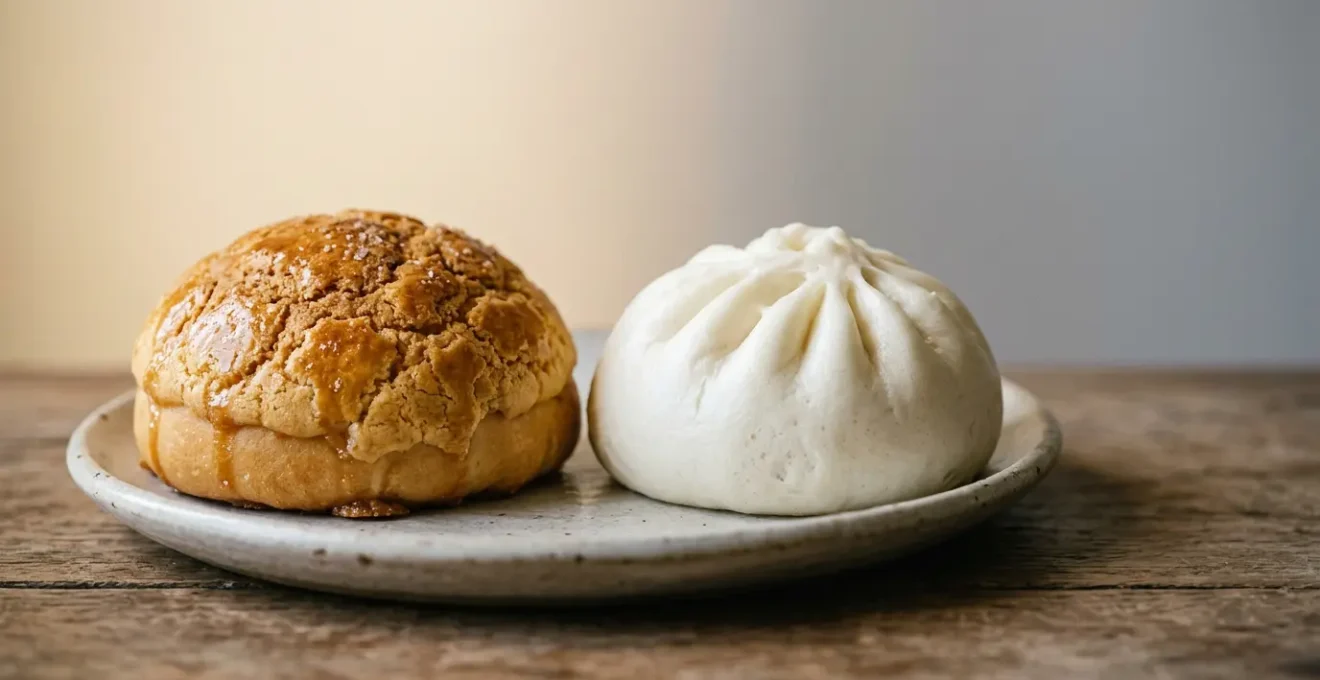
The choice between baked and steamed pork buns isn’t just about texture—it’s a dialogue between two opposing baking philosophies.
- Steamed buns prioritize ‘dough integrity’ through gentle, moist heat, resulting in a pure, yielding softness.
- Baked buns use ‘glaze chemistry’ and the Maillard reaction to create a structured, complex, and sweet crust.
Recommendation: Understand the baker’s technique behind each bun to truly appreciate which style is right for you and why it stands as a pillar of dim sum culture.
Step into any Hong Kong dim sum parlor, and the air itself tells a story. It’s a humid, savory-sweet narrative woven from the steam of bamboo baskets and the faint caramel scent of baking dough. At the heart of this story is the Char Siu Bao, the iconic barbecue pork bun. But here, a great debate unfolds not in words, but in textures. Do you reach for the ethereal, snow-white steamed bun, or the glistening, golden-brown baked one? For most, the choice is simple preference: fluffy versus crusty. But as a baker, I see something deeper.
The decision isn’t merely about a surface-level texture. It’s an entry point into the soul of Cantonese baking. We often hear that one is traditional, the other modern, but that oversimplifies the craft. This isn’t a competition. It’s a conversation about what a perfect bun should be. Is it a neutral, pillowy vessel designed to celebrate the savory char siu filling? Or is it an integrated pastry where the dough and filling engage in a sweet-and-savory dance? The answer lies not in choosing a winner, but in understanding the intent and science baked into each one.
This guide will take you beyond the simple taste test. We will knead our way through the very structure of these two buns, exploring the science of steam versus dry heat, the secrets of their respective doughs, and the cultural context that makes both indispensable. From the kitchens of the world’s most famous bun-maker to the practicalities of taking them home, we will decode the identity of Hong Kong’s true staple. By the end, you won’t just have a favorite; you’ll understand the baker’s philosophy that brought it to life.
To navigate this delicious debate, we’ll break down every facet of the Char Siu Bao experience. The following sections explore the mastery behind the craft, the science within the dough, and the practical advice every food explorer needs.
Summary: Baked vs Steamed Pork Buns: A Baker’s Take on the True Hong Kong Staple
- Is the Baked BBQ Pork Bun at Tim Ho Wan Still the Best in the World?
- Why Is There a Square of Paper Stuck to the Bottom of Steamed Buns?
- How Many Calories Are in a Standard BBQ Pork Bun?
- Do Baked Pork Buns Survive the Flight Back to the UK?
- Why Are Char Siu Bao the Best Dim Sum Option for Picky Children?
- Which Street Market Is Best for Kitchenware: Shanghai Street or Temple Street?
- How to Tell Sweet Zongzi from Savory Zongzi Before Unwrapping?
- How to Eat at a Michelin-Starred Restaurant in Hong Kong for Under £15?
Is the Baked BBQ Pork Bun at Tim Ho Wan Still the Best in the World?
Any discussion of modern pork buns inevitably leads to Tim Ho Wan. Founded in 2009 by Chef Mak Kwai Pui, a veteran of the three-Michelin-starred Lung King Heen, this humble 20-seat shop achieved the unthinkable: it earned a Michelin star within its first year. The star of the show? Their signature baked BBQ pork bun. It wasn’t just a bun; it was a paradigm shift—a delicate, crumbly, almost cookie-like pastry shell giving way to a perfectly balanced char siu filling. It redefined what a baked bun could be.
The legend grew, and so did the empire. Tim Ho Wan expanded from that small shop to over 50 locations worldwide. The Sham Shui Po branch has maintained its acclaim, achieving 17 consecutive years of Michelin recognition through 2026. But for a baker, global expansion raises a critical question: can you replicate perfection? Maintaining dough integrity and consistency across continents is the ultimate challenge. Variations in flour, humidity, oven calibration, and even the local water can alter the delicate chemistry of the pastry.
While the original Hong Kong locations are still revered, the question of whether a bun in New York or London truly matches the original is a valid one. The genius of Chef Mak’s creation lies in its precise textural counterpoint. The crust must shatter just so, the sweetness of the glaze perfectly complementing the savory pork. Replicating this requires more than a recipe; it requires an artist’s touch at every location. So, while Tim Ho Wan undeniably set the global standard, the « best » bun might still be found in that original, humble context where the magic first began.
Why Is There a Square of Paper Stuck to the Bottom of Steamed Buns?
The steamed bun, or ‘bao’, is a masterpiece of softness. Its brilliant white, unblemished surface and cloud-like texture are the result of a delicate process: steam infusion. Unlike baking, which uses dry heat, steaming cooks the dough with moisture. This presents a baker with a fundamental problem: how do you prevent the bottom of the bun from becoming a dense, waterlogged mess while it sits in the bamboo steamer? The answer is that small, unassuming square of paper.
This isn’t just any paper. It’s typically perforated parchment paper, and it serves two critical engineering functions. First, it acts as a non-stick barrier, preventing the delicate, sticky dough from adhering to the bamboo. Peeling a bun off the steamer and leaving half the bottom behind is a culinary tragedy. Second, and more importantly, it manages moisture. The perforations allow steam to circulate fully around the bun, ensuring an even cook, while the paper itself wicks away excess condensation that would otherwise pool at the base.
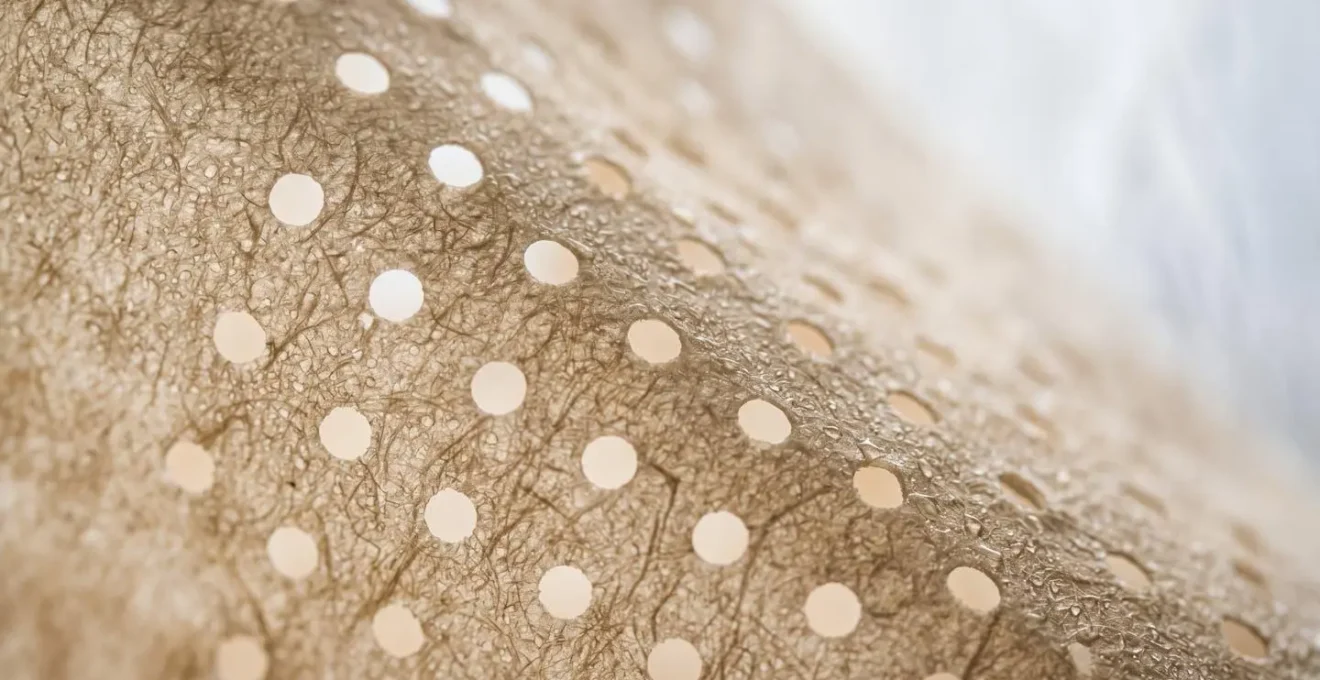
As the image above illustrates, the structure is key. This simple tool is the secret to achieving a perfect bao with a light, fluffy interior and a dry, intact base. Food science experts confirm that this technique prevents soggy bottoms while maintaining the signature ‘bao’ fluffiness. It’s a testament to the quiet ingenuity of dim sum chefs, where a seemingly minor detail is, in fact, the lynchpin of textural perfection. Without it, the integrity of the steamed bun would collapse.
How Many Calories Are in a Standard BBQ Pork Bun?
From a baker’s perspective, the calorie difference between a baked and a steamed bun comes down to one word: enrichment. A standard steamed bun dough is a relatively lean mixture of flour, water, yeast, and a little sugar and fat for softness. A baked bun dough, however, is often an enriched dough, containing more fat (like butter or lard) and sugar to produce a tender, more cake-like crumb and to encourage browning. Add to that the sugary glaze applied to the baked bun, and the nutritional profiles begin to diverge significantly.
While exact numbers vary by bakery, the general trend is clear. The enriched dough and glaze chemistry of the baked bun contribute to a higher calorie and fat content. The steamed bun, cooked with moist heat and no additional glaze, is the leaner option. Nutritional data reveals that a typical bun’s macronutrient profile is dominated by carbohydrates, with roughly 56% carbs, 28% fat, and 16% protein.
To put it in concrete terms, let’s look at a direct comparison. The following table breaks down the typical nutritional values, showing how the preparation method directly impacts the final numbers. As the data from a comparative analysis shows, the choice has a clear nutritional consequence.
| Bun Type | Calories (per bun) | Fat | Carbohydrates | Protein | Key Characteristic |
|---|---|---|---|---|---|
| Baked BBQ Pork Bun | 290 calories | 9.9g | 40g | 9g | Higher fat from enriched dough and glaze |
| Steamed BBQ Pork Bun | 230-287 calories | 8-9.9g | 41g | 8g | Higher carbohydrate density |
Do Baked Pork Buns Survive the Flight Back to the UK?
The thought of bringing a box of warm, golden baked pork buns home is a tempting souvenir for any food tourist. From a purely practical, baker’s standpoint, the bun faces challenges on a long-haul flight. A baked bun is at its absolute peak within an hour of leaving the oven. Over 24 hours, two things happen: starch retrogradation (staling) sets in, making the crumb hard, and moisture from the filling migrates into the pastry, softening the once-crisp crust. Reheating can help, but it will never fully recapture that fresh-from-the-oven texture. A gentle warming in an oven (not a microwave, which will make it tough) is your best bet to revive it.
However, the bigger obstacle isn’t science; it’s the law. Bringing meat products into Great Britain for personal use is strictly regulated. Due to risks of animal diseases, these rules arestringently enforced. As of early 2025, the regulations have become even tighter. The official UK government regulations state that you are no longer allowed to bring in personal imports of meat and dairy from non-EU countries. Since the char siu filling is pork, these buns fall squarely into the prohibited category.
So, unfortunately, the answer is a definitive no. While the bun might physically survive the journey in a somewhat degraded state, it will not legally survive UK customs. The dream of sharing authentic Hong Kong baked buns with friends and family back home must remain just that—a dream. They are a delicacy best enjoyed locally, fresh and hot, as the baker intended.
Why Are Char Siu Bao the Best Dim Sum Option for Picky Children?
Navigating a dim sum menu with a picky eater can be daunting. Unfamiliar textures, mysterious fillings, and unusual shapes can be overwhelming. This is where the baked char siu bao shines as the perfect ‘gateway food’. As a baker, I see the immediate appeal: it speaks a universal language of comfort. The bun itself is essentially a soft, sweet bread roll—a familiar format for children accustomed to Western bakery items. The sweet, sticky char siu filling is far more approachable than, say, chicken feet or tripe, tapping into the familiar flavor profile of barbecue sauce.
The combination of a slightly sweet, bread-like exterior and a savory-sweet filling creates a balanced, accessible flavor that doesn’t challenge a developing palate with bitter, sour, or overly complex notes. The baked version, in particular, with its golden crust and sugary glaze, has a visual and textural appeal that is less alien than the pale, pillowy steamed bun. It’s the dim sum equivalent of a cheeseburger or a sweet pastry—safe, delicious, and satisfying.
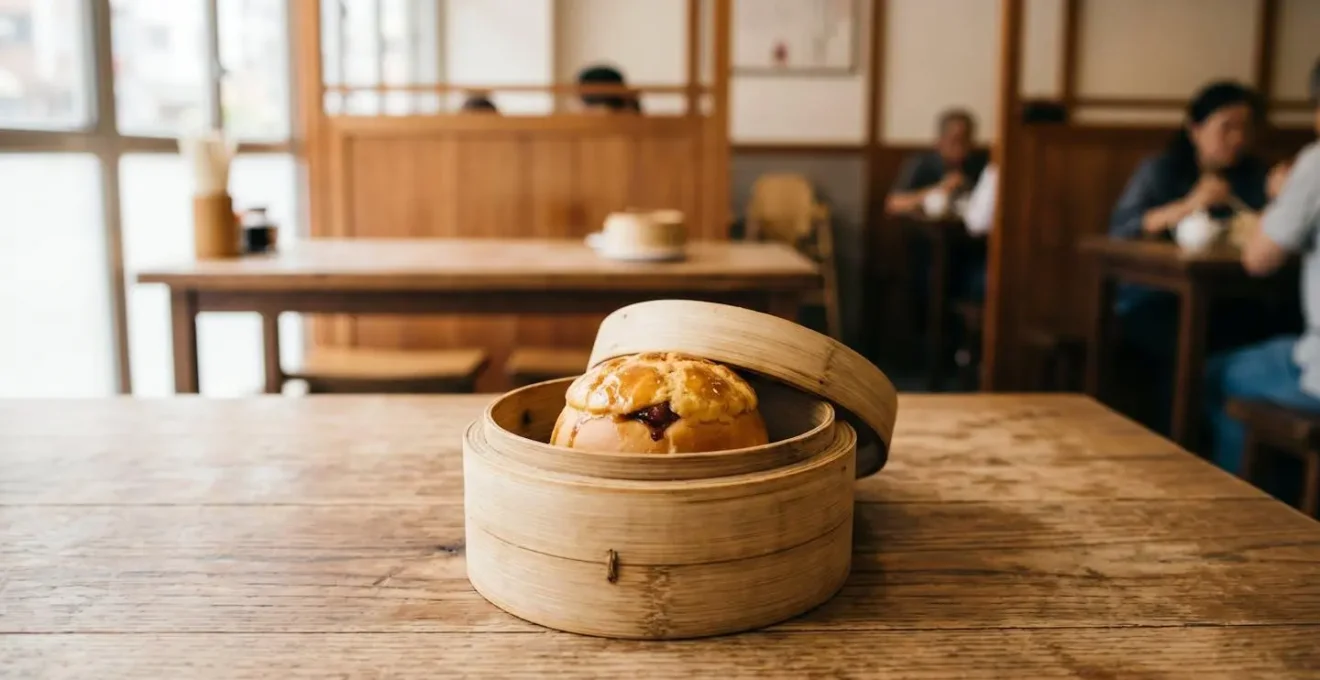
Once the baked char siu bao has been accepted, it can serve as a bridge to exploring the wider world of dim sum. The familiar flavor of char siu can be found in other dishes, like steamed rice rolls (cheung fun), creating a pathway to new textures. From there, the journey can continue, one small, delicious step at a time.
Your Action Plan: Guiding a Picky Eater Through Dim Sum
- Start with the Gateway: Introduce the Baked Char Siu Bao. Its sweet glaze and bread-like texture are familiar and unintimidating.
- Introduce a New Texture: Progress to the Steamed Char Siu Bao. It uses the same beloved filling but introduces the softer, pillowy texture of steamed dough.
- Stick to Sweet, Vary the Form: Offer a Steamed Egg Cake (ma lai go). This light, spongy, and sweet cake maintains a familiar flavor profile while introducing a new format.
- Introduce a Milder Savory Puff: Try Baked Chicken Puffs. The pastry is texturally similar to the baked bao, but the filling is a milder, less complex protein.
- Expand Formats and Horizons: Graduate to Steamed Rice Rolls with BBQ Pork or Bean-curd Skin with Pork & Shrimp, using the familiar pork flavor as an anchor for new textures and combinations.
Which Street Market Is Best for Kitchenware: Shanghai Street or Temple Street?
For a home cook or a professional baker looking to replicate the Hong Kong culinary experience, bringing back the right tools is essential. In Hong Kong, two famous streets come to mind for shopping: Shanghai Street and Temple Street. However, they serve vastly different purposes, especially when it comes to kitchenware.
Shanghai Street, particularly the section in Yau Ma Tei, is the undisputed champion for serious culinary equipment. This is not a tourist market; it is where local chefs and restaurant owners go to stock their kitchens. As a baker, this is my paradise. You will find stacks of professional-grade bamboo steamers in every conceivable size, high-carbon steel cleavers, robust woks, and specialized baking molds. It’s a street dedicated to function over form. If you want the exact tools used in a professional dim sum kitchen—from the steamer baskets to the dough scrapers—Shanghai Street is your one-stop destination. The prices are fair, and the quality is built to last.
Temple Street Night Market, on the other hand, is an entirely different experience. It’s a vibrant, bustling market geared more towards tourists and general shoppers. While you might find some kitchen gadgets and novelty items, it is not a specialist’s destination. You could find a basic wok or a set of chopsticks, but the selection and quality will not compare to Shanghai Street. Temple Street is for soaking up the atmosphere, haggling for souvenirs, and enjoying street food. For a true baker or chef on a mission, it’s a fun diversion, but not the primary destination for acquiring professional tools of the trade.
How to Tell Sweet Zongzi from Savory Zongzi Before Unwrapping?
The baked versus steamed pork bun debate is a perfect microcosm of a larger theme in Chinese cuisine: the delightful duality of sweet and savory in unexpected places. Another classic example is zongzi, the glutinous rice dumplings wrapped in bamboo leaves, especially popular during the Dragon Boat Festival. Arriving at a table, you’re often faced with a pile of identical-looking green parcels. Biting into what you expect to be savory pork and finding sweet red bean paste can be a shock, and vice-versa. Luckily, there are traditional clues to help you identify them before you unwrap.
While variations exist between regions and even families, some general visual cues can guide you. These subtle differences in shape and wrapping are the secret language of zongzi chefs.
- Primary Indicator – Shape: This is the most reliable clue. In Southern China, long, thin, cone-shaped zongzi almost always contain sweet fillings like red bean paste or jujubes. Larger, more substantial tetrahedral or pyramid-shaped zongzi typically indicate a savory filling of pork belly, salted egg yolk, and mushrooms.
- Secondary Clue – Leaf Color: Pay attention to the bamboo leaves. Sometimes, lighter green, fresher-looking leaves are used for sweet varieties, while darker or mottled leaves are reserved for the richer, savory ones.
- Secondary Clue – Twine: The color of the binding twine can be a code. Some vendors and families use a system, like red string for sweet and white or natural-colored string for savory, though this is not a universal rule.
- Context is Key: Observe how they are served. Savory zongzi are often part of the main meal, while sweet zongzi might appear as a dessert.
This sweet/savory pairing echoes the char siu bao dilemma. Just as the baked bun wraps a savory filling in a sweetish dough, the world of zongzi plays with expectations. It’s a recurring culinary philosophy: the harmony of contrasting flavors is a hallmark of the cuisine.
Key Takeaways
- Technique Defines Texture: Gentle steam infusion creates the steamed bun’s iconic softness, while the Maillard reaction in dry oven heat gives the baked bun its structured, golden crust.
- Dough as Philosophy: Steamed bun dough is a lean, neutral canvas designed to elevate the filling. Baked bun dough is enriched, an active participant that adds its own sweet, pastry-like character.
- Form Follows Function: The paper under a steamed bun is a crucial tool for moisture control, while the egg wash on a baked bun is key to its color and glaze chemistry.
How to Eat at a Michelin-Starred Restaurant in Hong Kong for Under £15?
The idea of « Michelin-starred dining » often conjures images of extravagant tasting menus and triple-digit bills. Yet, Hong Kong spectacularly shatters this stereotype, and it all comes back to dim sum. The city is a haven for affordable excellence, proving that world-class food doesn’t have to be expensive. The prime example is, once again, Tim Ho Wan. When its Sham Shui Po branch earned a star in 2010, it famously became the world’s most inexpensive Michelin-starred restaurant, a title it has proudly embodied ever since.
At this legendary spot, you can assemble a full, deeply satisfying meal for well under £15 per person. A serving of their signature baked BBQ pork buns costs around £4-6, and other classic dishes like shrimp dumplings (har gow) or steamed egg cake are similarly priced. It is a truly democratic approach to high-quality cuisine. Beyond Tim Ho Wan, the key is to look for another Michelin category: the Bib Gourmand. As the Michelin Guide defines it, the Bib Gourmand distinction is awarded to establishments that offer high-quality food at excellent value, making it a treasure map for budget-conscious food explorers.
To make the most of budget Michelin dining in Hong Kong, a few strategies are essential:
- Target the Right Spots: Focus on specialists like Tim Ho Wan (specifically the recognized Sham Shui Po branch) or the many street food stalls and small eateries awarded a Bib Gourmand.
- Go for Lunch: At more upscale Michelin-starred restaurants, the set lunch menus often offer a taste of their famous cuisine for a fraction of the dinner price.
- Order the Signature Dish: Don’t feel obligated to get a full menu. Visit a high-end spot and order just the one or two legendary dishes that earned them their fame.
- Arrive Early: For popular, no-reservation spots, arriving 30-45 minutes before they open is key to securing a table without a multi-hour wait.
Ultimately, Hong Kong teaches us that exceptional craft and flavor aren’t confined to fine dining rooms. They live in the steam of a bamboo basket and the crackle of a perfectly baked bun, accessible to everyone.
Now that you understand the craft, science, and culture behind Hong Kong’s most iconic bun, the next logical step is to experience it for yourself. Armed with this knowledge, you can approach your next dim sum meal not just as a diner, but as a connoisseur.