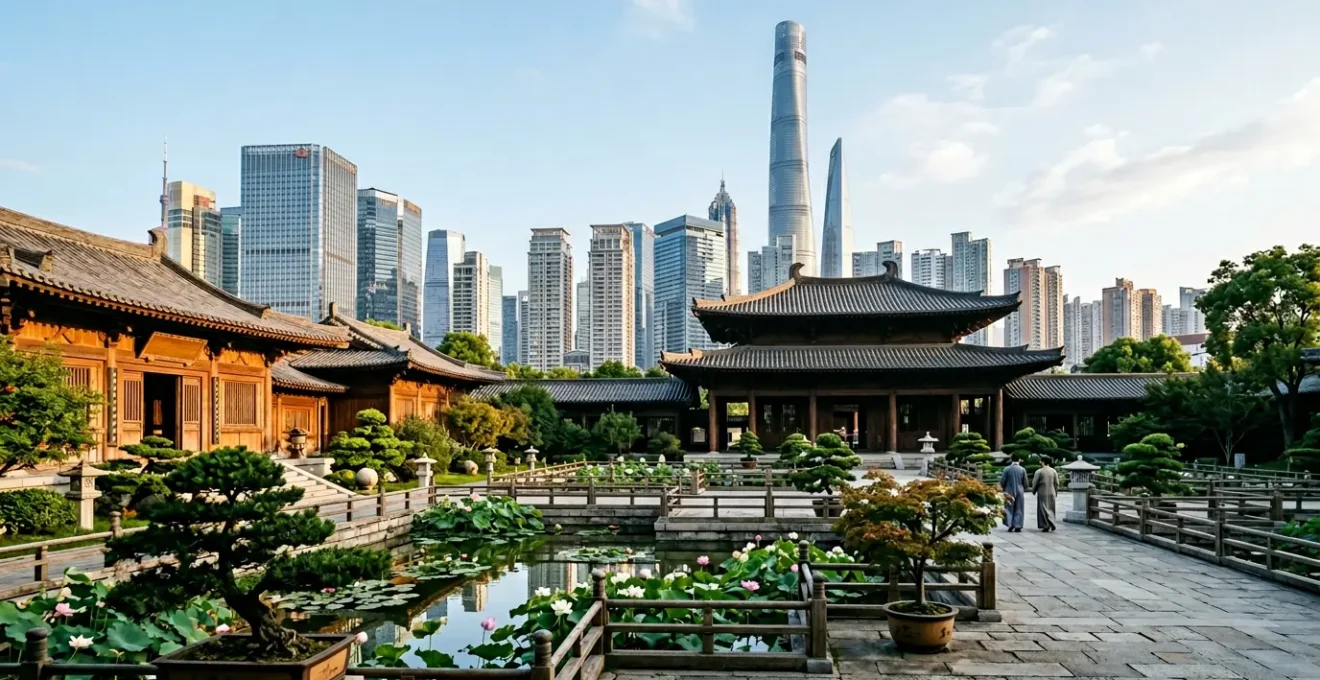
The secret to escaping city noise at Chi Lin Nunnery isn’t just finding a quiet corner; it’s understanding that the entire complex is meticulously engineered to guide your mind from chaos to calm.
- The nail-free wooden architecture isn’t just aesthetic; it embodies a philosophy of harmony that quiets the mind.
- The contrast with surrounding skyscrapers is an intentional design choice, using « borrowed scenery » to deepen the sense of sanctuary.
Recommendation: Visit not as a tourist ticking off sights, but as a meditation student, observing how each design element—from the sound of water to the scent of cypress—is a tool for finding inner stillness.
The relentless energy of Kowloon can feel like a current pulling you in every direction. For the overwhelmed traveler, the search for a moment of genuine silence seems like a quest for an illusion. Many guides will point you towards Chi Lin Nunnery, calling it a « peaceful oasis. » They’ll mention its beautiful gardens and Tang Dynasty architecture, suggesting it as a simple antidote to the city’s hum. But this view barely scratches the surface and often leads to a visit that feels pleasant, yet not truly restorative.
This approach misses the profound truth of the place. The tranquility you feel at Chi Lin Nunnery is not an accident or a mere absence of noise. It is the result of deliberate, masterful design—a form of sensory engineering created to actively transition your state of mind. The real key to escaping the city here isn’t just to walk through the gates, but to understand how the space has been built as a contemplative journey. It’s a physical manifestation of a meditative practice, where every element has a purpose.
This guide will move beyond the typical advice. We will explore how the very construction of the nunnery, the framing of the urban landscape, the flow of the gardens, and even the rules of conduct are all part of a larger system designed to cultivate serenity. By the end, you will not only know how to find silence but will understand how to participate in its creation, turning a simple visit into a deep, meditative break.
To help you navigate this unique urban sanctuary, this article breaks down the key elements that contribute to its profound sense of peace. The following sections will guide you through its architectural philosophy, sensory experiences, and practical considerations for a truly mindful visit.
Summary: A Guide to Serenity at Chi Lin Nunnery
- Why Are There No Nails Used in the Construction of Chi Lin Nunnery?
- Is the Waterfall Restaurant in Nan Lian Garden Worth the High Price?
- What Are the Dress Code Rules for Entering the Nunnery Grounds?
- How Does the Background of Skyscrapers Enhance the Nunnery’s Serenity?
- How Long Should You Allocate for a Relaxed Walk Through the Gardens?
- What Is the Difference Between a Man Mo Temple and a Pure Land Monastery?
- What Do the Wooden Columns of the Wisdom Path Actually Signify?
- Where to Find Large Buddha Statues in Hong Kong Besides Lantau Island?
Why Are There No Nails Used in the Construction of Chi Lin Nunnery?
The first step in understanding the Nunnery’s engineered peace is to look at its very bones. The entire temple complex, a vast reconstruction from the 1990s, is a masterpiece of traditional Chinese architecture. One of its most defining—and deeply symbolic—features is that it was constructed entirely without metal nails. This is not a quaint historical detail; it is a profound statement of philosophy. The structure is an exercise in architectural mindfulness, where the method of building is as important as the final form. The entire complex is a testament to this, spanning an impressive 33,000 square metres of nail-free construction made primarily from yellow cypress wood.
This remarkable feat is achieved using an ancient technique known as dougong, a complex system of interlocking wooden brackets. Instead of forcefully joining materials with nails, pieces of wood are perfectly carved to support one another, distributing the immense weight of the roof through a network of interdependent joints. To truly appreciate this, consider the close-up detail of this joinery.
As the image reveals, each piece fits into the next with breathtaking precision. This system represents a core Buddhist and Taoist principle: harmony with nature. It’s a physical manifestation of the idea that strength comes from balance and interconnectedness, not from force. By walking through these halls, you are surrounded by a structure that « breathes » with the wood, embodying a quiet strength that is both flexible and enduring. This subtle environmental cue is the first layer of sensory engineering; it communicates a sense of calm and stability that is subconsciously absorbed, setting the stage for inner quiet.
Case Study: The Philosophy of the Dougong System
During the reconstruction in the 1990s, craftsmen and historians meticulously followed ancient techniques. They hand-carved the dougong joints, fitting wooden brackets (dou) and crossbeams (gong) together like an intricate puzzle. This system doesn’t just hold the building up; it demonstrates the principle of interdependent integrity. Each part relies on the others, creating a unified whole that is stronger than the sum of its parts—a powerful metaphor for community and a direct contrast to the individualistic, competitive energy of the city just outside its walls.
Is the Waterfall Restaurant in Nan Lian Garden Worth the High Price?
Tucked discreetly behind a curtain of water in the Nan Lian Garden is the Chi Lin Vegetarian restaurant. For many visitors, the immediate question is whether the price, which is significantly higher than typical local fare, is justified. Viewing it merely as a place to eat misses its role in the contemplative journey. The restaurant is not just about food; it’s an extension of the garden’s sensory engineering, designed to offer a deep, multi-sensory experience that complements the visual peace of the surroundings.
The menu is exclusively vegetarian, aligning with Buddhist principles of compassion and non-violence. But this is not simple home-style cooking. The dishes are intricate, beautifully presented, and designed to delight the palate with complex flavors and textures. The experience is intended to be a form of mindfulness practice in itself—paying close attention to the taste, aroma, and appearance of the food. The setting, with the sound of the waterfall creating a natural sound barrier, further isolates you from the outside world, allowing for a focused and serene dining period.
Instead of thinking of it as « lunch, » consider it a curated experience. The cost reflects the artistry, the high-quality ingredients, and the unique environment. For a traveler on a tight budget seeking a quick meal, it may not be the right fit. But for the overwhelmed tourist seeking a deep, restorative break, an hour spent in this serene environment, savoring meticulously prepared food, can be more rejuvenating than hours spent rushing through other attractions. It completes the transition from outer chaos to inner calm. As one visitor noted, it’s about more than just the meal itself.
A diner who hosted a three-table banquet reported that the chef designed a special menu resulting in the best vegan banquet feast they had anywhere in Hong Kong—elaborate, meticulously prepared, and very well thought through—at approximately HKD 400 per person. The experience positioned the restaurant as offering exclusive sensory dining rather than just a meal.
– Visitor review on HappyCow
What Are the Dress Code Rules for Entering the Nunnery Grounds?
Your contemplative journey at Chi Lin Nunnery begins before you even step through the main gate. It starts with a simple, conscious choice: what you wear. The nunnery is an active place of worship and monastic life, not just a tourist park. As such, adhering to the dress code is a fundamental sign of respect. But more than that, it is the first active step you take in shifting your mindset from that of a passive observer to a mindful participant. The rules themselves are straightforward and centered on the principle of modesty.
The main requirements are to cover your shoulders and knees. This applies to everyone. Clothing that is overly revealing, such as tank tops, short shorts, or skimpy dresses, is considered inappropriate. There isn’t a strict guard at the gate turning people away, but the expectation of respectful attire is clear from the signage and the general atmosphere. By consciously choosing to dress appropriately, you are acknowledging that you are entering a sacred space. This simple act primes your mind for the quiet and reflection that the nunnery is designed to inspire. It helps you leave the casual, anything-goes attitude of the city behind and adopt a more deliberate, respectful posture.
As the HK City Guide aptly puts it, this is a non-negotiable aspect of the visit.
Since the nunnery is an active Buddhist religious site, remember to dress modestly (covering shoulders and knees), keep noise to a minimum, and behave respectfully.
– HK City Guide, Guide to Visiting the Chi Lin Nunnery in Hong Kong
Think of it as part of the experience. By dressing for tranquility, you are already beginning to cultivate it within yourself. To ensure you are prepared, follow this simple checklist.
Your Action Plan for Respectful Attire
- Cover shoulders: Wear clothing that covers your shoulders completely. A t-shirt or a blouse is perfect. Avoid spaghetti straps or tank tops.
- Cover knees: Ensure your shorts, skirts, or dresses extend to at least knee length. Long trousers or a longer skirt are ideal choices.
- Avoid revealing clothing: Refrain from wearing anything that is sheer, very tight, or has a low neckline. The goal is modesty and respect.
- Adopt a modest mindset: Recognize that dressing appropriately is your first step in acknowledging you are entering a sacred space, which primes the mind for a more contemplative experience.
- Pack a layer: If you are exploring Hong Kong in warm weather, simply pack a light scarf or cardigan that you can easily put on before entering the nunnery grounds.
How Does the Background of Skyscrapers Enhance the Nunnery’s Serenity?
One of the most striking—and initially jarring—sights at Chi Lin Nunnery and Nan Lian Garden is the backdrop. Towering, modern residential skyscrapers loom over the traditional wooden halls and manicured bonsai trees. The immediate thought is one of dissonance: how can a place be serene with such a stark reminder of urban density pressing in on all sides? But this contrast is not a flaw; it is a core feature of the garden’s genius design. This is a masterful use of the Japanese garden concept of shakkei, or « borrowed scenery. »
Instead of trying to block out the city entirely, the garden’s designers have intentionally framed the views. The skyscrapers are incorporated into the landscape as a constant, silent presence. This act of « borrowing » the chaotic background serves to dramatically amplify the tranquility within the garden walls. The serenity feels more precious, more deliberate, and more profound precisely because the chaos is visible, yet feels a world away. It’s an intentional disconnect. You see the city, but you don’t feel it. The sounds of traffic are replaced by the sounds of water and wind chimes, and the frantic pace is replaced by a mandated one-way path that encourages slow, deliberate walking.
This visual tension creates a powerful psychological effect. It makes you acutely aware that you are in a sanctuary, a space consciously carved out and protected from the urban jungle. The Hong Kong Tourism Board notes this exact effect, stating how the peace envelops you despite the surroundings. This isn’t an escape from the city, but an escape *within* the city, which is a much more powerful experience.
This tranquil haven is surrounded by residential buildings and the constant hum of city traffic; yet once inside, visitors are enveloped in a peaceful ambience, soothed by the sounds of birdsong and the gentle rustle of leaves.
– Hong Kong Tourism Board, Chi Lin Nunnery and Nan Lian Garden Official Description
How Long Should You Allocate for a Relaxed Walk Through the Gardens?
In a city that runs on efficiency, the question of « how long » is natural. However, the true purpose of Nan Lian Garden is to encourage you to lose track of time. The garden is designed as a contemplative journey, not a checklist of photo spots. The winding, one-way path is a deliberate piece of sensory engineering that gently forces you to slow down and observe. Rushing through would be to miss the point entirely. Therefore, the amount of time you should allocate depends entirely on the depth of experience you are seeking.
For a visitor pressed for time, a « Quick Sensory Reset » is possible. You can walk the main loop, see the key features like the Pavilion of Absolute Perfection and the watermill, and be out within 45 to 60 minutes. This will give you a taste of the tranquility and a much-needed break from the urban environment. However, to truly absorb the atmosphere, a « Balanced Cultural Visit » of one to two hours is more appropriate. This allows you to follow the path at a leisurely pace, pause at the exhibition halls, and perhaps enjoy a cup of tea without feeling rushed.
But for the overwhelmed tourist truly seeking solace, the ideal approach is a « Contemplative Journey » of two to four hours. This allows for an unhurried exploration of the garden’s many « pockets of tranquility. » You can spend extended time studying the ancient-looking rock formations, listening to the subtle sounds of water, or even timing your visit to hear the nuns chanting in the Chi Lin Nunnery. This longer duration transforms the visit from a simple walk into a restorative practice. The following table, based on visitor experiences, can help you decide which itinerary best suits your needs.
This table offers a structured way to plan your visit based on your goals for serenity, drawing from a helpful analysis of different visitor itineraries.
| Itinerary Type | Duration | What to Prioritize | Best For |
|---|---|---|---|
| Quick Sensory Reset | 45-60 minutes | Main pond, Pavilion of Absolute Perfection, watermill feature, one bench stop for contemplation | Time-pressed travelers seeking brief urban refuge |
| Balanced Cultural Visit | 1-2 hours | Follow the one-way path completely, visit exhibition hall, photograph key landmarks, short tea house stop | Most visitors wanting comprehensive experience without rush |
| Contemplative Journey | 2-4 hours | Include vegetarian restaurant dining, extended time at multiple ‘pockets of tranquility,’ rock formations study, listen to nun chanting at Chi Lin | Garden lovers, meditation practitioners, those seeking deep serenity |
What Is the Difference Between a Man Mo Temple and a Pure Land Monastery?
To fully appreciate the unique quality of silence at Chi Lin Nunnery, it helps to contrast it with another famous type of Hong Kong spiritual site: the Man Mo Temple. Both offer a refuge from the city, but they do so in vastly different ways. A Man Mo Temple, which is Taoist, is a place of active, energetic worship. The air is thick with the smoke of giant incense coils, the colors are a vibrant explosion of reds and golds, and the space buzzes with the clatter of fortune-telling sticks. The silence one finds there is an internal silence—a personal focus achieved amidst a sensory storm. Visitors are there to make offerings and ask for worldly favors, creating an atmosphere that is participatory and bustling.
Chi Lin Nunnery, on the other hand, is a Pure Land Buddhist monastery. Its purpose is to create an environment that reflects the serenity and purity of the Western Paradise. Here, the silence is architectural and atmospheric. The sensory palette is intentionally minimalist and natural: the scent of cypress wood and clean water, the muted tones of grey stone and green foliage, and the gentle sounds of wind or distant chanting. The design emphasizes open courtyards, symmetrical lotus ponds, and clean lines, creating a feeling of spaciousness and calm.
The visitor’s intent is also different. People come to Chi Lin not to ask for fortune, but to seek spiritual solace, to contemplate, and to escape from the material world. The atmosphere is observational and meditative, designed for silent walking and reflection. The following table breaks down these crucial sensory and experiential differences.
| Aspect | Man Mo Temple (Taoist) | Chi Lin Nunnery (Pure Land Buddhist) |
|---|---|---|
| Type of Silence | ‘Silence within the storm’—personal focus amidst sensory overload | Architectural and atmospheric silence—serene, spacious inner peace |
| Sensory Palette | Thick incense smoke, vibrant reds and golds, clatter of fortune sticks, sounds of divination, crowded energy | Scent of cypress wood and water, muted natural colors, wind through trees or distant chanting, minimalist calm |
| Visual Environment | Dense hanging spiral incense coils, dark interiors, ornate carved altars, crowded with worshippers | Open courtyards, symmetrical lotus ponds, natural light on wood, spacious halls with clean lines |
| Visitor Intent | Seeking worldly favors, fortune-telling, vibrant focused energy, paradoxically centering through activity | Seeking spiritual solace, contemplation, escape from materialism, expansive calming quiet |
| Atmosphere | Active, participatory, bustling with prayer and ritual | Observational, meditative, designed for silent walking and reflection |
What Do the Wooden Columns of the Wisdom Path Actually Signify?
While Chi Lin Nunnery provides the ultimate urban sanctuary in Kowloon, Hong Kong offers other profound sites for contemplation for those willing to venture further. One of the most powerful is the Wisdom Path, though it’s important to note that this is located on Lantau Island, near the Po Lin Monastery and the Big Buddha, not within the Chi Lin complex. A visit here requires a separate journey but offers a different, yet equally deep, meditative experience.
The Wisdom Path consists of 38 massive wooden columns, or steles, arranged in a figure-eight pattern that symbolizes infinity. These are not random posts; each column is inscribed with verses from the Heart Sutra, one of the most well-known and profound prayers in Mahayana Buddhism. The calligraphy is based on the work of the renowned contemporary scholar Professor Jao Tsung-I. The path invites visitors to walk amongst these towering columns and read the verses in sequence, creating a walking meditation on the sutra’s core teachings of emptiness and impermanence (śūnyatā).
The journey along the path is a physical and spiritual one. As you walk, you trace the sutra’s words, which speak of transcending illusion to find true wisdom. The very last column is left intentionally blank, symbolizing the concept of emptiness—the void from which all things arise and to which they return, a state beyond words and concepts. Standing on the hillside, surrounded by the silent, towering columns and the expansive mountain views, offers a powerful sense of perspective and peace that is vast and elemental, a perfect complement to the contained, curated serenity of Nan Lian Garden.
Key Takeaways
- Chi Lin Nunnery’s tranquility is not accidental but is engineered through its nail-free architecture, sensory garden design, and « borrowed scenery. »
- Your experience can be tailored from a 45-minute sensory reset to a 4-hour contemplative journey, depending on your need for peace.
- Understanding the difference between the active energy of a Man Mo Temple and the designed stillness of Chi Lin Nunnery is key to appreciating its unique form of silence.
Where to Find Large Buddha Statues in Hong Kong Besides Lantau Island?
The Tian Tan Buddha (or « Big Buddha ») on Lantau Island is iconic, but the pilgrimage to see it is often crowded, undermining the search for peace. For the traveler seeking a serene encounter with these powerful symbols, it is crucial to know that Hong Kong offers several other remarkable, and often quieter, locations. Chi Lin Nunnery itself houses a magnificent gold-plated statue of the Sakyamuni Buddha in its main hall, offering a moment of awe within its tranquil urban oasis.
However, comparing the different sites reveals that each offers a unique balance of tranquility, accessibility, and effort. For instance, the Tsz Shan Monastery boasts a colossal 76-meter bronze statue of Guanyin, the Goddess of Mercy. Access is free but strictly controlled via an online booking system, guaranteeing a sparse crowd and an almost exclusive level of silence. This is ideal for those who can plan ahead. In contrast, the Ten Thousand Buddhas Monastery presents a different kind of journey; peace is ‘earned’ after a steep climb up more than 400 steps, rewarding the effort with a spectacular and quirky display of thousands of golden statues.
This places Chi Lin Nunnery in a unique and highly advantageous position. It offers high tranquility without requiring advance booking or strenuous physical effort. It is the perfect synthesis of profound spiritual art and immediate urban accessibility. The following matrix helps to compare these options, placing the iconic Big Buddha in context to highlight the distinct advantages of the other locations.
This table from Discover Hong Kong provides a clear framework for choosing your destination based on the kind of experience you seek, showing how each location balances peace with practicality.
| Location | Featured Statue | Tranquility Level | Physical Effort | Spontaneity (Walk-in Access) | Best For |
|---|---|---|---|---|---|
| Tsz Shan Monastery | 76m Bronze Guanyin (Goddess of Mercy) | High – Controlled via booking | Low – Easy access | Low – Advance booking required | Exclusive silence seekers, guaranteed peace |
| Ten Thousand Buddhas Monastery | Multiple large Buddha statues + 13,000 small ones | Medium – Peace is ‘earned’ | High – 400+ steps climb | High – No booking needed | Active travelers, those valuing effort-reward |
| Chi Lin Nunnery | Gold-plated Sakyamuni Buddha (Main Hall) | High – Urban oasis design | Low – Flat accessible grounds | High – Free walk-in | Urban refuge seekers, architecture lovers |
| Po Lin Monastery (Lantau – for context) | Tian Tan Buddha (Big Buddha) | Low – Tourist-heavy | Medium – 268 steps to statue | High – Open to all | Iconic experience seekers, must-see tickers |
Your visit to Chi Lin Nunnery can be so much more than a brief escape. By approaching it with awareness, you can engage with its masterful design and transform a simple walk into a profound meditative practice. The next step is to go there and experience this sensory journey for yourself, not just as a place to see, but as a space to be.