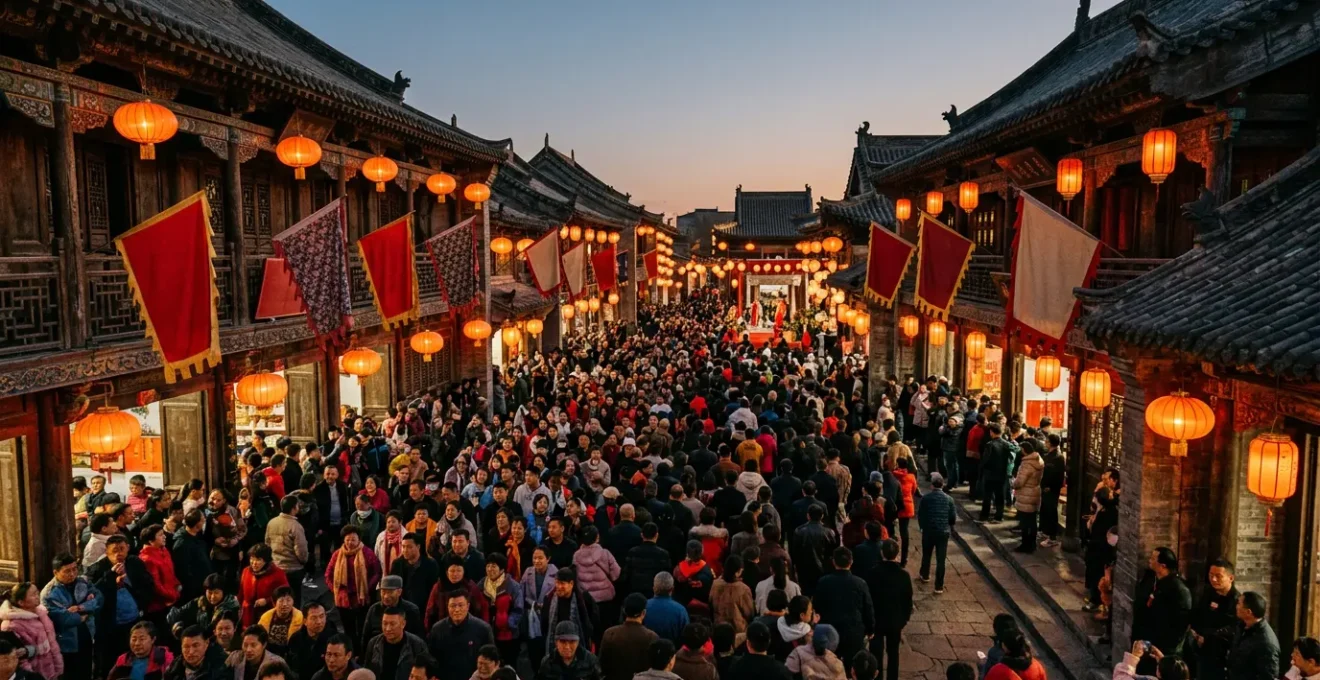
Stressed about the massive crowds at the Cheung Chau Bun Festival? The secret isn’t just to ‘arrive early,’ but to understand the island’s logistical pressure points. This guide, from an event security perspective, gives you the strategies to navigate ferry chokepoints, find smart viewing spots, and truly experience the cultural core of the festival without getting overwhelmed.
The image is iconic: dozens of climbers scrambling up three 60-foot towers covered in buns, a frantic, vertical race against the clock under the midnight sky. This is the climax of the Cheung Chau Bun Festival, an event that draws tens of thousands to a tiny island in Hong Kong. The typical advice is predictable: « go early, » « wear comfortable shoes, » and « prepare for crowds. » While true, this advice treats you like a passive victim of the chaos. It fails to address the core problem for the adventurous cultural tourist: how do you witness this unique spectacle without your experience being crushed by the sheer weight of the crowd?
As someone who has managed event security on islands, I can tell you that navigating a festival like this is a question of strategy, not just endurance. It’s about understanding the logistical fault lines and pressure points. The key isn’t simply enduring the queues; it’s about knowing why the queues exist and how to bypass them. It’s not about finding a space to stand; it’s about strategic viewing based on crowd dynamics. The difference between a frustrating day and an unforgettable cultural immersion lies in shifting your mindset from tourist to strategist.
This guide breaks down the festival’s most famous elements, not as mere spectacles, but as a series of logistical puzzles. By understanding the ‘why’ behind each tradition and its associated crowds, you can craft a plan that maximizes your experience. We will explore the critical timing for ferries, the true meaning behind the ubiquitous buns and floating children, and the island-wide traditions that define this event. We will then compare this unique experience with another of Hong Kong’s major festivals to give you a complete strategic overview of the region’s cultural celebrations.
This article provides a detailed breakdown of the festival’s main components and offers strategic advice for navigating them. Below is a summary of the topics we will cover to help you plan your visit.
Summary: A Strategic Guide to Hong Kong’s Island Festivals
- Why Are Ferry Queues to Cheung Chau So Long During the Festival?
- Do the « Peace Buns » Actually Taste Good or Are They Just Symbols?
- Why Do Children Float in the Air During the Piu Sik Parade?
- Why Does the Whole Island Go Vegetarian During the Bun Festival?
- Where to Buy the Official Bun Magnets and Keychains?
- How to Read the Sporadic Schedules of Small Kaito Ferries?
- What Time Must You Arrive at Stanley Beach to Secure a Spot?
- Is the Dragon Boat Festival at Stanley a Sport Event or a Beach Party?
Why Are Ferry Queues to Cheung Chau So Long During the Festival?
The primary reason for the notoriously long ferry queues is a simple equation of supply and demand. Cheung Chau is an island with no private cars, making ferries its lifeline. During the Bun Festival, this lifeline is put under extreme strain. The island’s population temporarily explodes, with ferry operators observing an influx of 20,000 to 30,000 passengers daily over festival weekends. This number can swell even further on the main parade and scrambling days. The ferry service, while frequent, has a finite capacity, creating a bottleneck at Central Pier 5 that can lead to waits of over an hour or more.
The crowd dynamics are predictable: a massive surge of day-trippers arrives between 9 AM and 11 AM and attempts to leave between 3 PM and 6 PM. For the midnight bun scrambling, a second, even more concentrated wave arrives in the late evening. Understanding this flow is the first step to outsmarting it. Arriving outside these peak windows is the most basic strategy, but for a truly optimized experience, a more detailed plan is required. You must audit your own expectations and resources against the reality of the festival’s logistical pressure points.
Action Plan: Auditing Your Festival Attendance Strategy
- Points of contact: List all logistical hurdles you’ll face. This includes the outbound ferry, navigating parade routes, finding food, securing a viewing spot for the scramble, and the return trip ferry.
- Collecte: Inventory your own resources. What is your group’s stamina? How flexible is your schedule? Are you willing to stay late for the midnight event?
- Cohérence: Confront your desired itinerary with the festival’s reality. A plan to « quickly pop over for the parade » is not coherent with the 1-2 hour ferry queues. Adjust expectations.
- Mémorabilité/émotion: Identify your non-negotiable « must-see » moments (e.g., the final climb) versus « nice-to-haves » (e.g., a specific souvenir). Prioritize your energy and time for what matters most to you.
- Plan d’intégration: Develop a timed itinerary with built-in buffers and backup plans. This includes identifying alternative transport and knowing when to switch from Plan A to Plan B.
Ultimately, the queues are long because the festival is a victim of its own success. It’s a beloved, world-renowned event drawing people to a small space with limited access, a classic logistical chokepoint.
Do the « Peace Buns » Actually Taste Good or Are They Just Symbols?
The short answer is: they are both. The « Peace Buns » (平安包, ping on bao) are the central motif of the festival, and their significance goes far beyond their flavor. Symbolically, they represent peace, health, and prosperity. Stamped with the Chinese characters for « peace, » they are offerings to the Taoist deity Pak Tai and are believed to absorb and then distribute good fortune to those who consume them. The sheer scale of their production underscores their importance; the festival’s official supplier, Kwok Kam Kee, makes over 60,000 buns for the event.
From a culinary perspective, they are a simple, traditional treat. The white, fluffy steamed buns are typically filled with a sweet paste, most commonly lotus seed, red bean, or sesame. They are not a complex gourmet item; their taste is comforting, slightly sweet, and satisfying in a humble way. To judge them on flavor alone is to miss the point entirely. Eating a peace bun is an act of participation in a century-old tradition, a way of consuming a piece of the festival’s good luck.
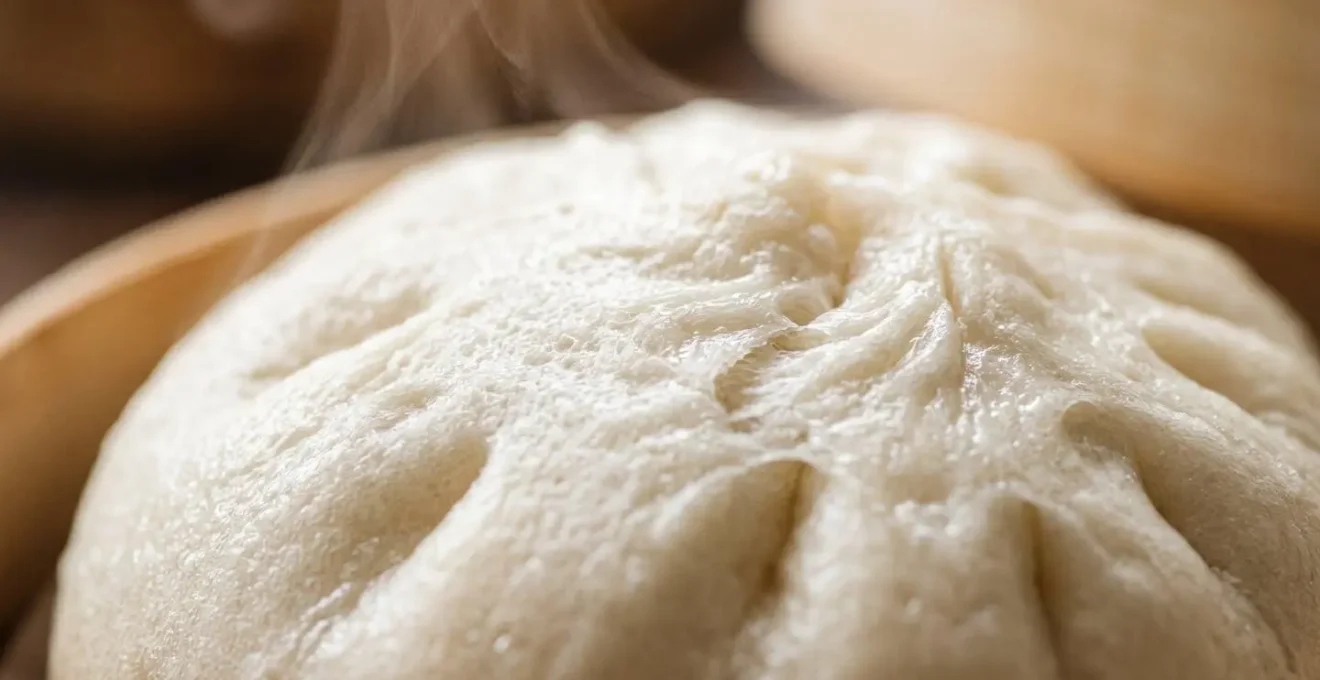
The experience is as much about the context as the taste. Buying a warm bun from a bustling island bakery, surrounded by the sights and sounds of the festival, transforms a simple snack into a memorable cultural moment. While you can find similar buns in Hong Kong year-round, they don’t carry the same weight of tradition or the collective energy of the festival. So, while they might not be the most exciting thing you’ll ever eat, they taste of something more profound: cultural heritage and shared celebration.
Therefore, their value is not in their gastronomic complexity, but in their symbolic density. They are a tangible link to the festival’s history and its core message of peace.
Why Do Children Float in the Air During the Piu Sik Parade?
The Piu Sik, or « Floating Colours, » Parade is one of the festival’s most visually striking events, where young children, dressed as mythological figures or contemporary celebrities, appear to glide effortlessly above the crowd. This « floating » is a masterclass in traditional engineering. Each child is securely strapped to a hidden steel frame, known as the « iron spear, » which is anchored to the float and carried by strong bearers. The frame runs up the child’s back and is skillfully disguised by their elaborate costumes, creating a convincing and magical illusion of levitation.
The selection of these « floating » children is a prestigious honor for local families, and it comes with strict requirements. To ensure safety and manage the strain on the support frame, participants must be small and light. The unofficial criteria, widely understood by the community, state that children should be not taller than 42 inches with weight within 35 pounds. This practical constraint ensures the apparatus remains stable and the child can be carried through the narrow, crowded streets for the duration of the parade.
More than just a spectacle, the Piu Sik parade is a form of living newspaper, a platform for social and political commentary. While traditionally depicting deities and historical figures, modern floats often feature children dressed as local politicians and pop culture icons, offering a satirical take on current events.
Case Study: The 2023 Piu Sik Parade’s Modern Commentary
The 2023 parade perfectly demonstrated this evolution. It showcased more than 10 children dressed as prominent local figures, including Financial Secretary Paul Chan Mo-po and Olympic medalists Siobhan Haughey and Cheung Ka-long. This inclusion of topical, and sometimes controversial, figures alongside traditional ones shows the parade’s dynamic role in reflecting and commenting on contemporary Hong Kong society, making it far more than just a historical reenactment.
This blend of ingenious folk mechanics and sharp social observation is what makes the Piu Sik parade a uniquely dynamic tradition, continually reinventing itself while maintaining its core structure.
Why Does the Whole Island Go Vegetarian During the Bun Festival?
The three-day vegetarian-only rule on Cheung Chau is one of the festival’s most profound and strictly observed traditions. It is rooted in Taoist beliefs of purification and compassion. The festival originally began in the 18th century to appease the spirits of those killed by pirates and to drive away a plague. Part of this ritual involved cleansing the island by abstaining from eating meat to show respect for all living beings and to create a pure, peaceful environment for the deities being honored. This practice continues today as a core element of the festival’s spiritual identity.
As Eric Ho, Vice Chairman of the Cheung Chau Rural Committee, emphasizes, this is not a minor detail but a central pillar of the event. He states:
The three-day vegetarian diet is one of the most important cultural aspects of the festival, and has been a part of it since the beginning.
The commitment is so absolute that nearly every eatery on the island, from traditional noodle shops to global fast-food chains, switches to a vegetarian menu. This creates a unique culinary landscape where visitors can try creative vegetarian versions of classic Hong Kong dishes. The most striking modern example of this is McDonald’s, which famously suspends sales of its meat products and offers a special « McVeggie » burger exclusively at its Cheung Chau location. The popularity of this move is staggering; it was reported that at least 4,000 vegetarian buns sold in one afternoon during the 2023 festival, a powerful testament to how deeply this tradition is embraced by locals and visitors alike.
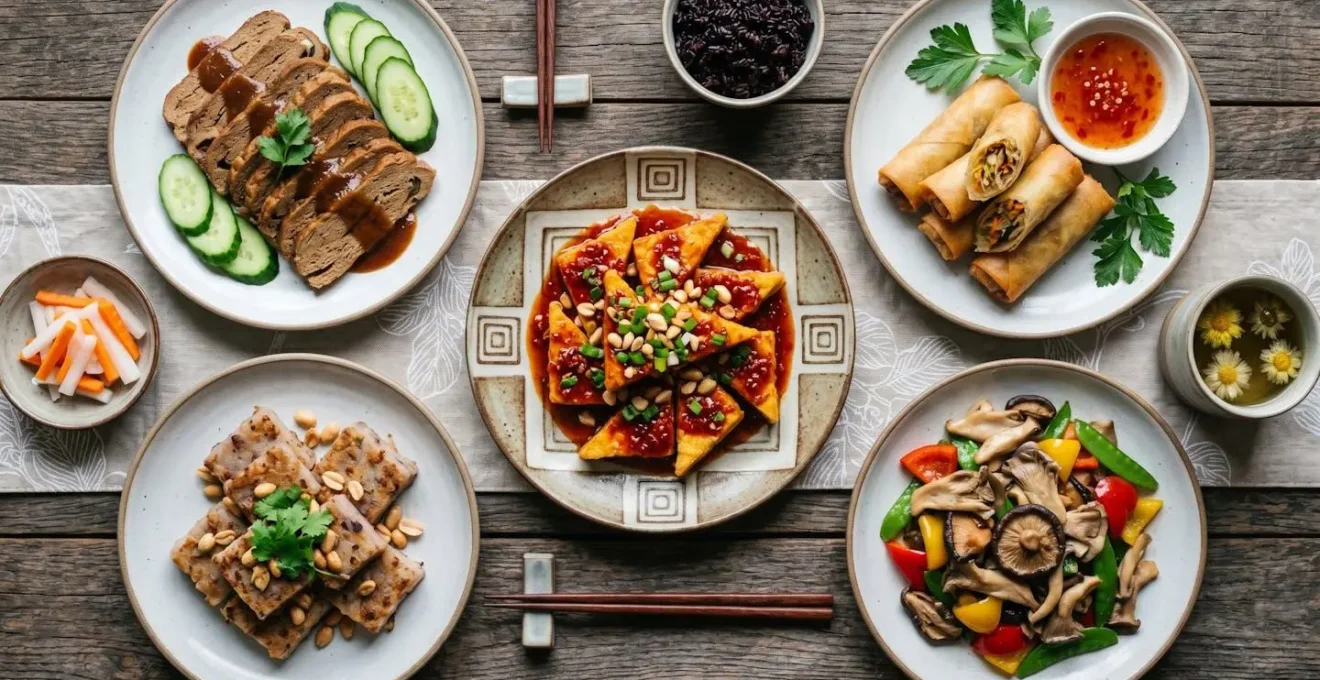
Therefore, the vegetarian diet is not just about food; it’s a shared, island-wide ritual that physically and spiritually prepares the community for the festival’s climax, reinforcing a collective sense of purpose and communal purification.
Where to Buy the Official Bun Magnets and Keychains?
Finding official festival merchandise, like the coveted bun-shaped magnets, keychains, and pillows, is an integral part of the visitor experience. As a logistics expert, I see this as another crowd-flow pattern. The highest concentration of souvenir vendors is found along the island’s main logistical arteries. Your primary targets should be the streets leading directly from the ferry pier to the Pak Tai Temple, which is the epicenter of the festival. This route, typically along San Hing Praya Street and Pak She Street, transforms into a bustling open-air market.
For « official » merchandise, which supports the festival’s organizing committee, look for stalls set up directly outside the Pak Tai Temple. These are often run by community organizations and are your best bet for authentic, sanctioned souvenirs. Many of the island’s long-standing bakeries, particularly Kwok Kam Kee (the official bun supplier), also set up temporary storefronts or expand their offerings to include a wide range of bun-themed memorabilia. These are excellent places to buy directly from the source.
Beyond these main hubs, dozens of independent shops and temporary stalls will pop up along the waterfront and in the smaller alleyways. While they offer a vast array of creative and sometimes quirky bun-related items, be aware that their « official » status may vary. A good strategy is to make your souvenir purchases earlier in the day if you see something you like. Popular items, especially the limited-edition designs for the year, can and do sell out. This avoids a frantic last-minute search before you rush to catch your ferry back, allowing you to focus on enjoying the later events.
In essence, treat souvenir hunting as a planned objective. By targeting the high-density vendor areas near the pier and temple early on, you can efficiently secure your mementos and then freely immerse yourself in the festival’s main attractions.
How to Read the Sporadic Schedules of Small Kaito Ferries?
From a strategic standpoint, the small « kaito » ferries are your ace in the hole, your logistical escape route. While the main ferry from Central is the primary artery, it’s also the most congested. The kaitos, on the other hand, represent a secondary network that the savvy visitor can use to their advantage. Their schedules aren’t truly « sporadic »; they simply serve a different purpose. Instead of a direct point-to-point service from Hong Kong Island, they operate on an inter-island loop, connecting Cheung Chau with other Outlying Islands like Mui Wo and Chi Ma Wan on Lantau Island, and Peng Chau.
Understanding how to use this network is key. If the queues at Central Pier 5 are unmanageable, you can initiate Plan B: take a ferry to Mui Wo (Lantau Island) instead, which often has less traffic, and then catch the inter-island kaito from Mui Wo to Cheung Chau. This multi-step journey might seem longer, but it can often be faster and significantly less stressful than waiting in a static queue for two hours in Central. The key is to see the ferry map not as a single line, but as an interconnected web.
Here is a basic strategy for leveraging the kaito network:
- Identify the Route: The main inter-island route for your purposes serves Peng Chau, Mui Wo, Chi Ma Wan, and Cheung Chau. Your goal is to get to any of these points (Mui Wo is usually easiest) and join the loop.
- Understand the Timings: The journey from Cheung Chau to Chi Ma Wan is about 18-20 minutes, and from Chi Ma Wan to Mui Wo is another 13-15 minutes. These are not fast ferries, but they are reliable.
- Check the Schedule: While schedules can vary, these ferries typically run every 1-2 hours. Always check the Transport Department’s website or a reliable ferry app for the day’s schedule before committing to a route.
- Strategic Use: This is your ‘Plan B’ for peak congestion. It’s particularly useful for the return journey after the main parade, when thousands of people descend on the Cheung Chau ferry pier simultaneously.
In short, don’t view the kaito schedule as sporadic. View it as a different system operating on a different logic—a system that can be your secret weapon against the festival’s biggest logistical challenge.
Key takeaways
- Success at a major cultural festival hinges on logistical strategy and understanding crowd dynamics, not just on arriving early.
- Core traditions like the Piu Sik parade and island-wide vegetarianism are living, evolving cultural expressions, not static historical displays.
- Identifying and utilizing alternative transport networks, like the inter-island kaito ferries, is a key strategic asset for avoiding the worst chokepoints and enhancing the visitor experience.
What Time Must You Arrive at Stanley Beach to Secure a Spot?
Shifting our focus to another iconic Hong Kong event, the Dragon Boat Festival at Stanley presents a similar, yet distinct, crowd management challenge. While the Cheung Chau Bun Festival is a dense, street-based cultural event, Stanley’s festival is a sprawling beach party centered on a sporting competition. The question of arrival time is critical. With over 30,000 spectators and 200 teams participating, Stanley Main Beach, a relatively small stretch of sand, reaches capacity very early in the day.
For a prime spot on the sand with a clear view of the races, you must think in terms of a pre-dawn arrival. The most dedicated groups arrive between 7:00 AM and 8:00 AM to « claim their territory » near the finish line. By 9:00 AM, the beach is already densely packed, and by 10:00 AM, finding any space on the sand becomes nearly impossible. This isn’t just about seeing the race; it’s about establishing a « base camp » for the day, complete with coolers, umbrellas, and towels.
However, applying a strategic mindset opens up other options beyond a 7 AM start. If your goal is simply to soak in the atmosphere rather than secure a premium viewing spot, arriving later can still be enjoyable, provided you adjust your expectations. Here are some strategic options for viewing:
- Early Bird (7-8 AM): For the serious spectator. Your reward is a front-row, sand-in-your-toes view of the action. The cost is an early start and a long day defending your small patch of beach.
- The Promenade (9-10 AM): The waterfront promenade running alongside the beach offers elevated views. While crowded, the constant flow of people means gaps can open up. This is a good compromise for those who want to see the races without committing to a full day on the sand.
- The Pier & Murray House (10 AM onwards): Stanley Pier offers excellent views of the race finishes. The area around Murray House and the Stanley Plaza provides a more relaxed, festive atmosphere with easy access to food and drinks, though the direct view of the races is more intermittent.
- Restaurant Booking (Plan Ahead): The ultimate strategic move is to book a table at one of the waterfront restaurants in advance. This provides a comfortable, elevated viewing platform with all the amenities, completely bypassing the on-the-ground chaos.
In conclusion, there is no single « right » time to arrive. It depends entirely on your desired balance of viewing quality, comfort, and effort. The earlier you arrive, the better your view, but the greater the commitment.
Is the Dragon Boat Festival at Stanley a Sport Event or a Beach Party?
The Dragon Boat Festival at Stanley is a fascinating hybrid: it is fundamentally a serious, high-stakes sporting event that is encased within the city’s largest and most raucous annual beach party. The core of the event is the intense athletic competition. With over 200 corporate, community, and international teams, and more than 5,000 paddlers, the races are fiercely contested. Teams train for months, and the atmosphere on the water is one of focused, powerful athleticism. This is the « sport event » part, a tradition rooted in ancient Chinese history.
Surrounding this athletic core, however, is an undeniable party atmosphere. The beach and surrounding promenade are packed with tens of thousands of spectators, fueled by loud music from sponsor tents and an abundance of beer. The crowd is a mix of serious paddling supporters, expatriates, tourists, and locals drawn by the carnival-like environment. The sheer volume of visitors is immense; during the festival period, Hong Kong’s tourism can see significant spikes, with past data showing arrivals like 380,000 visitors from mainland China over the holiday weekend. This influx contributes heavily to the party vibe.
The best way to understand Stanley’s dual nature is to compare it directly with the Cheung Chau Bun Festival, which presents a very different kind of mass gathering.
| Aspect | Cheung Chau Bun Festival | Stanley Dragon Boat Festival |
|---|---|---|
| Primary Character | Spiritual, cultural, Taoist ritual | Athletic competition, carnival atmosphere |
| Main Event Timing | Nighttime climax (midnight bun scrambling) | Daytime races (8 AM to 5 PM) |
| Crowd Atmosphere | Family-oriented, reverential, traditional | Raucous, alcohol-fueled beach party |
| Participant Profile | Local community, selected children for parade | 150+ corporate and community teams, 5,000+ paddlers |
| Food Experience | Mandatory vegetarian diet for 3 days | Food and drink stalls, unrestricted menus |
| Spectator Count | 20,000-30,000 daily (weekends) | Over 30,000 at Stanley Beach alone |
| Cultural vs Sport | Cultural heritage, ICH listed | International sporting event with competitive teams |
Ultimately, Stanley’s Dragon Boat Festival is both a sport and a party. The magic lies in how these two identities coexist, creating an event that is simultaneously a display of elite athleticism and a massive, chaotic, and unforgettable celebration on the beach.