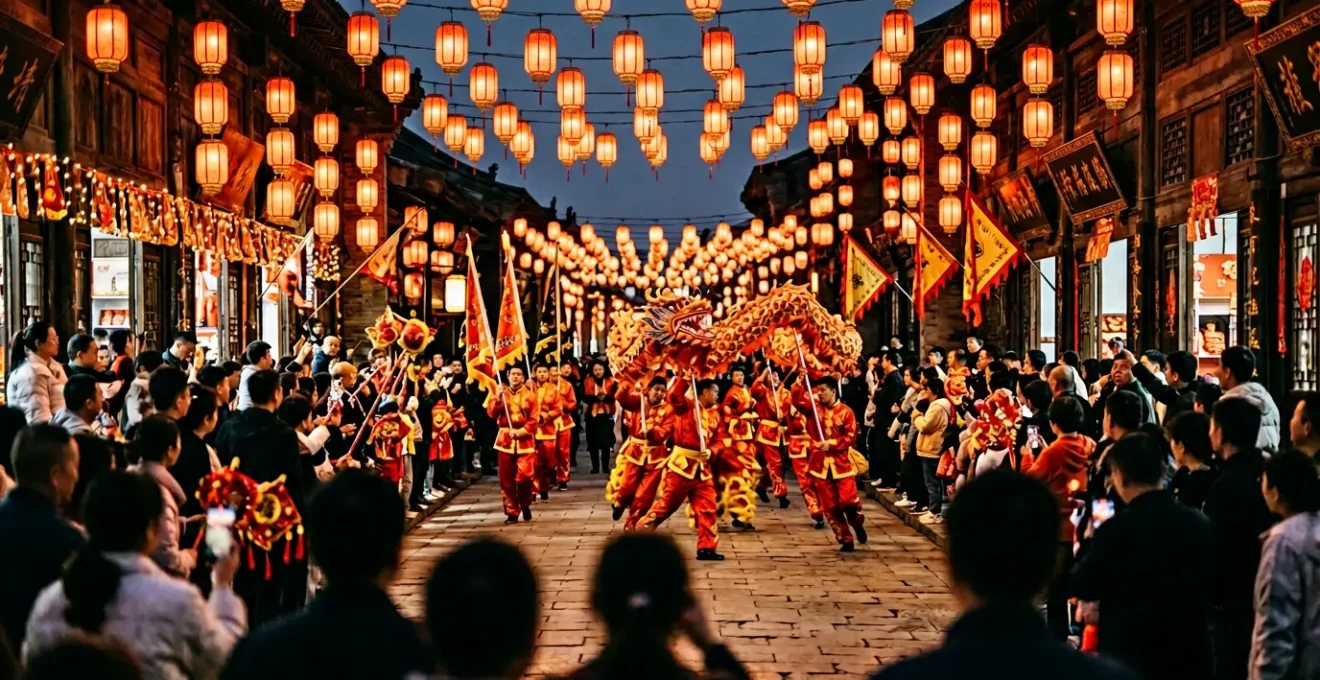
Many believe the difference between a lion and dragon dance is simply the number of performers. This is a surface-level observation. The fundamental distinction lies in their purpose: the lion dance is a demonstration of a martial arts school’s discipline and prowess, performed by two highly trained artists. In contrast, the dragon dance is a community ritual of collective power, symbolizing luck and prosperity through the fluid cooperation of a larger team.
At any vibrant festival, the explosive sound of drums and cymbals announces their arrival. A flash of color, a dynamic beast weaving through the crowd. For the uninitiated, the spectacle of the lion dance and the dragon dance can seem like a blur of beautiful, chaotic energy. You may have noticed one is performed by two people and the other by a long line of dancers, but to see only this is to miss the very soul of the performance.
Many guides will give you a simple checklist of visual differences. While not incorrect, they fail to answer the deeper question: what are you truly watching? The answer lies not just in the costume, but in the philosophy behind it. The key to differentiating these two magnificent beasts is to understand their core function. The lion dance is not merely a dance; it is a public exhibition of a specific martial arts lineage. It is a story of skill, strength, and discipline. The dragon dance, on the other hand, is a powerful and fluid expression of community spirit and a prayer for fortune.
This guide will take you beyond the surface. As a practitioner, I will teach you to see with a trained eye. We will explore the rituals that define the lion’s character, decode the language of its drumbeat, and understand the physical demands placed upon its performers. By the end, you will not only be able to tell the two apart but will also possess a deeper appreciation for the lion dance as a profound martial art form.
To guide your understanding, we will delve into the specific elements that reveal the lion dance’s true nature. This exploration will equip you to recognize the discipline and symbolism behind every movement.
Summary: A Master’s Guide to the Lion and Dragon Dance
- What Does the « Cai Qing » Lettuce Ritual Signify?
- Why Are the Drums and Firecrackers So Loud During the Dance?
- How Do You Feed a Red Packet to the Lion Safely?
- Where Are the Best Malls to See Free Lion Dance Performances?
- How Heavy Is the Lion Head Used by the Dancers?
- Do Locals Believe the Smoke Carries Messages to the Heavens?
- Why Do Children Float in the Air During the Piu Sik Parade?
- Why Is the Tai Hang Fire Dragon Made of Straw and Incense?
What Does the « Cai Qing » Lettuce Ritual Signify?
The « Cai Qing » (采青), or « plucking the greens, » is perhaps the most misunderstood part of a lion dance performance. It is not simply a playful act of grabbing vegetables. For a martial arts troupe, it is the centerpiece of the performance—a public test of skill, strategy, and power. The « greens » (usually lettuce, a pun for « wealth » in Cantonese) are hung at a challenging height, often with a red packet prize. The lion must approach, observe, and strategize how to reach the prize, mimicking the curiosity, caution, and cunning of a real cat.
This ritual is a direct demonstration of the troupe’s prowess. A clumsy or failed attempt reflects poorly on their school’s discipline. For competitive performances, the challenge is amplified, with lettuce hung from poles reaching heights of 5 to 6 metres, requiring incredible acrobatic ability and flawless coordination between the two performers. As noted by experts, this ritual showcases the troupe’s creativity in overcoming obstacles.
Cai Qing isn’t just about grabbing some veggies. It’s a test of the lion dance troupe’s skill, coordination, and creativity. The higher and more challenging the setup, the more impressive the performance.
– Lion Dance Singapore, What is Cai Qing in Lion Dance?
Observe the lion’s approach: the cautious steps, the powerful stances, the explosive leap. You are watching a choreographed hunt, a display of martial foundation where every movement is precise and filled with intent. This is not just a game; it is ritualized prowess.
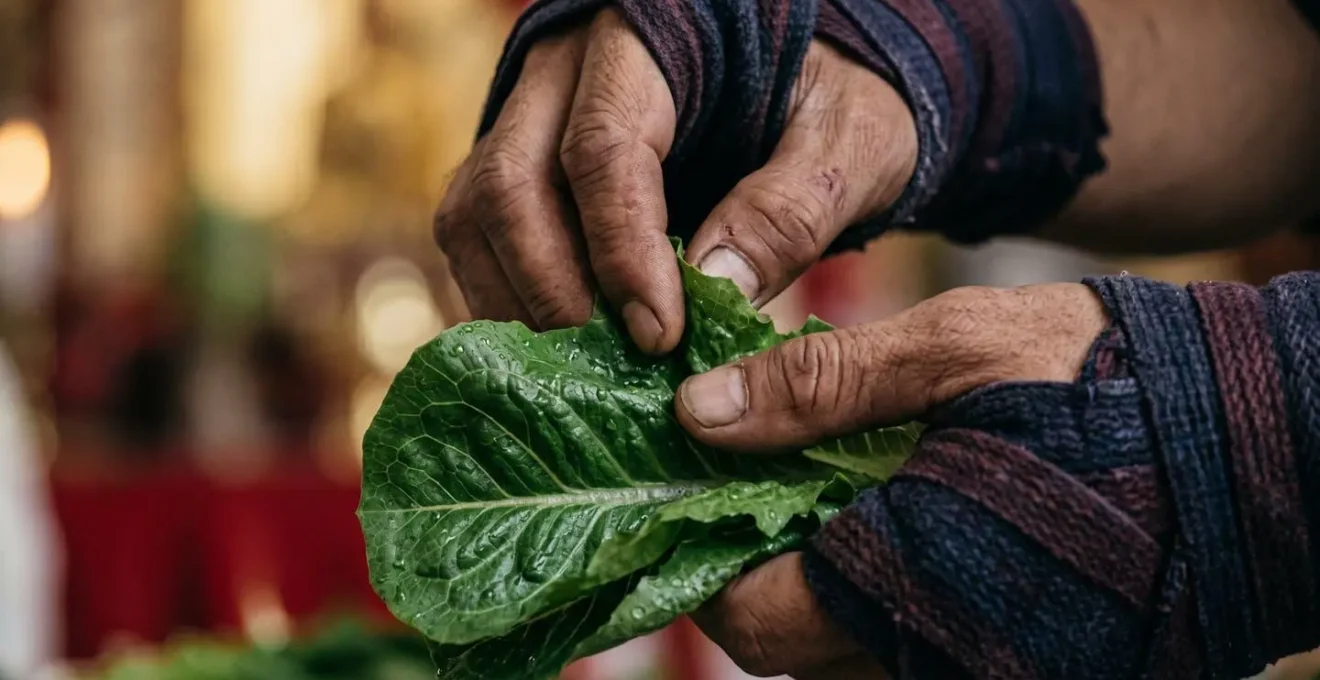
The successful capture and subsequent « spitting out » of the greens to the audience is a symbolic sharing of wealth and good fortune, earned through the demonstrated skill of the martial artists. The difficulty of the « Cai Qing » directly corresponds to the prestige of the troupe.
Why Are the Drums and Firecrackers So Loud During the Dance?
The thunderous sound accompanying a lion dance is not random noise. It is the lifeblood of the performance. The cacophony of drums, cymbals, and gongs serves a dual purpose: one spiritual, the other martial. Spiritually, the loud noise is believed to scare away evil spirits and bad luck, cleansing the area and ushering in good fortune. This is why lion dances are essential for opening a new business or celebrating the New Year.
From a martial arts perspective, however, the percussion is far more sophisticated. It is the lion’s voice and its heartbeat. Each movement of the lion—a pounce, a look of curiosity, a shake of the head, a powerful leap—has a corresponding drum pattern. The drum dictates the pace, builds tension, and signals the next sequence of movements. As one school explains, « The drum stands for the pulse of the heart beat of the lion. A particular rhythm is associated to every steps and routines of the Lion. »
The Rhythm of Combat: A Deeper Look
This martial connection is not just theoretical. A 2015 academic study of Toronto’s Hong Luck Kung Fu Club revealed how lion dancers perceive drum patterns as signals for coordinating maneuvers on a « performance battlefield. » The research highlighted that while students train movements without music, the percussion during public demonstrations is a critical element, forcing the dancers to synchronize their martial discipline with specific auditory cues.
Listen closely the next time you watch. You will hear the rhythm change from a slow, cautious beat as the lion surveys its surroundings to a rapid, intense crescendo during an acrobatic feat. The two performers are not just dancing to the music; they are communicating with the musicians and with each other through this spiritual pulse. The firecrackers add to this, their explosive bursts representing a final, powerful warding off of all negativity.
How Do You Feed a Red Packet to the Lion Safely?
Offering a « lai see » or red packet (红包) to the lion is a wonderful way to participate in the tradition and show appreciation. It is an exchange of blessings; you offer a token of gratitude, and the lion bestows good fortune upon you. However, there is an etiquette to this interaction, rooted in respect and martial discipline. You are not feeding an animal; you are interacting with two highly trained performers engaged in a demanding physical art.
The key is to remember that the lion will approach you. Do not rush towards it or thrust the envelope in its face. This can disrupt the performers’ concentration and balance, especially if they are in a difficult stance. The lion, embodying the spirit of a curious but cautious cat, will perform a routine around the offering before gently « eating » it. This act of « eating » is part of the character and demonstrates the control and precision of the performers, who must manipulate the lion head’s mouth while maintaining their footwork.
For a respectful and safe interaction, follow a clear set of steps. This ensures both your safety and that of the performers, allowing the tradition to unfold with the proper discipline.
Your Action Plan: Offering a Red Packet with Respect
- Choose an auspicious amount: For public shows, amounts like $8 or $18 are fine. For performers you know, $28 or $88 shows greater appreciation.
- Present with both hands: Hold the red packet at chest level with both hands. Let the lion approach you; do not reach out towards it.
- Maintain a safe distance: Stand still and allow the performers to control the interaction. They are trained to take the envelope gently.
- Add the « greens »: For an enhanced tradition, you can attach the red packet to a head of lettuce, which the lion will « pluck » from you.
- Await the bow: After taking the packet, the lion will perform a bow. This is a sign of gratitude and martial respect. Acknowledge it with a nod.
By following this etiquette, you are not just giving money; you are participating in a centuries-old dialogue of respect between the community and the martial artists who protect and entertain it.
Where Are the Best Malls to See Free Lion Dance Performances?
During festive periods, particularly Chinese New Year, the lion dance breaks free from the confines of martial arts schools and temples to perform in public spaces. Shopping malls have become a popular and accessible venue for witnessing this tradition. These performances are a fantastic opportunity for cultural tourists to experience the art form up close, free of charge. Cities with large Chinese communities, like Hong Kong, Singapore, and Vancouver, often have schedules of performances at major commercial centers.
Performances in malls are designed to be spectacular, showcasing the troupe’s energy and character. While they may not always feature the most death-defying pole-jumping acrobatics due to spatial constraints, they provide an excellent chance to observe the fundamentals. As one guide on performances in Hong Kong’s commercial districts notes, these shows are perfect for observing the « stable horse stances and coordination between head and tail performers. »
This is where your new knowledge comes into play. Instead of just seeing a colorful costume, look for the martial arts foundation. Notice the strength in the performers’ low stances. Observe how the head and tail performers move as one entity, a testament to countless hours of training. As the Chinese American Family organization points out, « Most lion dancers are highly trained and follow carefully choreographed routines based on the martial arts. » A mall performance is a perfect, controlled environment to see this discipline in action.
To find these performances, check the websites or social media pages of major shopping malls in the city you are visiting during a festive season. They will often post a schedule of « lion dance blessings. » Arrive early to get a good viewing spot, as these events draw large, enthusiastic crowds eager for a dose of good fortune.
How Heavy Is the Lion Head Used by the Dancers?
The grace and agility of a lion dancer can be deceptive. It masks the incredible physical strength and endurance required to perform. A significant part of this challenge comes from the weight of the lion head itself. The performer at the front must not only support this weight but also manipulate it with precision to convey a full range of emotions—happiness, curiosity, fear, and aggression. This is an athletic feat rooted in deep martial conditioning.
The weight varies by the lion’s style and materials. For the traditional Southern Lion, which emphasizes strong stances and powerful character, the head is typically constructed from bamboo and papier-mâché. According to specifications from experts, a traditional Southern style head can weigh between 3.5 to 6.5 kilograms (7.7 to 14.3 pounds). While modern versions using aluminum or carbon fiber are lighter to allow for more acrobatic movements, the traditional weight remains a benchmark of a performer’s raw power and stance training.
The table below shows how different styles present unique physical challenges, with some traditional Northern Lion costumes being extraordinarily heavy, demanding an almost superhuman level of conditioning.
| Lion Style | Weight Range | Material | Performance Impact |
|---|---|---|---|
| Southern Lion (Traditional) | 3.5–6.5 kg (7.7–14.3 lbs) | Bamboo, papier-mâché, fur | Requires raw power and strong stances |
| Northern Lion (Traditional) | Up to 70 kg (154 lbs) with skin | Wooden head, heavy fur skin | Demands extraordinary physical conditioning |
| Northern Lion (Modern) | ~10 kg (22 lbs) | Aluminum, lighter materials | Enables high-energy acrobatic performances |
| Southern Lion (Modern) | Lighter variants available | Carbon fiber, aluminum | Allows more gymnastic, acrobatic feats |
This immense physical demand is why the art has been traditionally dominated by male martial artists, although many modern troupes now feature incredibly skilled and strong female performers who have mastered the discipline. The weight is not a bug; it is a feature. It ensures that only those with a strong kung fu foundation can properly bring the lion to life.
Do Locals Believe the Smoke Carries Messages to the Heavens?
The sensory experience of a lion dance is dense with symbolism. While the loud percussion serves to ward off evil, the smoke that often fills the air from incense and firecrackers plays a complementary spiritual role. The belief is not typically that the smoke carries specific messages to the heavens in the way one might with prayer tablets at a temple. Rather, the smoke is part of a larger act of atmospheric and spiritual cleansing.
In many Eastern traditions, burning incense is an act of purification. Its fragrant smoke is thought to please the deities and create a sacred space, clearing away negative energy or lingering malevolent spirits. When combined with the explosive power of firecrackers, the effect is a potent, multi-sensory ritual designed to create an environment of maximum auspiciousness. The lion dance, therefore, moves through this cleansed space, bringing active blessings and good fortune.
The primary purpose shared by locals is one of protection and luck. As the Vancouver Lion Dance team puts it, « Lion dances are said to bring fortune and protection from evil spirits. » The smoke and noise are the tools used to achieve the first part of that goal—protection—by driving away anything harmful. This clears the way for the lion itself to deliver the second part: fortune.
So, while the smoke may not be a direct line of communication to the heavens, it is a crucial element in preparing the earthly realm for the arrival of good luck. It transforms a mundane space—be it a storefront, a street, or a home—into a temporary sanctuary, ready to receive the blessings that the lion brings.
Why Do Children Float in the Air During the Piu Sik Parade?
Here, we must make a critical distinction that even many locals confuse. The sight of children seemingly floating in the air, dressed as mythological figures and balanced on the tip of a fan or sword, is a feature of the Piu Sik (飄色) or « Floating Colours » parade. While often part of the same grand festival procession as a lion dance, it is a completely separate folk art form.
The « floating » is a masterful illusion. The children are securely fastened to a strong, hidden steel frame that is disguised as part of the costume or a prop they are holding. The entire structure is carried by a team of strong adults. It is a beautiful and mesmerizing spectacle, but it is an art of pageantry and mechanical ingenuity, not martial arts.
When people speak of the « flying » of a lion dance, they are referring to something entirely different and very real: the breathtaking acrobatics of « Jong » or pole-jumping. This is where the lion leaps between high poles, some reaching heights of up to 2.8 meters (~8 feet), with only a small platform at the top. This requires superhuman balance, timing, and courage. It is the absolute pinnacle of the lion dance as a martial discipline. As the Asian Art Federation states, « The ‘flying’ of a lion dance, especially in pole-jumping, is a genuine feat of human athleticism, balance, and courage rooted in years of martial arts training. »
Do not mistake the illusion of Piu Sik for the raw athleticism of Jong. One is a clever piece of folk engineering designed to delight the eye. The other is a heart-stopping display of genuine human prowess that pushes the limits of physical and mental discipline.
Key Takeaways
- The « Cai Qing » lettuce ritual is not a game, but a public test of a martial arts troupe’s skill, coordination, and power.
- The drumbeat is the « heartbeat » of the lion, with specific rhythms signaling combat-like maneuvers and coordinating the two performers.
- The lion head’s significant weight (up to 6.5 kg for traditional styles) is a feature, not a flaw, ensuring only performers with strong martial conditioning can bring it to life.
Why Is the Tai Hang Fire Dragon Made of Straw and Incense?
The final, and perhaps most profound, difference between the lion and the dragon is embodied in their very substance. The Tai Hang Fire Dragon, a spectacular tradition from Hong Kong, is a massive 67-meter beast made of straw and covered with thousands of burning incense sticks. It is built to be a magnificent, ephemeral spectacle. After its three-night parade, it is ritually taken to the sea and burned. It is a powerful, one-time community cleansing ritual.
The lion, by contrast, is durable. Its head, whether made of traditional bamboo and papier-mâché or modern carbon fiber, is a treasured object. It represents the identity and spirit of a martial arts school. It is carefully maintained, repaired, and used for many years, sometimes even generations. It is not an ephemeral object for a single ritual; it is the ongoing embodiment of a martial arts lineage.
This highlights the core philosophical difference. As a Cultural Performance Analysis study articulates, « The Fire Dragon is ephemeral, designed to be burned in a powerful, one-off cleansing ritual. The Lion is durable, representing an ongoing tradition and a set of skills passed down through generations within a specific martial arts lineage. » The dragon dance requires a large group of community members (often 9-15 dancers) to cooperate for a collective blessing. The lion dance requires a pair of highly specialized artists who have dedicated years to mastering a specific combat discipline.
The dragon is the collective power of the community. The lion is the focused prowess of the individual school. One is a fluid, flowing river of people. The other is a sharp, disciplined expression of combat skill. In understanding this, you now see beyond the costume and can truly appreciate the spirit within.
Now that you can see with a trained eye, the next step is to witness a performance and observe these elements for yourself. Seek out a celebration and watch not just the spectacle, but the discipline, strength, and spirit that bring the lion to life.