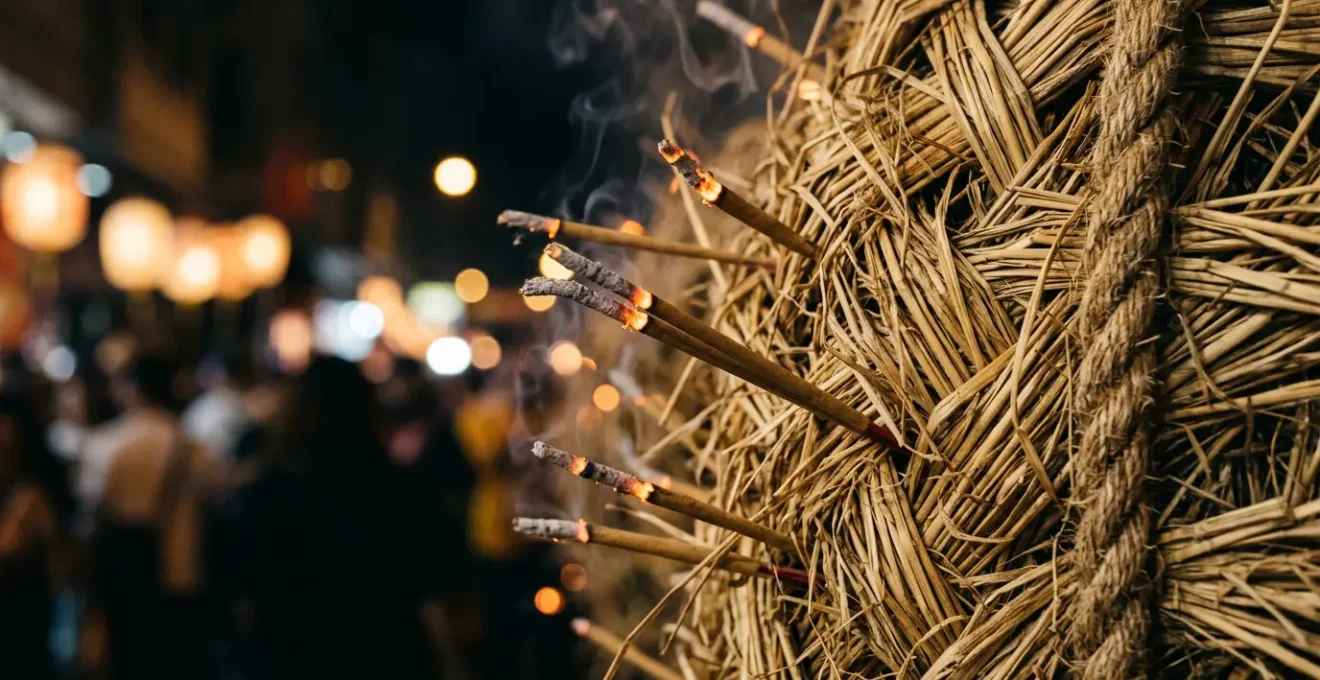
The Tai Hang Fire Dragon is crafted from straw and incense not for spectacle, but as a form of spiritual technology designed to absorb and burn away malevolence.
- Straw acts as an ephemeral vessel, a temporary body to house the dragon spirit and the community’s afflictions.
- The thousands of burning incense sticks transform the dragon into a moving censer, a kinetic prayer that purifies the district with sacred smoke.
Recommendation: To truly understand the dance, view it not as a parade, but as a powerful, living ritual of purification you can feel, see, and smell.
Every Mid-Autumn Festival, the narrow streets of Hong Kong’s Tai Hang district transform into a river of fire, smoke, and thunderous drumming. A colossal dragon, glowing with thousands of points of light, weaves through the crowds. For many, it’s a breathtaking photo opportunity. But to ask why this magnificent creature is made of humble straw and fragrant incense is to pull back the curtain on the performance and step into the heart of a profound ritual. This isn’t just a tradition; it’s the living legacy of a village that fought a plague not with medicine, but with fire, faith, and a dragon born of the earth.
Most guides will tell you the dance started in the 19th century to stop a pestilence, and that it’s a key part of the Mid-Autumn festivities. They focus on the spectacle. But this understanding barely scratches the surface. It overlooks the deliberate symbolism embedded in every material and every movement. The truth is far more potent: the Tai Hang Fire Dragon is an act of spiritual technology. The choice of straw and incense is not incidental; it is the very core of its purifying power. The dragon is an ephemeral vessel, built to absorb the community’s maladies and then be ritually destroyed, taking the bad luck with it in an ablution by fire.
This article moves beyond the surface-level description. We will explore the logistics of experiencing this powerful ceremony, not just watching it. We will decode the symbolism of its components, from the « pearls » it chases to the very smoke it breathes. By understanding the « why » behind the materials, you will no longer see a parade; you will witness a community’s soul set alight, an annual act of purification that you can see, smell, and feel in the very air you breathe.
This guide will walk you through the practical strategies for immersing yourself in the event and the deeper cultural meanings behind its most fascinating elements. Explore the table of contents below to navigate the layers of this unique heritage.
Summary: Why Is the Tai Hang Fire Dragon Made of Straw and Incense?
- How to Get a Front Row View in the Crowded Streets of Tai Hang?
- Do You Need Goggles to Watch the Fire Dragon Dance?
- Why Is It Better to Walk from Tin Hau Station than Causeway Bay?
- What Is the « Pearl » That the Fire Dragon Chases?
- Can You Do Tai Hang and Victoria Park Lanterns in One Night?
- Why Do Incense Coils Hang From the Ceiling for Weeks at a Time?
- Why Do Children Float in the Air During the Piu Sik Parade?
- Where Are the Most Instagrammable Lantern Displays for Mid-Autumn?
How to Get a Front Row View in the Crowded Streets of Tai Hang?
Securing a good vantage point for the Tai Hang Fire Dragon Dance is a strategic challenge, but essential for a full sensory immersion. This is a free, non-ticketed street event, meaning the key is foresight, not funds. The dance typically begins at 8:15 PM, but the streets become impassable long before. To truly feel the heat and smell the sacred smoke, you need to be at the heart of the action. The sheer scale of the event is immense; a team of over 300 performers carries the 67-meter dragon, which is a spectacle that draws tens of thousands into a very small, dense neighbourhood.
The premier viewing spot is widely considered to be the intersection of Wun Sha Street and School Street. Here, the dragon often pauses to perform more intricate, choreographed movements. To claim a spot here, arriving one to two hours early is not just recommended; it’s mandatory. Another effective tactic is to follow the sound. The drum corps always precedes the dragon’s arrival by several minutes. By listening for the drummers, you can anticipate the dragon’s path and secure a last-minute position just ahead of the main procession.
For those who prefer a less frantic experience, the side streets of the route, such as Lily Street or Ormsby Street, offer more breathing room. The dragon passes through these areas multiple times throughout its three-hour journey, providing ample viewing opportunities with thinner crowds. Alternatively, look up. Some upper-floor restaurants and cafes along the route may offer a more comfortable, albeit less direct, view of the ceremony unfolding below.
Do You Need Goggles to Watch the Fire Dragon Dance?
While the image of a 67-meter dragon studded with thousands of burning incense sticks might suggest a need for heavy-duty protection, goggles are generally unnecessary and impractical. The primary sensory challenge is not sparks, but the thick, pervasive smoke and falling ash. A simple cloth face mask is far more useful than goggles, helping you breathe more comfortably amidst the fragrant haze. This smoke is not seen as a pollutant but as a core part of the ritual—an atmospheric purification of the entire district.
Locals, in fact, consider the falling ash a blessing of good luck. You’ll see many spectators, especially older residents, willingly let it settle on their hair and clothes. Wearing a hat is a practical measure to protect your hair and scalp, while still participating in this shared moment of communal blessing. If you have a camera, a simple UV filter will protect your lens from scratches, and an air blower is invaluable for safely removing ash without wiping it across the glass.
The experience is an intense immersion. As the cultural platform Our China Story highlights, the ritual extends beyond the dance itself. After the parade, the « Dragon Incense » is distributed to the public:
After the parade, the remaining incense sticks on the fire dragon, known as ‘Dragon Incense’, are distributed to the public, symbolising good luck and blessings.
– Our China Story, 8 numbers that unveil HK’s Tai Hang Fire Dragon Dance
If you are particularly sensitive to smoke or have respiratory conditions, it’s wise to watch from the periphery of the crowds or for shorter periods. But for most, embracing the sensory onslaught is part of the authentic experience.
Essential Checklist for Experiencing the Fire Dragon Dance
- Personal Comfort: Wear a hat to protect your hair from falling ash (a sign of good luck!) and a simple cloth mask for the thick, fragrant smoke.
- Camera Safety: Equip your lens with a UV filter for protection and carry an air blower to safely remove ash without scratching the glass.
- Hydration and Footwear: Bring a bottle of water to stay hydrated in the warm, crowded conditions and wear comfortable shoes for several hours of standing.
- Health Assessment: If you have respiratory sensitivities, plan to view the dance from less congested side streets or for a shorter duration.
- Mindset of a Participant: Prepare to be immersed. Understand that the smoke and ash are not a nuisance but an integral part of a sacred purification ritual.
Why Is It Better to Walk from Tin Hau Station than Causeway Bay?
Choosing your arrival point is a critical strategic decision that defines your entire experience of the Fire Dragon Dance. While Causeway Bay is the larger, more famous MTR station nearby, approaching from Tin Hau MTR Station is the superior choice for several reasons. It’s about mastering crowd flow and embracing the authentic neighbourhood atmosphere before the main event even begins.
The most direct route is from Tin Hau Station’s Exit A1. After exiting, you cross the bustling King’s Road and walk down the aptly named « Fire Dragon Path. » This approach is a form of « atmospheric appetizer. » You move through quieter, residential streets, witnessing local preparations and feeling the buzz build organically. Festival flags and lanterns guide your way, creating a sense of pilgrimage rather than a chaotic commute. By arriving from Tin Hau, you are moving « upstream » against the primary torrent of people flowing from the commercial hub of Causeway Bay, making your walk significantly less stressful.
The real advantage of the Tin Hau route becomes clear after the dance concludes around 10:30 PM. The exodus towards Causeway Bay Station becomes a massive human bottleneck, a slow, frustrating shuffle. In contrast, the path back to Tin Hau is remarkably less congested, allowing for a swift and calm departure. By choosing Tin Hau, you not only have a more pleasant arrival but also a much more efficient exit, saving you time and frustration at the end of a long, exciting night.
What Is the « Pearl » That the Fire Dragon Chases?
The Fire Dragon does not dance alone. It is perpetually led by two large, glowing orbs, spun vigorously by performers who dance backwards, facing the dragon’s head. These are the « pearls, » and their role is far more significant than mere decoration. They are both the practical guide for the colossal dragon and the symbolic heart of its spiritual quest. Made from pomelos studded with burning incense, the pearls are a central element of this kinetic prayer.
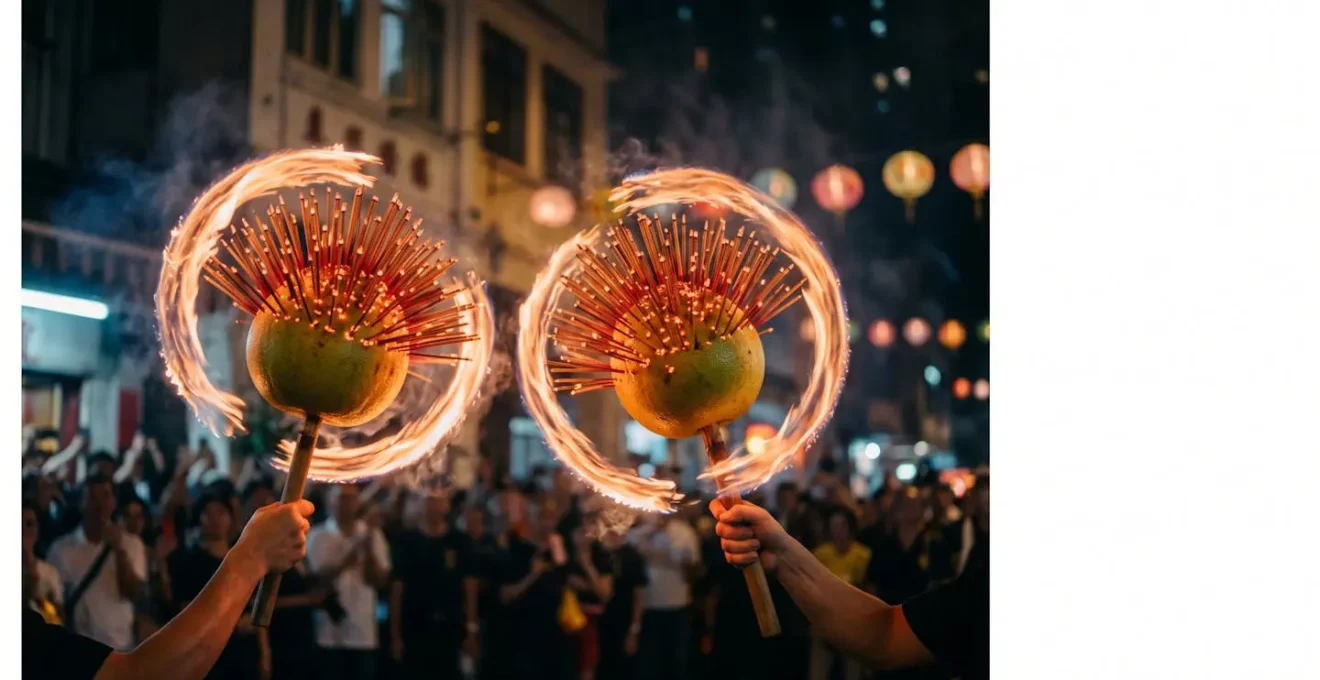
On a practical level, the pearls function as a steering mechanism. As the Hong Kong Tourism Board explains, their movement dictates the dragon’s path through the tight, winding streets:
The pearls play a crucial role in guiding the majestic dragon along its path. To ensure the dragon follows the right direction, the performers carrying the pearls have to face the dragon and walk backwards.
– Hong Kong Tourism Board, 5 Fun Facts about the Tai Hang Fire Dragon Dance
However, the symbolism of the pearl runs much deeper in Chinese philosophy. The eternal chase of the pearl is a classic motif representing the pursuit of profound truth. In this context, the pearl embodies wisdom, spiritual enlightenment, and cosmic balance. It is often associated with the moon’s yin energy, which the dragon, a creature of fiery yang energy, seeks to balance.
The Pearl as a Symbol of Eternal Pursuit
In Chinese mythology and Buddhist philosophy, the pearl is linked to the ‘cintamani’, or the wish-fulfilling jewel, representing perfection and enlightenment. According to an analysis of the dragon and pearl motif, the chase symbolizes that the most important things in life—wisdom, truth, and spiritual growth—are not goals to be finally attained, but ideals that are continuously pursued. The dragon’s dance is therefore not a hunt with an end, but a representation of the perpetual journey of self-improvement and the quest for balance.
Can You Do Tai Hang and Victoria Park Lanterns in One Night?
Yes, it is entirely possible to experience both the Tai Hang Fire Dragon Dance and the Victoria Park Mid-Autumn Lantern Carnival in a single evening, but it requires strategic planning and an acceptance of crowds. The two locations are geographically very close—Victoria Park is just a short walk from the Tin Hau MTR station, which is the recommended starting point for the Fire Dragon Dance. This proximity makes the combination logistically feasible.
The best strategy is to visit the Victoria Park lantern displays *before* the Fire Dragon Dance begins. The lanterns are typically illuminated from 6:30 PM onwards. Arriving around 7:00 PM gives you ample time to wander through the displays, soak in the festive atmosphere, and take photos before the peak crowds descend. Victoria Park hosts the largest Mid-Autumn lantern carnival in Hong Kong, featuring massive, intricate lantern installations that are best appreciated with a little bit of breathing room.
Around 7:45 PM, you can then make the short 10-minute walk from Victoria Park to the streets of Tai Hang to secure a spot for the Fire Dragon Dance, which starts at 8:15 PM. This order—lanterns first, dragon second—is crucial. The Fire Dragon Dance runs until about 10:30 PM, by which time Victoria Park will be extremely congested with post-dinner crowds, making a late visit far less pleasant. By front-loading your lantern viewing, you get to enjoy the best of both worlds in a more managed and enjoyable way.
Why Do Incense Coils Hang From the Ceiling for Weeks at a Time?
To understand why the Tai Hang Fire Dragon is made of incense, one must first understand the role of incense in the spiritual landscape of Hong Kong. In temples like Man Mo, you will see enormous, cone-shaped incense coils hanging from the ceiling, burning slowly for days or even weeks. These are not just air fresheners; they are a form of sustained, long-lasting prayer. This practice provides the spiritual blueprint for the Fire Dragon.
The Spiritual Function of Long-Burning Incense
In traditional temples, worshippers purchase these large incense coils as significant offerings. They attach a red paper tag inscribed with their name and specific wishes—for health, for success in business, for family prosperity. The extended burning time symbolizes the endurance and sincerity of their request. The constant stream of smoke is believed to create a sacred atmospheric medium, carrying the prayer from the earthly realm to the heavens. It is a slow, persistent petition to the deities.
The Fire Dragon is essentially a mobile, horizontal version of this temple practice. The straw frame serves as an ephemeral vessel, a temporary body designed to carry thousands of these prayers through the community. The specific incense sticks used, called ‘Longevity Incense’ (長壽香), are each 45 cm long, designed for a substantial burn time. When the dragon dances through the streets, it becomes a massive, moving censer. The thick, fragrant smoke is not a byproduct; it is the primary purpose. It is a powerful act of ablution by fire and smoke, cleansing the streets, the homes, and the people of any lingering misfortune or malevolent spirits, just as it was intended to do during the 19th-century plague.
Why Do Children Float in the Air During the Piu Sik Parade?
While exploring Hong Kong’s vibrant festival culture, it’s common to encounter the fascinating image of young children, dressed in elaborate costumes, seemingly floating in the air. However, it’s crucial to distinguish this tradition, known as the Piu Sik (Floating Colours) Parade, from the Tai Hang Fire Dragon Dance. They are separate, equally important, threads in the rich tapestry of Hong Kong’s intangible cultural heritage.
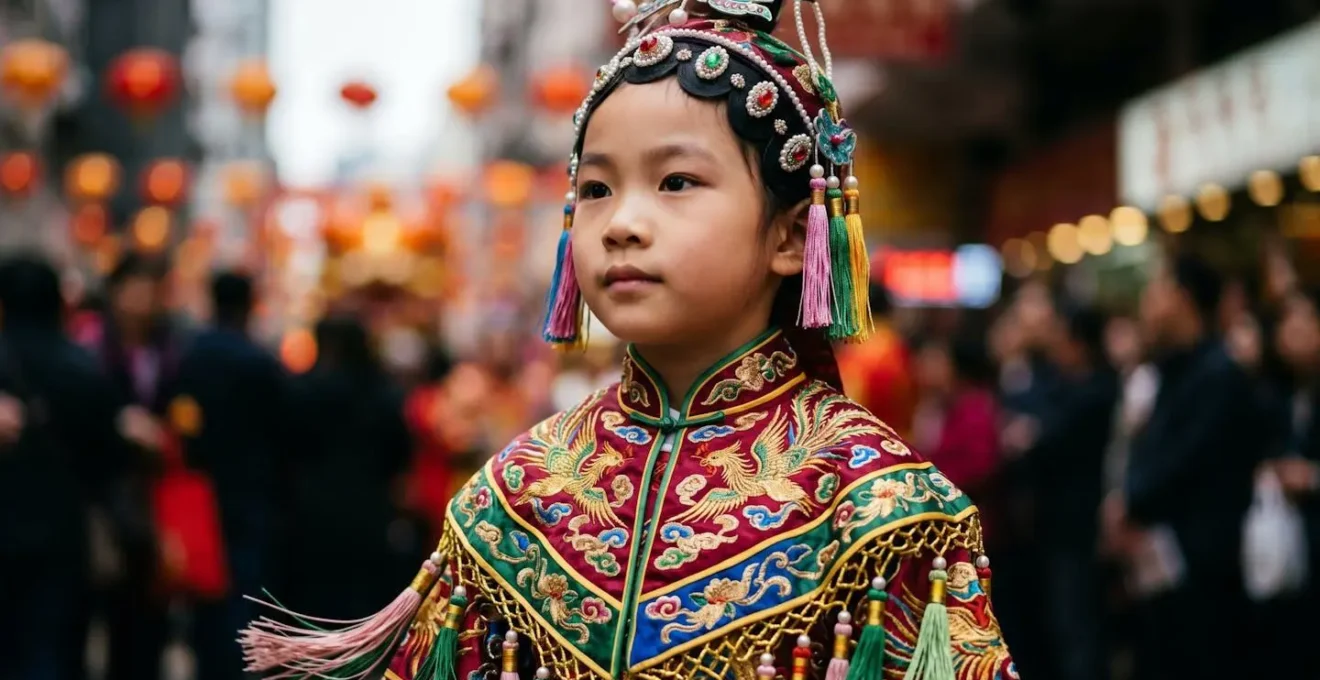
The Piu Sik Parade is most famously associated with the Cheung Chau Bun Festival, not the Mid-Autumn Festival. The « floating » effect is a masterful illusion. Each child is securely strapped to a hidden steel frame, which is disguised by fans, props, and costume elements, and then carried by an adult. The children themselves are meticulously chosen for their light weight and calm demeanor. They are dressed as mythological figures or contemporary personalities, creating a surreal and beautiful procession.
The purpose of Piu Sik is to bring blessings and ward off evil spirits. The children, elevated above the crowds, are seen as pure conduits for divine goodwill. While the method and festival are different, the underlying theme of communal purification and blessing connects it spiritually to the Tai Hang Fire Dragon Dance. Both rituals demonstrate a profound community commitment to preserving and passing on heritage, with young people often playing a central role as bearers of tradition, ensuring these unique cultural practices continue to thrive for future generations.
Key takeaways
- The Fire Dragon’s materials are symbolic: straw as a temporary body for misfortune, and incense as a purifying agent.
- Experiencing the dance is a full sensory immersion; the smoke and ash are considered blessings, not annoyances.
- The dragon’s chase of the « pearl » represents the eternal pursuit of wisdom and enlightenment, a core philosophical concept.
Where Are the Most Instagrammable Lantern Displays for Mid-Autumn?
While the Fire Dragon Dance is the dynamic heart of Tai Hang’s Mid-Autumn celebration, the festival across Hong Kong is synonymous with the serene beauty of lantern displays. Finding the most photogenic spots involves choosing an atmosphere that matches your desired aesthetic, from traditional grandeur to modern romanticism. Each location offers a unique canvas for capturing the spirit of the festival.
For sheer scale and traditional magnificence, nothing beats Victoria Park. As the city’s largest and most official carnival, it features enormous, complex lantern installations that make for impressive wide-angle shots. For a completely different, more modern and intimate feel, Lee Tung Avenue in Wan Chai is unparalleled. Its famous canopy of over 800 colorful Chinese lanterns creates a 200-meter-long glowing tunnel, perfect for portraits and creating a magical, atmospheric mood.
For those seeking tranquility and classic elegance, the Nan Lian Garden at Diamond Hill offers a Zen-like experience. Here, traditional lanterns are set against the stunning backdrop of Tang Dynasty architecture, with their lights reflecting peacefully in serene ponds. Finally, for a shot that screams « Hong Kong, » the Tsim Sha Tsui Promenade provides lantern displays with the iconic Victoria Harbour and Hong Kong Island skyline as a dramatic backdrop. To elevate your photography, aim to shoot during the « blue hour »—the 30-45 minutes just after sunset when the sky retains a deep blue hue, creating a beautiful contrast with the fully illuminated lanterns.
| Location | Best For | Getting There |
|---|---|---|
| Victoria Park | Traditional Grandeur & Scale | MTR Tin Hau (Exit A2) or Causeway Bay (Exit E) |
| Lee Tung Avenue | Modern Romance & Atmosphere | MTR Wan Chai (Exit D) |
| Nan Lian Garden | Zen Serenity & Architecture | MTR Diamond Hill (Exit C2) |
| Tsim Sha Tsui Promenade | Iconic Skyline Integration | MTR East Tsim Sha Tsui (Exit L6) |
Now that you understand the deep-rooted symbolism and practical logistics, you are ready to witness the Tai Hang Fire Dragon Dance not just as a tourist, but as an informed guardian of this precious intangible heritage. Engage your senses, embrace the smoke, and become part of a ritual that has protected a community for over a century.