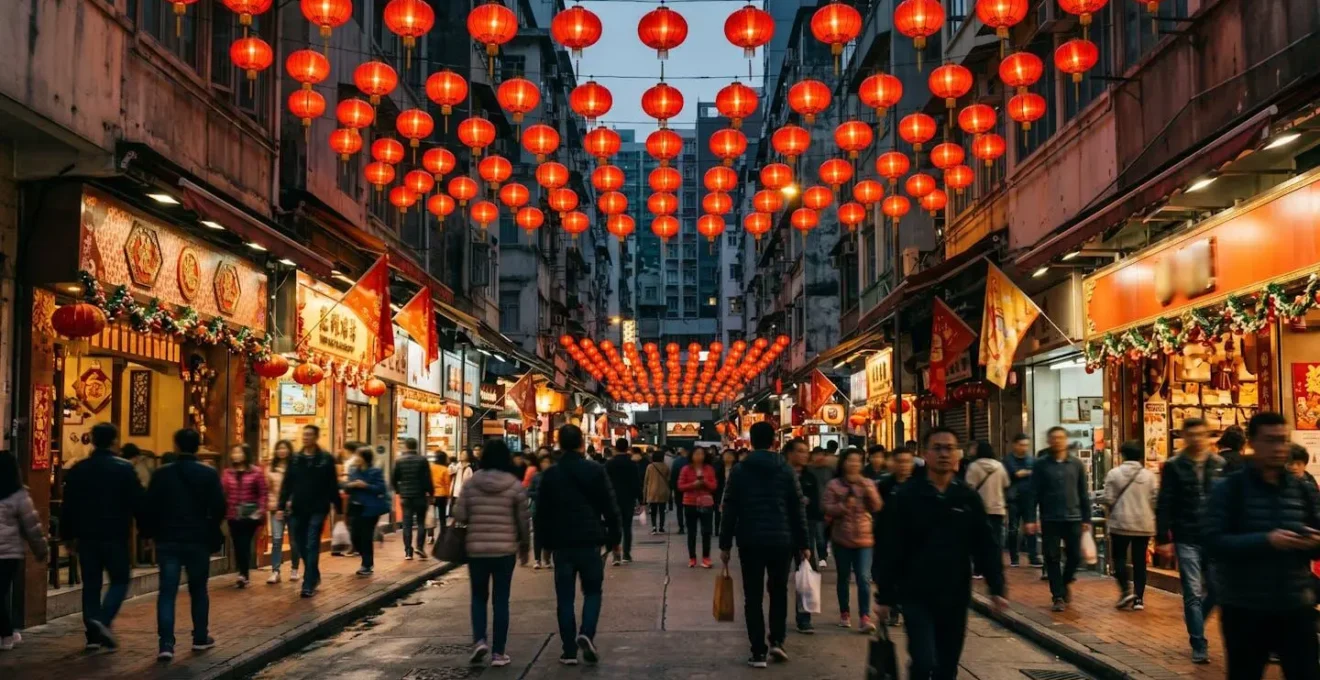
The key to surviving Chinese New Year in Hong Kong isn’t knowing which shops close, but understanding why they close and using that cultural knowledge as a strategic map.
- Follow the sound of drums and cymbals; the « Cai Qing » lion dance ritual literally points you to businesses that are open and celebrating.
- Visit the Victoria Park Flower Market on CNY Eve not just for flowers, but as a last-chance, open-air food hub when other restaurants are closed.
Recommendation: Stop seeing traditions as obstacles. Instead, use them as your cultural GPS to navigate the city and find exactly what you need—from food to entertainment.
The common fear for any traveler visiting Hong Kong during Chinese New Year is the dreaded shutdown. Visions of empty streets, shuttered restaurants, and a desperate search for a 7-Eleven can cause serious travel anxiety. You’ve probably been told to « check online » or « book months in advance, » but this reactive advice fails to capture the dynamic reality on the ground. It treats the holiday’s cultural traditions as inconvenient roadblocks for tourists.
But what if the very rituals that seem to close the city down were actually a secret map to survival? What if, instead of fighting against the current, you could learn to read it? This guide proposes a radical shift in perspective. The key to finding food, services, and unique experiences during the Lunar New Year isn’t a static list of what’s open, but a dynamic strategy based on understanding cultural patterns. We will reframe cultural taboos, festive performances, and traditional gatherings not as obstacles, but as your most reliable breadcrumbs.
Think of this not as a simple guide, but as a survival plan. By learning to decode the city’s festive rhythms, you’ll transform from a worried tourist into a savvy urban navigator, turning potential frustration into a series of triumphant discoveries. This is your blueprint for using the city’s cultural GPS to find exactly what you need, right when you need it.
This article breaks down the essential strategies for navigating the city, from decoding major events to understanding the subtle cues that signal an open door. By the end, you’ll have a complete tactical toolkit for a successful and well-fed Chinese New Year.
Contents: Your CNY Survival Blueprint
- Do You Need to Buy Tickets for the Night Parade Seats?
- Where Is the Best Free Spot to Watch the CNY Fireworks?
- Should a Tourist Give Red Packets to Hotel Staff?
- Why Should You Visit the Victoria Park Flower Market on New Year’s Eve?
- Why Should You Not Buy Shoes or Cut Your Hair During CNY?
- Why Is « Yum Cha » Traditionally a Morning or Lunch Activity?
- Can You Pay for McDonald’s and 7-Eleven with Octopus?
- How to Differentiate Between a Lion Dance and a Dragon Dance?
Do You Need to Buy Tickets for the Night Parade Seats?
The short answer is: it depends on your definition of « survival. » If your goal is a guaranteed, comfortable view without a battle, then yes, buying a ticket is your best bet. The Cathay International Chinese New Year Night Parade is a massive event, and the free spots along the Tsim Sha Tsui route fill up hours in advance. According to the Hong Kong Tourism Board, ticketed seating in the Hong Kong Cultural Centre Piazza offers a reserved spot, with prices in the past ranging from HK$300 to HK$480 for reserved seating zones. This gets you into the area at 5:45 PM for pre-parade street performances starting at 6 PM, ensuring you see everything without craning your neck for two hours.
However, a true survival planner sees an opportunity in every situation. The parade itself runs from 8:00 PM to 9:45 PM. This is your strategic window. While the masses are packed along Canton Road, Haiphong Road, and Nathan Road, what are they not doing? Eating at nearby restaurants. An alternative strategy is to forget watching the parade live and instead book a table at a restaurant during these hours. You’ll enjoy a peaceful meal while the city’s attention is focused elsewhere.
For those who want to brave the crowds for a free view, the key is arriving early. Be prepared to claim your spot by 6 PM at the latest. After the parade disperses, target late-night eateries along the dispersal routes near Salisbury Road and Nathan Road to grab a post-event meal. This is a classic example of opportunistic dining: eat where the crowds aren’t.
Where Is the Best Free Spot to Watch the CNY Fireworks?
The Chinese New Year Fireworks display over Victoria Harbour is one of the most spectacular sights you’ll ever see, but finding a good spot can be a challenge. As a survival planner, your goal is to maximize the view while minimizing the stress of entry and exit. The « best » spot is entirely dependent on your group and priorities.
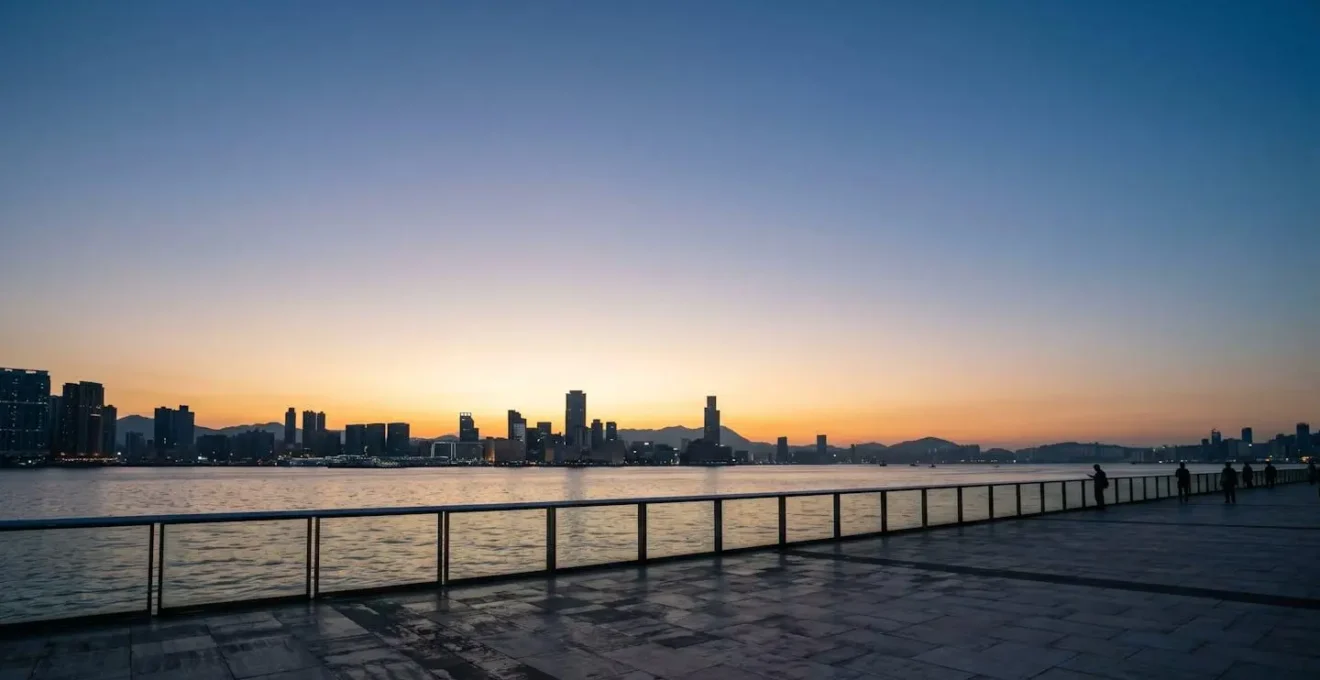
As the image above suggests, the classic, postcard-perfect view is from the Tsim Sha Tsui waterfront. This area offers an unobstructed vista of the Hong Kong Island skyline, providing a stunning backdrop for the pyrotechnics. For photographers, the Avenue of Stars is unparalleled, offering incredible reflection shots on the water. However, this is also the most popular and crowded location. For families with children, a slightly less conventional option like Victoria Park might be better. While the view is more distant, it offers more space and an easier exit to nearby Causeway Bay restaurants after the show.
For a more comfortable and romantic experience, many hotel bars with harbor views offer special fireworks packages. These require booking weeks or even months in advance and often have a minimum spend, but they eliminate the crowds entirely. The most strategic consideration, however, is your exit plan. The MTR stations at Tsim Sha Tsui and Central will be overwhelmed immediately after the show. Choosing a spot with a clear exit strategy away from the main crush is a key survival tactic. Consider spots slightly further away, like the Wan Chai waterfront or even Hung Hom, for a quicker getaway to your post-fireworks dinner.
Should a Tourist Give Red Packets to Hotel Staff?
Navigating the etiquette of « lai see » (red packets) can be daunting for a tourist, but it’s a simple gesture that can go a long way. The short answer is yes, it is a thoughtful and appreciated custom. While not strictly mandatory for tourists, giving a small red packet to hotel staff who have been helpful—like the doorman, concierge, or housekeeping staff—is a sign of respect and gratitude. It shows you’ve made an effort to understand and participate in the local culture.
This isn’t just an anecdotal observation; the practice is widespread in the region. As Wikipedia contributors note in their article on the tradition, giving lai see to service staff is a well-established custom:
In the Chinese communities of Singapore, Malaysia, Hong Kong and Macao, it is also customary for red packets to be given to service staff, such as security guards, cleaners, domestic helpers and doormen during the first few days of the Lunar New Year.
– Wikipedia contributors, Red envelope – Wikipedia
So, how do you do it correctly? The key is preparation. First, obtain crisp, new banknotes from a local bank before the holiday begins. The amount for service staff is typically modest, around HK$20-50 per person. The etiquette is crucial: always give and receive the packet with both hands, and accompany the gesture with a festive greeting like « Gong Hey Fat Choy » (恭喜發財), which means « Wishing you prosperity. » The best time to give them is during the first few days of CNY, usually the first time you see the person during the holiday. For budget travelers, even without giving money, learning and using the festive greetings is a powerful way to express gratitude.
Why Should You Visit the Victoria Park Flower Market on New Year’s Eve?
For the uninitiated, visiting a flower market on New Year’s Eve might seem like a strange priority. But for the savvy survival planner, the Victoria Park Lunar New Year Fair is not just about auspicious plants; it’s a critical late-night food destination. On the evening of CNY Eve, a significant number of traditional restaurants across Hong Kong close early for their own family reunion dinners. This is the moment the city can feel like it’s shutting down, leaving travelers wondering where to eat.
This is where the flower market reveals its secret identity. It transforms from a daytime market into a vibrant, bustling open-air dining hub. The atmosphere is electric, filled with locals doing their last-minute shopping and soaking up the festive spirit. For a traveler, it’s a golden opportunity for both cultural immersion and a guaranteed meal.
Case Study: The Flower Market as a Last-Chance Food Hub
The Victoria Park Lunar New Year Fair becomes an essential resource when other dining options disappear. As many restaurants close for private family dinners on CNY Eve, the market itself becomes a sprawling street food festival. Visitors can find a huge array of local snacks, traditional festive foods, and unique bites that only appear once a year. The peak time to visit for food is in the hours leading up to and just after midnight. During this time, stall vendors become highly motivated to sell off their remaining stock before the market officially closes at dawn on New Year’s Day, often leading to incredible bargains. It’s a perfect example of opportunistic dining in action.
By visiting the market, you are not only solving the « where to eat » problem but also participating in one of Hong Kong’s most beloved CNY traditions. You can graze on everything from fish balls and egg waffles to more elaborate festive treats, all while surrounded by the sights and sounds of the holiday at its peak. It’s a sensory overload in the best possible way and a strategy that turns a potential food desert into a feast.
Why Should You Not Buy Shoes or Cut Your Hair During CNY?
At first glance, these Chinese New Year taboos seem like quaint superstitions. But for the traveler on the ground, they have a very real and practical consequence: closed shops. Understanding the « why » behind these traditions is the key to predicting which services will be unavailable. This isn’t just folklore; it’s a practical business indicator.
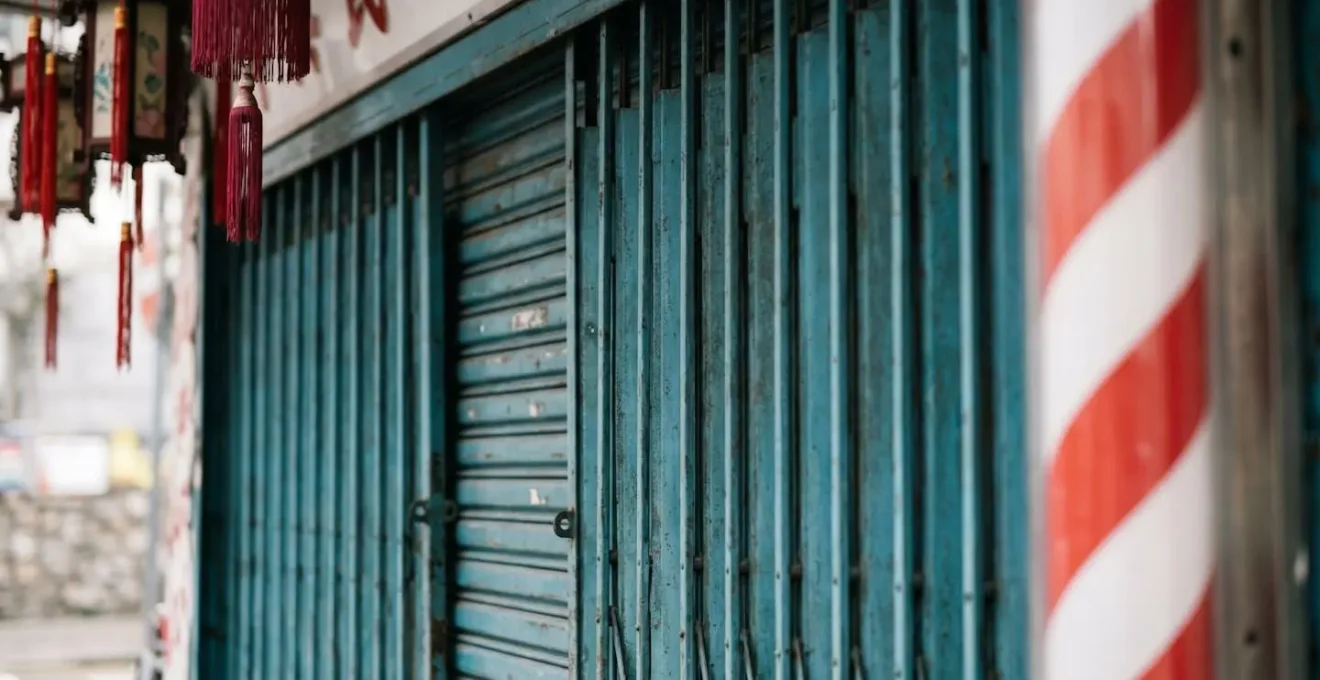
The prohibition against cutting your hair during the first lunar month is a prime example. The word for hair (髮, faat) has the same pronunciation as the word for prosperity. Therefore, cutting your hair is seen as symbolically « cutting away your fortune. » More specifically, it’s believed to bring misfortune to one’s maternal uncles. The practical result? The vast majority of barbershops and hair salons will be firmly shut for at least the first few days, and many for the entire holiday period. Similarly, buying shoes is avoided because the Cantonese word for shoes (鞋, haai) sounds like a sigh or the word for « evil. » This makes shoe stores a less-than-auspicious place to be, leading many to close their doors.
These taboos extend to other areas as well. The avoidance of using sharp objects like scissors and knives, which could « cut » your stream of wealth, directly affects businesses like tailors. Instead of seeing these as inconveniences, use this knowledge to plan. Get that haircut *before* the holiday starts. Don’t plan a big shopping day for shoes during the first few days of CNY. Instead, focus on what you *should* do: wear red, eat lucky foods like tangerines, and visit the bustling flower markets. It’s a strategic pivot from « what’s closed » to « what’s open and auspicious. »
Why Is « Yum Cha » Traditionally a Morning or Lunch Activity?
Yum cha, the beloved Cantonese tradition of drinking tea and eating dim sum, is fundamentally a daytime affair. Its cultural role is that of a social hub for family and friends to gather, chat, and share a meal, making it a peak activity during the first few days of Chinese New Year when families are visiting one another. It’s the quintessential morning or early afternoon ritual, a time for connection before the day’s other activities. As a traveler, participating in this is a must-do cultural experience.
However, the holiday period introduces some critical survival variables that you must be aware of. While traditionally a daytime event, the immense demand during CNY leads many yum cha restaurants to alter their schedules and pricing. As one travel expert notes, the normal rules don’t always apply during this peak season.
During Chinese New Year, many restaurants offering yum cha disrupt normal schedules by extending to all-day service with special dinner sets and significant price increases. Even staff who normally speak English may be replaced by temporary workers or family members helping out during the busy holiday period, making advance research and booking essential for securing tables.
– Lokafy Blog Contributor, Lokafy
This insight is crucial for your planning. Expect restaurants to be packed, especially in the morning. Be prepared for special holiday menus with inflated prices. Don’t be surprised if the usual English-speaking manager is replaced by a family member who speaks limited English. Your best strategy is to book well in advance if possible, or be prepared to wait. Alternatively, target yum cha later in the afternoon when the main family gathering rush has subsided. This is a moment to be flexible and adapt to the holiday rhythm.
Can You Pay for McDonald’s and 7-Eleven with Octopus?
Yes, and you absolutely should. The Octopus card is your single most important survival tool for navigating Hong Kong during Chinese New Year. While many smaller, traditional shops and restaurants will close, the city’s infrastructure and major chains keep humming along. Fast-food giants like McDonald’s and convenience stores like 7-Eleven and Circle K will be your lifeline for quick snacks, drinks, and emergency supplies. All of them widely accept Octopus.
Using your Octopus card streamlines every transaction, saving you from fumbling with cash and calculating change. This is especially useful in a busy, crowded city. Furthermore, the places that accept Octopus are often the very places most likely to remain open during the holiday. This includes the entire MTR public transport system, which is essential for getting around. The card creates a nearly frictionless experience for the most reliable parts of the city’s economy.
However, you cannot rely on digital payments alone. Cash remains essential for certain quintessential CNY experiences. You will need crisp, new bills for red packets, small change for temple donations, and cash for vendors at street markets or older, family-run establishments that may not have digital payment systems. The best strategy is a hybrid one: use your Octopus for all modern retail and transport, but always carry a backup of cash for traditional interactions and emergencies.
Your CNY Payment Survival Checklist:
- Secure your tool: Get an Octopus card immediately upon arrival and keep it topped up.
- Prepare for tradition: Obtain new, crisp banknotes from a bank for red packets and small cash-only vendors.
- Know your top-up points: MTR stations and convenience stores are your most reliable locations for adding value to your Octopus card, as they remain operational.
- Embrace the hybrid approach: Use Octopus for chains and transport, but always carry a reasonable amount of cash as a backup.
- Check your apps: If using other payment methods, download and set up local apps like AlipayHK before you need them.
Key Takeaways
- Turn Traditions into Strategy: Use cultural events like lion dances and market timings as a real-time guide to find open food and services.
- Embrace Opportunistic Dining: The best meal is the one you can find. Eat when crowds are distracted (e.g., during the parade) or where vendors are trying to sell off stock (e.g., late-night flower market).
- Master the Hybrid Approach: Rely on your Octopus card for modern chains and transport, but always carry cash for traditional customs like red packets and small market stalls.
How to Differentiate Between a Lion Dance and a Dragon Dance?
For a traveler, this might seem like a trivial detail. But in the context of CNY survival, it’s critical. One is a beautiful spectacle; the other is your audible guide to open businesses. A dragon dance, which involves many performers holding a long, flowing dragon on poles, is a large-scale performance often seen in parades. A lion dance is smaller, more acrobatic, and far more significant for your mission.
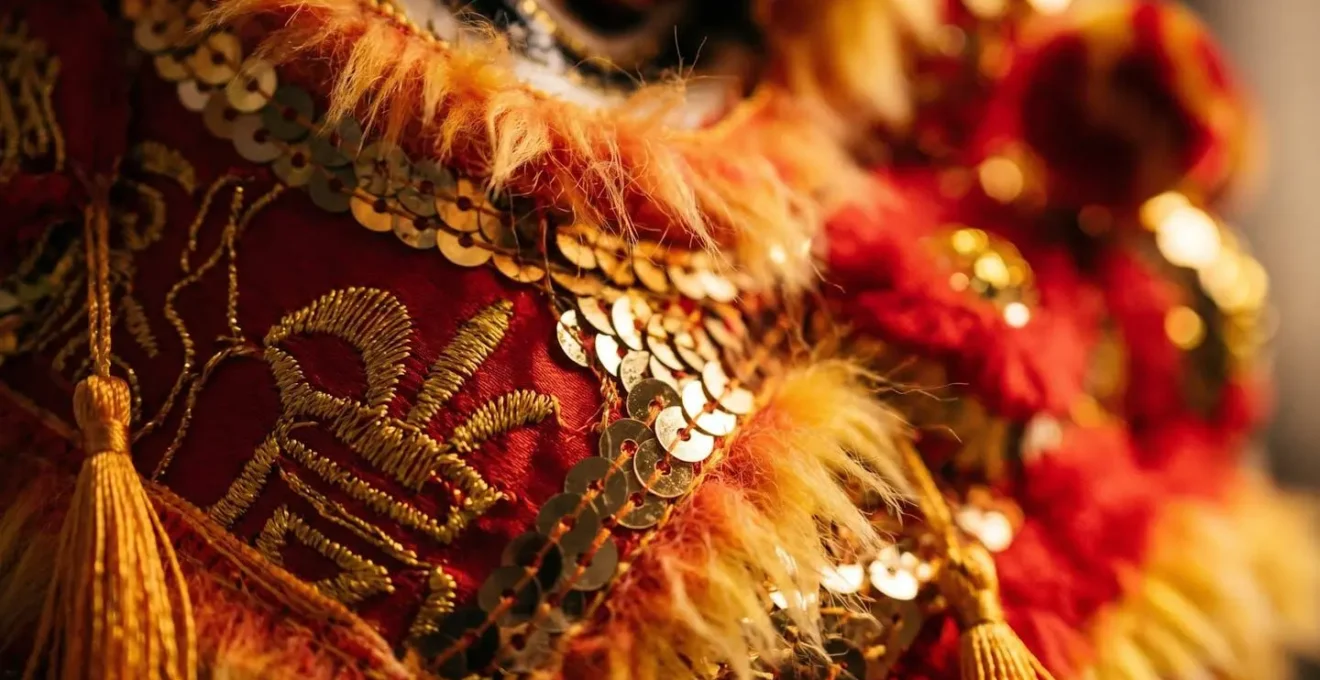
The lion dance involves just two performers inside an intricate lion costume, accompanied by the intense, driving sound of drums, cymbals, and gongs. This is the sound you need to listen for. It’s your « cultural GPS » pinging a nearby location of interest. Lion dance troupes are hired by businesses to perform a ritual called « cai qing » (採青), or « plucking the greens. » During this ritual, the lion « eats » a head of lettuce (a symbol of fortune) and red packets hung in the doorway of a business. This performance is believed to bring good luck and prosperity for the coming year.
The strategic implication is profound: if you see or hear a lion dance performing the « cai qing » ritual, you know with 100% certainty that the establishment is open for business and actively celebrating. The performance is a loud, vibrant, can’t-miss-it advertisement. These blessings typically happen in the morning or early afternoon on the first few days of the New Year. So, your strategy is simple: follow the sound. When you hear the drumming, walk towards it. You are literally being guided to an open shop or restaurant. This is the ultimate survival tactic, turning a cultural performance into a practical tool for finding your next meal.
Your Chinese New Year journey in Hong Kong is now transformed. By adopting the mindset of a survival planner, you can move through the city with confidence, using its rich cultural tapestry as your guide. Every drumbeat, every closed storefront, and every festive gathering is no longer a mystery, but a piece of actionable intelligence to ensure your trip is not just manageable, but truly memorable.