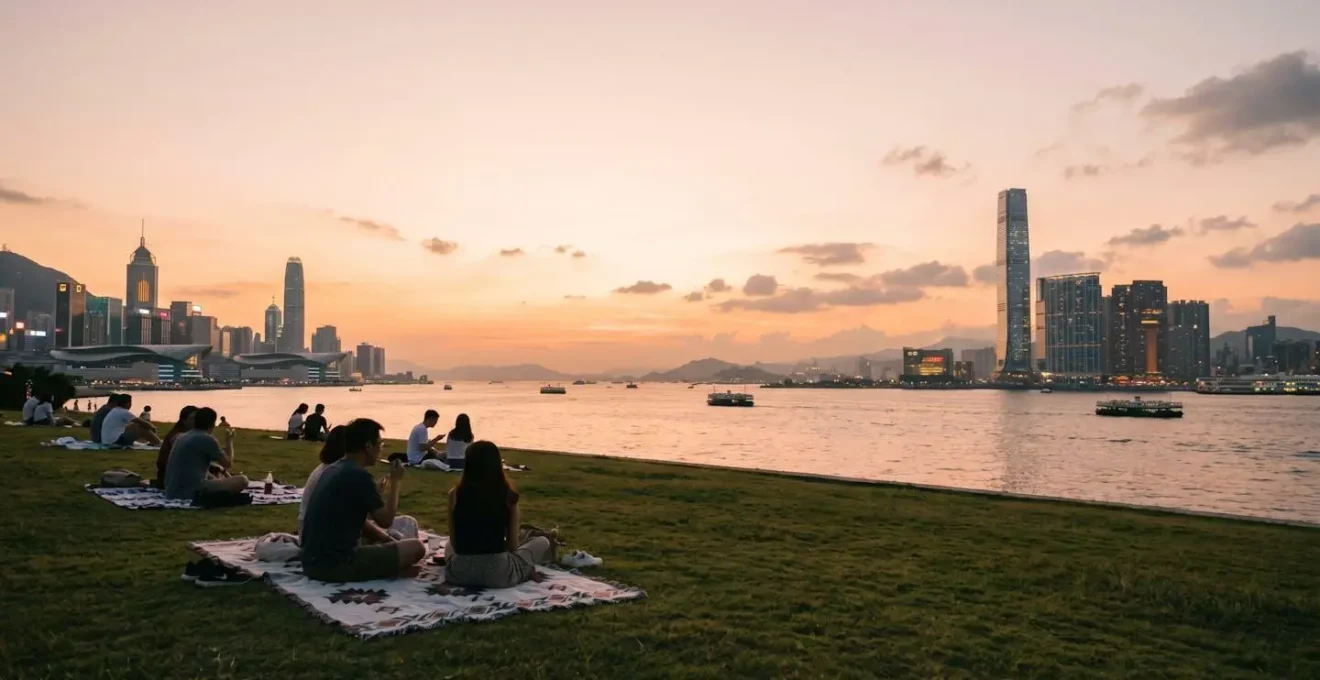
The ultimate West Kowloon sunset picnic isn’t just about food and a blanket; it’s an exercise in experience curation.
- Success lies in layering activities: pair your picnic with a visit to a world-class museum, a jazz performance, or even a major art fair.
- Every choice, from your MTR route to your food source, shapes the sensory experience of your urban escape.
Recommendation: Use this guide to move beyond simple planning and start intentionally designing your perfect day of relaxation and culture, with the sunset picnic as your stunning anchor point.
In the relentless pace of Hong Kong, the desire for a patch of green and a moment of calm is a shared craving. The West Kowloon Art Park, with its sprawling lawns and iconic harbour views, presents itself as the perfect antidote. The standard advice is simple: grab some food, find a spot, and enjoy the show as the sun dips below the skyline. This is a fine plan, but it only scratches the surface. The park is a free-to-enter public space, but its true value is unlocked when you see it not just as a destination, but as a canvas.
What if the key to an unforgettable experience wasn’t just in the picnic itself, but in how you frame it? The real magic of the West Kowloon Cultural District lies in its density of world-class cultural offerings. The perfect sunset picnic becomes an anchor, a centerpiece for a day you consciously design. This is about experience curation—the deliberate blending of art, music, food, and nature to create a personalized urban escape. It’s about understanding the sensory transition from the city’s buzz to the park’s tranquility and making every choice, from logistics to leisure, a part of that journey.
This guide moves beyond the basics. We’ll explore the critical questions that allow you to stack activities and craft a day that’s uniquely yours. We’ll treat the park’s museums, performance venues, and even its transport links not as separate entities, but as ingredients for your perfect recipe of relaxation and cultural immersion.
Summary: A Curated Guide to Your West Kowloon Experience
- How Does the Hong Kong Palace Museum Differ from the Beijing Original?
- Is the Acoustics at the Freespace Jazz Festival Good for Audiophiles?
- Why Is West Kowloon One of the Few Pet-Friendly Parks in HK?
- Is It Easier to Walk from Austin Station or Kowloon Station?
- Are the Food Trucks or the Restaurants Better Value in the Park?
- Can You Drink Alcohol Openly at the West Kowloon Art Park?
- Is the Tsim Sha Tsui Lantern Display Less Crowded Than Victoria Park?
- How to Visit Art Basel Hong Kong as a Member of the General Public?
How Does the Hong Kong Palace Museum Differ from the Beijing Original?
Viewing the Hong Kong Palace Museum (HKPM) as a « cultural appetizer » before your sunset picnic is a perfect example of activity stacking. But is it the right choice for you? Understanding its unique identity is key. Unlike the overwhelming scale of Beijing’s Forbidden City, the HKPM offers a focused, modern, and context-driven experience. Its mission is not just to display treasures but, as Museum Director Louis Ng states, to « connect the past to the present. » This is achieved through a curatorial approach that favors multimedia interpretations and a focus on an international audience.
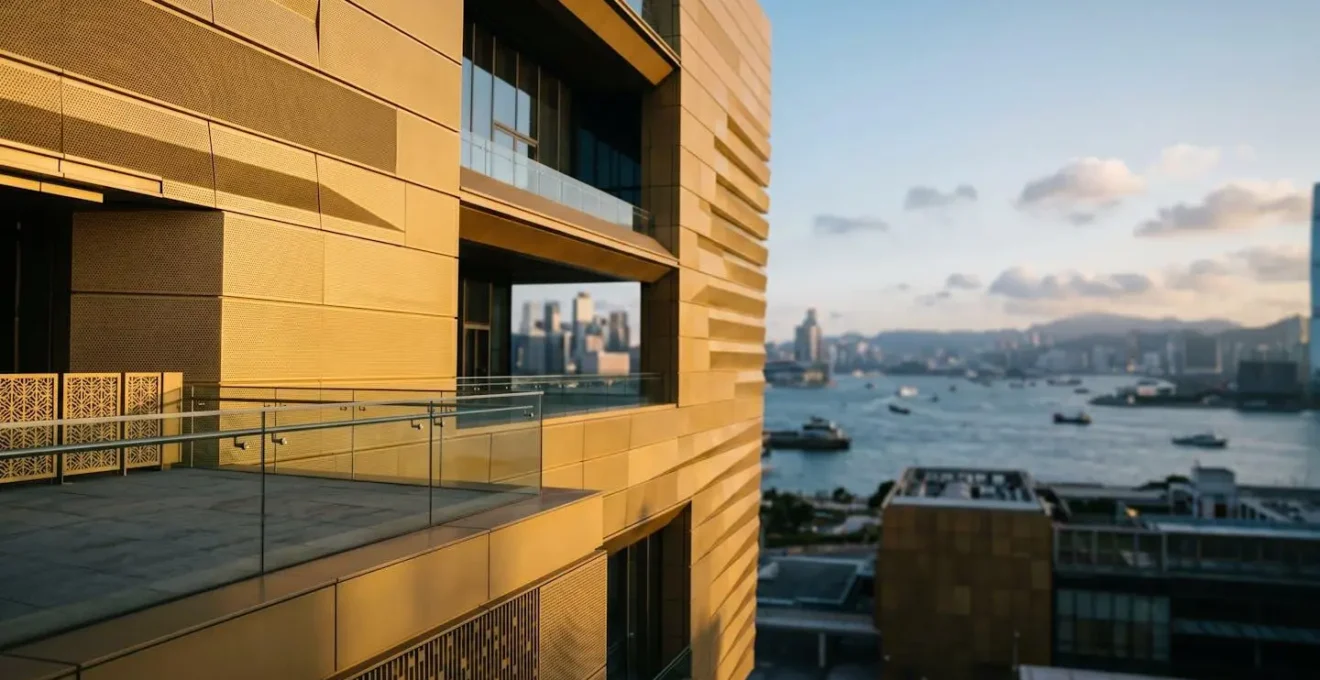
The building itself is part of the narrative. Where the Beijing original is a formal, inward-facing complex, the HKPM is designed to interact with its surroundings. Its viewing platforms intentionally frame the Victoria Harbour skyline, physically linking the historical artifacts inside with the contemporary city outside. This makes a late afternoon visit ideal; you can immerse yourself in a curated collection of over 900 treasures, including 166 grade-one national treasures, and then step out directly into the landscape you were just admiring, ready for your picnic.
This table from a recent analysis highlights the key differences in the visitor experience, helping you decide if this curated, 2-3 hour immersion is the right prelude to your evening.
| Aspect | Hong Kong Palace Museum | Beijing Forbidden City |
|---|---|---|
| Focus | Focused collection, climate-controlled, excellent presentation | Overwhelming scale, architectural experience, crowds |
| Visitor Numbers | ~2 million annually (estimated) | ~15 million annually |
| Artifacts on Display | Over 900 treasures (166 grade-one national treasures) | Over 1.8 million pieces in collection |
| Curatorial Approach | Modern multimedia interpretations, international audience focus | Traditional display, historical context emphasis |
| Viewing Experience | Viewing platforms frame Victoria Harbour, building integrated into experience | Formal, inward-facing architecture, traditional courtyards |
| Recommended Visit Duration | 2-3 hours (ideal for late afternoon 3-5 PM before sunset picnic) | 4-6 hours minimum for comprehensive visit |
Is the Acoustics at the Freespace Jazz Festival Good for Audiophiles?
If your idea of a perfect evening involves a sophisticated soundtrack, timing your picnic with the Freespace Jazz Festival could be the ultimate « activity stacking » move. For a true audiophile, however, the question of sound quality is paramount. The answer depends on where you listen. The festival utilizes both indoor and outdoor stages, each offering a distinct acoustic profile. For the purist, the place to be is The Box, Freespace’s flagship indoor venue.
This black-box theatre is not a typical concert hall. A deep dive into its setup reveals a commitment to sonic excellence. The Box employs advanced L-ISA (Immersive Sound Art) technology, a system that allows for the precise spatial positioning of sound. This creates a multi-dimensional audio experience where every instrument can be pinpointed in space, a feature fully leveraged by headline acts. For an audiophile, this means you’re not just hearing the music; you’re immersed within it.
Case Study: Freespace’s L-ISA Immersive Sound
Freespace’s flagship venue, The Box, utilizes advanced L-ISA (Immersive Sound Art) technology along with media server, tracking, and projection systems to create a multi-dimensional audio experience. Headline acts fully leverage this immersive sound system, allowing audiophiles to experience jazz performances with precise spatial audio positioning. The outdoor Wonderland stage, while more challenging acoustically due to open-air sound propagation, benefits from professional sound engineering that balances the ambient harbour environment with direct artist amplification, creating a unique listening experience distinct from indoor venues.
The outdoor Wonderland stage presents a different proposition. While open-air sound propagation is inherently more challenging, the experience is curated differently. Here, the goal is not sterile perfection but a unique blend of high-quality artist amplification with the ambient sounds of the harbour. It’s a trade-off: you sacrifice the precise acoustics of The Box for the unparalleled atmosphere of live jazz against a backdrop of the setting sun and the Hong Kong skyline. For many, this unique listening environment is a more compelling draw than pure audio fidelity.
Why Is West Kowloon One of the Few Pet-Friendly Parks in HK?
For many, a perfect relaxing day out is incomplete without their furry companion. West Kowloon’s status as a pet-friendly oasis is a significant part of its appeal, but it’s a relatively recent development in Hong Kong’s landscape of public spaces. The city has traditionally been restrictive with pets in parks. However, a shift in policy is underway, as reported by the Leisure and Cultural Services Department, with 54 more parks declared pet-friendly in 2023, bringing the total to over 170.
West Kowloon was a trailblazer in this regard, designed from the outset with a more inclusive vision of public leisure. The management understands that for its target audience of couples and friends, pets are often part of the social unit. This proactive approach includes providing essential amenities like pet excreta collection bins and water taps. More importantly, it features a dedicated Pet Zone, a securely double-gated area where dogs can play off-leash, offering a safe space for socialization away from the main picnic lawns.
This pet-welcoming attitude, however, comes with a shared responsibility. A successful pet-friendly picnic relies on observing proper « pet-iquette » to ensure a pleasant experience for everyone. This involves more than just cleaning up; it’s about managing interactions, planning for hydration, and even combining your park visit with nearby pet-centric services for a full day out. Following a clear plan ensures the park remains a harmonious space for both pet owners and other visitors.
Your Pet-iquette Checklist for West Kowloon
- Leash Management: Keep pets on-leash in general park areas; use the designated Pet Zone with its double-gated entrance and high fences for safe off-leash play.
- Hydration Stations: Locate pet water taps throughout the park before settling down to plan for water breaks.
- Waste Disposal Strategy: Always use the dedicated pet excreta collection bins and practice a pack-in/pack-out policy for all your picnic waste.
- Social Etiquette: Manage interactions by maintaining a safe distance in crowded areas and always ask for permission before allowing your dog to greet another pet.
- Picnic Setup: Choose a shaded spot during hot months and bring a dedicated pet mat to create a separate space from your own picnic blanket.
Is It Easier to Walk from Austin Station or Kowloon Station?
Curating your experience begins the moment you step off the MTR. The choice between arriving at Austin Station or Kowloon Station is more than a simple matter of logistics; it’s a choice between two different sensory transitions. Neither is objectively « better, » but one will be better for the kind of day you want to have. Your arrival is the first note in your urban escape symphony, so it’s worth choosing it deliberately.
The Austin Station route is the minimalist’s choice. It’s a direct, 2-3 minute walk across a pedestrian bridge. You are immediately exposed to the city’s elements—the heat, the humidity, the street sounds—before you find sanctuary in the park’s green expanse. This route is quick and efficient, but offers little in terms of comfort or amenities. It’s the express path from urban chaos to natural calm.
The Kowloon Station route, by contrast, is the all-in-one planner’s path. The 8-10 minute walk is almost entirely through the air-conditioned comfort of Elements Mall. This sheltered passage not only protects you from the weather but also offers a crucial advantage: access to a high-end supermarket. You can pick up all your gourmet picnic supplies en route. This path provides a gradual, climate-controlled transition from the underground MTR to the open-air park, trading speed for comfort and convenience.
| Factor | Austin Station Route | Kowloon Station Route |
|---|---|---|
| Walking Distance | 2-3 minutes / ~300 meters | 8-10 minutes / ~800 meters |
| Route Type | Direct overhead bridge/pedestrian tunnel | Footbridge through Elements Mall (Level 1 Exit M) |
| Weather Protection | Minimal – partially exposed to outdoor elements | Fully sheltered – air-conditioned mall passage |
| Picnic Supply Access | Limited – Austin area has fewer shops | Excellent – Elements supermarket for picnic supplies |
| User Profile | Minimalist’s Direct Route: quickest but weather-dependent | All-in-One Planner’s Route: sheltered with shopping access |
| Sensory Experience | Immediate exposure to city heat, humidity, and street sounds | Gradual transition from AC comfort to outdoor park environment |
Are the Food Trucks or the Restaurants Better Value in the Park?
The question of where to eat at West Kowloon isn’t just about budget; it’s about the « value-for-experience. » Both the casual food trucks and the more formal restaurants offer distinct advantages that cater to different moments and moods. The savviest park-goers don’t choose one over the other; they employ a hybrid strategy, using each to its best advantage. This approach maximizes both cost-efficiency and the overall quality of the picnic experience.
The foundation of this strategy is to bring your own core supplies. Packing your own drinks, water, fruit, and basic snacks drastically cuts costs and gives you a baseline of comfort. From there, you can supplement. The food trucks are perfect for purchasing one or two « hero items »—a gourmet sandwich, a specialty coffee—that add a touch of spontaneity and novelty to your on-the-grass dining. They embody the casual, impromptu vibe of a classic picnic.
Restaurants, on the other hand, offer guaranteed quality, service, and comfort. They are best used strategically. Consider reserving a table for a post-picnic dessert or a premium cocktail. This allows you to enjoy their comfortable seating and stunning harbour views without committing to a full, expensive meal. This approach acknowledges the growing quality of the dining scene, which has seen food and beverage sales increase significantly, reflecting a rise in both options and patronage. Ultimately, the best value comes from matching your dining choice to the specific experience you’re curating at that moment.
Can You Drink Alcohol Openly at the West Kowloon Art Park?
A sunset picnic for many couples and friends feels incomplete without a celebratory glass of wine or a cold beer. In most Hong Kong public parks, this would be a clear violation of regulations. However, West Kowloon Art Park operates within a nuanced reality where official rules and observed practice diverge. The key to enjoying a sunset toast lies in understanding this unique, relaxed enforcement approach.
While general regulations discourage public alcohol consumption, the park’s identity as a hub for cultural events and sophisticated leisure creates a different atmosphere. Authorities here generally adopt a tolerant stance towards discreet alcohol consumption, particularly during picnics. It is a widely observed practice for visitors to bring wine, beer, or pre-mixed cocktails to enjoy with the sunset. This is accepted, provided it’s done with discretion and respect for others. The emphasis is on maintaining a peaceful environment, avoiding excessive noise, and being mindful of families sharing the space.
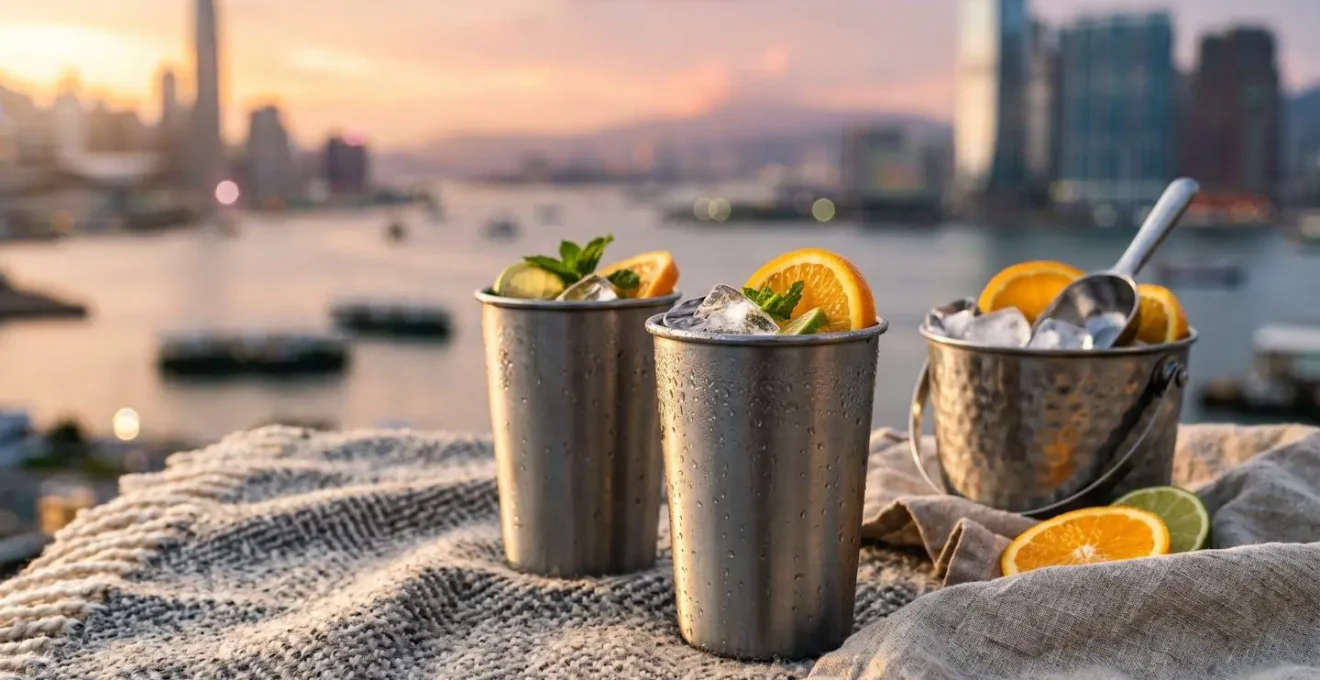
The unofficial rule is to be considerate. Using non-glass containers like reusable tumblers is a smart choice both for safety and discretion. As long as behavior remains respectful and the primary purpose of the visit is to enjoy the park’s ambiance, a quiet drink is generally considered part of the experience. It’s this unspoken understanding that allows for a more adult, European-style leisure experience, distinguishing West Kowloon from more rigidly regulated public spaces in the city.
Is the Tsim Sha Tsui Lantern Display Less Crowded Than Victoria Park?
Timing your visit to coincide with a city-wide festival like the Mid-Autumn Festival can elevate your sunset picnic into a truly magical cultural event. The question of where to see the lanterns—the traditional, dense displays at Victoria Park or the more modern installations around Tsim Sha Tsui and West Kowloon—is a critical part of curating your festival experience. Each offers a fundamentally different atmosphere.
Victoria Park delivers the classic, bustling, and immersive lantern carnival. It’s a sensory overload of intricate traditional designs, food stalls, and massive crowds, appealing to those who seek an authentic, high-energy cultural immersion. In stark contrast, the Tsim Sha Tsui and West Kowloon area offers a contemporary, spacious, and artistic approach. Here, the lanterns are often art-installation-style pieces spread along the waterfront. West Kowloon Art Park, specifically, provides the unique advantage of combining lantern viewing with the space for a comfortable picnic.
This makes the WKCD an ideal choice for those who prefer a more relaxed, photography-friendly festival experience. You can admire the lanterns against the dramatic backdrop of the Victoria Harbour skyline without navigating the shoulder-to-shoulder crowds of Victoria Park. The ability to spread out a blanket and enjoy mooncakes while the city lights up creates a perfect blend of festive celebration and personal comfort. To maximize this experience, a step-by-step plan is essential.
Your Mid-Autumn Sunset Picnic Plan
- Timing is Everything: Arrive at the Art Park by 5:00 PM to secure a prime lawn spot with clear views of both the lantern installations and the harbour.
- Optimal Setup: Position your blanket on the Great Lawn facing Victoria Harbour to capture the sunset, which typically occurs between 6:00-6:30 PM during the festival in September.
- Daylight Lantern Viewing: Explore the art-installation lanterns along the Waterfront Promenade around 5:30 PM, while there’s still enough daylight to appreciate their design details.
- The Golden Hour: Be back at your picnic spot by 6:15 PM to witness the golden hour over the harbour as the skyline begins to sparkle.
- Twilight Photography: The ‘blue hour’ (6:45-7:15 PM) is your magic window. The lanterns are fully lit, the sky has a deep blue hue, and the skyline provides a stunning, luminous backdrop.
Key takeaways
- The best West Kowloon experience is curated, blending the central picnic with cultural activities like museum visits or festivals.
- Logistical choices, like your arrival MTR station, are part of the sensory experience and should be chosen deliberately.
- Adopt a hybrid strategy for food—bring your own basics and supplement with hero items from food trucks or restaurants for the best value.
How to Visit Art Basel Hong Kong as a Member of the General Public?
Perhaps the most extreme example of « activity stacking » is pairing the serene West Kowloon sunset picnic with the intense, high-energy world of Art Basel Hong Kong. This combination creates a day of powerful contrasts, using the park as a necessary tool for sensory decompression. Art Basel, held at the HKCEC in Wan Chai, is a thrilling but overwhelming immersion in the commercial contemporary art world. The key to enjoying it without burnout is to have a planned « antidote. »
A balanced itinerary is crucial. The morning can be dedicated to the intense experience of Art Basel, arriving early to navigate the crowds. The « sensory transition » begins midday. Instead of a stuffy MTR ride, take the iconic Star Ferry from Wan Chai to Tsim Sha Tsui. This short, scenic crossing provides a vital moment of decompression, with open air and harbour views cleansing the visual palate. From TST, a 20-minute waterfront stroll leads you to the West Kowloon Cultural District, further easing you out of the art fair’s intensity.
Once at West Kowloon, you have options. You could visit M+ or the Palace Museum to contrast the commercial art of the fair with curated, scholarly collections. However, the ultimate act of decompression is setting up your picnic on the lawn. This relaxed time allows you to mentally process, discuss, and reflect on the art you’ve seen. As the sun sets over the harbour, the calm, natural beauty provides the perfect counterbalance to the morning’s sensory overload. It transforms a potentially exhausting day into a rich, multifaceted artistic and recreational journey.
Now that you have the framework for curating your perfect day, the next step is to start piecing together the elements that best suit your style. Begin by choosing your anchor activities and build your personalized itinerary from there.