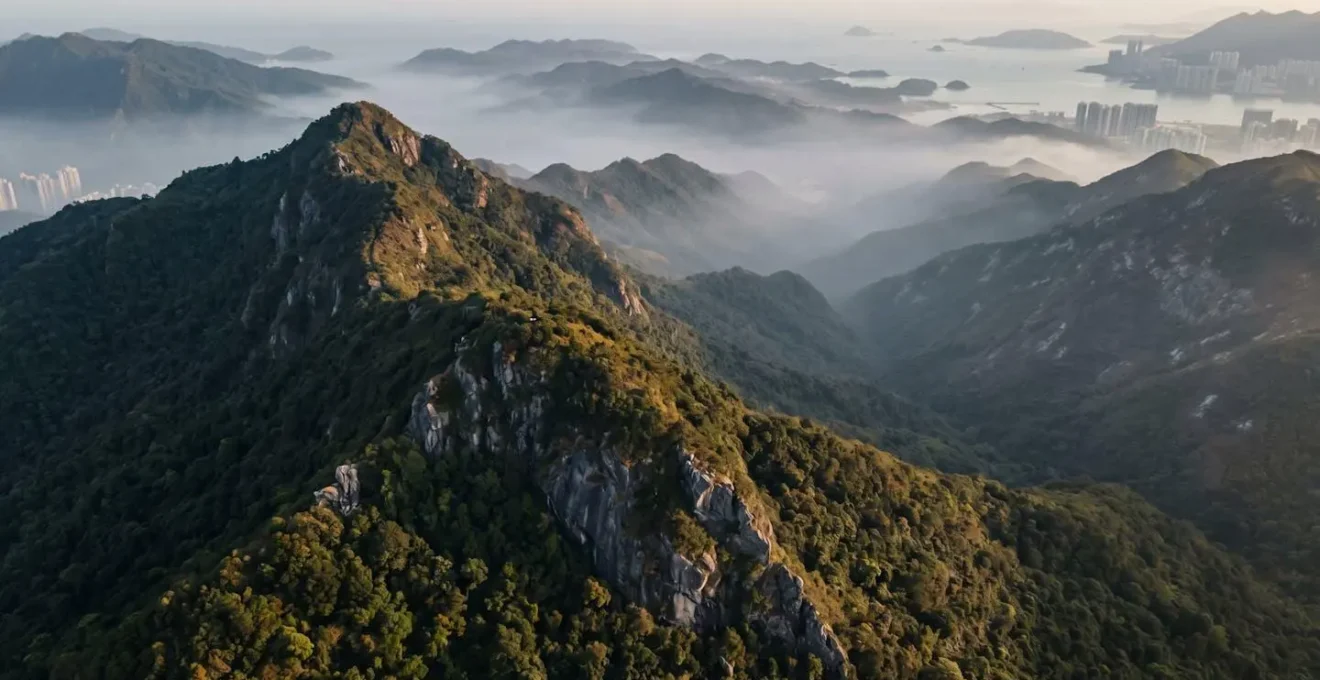
Hong Kong’s vast network of country parks is not an accident of geography but the result of a deliberate urban planning strategy designed to make extreme-density living sustainable.
- This « ecological-social contract » trades vertical living space for guaranteed, accessible, and protected natural landscapes.
- The system functions as a form of « recreational infrastructure, » with government-managed trails, campsites, and BBQ areas serving a crucial social function.
Recommendation: View the parks not just as an escape from the city, but as an integral and brilliantly designed component of the city itself.
Mention Hong Kong, and the mind conjures images of a relentless vertical city, a forest of skyscrapers packed onto a sliver of land. The common narrative paints a picture of a « concrete jungle, » a place where nature is a distant concept. Yet, the startling reality is that approximately 40% of Hong Kong’s total land area is designated as protected country parks and special areas. This fact often leads to the simple conclusion that Hong Kong is « more than just a city. » While true, this observation misses the more profound and fascinating story.
The existence of this vast green lung is not a happy coincidence or a remnant of untouched wilderness. It is a radical and intentional act of comparative urbanism. The question is not just *that* these parks exist, but *why* they were so comprehensively protected and integrated into the city’s fabric. The answer lies in a unique philosophy of governance where ecological preservation is actively used as a tool for social well-being and a functional solution to the pressures of hyper-density.
This is not a story of nature versus the city, but of nature as a fundamental component of the city’s design. This article explores the mechanisms behind this extraordinary balancing act. We will examine how the system of « managed wildness » works in practice, from its world-class hiking trails and unique social rituals to its specific rules on everything from monkey encounters to camping, revealing a model of urban livability that has lessons for dense cities worldwide.
To fully appreciate this integrated system, we will delve into the practical ways it shapes daily life and recreation. The following sections explore everything from the best trails for a day trip to the unwritten social codes of a weekend barbecue, painting a complete picture of Hong Kong’s green-grey dynamic.
Summary: The Deliberate Design of Hong Kong’s Green Spaces
- Which Section of the 100km MacLehose Trail Is Best for Day Hikers?
- How to Behave When Surrounded by Monkeys in Kam Shan Country Park?
- Why Are Public BBQ Pits So Popular Among Locals on Weekends?
- Which Country Parks Are Accessible Within 30 Minutes of an MTR Station?
- Do You Need a Permit to camp in Sai Kung West Country Park?
- How Does the Skyline Lighting Impact Migratory Birds During Autumn?
- Can You Drink Alcohol Openly at the West Kowloon Art Park?
- How to Hike the Dragon’s Back if You Are Not a Pro Hiker?
Which Section of the 100km MacLehose Trail Is Best for Day Hikers?
The MacLehose Trail is the crown jewel of Hong Kong’s « recreational infrastructure. » This 100-kilometre path is not just a local treasure; it’s globally significant, having been recognized by National Geographic as one of 20 ‘Dream Trails’ worldwide. Its brilliance lies in its modular design, allowing it to be tackled in ten distinct sections. This structure makes it perfectly suited for day hikers who can choose a segment based on their fitness, available time, and desired scenery, embodying the principle of accessible nature for all.

Choosing the « best » section depends entirely on the hiker’s goal. Whether seeking geological wonders, pristine beaches, or a quick family outing, there is a section tailored to the need. This managed diversity is a core feature of the park system’s success.
- Section 1 (10km, Easy): Perfect for an introduction, this section starts at the High Island Reservoir, famous for its spectacular hexagonal volcanic rock formations from 140 million years ago. It offers stunning coastal views and access to a beach.
- Section 2 (13.5km, Moderate): For those wanting a challenge with a reward, this part features alternating peaks and descents to some of Hong Kong’s most beautiful beaches, including the pristine Long Ke Wan.
- Section 6 (4.6km, Easiest): The shortest section is ideal for families or those short on time. It follows Golden Hill Road, offering encounters with wartime relics and the park’s famous monkey population.
- Sections 1 & 2 Combined (16km, Very Difficult): A rewarding six-hour trek for experienced hikers, this route showcases the best of the Hong Kong UNESCO Global Geopark and the stunning beaches of Tai Long Wan.
This variety ensures the trail serves the widest possible cross-section of the population, from seasoned trekkers to casual weekend strollers. It’s a testament to the idea of the parks as a public utility for mental and physical health.
How to Behave When Surrounded by Monkeys in Kam Shan Country Park?
Kam Shan Country Park, aptly nicknamed « Monkey Hill, » is a prime example of Hong Kong’s concept of « managed wildness. » It’s a space where nature is largely left alone, but human interaction is governed by strict rules to ensure safety and ecological balance. The park is home to approximately 1,800 macaques, representing about 85% of Hong Kong’s entire wild monkey population. This high concentration makes encounters almost certain, and knowing how to behave is not just advice—it’s a critical part of the park’s management strategy.
The key principle is to be a passive observer, not an active participant. The monkeys have learned to associate humans, and particularly plastic bags, with food. This learned behavior is the source of most negative interactions. The Agriculture, Fisheries and Conservation Department (AFCD) has established clear guidelines to mitigate this conflict and protect both visitors and the animals themselves.
Following these rules is essential for a safe visit and is part of the « ecological-social contract » that allows such a dense wildlife population to coexist with millions of city dwellers.
- Never feed the monkeys. This is the most important rule. Feeding is illegal under the Wild Animals Protection Ordinance and carries a fine of up to HK$100,000 and one year in prison.
- Hide all plastic bags. Monkeys aggressively grab plastic bags, associating them with food. Keep them stowed inside a backpack at all times.
- Avoid direct eye contact. Staring is interpreted as a sign of aggression by macaques. Glance away and do not make sudden movements.
- Keep a safe distance. This is especially true for mothers with infants, who are highly protective and can be more aggressive.
- Secure your belongings. Monkeys are opportunistic and known for snatching bags, cameras, and anything left unattended.
- Stay calm if approached. Do not scream or run, as this can trigger a chase. Stand your ground or back away slowly without turning your back.
Why Are Public BBQ Pits So Popular Among Locals on Weekends?
The hundreds of free public barbecue pits scattered throughout Hong Kong’s country parks are far more than just a recreational amenity; they are a cornerstone of the city’s social life and a physical manifestation of the « ecological-social contract. » In a city where private outdoor space is a rare luxury, these pits function as vital, government-provided recreational infrastructure. They offer a venue for large gatherings of family and friends, a practice deeply embedded in the local culture.
The style of barbecue is itself a communal activity. Unlike Western-style grilling often dominated by one person, the Hong Kong approach is participatory. As noted by cultural observers, everyone gathers around the fire, tending to their own food on long forks.
Hong Kong style BBQ is a timeless tradition to be shared and enjoyed by all. Here in the SAR, we don’t necessarily sit and mingle while the patriarch possesses the grill and manages its contents; cooking food Hong Kong BBQ style is a social activity, and everyone is expected to handle their own meat.
– GeoExpat Hong Kong, Hong Kong BBQ Style cultural analysis
This tradition is not a recent development but a direct result of government policy from the 1970s, designed to provide accessible recreation while managing human impact on the environment.
Case Study: The Winter Barbecue Season Phenomenon
The popularity of this social ritual is most evident during the « winter barbecue season, » from November through Lunar New Year. A deep dive into this cultural phenomenon by the South China Morning Post reveals how popular BBQ sites operate at constant capacity. Groups send « advance parties » at dawn to claim a concrete brazier and table for the day. This practice stems directly from the 1976 Country Parks Ordinance, which intentionally created free recreational facilities to serve the population of a dense city with tiny apartments. By building these pits in accessible zones, the government successfully channeled human activity away from more ecologically sensitive areas, fulfilling a dual mandate of public recreation and conservation.
Which Country Parks Are Accessible Within 30 Minutes of an MTR Station?
The genius of Hong Kong’s country park system is not just its scale, but its profound accessibility. The parks are not distant, weekend-only destinations; they are woven into the urban fabric, designed to serve as a readily available « density buffer » for the city’s residents. Many trailheads and park entrances are reachable within a short bus or taxi ride from an MTR station, making a spontaneous escape to nature a practical reality. This ease of access is a core tenet of the system, which sees an astonishing 13.5 million visitors recorded annually, demonstrating the success of this integration.
For nature lovers surprised by the city’s green-to-grey ratio, the speed at which one can transition from a bustling subway station to a tranquil forest path is perhaps the most compelling evidence of this unique urban design. Several major parks are prime examples of this seamless connection.
- Lion Rock Country Park: A 25-minute journey from Diamond Hill MTR provides access to the Wilson Trail and the iconic Jat’s Incline Viewpoint, offering panoramic views that juxtapose the city’s density with the park’s greenery.
- Kam Shan Country Park: The famous « Monkey Hill » is just a 30-minute walk up Tai Po Road from Lai Chi Kok MTR (Exit B1), making it one of the most accessible wildlife encounters in the world.
- Tai Mo Shan Country Park: Reaching Hong Kong’s highest peak is surprisingly quick. A trip from Tsuen Wan West MTR via bus 51 takes about 30 minutes to get you to the trailhead.
- Dragon’s Back (Shek O Country Park): TIME Magazine’s « Best Urban Hike in Asia » is easily reached by taking the MTR to Shau Kei Wan, followed by a short ride on bus 9.
This strategic placement of parks near public transport hubs is no accident. It is the practical application of the philosophy that access to nature is a right and a necessity for citizens living in one of the world’s most compact urban environments.
Do You Need a Permit to camp in Sai Kung West Country Park?
The question of permits gets to the heart of Hong Kong’s « managed wildness » philosophy. For the vast majority of cases, including camping in Sai Kung West Country Park, the answer is no. Hong Kong operates on a principle of open access. The government has established 41 designated campsites along major trails, most of which are equipped with basic facilities like toilets and barbecue pits. These sites operate on a first-come, first-served basis and do not require any permit or booking, fostering a culture of spontaneous and free recreation.
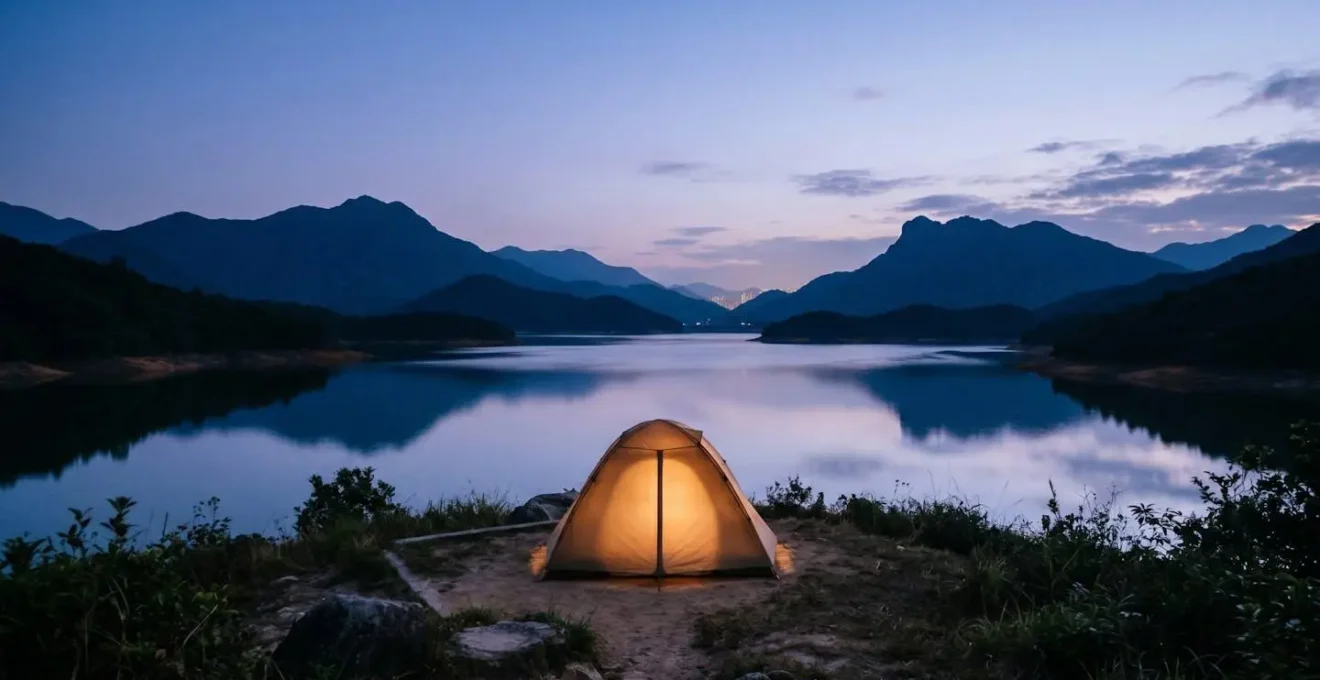
However, this open access is balanced with a tiered protection system. While most of the country park is open for enjoyment, certain « Special Areas » or zones overlapping with the Hong Kong UNESCO Global Geopark have stricter controls. A breakdown of the MacLehose Trail regulations explains that these ecologically sensitive zones may require advance booking or permits to manage human impact. This dual approach allows maximum public freedom in designated recreational areas while enforcing strict conservation in fragile ecosystems. Wild camping outside designated sites is technically not permitted but is often practiced by experienced hikers who adhere to strict Leave No Trace principles.
Your Action Plan for Legal and Responsible Camping
- Verify Your Location: First, check the AFCD website to ensure your intended campsite is one of the 41 official designated camping areas. These are the only legally recognized spots for general public camping.
- Check for Special Designations: Confirm that the site does not fall within a « Special Area » or a sensitive ecological zone that requires a permit. This information is available on the AFCD park maps and alerts.
- Plan for First-Come, First-Served: Since no permits are needed for standard sites, understand that they cannot be reserved. During peak seasons (autumn, winter, and public holidays), arrive early to secure a spot.
- Practice Leave No Trace: This is the most crucial step. Pack out everything you pack in, including all food scraps and trash. Campsite facilities are limited, and responsible waste management is a personal duty.
- Prepare for Wild Conditions: While accessible, these are still wild areas. Bring sufficient water, check weather forecasts, and be prepared for encounters with wildlife like wild boars or snakes.
How Does the Skyline Lighting Impact Migratory Birds During Autumn?
The brilliant glow of Hong Kong’s skyline is a world-famous spectacle, but it represents the most significant point of conflict in the city’s green-grey relationship. While the country parks serve as vital sanctuaries, the urban core they surround poses a direct threat to the very biodiversity they protect. The stakes are incredibly high; an analysis by the Legislative Council shows that over 98% of all flora and fauna species in Hong Kong are found within this 40% of protected land.
During the autumn migration season, this conflict becomes starkly visible. Hong Kong lies on a major global migratory flyway for birds. The intense light pollution from the city’s skyscrapers, particularly the famous « Symphony of Lights » show, disorients nocturnal migratory birds. They are drawn towards the light, causing them to circle buildings until they collapse from exhaustion or collide with glass facades. This phenomenon of fatal light attraction turns the celebrated skyline into an ecological trap.
This issue highlights the central challenge for Hong Kong’s urban ecologists: how to mitigate the impact of the dense urban core on the fragile ecosystems it borders. While conservation groups advocate for « lights out » initiatives during peak migration periods, the tension between economic activity, tourism, and ecological preservation remains. It serves as a powerful reminder that the country parks, while extensive, are not isolated islands. They are part of a single, interconnected system where the actions of the city have direct consequences for its « managed wildness. »
Can You Drink Alcohol Openly at the West Kowloon Art Park?
This question is deceptively simple, but the answer reveals the sophisticated « dual governance model » that manages Hong Kong’s public spaces. The short answer is yes, you can generally drink alcohol openly in the West Kowloon Art Park, but the reason why is crucial. The Art Park is not a country park. It is an urban park, and this distinction is fundamental to understanding how Hong Kong’s green spaces are managed.
Country Parks, which constitute the 40% protected land, are managed by the Agriculture, Fisheries and Conservation Department (AFCD) under the Country Parks Ordinance. Their primary purpose is nature conservation, outdoor recreation, and education. Urban parks, like the West Kowloon Art Park, Hong Kong Park, or Victoria Park, are managed by a different body: the Leisure and Cultural Services Department (LCSD). Their primary purpose is to provide venues for urban recreation, community gatherings, and cultural activities.
This difference in governance and purpose leads to different rules and philosophies. The following table, based on a governance analysis from Hong Kong’s Legislative Council, clarifies this distinction.
| Aspect | Country Parks (AFCD) | Urban Parks (LCSD) |
|---|---|---|
| Governing Body | Agriculture, Fisheries and Conservation Department | Leisure and Cultural Services Department |
| Legal Framework | Country Parks Ordinance (Cap.208) enacted 1976 | Leisure and Cultural Services Department Ordinance |
| Primary Purpose | Nature conservation, countryside recreation, outdoor education | Cultural activities, urban recreation, community events |
| Land Coverage | 44,300 hectares (40% of Hong Kong) | Scattered urban green spaces (significantly smaller) |
| Alcohol Consumption | Generally permitted in recreational areas | Varies by specific park regulations and events |
| BBQ Facilities | Free public pits in designated areas, 24/7 access | Designated sites with specific operating hours |
| Management Philosophy | Managed wildness with minimal intervention | Curated cultural venues with active programming |
Therefore, while drinking alcohol is generally acceptable in both types of parks in designated recreational zones, the underlying reason and overall regulatory environment are completely different. West Kowloon is a curated cultural venue, while a country park is a managed slice of the wild.
Key Takeaways
- Hong Kong’s 40% protected land is a deliberate urban strategy, not an accident, creating an « ecological-social contract » for its dense population.
- The park system functions as « recreational infrastructure, » with government-managed trails and facilities serving crucial social and public health roles.
- A « dual governance model » separates AFCD-managed country parks (conservation-focused) from LCSD-managed urban parks (culture-focused), resulting in different rules and atmospheres.
How to Hike the Dragon’s Back if You Are Not a Pro Hiker?
The Dragon’s Back hike is the ultimate testament to Hong Kong’s principle of accessible nature. Despite being named TIME Magazine’s « Best Urban Hike in Asia, » it is surprisingly manageable for beginners and those with average fitness. Its fame comes not from its difficulty, but from its incredible reward-to-effort ratio, offering spectacular 360-degree views of the South China Sea, coastal cliffs, and sandy beaches after a relatively gentle climb. This makes it the perfect encapsulation of the country park ethos: world-class natural beauty made available to everyone, not just elite athletes.
The key to enjoying the Dragon’s Back as a non-professional is preparation and pacing. The trail is well-maintained and clearly marked, removing the navigational challenges that often deter novice hikers. By following a few simple steps, anyone can conquer this iconic ridge walk and end their day at a beachside restaurant or one of the 39 public barbecue pits at Shek O, fully experiencing the city’s unique urban-to-wild transition.
A beginner-friendly guide to the area outlines a straightforward plan for a successful day out:
- Easy Access: Take the MTR to Shau Kei Wan station, then catch bus 9 to the To Tei Wan stop on Shek O Road. The entire journey from the city center is about 30 minutes.
- Manage the Climb: The hike begins with a paved path and steps that climb about 200 metres. The key is to take your time and rest as needed; there’s no need to rush.
- Enjoy the Ridge: The main section is a well-maintained dirt path along the undulating ridge. Wooden railings are installed at steeper points, ensuring safety.
- Leisurely Pace: The full 8.5km hike can be completed in 3-4 hours at a relaxed pace, with plenty of stops for photos. It’s shorter than many people assume.
- Stay Connected (or Not): While close to the city, some sections have limited mobile signal. It’s wise to download an offline map beforehand.
- The Reward: The trail conveniently ends at Big Wave Bay or the nearby Shek O Beach, where restaurants and facilities await.
- Hydrate and Protect: The ridge is very exposed with little shade. Bringing 2-3 litres of water per person and using sun protection is essential, even on cooler days.
By understanding this system not as a collection of parks but as a unified strategy, one can truly appreciate the genius of Hong Kong’s design. The next step is to experience it firsthand. So, plan a route, pack a bag, and explore this extraordinary example of urban-ecological harmony.